
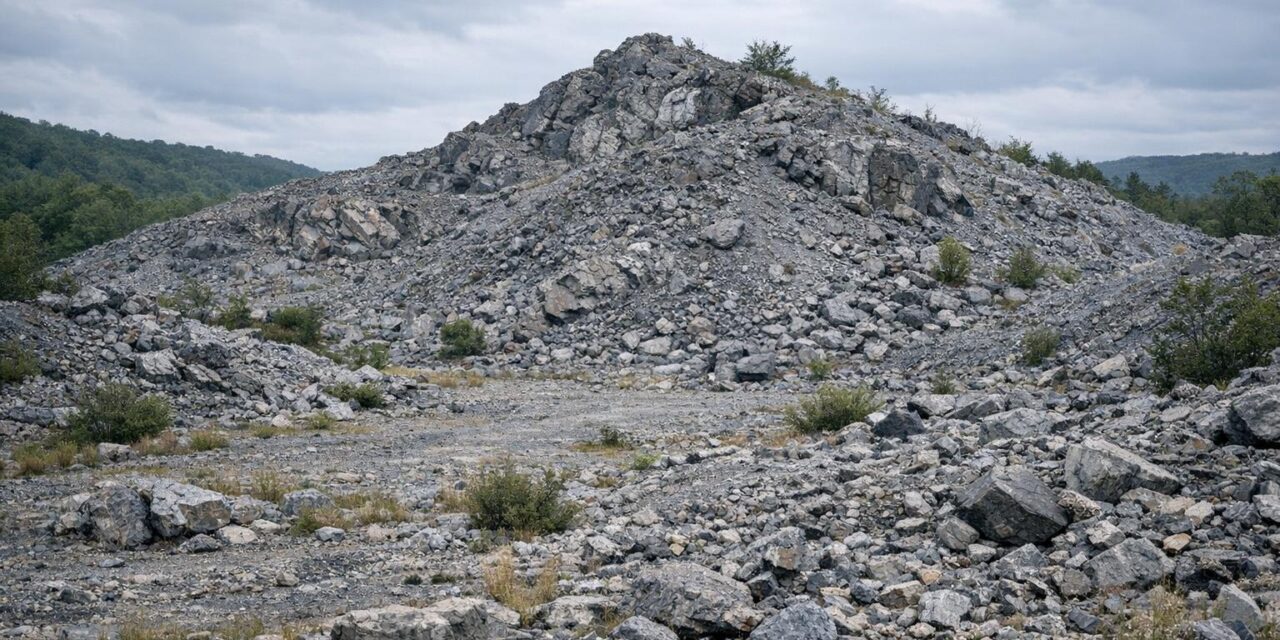
A blacklight clicks on and the gray, unremarkable rock in your hand suddenly isn’t gray anymore. It’s streaked with electric green, hot pink, a violet so saturated it looks like it’s generating its own light rather than reflecting it. Turn the lamp off and the color vanishes, the rock goes back to looking like every other piece of broken stone on the pile. Turn it back on and the glow returns, exactly the same, exactly that bright.
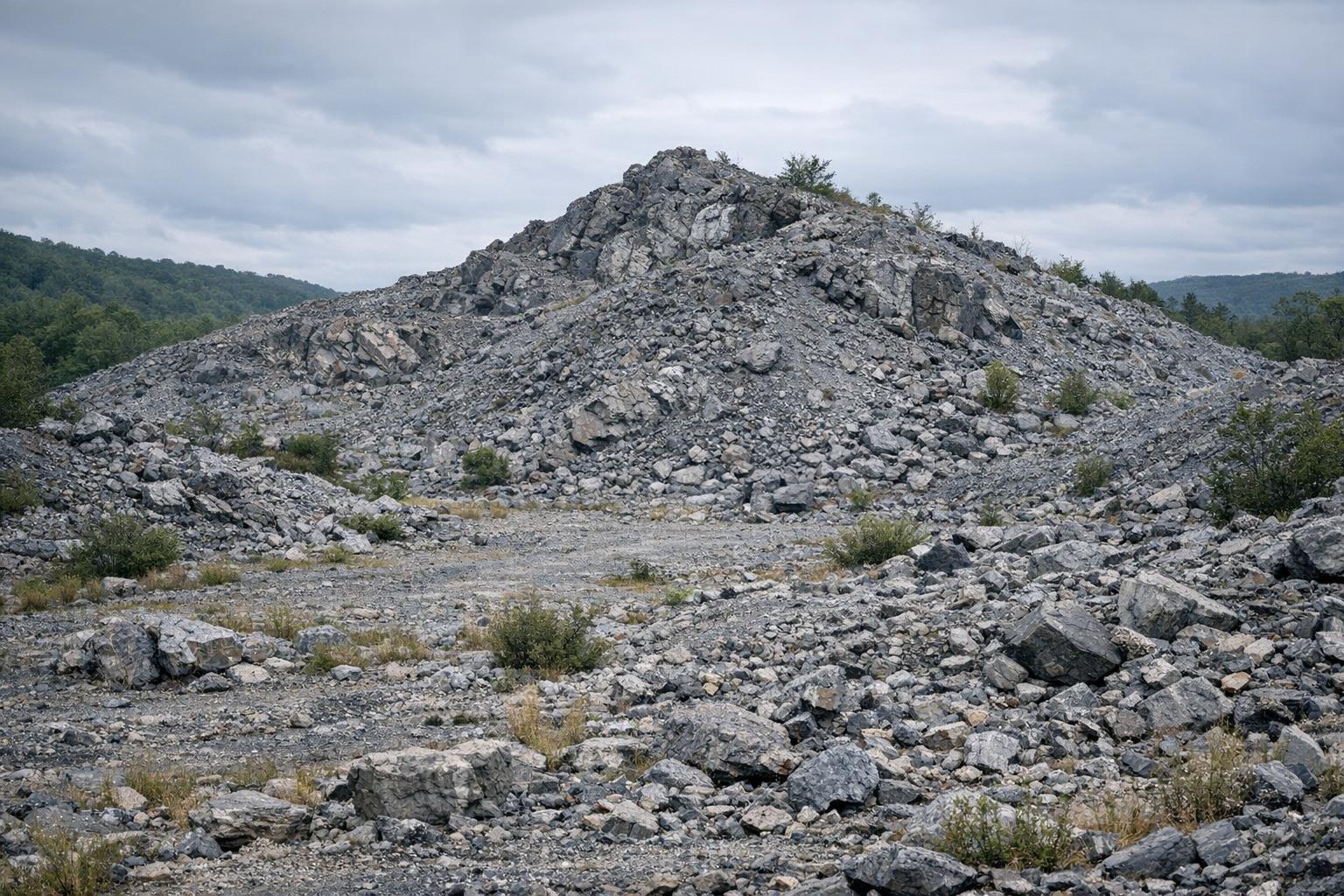
The Buckwheat Dump: New Jersey’s Fluorescent Mineral Field
The Buckwheat Dump sits on the grounds of the Franklin Mineral Museum in Franklin, New Jersey, a rockhounding destination built around one specific, striking phenomenon: minerals that glow under ultraviolet light. Franklin, New Jersey has a well-established identity within the mineral-collecting world specifically because of this fluorescence, and the Buckwheat Dump is where that identity becomes something visitors can experience directly, digging through a waste-rock pile in daylight and then watching what that same rock does under a blacklight.
Fluorescence itself is a real, well-documented mineralogical phenomenon: certain minerals contain trace elements that absorb ultraviolet light and re-emit it as visible light, producing colors that have nothing to do with how the mineral looks under normal daylight. A rock that appears entirely unremarkable, gray or brown or black, can turn out to fluoresce brilliant green or orange or pink the instant UV light hits it. That’s the appeal driving visitors to a site like the Buckwheat Dump specifically: the material itself doesn’t look valuable or unusual until the right kind of light reveals what’s actually inside it.
That gap between how a mineral looks under ordinary daylight and how it looks under ultraviolet light is what makes fluorescent-mineral collecting such a distinct branch of the broader rockhounding hobby. A collector searching for most other minerals is looking for visual cues that are visible the moment a rock is picked up, color, crystal shape, luster, texture. Fluorescent mineral collecting inverts that entirely. The visual cue that actually matters is invisible under normal conditions and only appears once a very specific kind of light is introduced, meaning a piece that looks like nothing special in a visitor’s hand during the day can turn out to be the single most striking find of the entire trip once evening falls or a blacklight comes out.
The dump is situated on privately owned Franklin Mineral Museum grounds rather than public BLM or Forest Service land, which matters directly to how access here works. Because this is private museum property, the usual federal default for gemstone and rockhounding on public land simply doesn’t apply, the museum sets its own access policy for the site entirely. That policy, as it stands, is genuinely visitor-friendly: rather than treating the dump as an off-limits mining relic, the museum has built it into a core part of the visitor experience, allowing hands-on digging and collecting as a documented, sanctioned activity rather than something visitors have to seek special permission for beyond standard admission. That’s worth appreciating specifically because it’s not the default outcome for a site like this. Plenty of historic mine waste-rock piles sit on private land and stay entirely off-limits to the public, fenced off as liability risks rather than opened as visitor attractions. The Franklin Mineral Museum made the opposite choice, turning what could have simply been inert mining debris into the centerpiece of an actual hands-on visitor experience.

Digging and Collecting on Museum Grounds
What makes the Buckwheat Dump function as an actual rockhounding destination, rather than just a museum exhibit behind glass, is the specific access structure the Franklin Mineral Museum has built around it. General museum admission includes the right to collect up to five pounds of material from the dump, meaning a standard visit already comes with a real, tangible collecting opportunity built in rather than requiring any additional fee or paperwork beyond the basic ticket price. That’s a meaningful detail for anyone weighing whether a visit is worth the trip: the collecting isn’t an upsell or a separate premium activity, it’s included in what a regular visitor already pays for.
For visitors who want to dig more seriously, the museum offers a dedicated collecting day on the last Sunday of each month, with its own separate fee structure: ten dollars covers the first ten pounds of material, and each additional pound beyond that costs one dollar. That tiered pricing structure is worth understanding closely, because it reveals something about how the museum thinks about the dump as a resource. Rather than charging a flat admission fee regardless of how much a visitor takes, the museum has built a system that scales directly with volume, a structure that rewards serious, sustained digging on that monthly collecting day specifically, while keeping the standard five-pound allowance under general admission simple and essentially cost-free.
That two-tiered system, standard admission with a modest built-in allowance, plus a dedicated monthly day for more serious volume collecting, reflects a deliberate choice about how to manage a finite waste-rock resource responsibly while still keeping it genuinely accessible. A visitor doesn’t need to plan around the monthly collecting day at all if a modest five-pound haul is enough, general admission alone covers that. But for a rockhound who wants to dig seriously and bring home a meaningful quantity of fluorescent material, that last Sunday of the month is specifically built for exactly that purpose. It’s a system that quietly acknowledges something true about a finite waste-rock pile: unlimited free digging, indefinitely, would eventually exhaust the material entirely, while a modest built-in allowance combined with a metered, fee-based option for heavier collecting keeps the site sustainable for future visitors without shutting anyone out of a meaningful first experience.
Visiting Buckwheat Dump Today
The Buckwheat Dump remains open to the public today as part of the Franklin Mineral Museum’s regular visitor experience. General admission includes collecting up to five pounds of material, and the dedicated collecting day held the last Sunday of each month offers an expanded, fee-based option for visitors who want to dig more, ten dollars for the first ten pounds and one dollar per pound after that.
Visitors should come prepared for genuinely difficult, uneven terrain: this is a waste-rock pile, not a groomed trail, meaning sharp broken rock underfoot and an unstable, sloped surface that demands sturdy footwear and careful footing throughout a visit. That physical reality is worth taking seriously before a visit, not because the site is dangerous in any dramatic sense, but because a waste-rock pile is exactly what it sounds like: broken, irregular material stacked up over time, not a manicured path. A visitor arriving expecting flat, easy ground will need to adjust their expectations, and appropriate footwear makes a real difference in how comfortable and safe a few hours of digging actually feels.
The Legacy of the Buckwheat Dump
For anyone serious about rockhounding, the Buckwheat Dump offers something few other collecting sites can: a direct, hands-on encounter with fluorescence, a genuinely striking mineralogical phenomenon that transforms an ordinary-looking rock into something that seems to generate its own light under the right conditions. That combination, an accessible, museum-managed dig site paired with a collecting allowance built into standard admission, makes it a rare entry point into serious mineral collecting for visitors who might otherwise never encounter fluorescent minerals in the field at all. The Buckwheat Dump stands as a reminder that some of the most visually striking material in the hobby doesn’t announce itself until the right light is shined on it. For a prospector accustomed to judging a find by what it looks like the moment it comes out of the ground, that’s a genuinely different way of thinking about what makes a specimen worth keeping, and a visit here is as good an introduction to that mindset as the hobby offers anywhere.
Story Source: www.franklinmineralmuseum.org
Location: Buckwheat Dump, Sterling Hill Mining Museum, Ogdensburg, NJ
Site Status: Open to public collecting
Legal Conditions: N/A override — the Buckwheat Dump sits on privately owned Franklin Mineral Museum grounds, not BLM/USFS land, so the Tier 1 federal default for Gemstone & Rockhounding does not apply in the first place; this documents the museum’s own access policy (Verified, per the museum’s official site). General museum admission includes collecting up to 5 lbs of material from the dump; a dedicated collecting day is held the last Sunday of each month with a $10 fee for the first 10 lbs and $1/lb after that.
Hazards: Difficult terrain/remote access (uneven waste-rock pile; sharp broken rock underfoot)
Google Map
Firsthand Accounts
Geologist Bruce T. Mitchell documented twenty years of systematic collecting on the Buckwheat Dump in a 2011 Mindat article, describing how he used a portable shortwave ultraviolet light to screen material and identify fluorescent calcite, willemite, esperite, and other species — and recommending newcomers bring the same tool rather than rely on “blind pick-up.”
Author Manuel A. Robbins described an unusual two-color fluorescent calcite from the Buckwheat Dump in his 1983 book “Collector’s Book of Fluorescent Minerals” — a piece that glows orange-red under shortwave UV but shows patches of violet-white under longwave UV, a combination later collectors specifically hunt for on the dump.
Fellow collector John Cianciulli examined an orange-fluorescing find of Bruce Mitchell’s on the dump and confirmed his identification of it as fluorapatite, illustrating how collectors on the dump routinely cross-check identifications with one another and with museum staff on site.
In 1968, the New Jersey State Legislature officially declared Franklin the “Fluorescent Mineral Capital of the World,” a designation the Franklin Mineral Museum now highlights in its 32-foot fluorescent display, reflecting the district’s globally unmatched diversity of fluorescent mineral species.
Before underground mining began, ore for the Taylor Mine came from an open quarry known as the Buckwheat Pit; waste rock from that pit was piled into the mound now called the Buckwheat Dump, which once covered more than three acres before decades of collecting wore it down to roughly half its original size.
