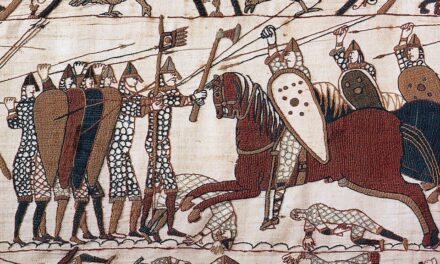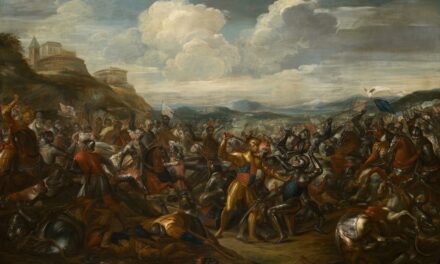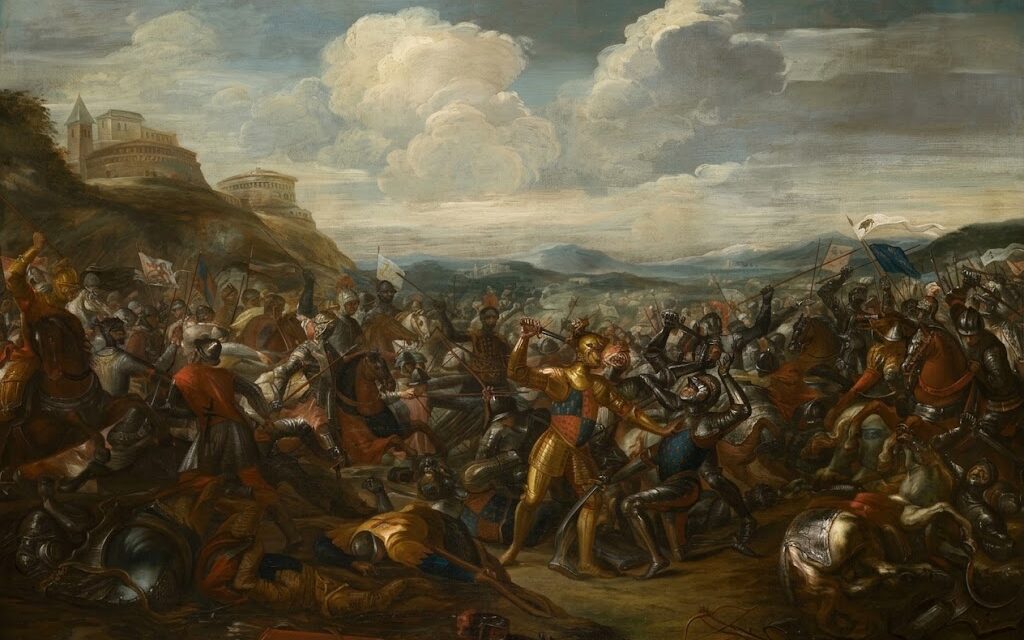
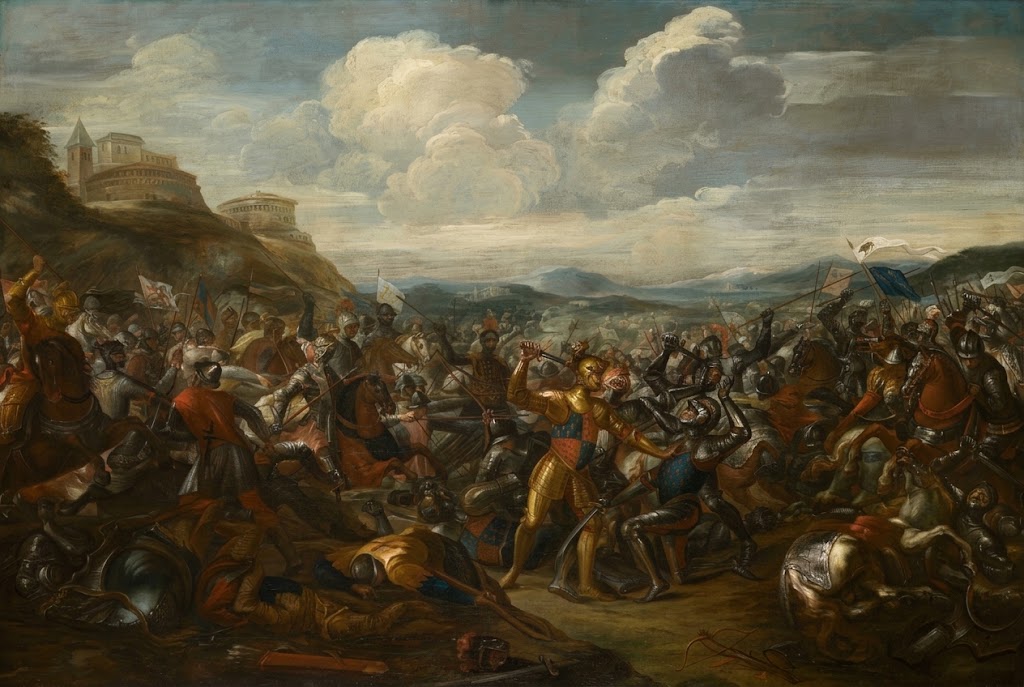
Three days of relentless rain had turned the ploughed field into ankle-deep sludge by the time the two armies faced each other. Men in seventy pounds of steel plate sank to their knees with every stride, and the sound that carried across the field wasn’t shouting or steel on steel so much as the wet, sucking effort of thousands of men trying to walk through mud that would not let them go. It would decide the battle before a single blow landed.
Agincourt: The Road to Battle
By October 1415, King Henry V of England had spent weeks besieging the French port of Harfleur, a campaign that cost him time, supplies, and men to dysentery and other disease before he finally forced its surrender, far longer than he had planned and leaving the campaigning season for the year nearly spent. Rather than sail home with his depleted, exhausted army, Henry chose to march roughly 250 miles overland toward the English-held port of Calais, a decision that put his weakened force directly in the path of a much larger French army determined to intercept and destroy it before it could reach safety, a gamble that could easily have ended the campaign, and Henry’s reign, in catastrophe rather than triumph.
By the time the two sides met near the village of Azincourt on October 25, Henry’s army was reduced by illness, hunger, and weeks of marching to a fraction of its original strength, facing a French force that most contemporary accounts describe as several times its size and drawn from the flower of French nobility, eager to settle scores from earlier English victories in the ongoing Hundred Years’ War. The French chose to meet the English on a narrow strip of recently ploughed farmland flanked by dense woods on both sides, confident that their numbers would simply overwhelm Henry’s exhausted men once battle was joined, a choice that would prove disastrous once the rain-soaked ground and the field’s narrow width turned their own advantage against them.
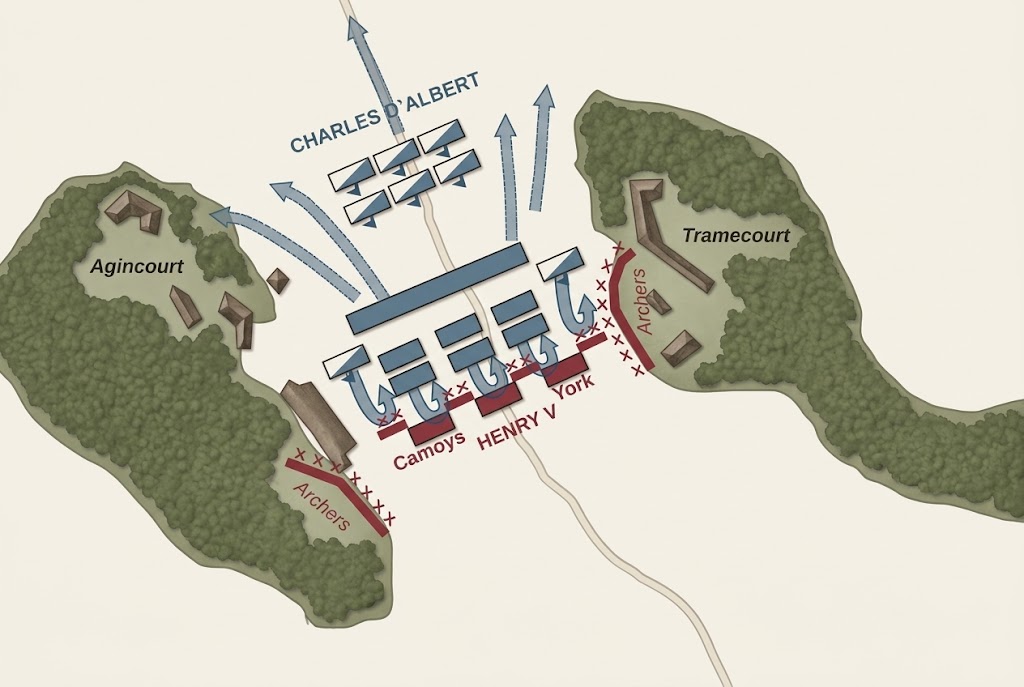
The Battle of Agincourt
Henry positioned his English and Welsh longbowmen, who made up the large majority of his force, on the flanks and behind sharpened wooden stakes driven into the ground to blunt any cavalry charge, while his dismounted men-at-arms held the center of a line deliberately narrowed by the woods on either side. When the French men-at-arms advanced, first on horseback and then on foot after the cavalry charge faltered, their heavy plate armor sank into the churned, waterlogged mud, and the narrow field forced their overwhelming numbers into a compressed mass that could barely maneuver, exactly the conditions the English needed to offset their disadvantage in men and armor.
As the French struggled forward, the longbowmen loosed volley after volley into the advancing ranks, and casualties mounted so quickly among the leading French lines that survivors began falling back into the men still pressing forward behind them, creating a crush in which soldiers could neither advance nor retreat. Men who fell in the mud, weighed down by armor that could exceed seventy pounds, often could not rise again unassisted, and contemporary accounts describe casualties piling in heaps several men deep as the press of bodies grew, with some soldiers reportedly suffocating under the weight of the dead and dying around them before an English blade ever reached them. Jean de Wavrin, a young Burgundian nobleman present with the French forces who later became a chronicler, described the chaos of that advance through the mud under a hail of English arrows, and the sight of heavily armored men-at-arms trampling one another as the front ranks collapsed and could not retreat because of the sheer press of troops behind them.
The English longbowmen, once their arrows were spent, waded into the collapsing French formation with hatchets, swords, and mallets used to drive their defensive stakes, cutting down exhausted, mud-mired French men-at-arms who could barely lift their weapons, a reversal in which lightly armored archers, traditionally seen as secondary to armored knights, became the decisive force on the field. Ghillebert de Lannoy, a Burgundian man-at-arms fighting for the French, was wounded and captured during the fighting, and he later recorded being among the French prisoners present when Henry, fearing a renewed French attack after reports that his baggage train had been raided, ordered a number of prisoners killed, an episode Lannoy survived to describe in his own later writings as a diplomat.
The Legacy of Agincourt
Agincourt became one of the most celebrated English victories of the Hundred Years’ War, a battle in which a smaller, exhausted force overcame a numerically superior enemy through terrain, weather, and disciplined use of the longbow rather than any advantage in numbers or armor. The defeat cost France a significant portion of its senior nobility in a single afternoon, a loss that weakened its capacity to resist further English campaigns in the years that followed and helped set the terms for the treaty that would later recognize Henry as heir to the French throne. The victory strengthened Henry’s negotiating position in the ongoing war with France and cemented his reputation as a military commander, but the very conditions that won it, mud, exhaustion, and a battlefield too narrow for numbers to matter, are a reminder that the outcome hinged on circumstances neither side fully controlled going in.
Visiting the Agincourt Battlefield Today
Centre Azincourt 1415, a modern museum in the village of Azincourt in northern France, offers visitors both a quick one-hour visit and a longer two-to-three-hour self-guided route through interactive exhibits covering the battle and daily life in the 15th century, with a modest paid admission on most open days. Its exhibits combine artifacts, reconstructed weapons and armor, and multimedia displays to walk visitors through the campaign leading up to the battle and the fighting itself. An observation tower at the center overlooks the actual battlefield, though the ground itself is now largely open farmland marked only by a small memorial, so the museum’s own interpretation supplies most of the context a visitor needs to picture where the armies stood.
Every July, the site hosts a medieval fair with jousting and combat reenactments for visitors who want a livelier, hands-on sense of the period beyond the museum’s exhibits, drawing crowds well beyond the steady trickle of visitors the museum sees on an ordinary day. Visitors consistently note that the battlefield itself, without the museum’s context, reads as little more than ploughed fields and a stone marker, and recommend touring the exhibits and climbing the tower before walking the ground where the fighting actually happened, since the flat, quiet farmland gives few visual clues to what unfolded there without that groundwork first.
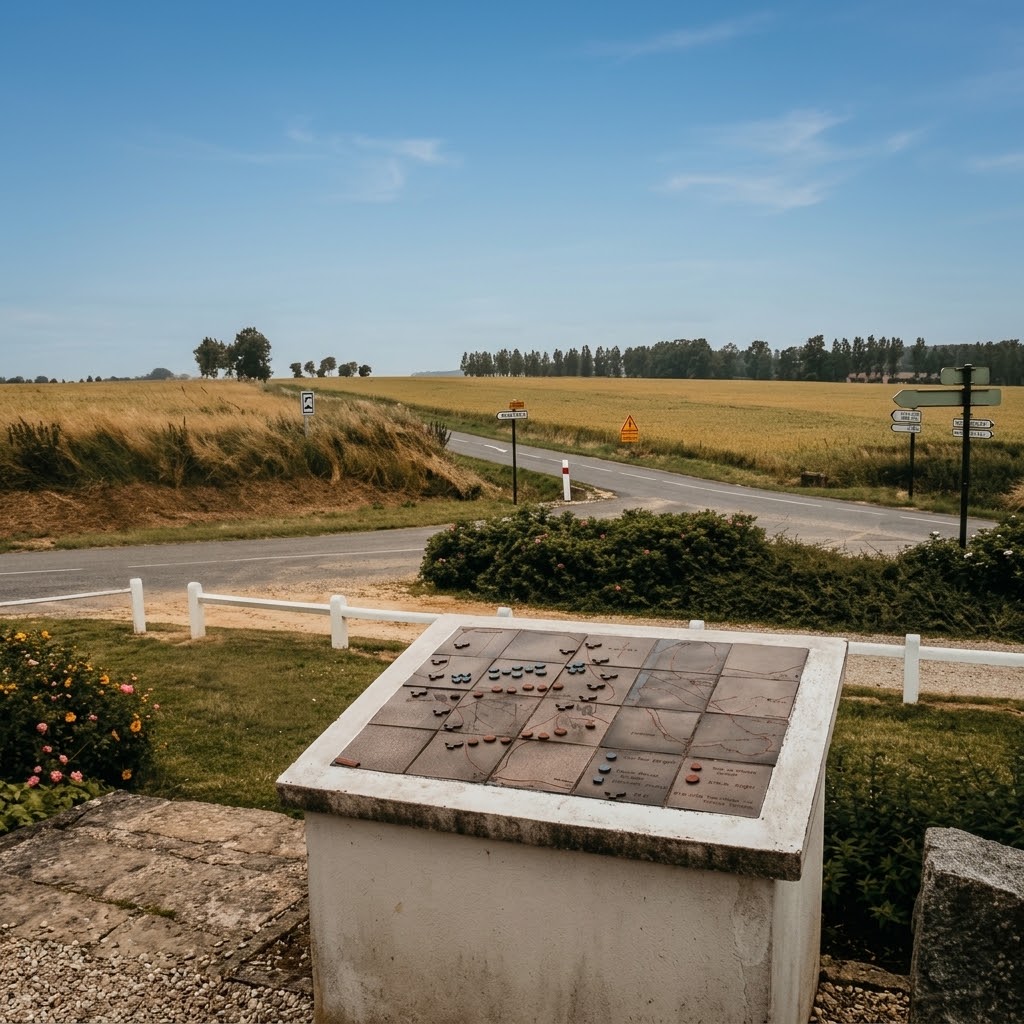
Remembrance at Agincourt
Agincourt has no fixed annual military commemoration on the scale of the world war memorials elsewhere in France, but the museum and its July medieval fair function as the site’s primary vehicle for keeping the battle’s memory active, drawing visitors who want a tactile, reenacted sense of 15th-century warfare rather than a solemn ceremony. The small memorial marker on the battlefield itself remains a quieter point of reflection for visitors who make the walk out from the museum, standing on the same ground where thousands of men and horses once fought and died in the mud.
Visitor Info: azincourt1415.com
Location: Centre Azincourt 1415, Azincourt, 62310, Pas-de-Calais, France
Site Status: National Park / Managed Historic Site
Visitation Notes: Centre Azincourt 1415 is a modern, professionally run museum in the village of Azincourt in northern France, open most days with a modest paid admission, and offers both a quick one-hour visit and a longer two-to-three-hour self-guided route through interactive exhibits on the battle and 15th-century life. An observation tower at the center lets visitors look out over the actual battlefield, though the ground itself is now largely open farmland with only a small memorial marker, so a guide or the museum’s own interpretation adds most of the context. Every July the site hosts a medieval fair with jousting and combat reenactments drawing visitors interested in a livelier, more hands-on experience of the period.
Google Map
Visitor Comments
This was a very enjoyable history lesson remarks David R, from Manchester, United Kingdom. The museum does a great job putting the 1415 battle in the context of the wider Hundred Years’ War rather than just focusing on the fight itself, and there’s a lot more information than we expected packed into a fairly compact space.
— from TripAdvisor
The interactive displays are excellent and the staff were genuinely helpful when we had questions remarks Mark N from Loughborough, United Kingdom. Don’t skip the walk up the battlefield tower — the panoramic view over the old combat ground really helps you picture how the two armies were arranged once you’ve seen the exhibits inside.
— from TripAdvisor
The sight of the arrows arching into the air, recreated on the museum’s screens, is mesmerizing and terrifying at the same time. The actual battlefield site itself is underwhelming on its own, just a stone marker and ploughed fields, so it takes a real feat of imagination to conjure up the scene without having visited the museum first.
— from Mary Anne’s France
The battlefield itself is mostly a grass-covered area with no great physical marks of the long-ago fought battle, just a small obelisk memorial and a few explanatory plaques. Hiring an English-speaking guide or picking up an audio guide adds a lot to the visit, since there’s little at the site itself to explain what actually happened here without that context.
— from History Hit