
Pull a stone out of Kansas farmland and cut it open, and sometimes what’s inside doesn’t look like rock at all — a web of iron running through translucent, olive-green crystal, glowing when light passes through it, like something that fell out of a jeweler’s case rather than the sky. That’s a pallasite, one of the rarest classes of meteorite there is. Not every meteorite hunter ever finds one. This stretch of Kansas farmland has produced them for generations.

Brenham: Kansas’s Century-Old Pallasite Strewnfield
The Brenham strewnfield sits on private farmland near Haviland, in Kiowa County, Kansas, and it has produced pallasite meteorites for more than a hundred years. That kind of century-plus track record is rare for any single strewnfield, let alone one producing a meteorite class as uncommon as pallasites. Pallasites are a genuinely rare class of stony-iron meteorite, made up of an iron-nickel matrix studded with crystals of olivine, and they’re prized by collectors and researchers alike both for their scientific significance and for their striking appearance when cut and polished. A cut and polished slice, backlit, is one of the more visually distinctive objects in the entire hobby, which only adds to the appeal of a strewnfield known for producing them. Few places on Earth have produced pallasite material in the quantity and quality that the Brenham strewnfield has, which has made this small corner of southwest Kansas a name well known among meteorite specialists. The rarity of the meteorite class itself is part of what elevates Brenham’s reputation: pallasites make up only a small fraction of all known meteorite falls worldwide, and finding a strewnfield that produces them reliably, across generations of searching, is genuinely unusual.
The strewnfield’s productivity hasn’t slowed with time. In 2005, a mass weighing 1,430 pounds was recovered from private farmland within the strewnfield, more than a century after pallasites were first documented coming out of this same ground — proof that Brenham, like a handful of other exceptional strewnfields around the world, still has significant material buried beneath its surface waiting to be found. Recovering a mass of that size intact, rather than as fragments, is itself a notable achievement, and it places the 2005 find among the more significant single recoveries in the strewnfield’s long documented history. A find of that size, from a site already producing material for generations, underscores just how substantial the original fall must have been to keep yielding specimens on this scale so long after the fact. A mass of over 1,400 pounds isn’t a small fragment turned up by a metal detector sweep — it’s a significant, standalone discovery on the scale of finds that define a strewnfield’s reputation.

The 2005 Recovery and a Century of Finds
The 2005 discovery of a 1,430-pound pallasite mass on private farmland within the Brenham strewnfield stands as one of the most significant recent finds from this site, a reminder that more than a century of recovery hasn’t come close to exhausting what fell here originally. That kind of mass, recovered from ground that had already been searched and worked for generations, speaks to both the scale of the original event and the value of continuing, patient searching even at a site with such a long collecting history. It’s a striking demonstration that a century of prior recovery efforts hadn’t come close to accounting for everything the original fall left behind in this ground.
Brenham’s status as a working strewnfield rather than a purely historical curiosity is part of what makes it significant within the meteorite-hunting and collecting community. Most strewnfields of comparable age have been searched to the point of diminishing returns, but Brenham has continued to produce substantial material, including genuinely large masses, well into the twenty-first century. That pattern sets Brenham apart from the more typical trajectory of a historic strewnfield, where early decades tend to produce the largest, most accessible finds before returns steadily shrink. That combination of rarity — pallasites are uncommon meteorites to begin with — and continued productivity has kept the Brenham strewnfield firmly in the conversation among serious collectors, even a century-plus after the first specimens were documented. Few sites anywhere combine those two qualities as consistently as Brenham has.
The fact that all of this material sits on private farmland is central to how the site has been managed and accessed over the decades. Every pallasite recovered from Brenham, including the 1,430-pound 2005 find, has come from land owned by someone other than the finder, which has shaped the legal and practical relationship between hunters and landowners at this site for generations. That relationship, built on permission and typically some form of shared arrangement, has governed how material leaves this ground for as long as pallasites have been documented coming out of Brenham.
Accessing the Brenham Strewnfield Today
The Brenham strewnfield lies entirely on private farmland in Kiowa County, Kansas, not on any federal or public land, and access requires explicit landowner permission before any hunting or collecting can take place. There is no public or federal component to this strewnfield at all — the entirety of the known productive ground sits under private ownership. Under long-established U.S. common law — the 1892 Iowa Supreme Court decision Goddard v. Winchell, still the foundational and widely cited precedent nationwide — a meteorite becomes part of the land it falls on and legally belongs to the landowner rather than whoever finds it. That principle has been treated as well-established U.S. property law for well over a century now, even though it hasn’t been separately tested in Kansas-specific case law. The absence of a Kansas-specific ruling doesn’t weaken the underlying rule; it simply means the nationwide precedent has never needed separate confirmation in this particular state. In practice, that means anyone hoping to search Brenham needs to secure permission directly from the landowner first, and arrangements typically involve a share of what’s found or a formal sale agreement rather than an informal handshake. That structure exists precisely because material recovered here, including exceptional finds like the 2005 mass, can carry real financial value, giving both landowner and finder good reason to formalize the terms before any digging begins. Neither party benefits from leaving that arrangement to chance once a discovery of real size or value is on the line.
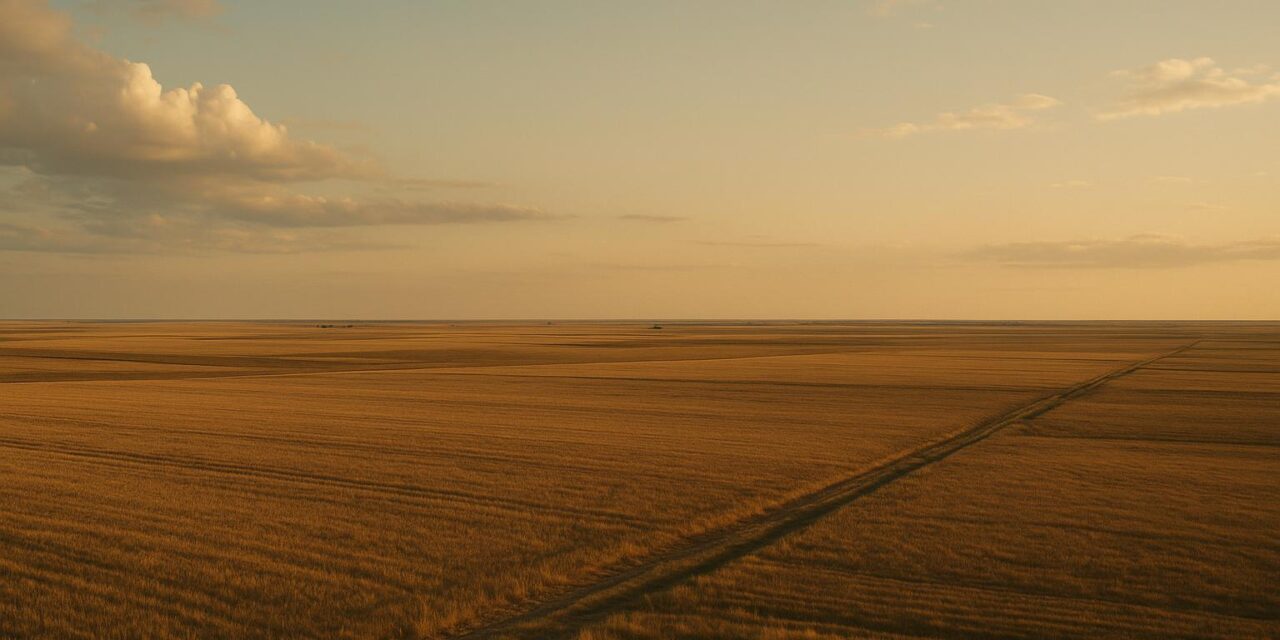
Beyond the legal requirement, the physical conditions at Brenham demand real preparation. The strewnfield sits on exposed farmland and open prairie, with Kansas summers bringing serious heat and little natural shade. Anyone spending real time out on that open ground should plan for sun exposure and heat as a matter of course, not an afterthought. The area itself is rural and sparsely populated, well removed from services, so a visit here — arranged properly with the landowner in advance — calls for the same planning any remote agricultural search would require. Southwest Kansas isn’t a place where help or supplies are ever close at hand.
The Legacy of the Brenham Pallasite Strewnfield
The Brenham strewnfield matters to meteorite collectors and researchers because it represents a genuinely rare combination: one of the world’s most productive pallasite localities, still yielding substantial finds like the 1,430-pound 2005 mass more than a century after the first specimens were documented here. Pallasites are rare enough on their own that a strewnfield capable of producing them consistently, at this scale, for this long, is a significant thing within the hobby. For anyone with a serious interest in meteorites, Brenham stands as proof that even century-old strewnfields on well-documented private ground can still hold genuinely major discoveries, provided the proper permission is secured first. The 2005 mass is the clearest recent proof of that, and it’s unlikely to be the last significant find this ground gives up.
Story Source: kgs.ku.edu
Location: Brenham strewnfield, near Haviland, Kiowa County, KS
Site Status: Permission or permit required
Legal Conditions: The Tier 1 U.S. federal default does not directly apply since the Brenham strewnfield lies entirely on private farmland in Kiowa County, not federal land. Under U.S. common law (Goddard v. Winchell, Iowa Supreme Court, 1892, the foundational and still-cited precedent), a meteorite becomes part of the land it falls on and belongs to the landowner, not the finder — explicit landowner permission (and typically a share or sale agreement) is required to hunt or keep any Brenham material. Confidence: Verified (well-established U.S. property law, though not Kansas-specific case law).
Hazards: Extreme heat/cold/exposure (exposed farmland and prairie, hot Kansas summers); Difficult terrain/altitude/remote access (rural, sparsely populated area of southwest Kansas, far from services).
Google Map
Firsthand Accounts
Eliza Kimberly, whose family homesteaded the strewnfield-area farm, noticed the odd black “iron stones” scattered on the property, began piling them up near the family’s dugout house, and eventually convinced Professor F.W. Cragin of Washburn College to travel out, examine the rocks, and purchase several — the discovery that put Brenham/Haviland on the meteoritical map. Source: Brenham (meteorite) discovery history, as documented by the Kansas Geological Survey and Meteorite Times Magazine, “Brenham, Kansas Meteorite Farm.”
Professor F.W. Cragin of Washburn College, Topeka, was the first trained scientist to examine the Kimberly farm’s iron stones, confirming them as meteorites and purchasing samples — the formal scientific validation that began the Brenham pallasite’s documented history. Source: Brenham (meteorite) discovery history, as documented by the Kansas Geological Survey.
In October 2005, meteorite hunter Steve Arnold and geologist Philip Mani located and recovered a 650-kilogram (1,430-lb) pallasite mass on Allen Binford’s wheat farm near Greensburg — the largest fragment ever recovered from the Brenham strewnfield — with ownership subsequently shared among Arnold, Mani, and Binford under a private agreement reflecting the landowner’s legal claim. Source: Brenham (meteorite) discovery history; contemporary reporting including NBC News, “Million-dollar space rock unearthed.”


