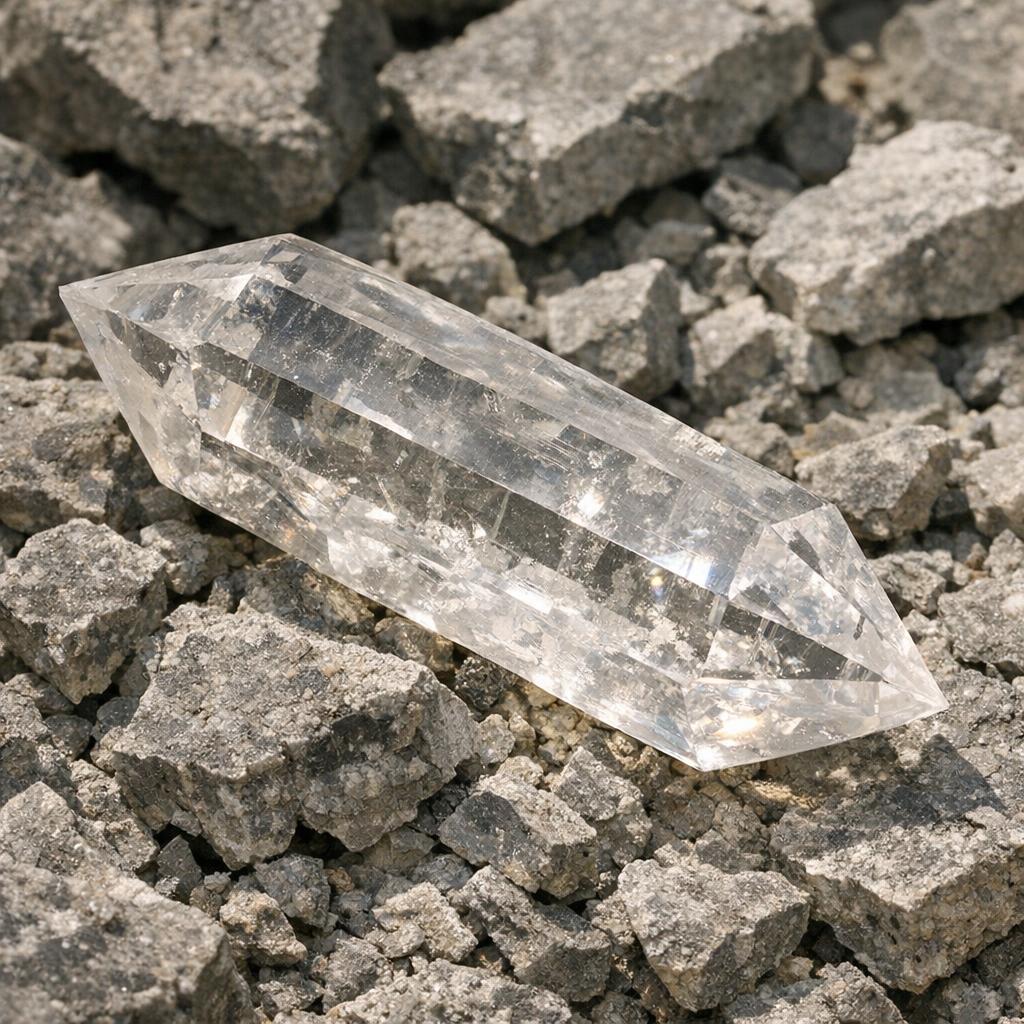
A crystal comes out of the rock pile catching the light from two directions at once, pointed at both ends like something no ordinary stone should be. It’s clear enough to see straight through, faceted as if it had been cut by hand, except nobody touched it. The rock itself did this, five hundred million years in the making, and it was just sitting there in a pile of broken dolomite waiting to be noticed.

Herkimer Diamond Mines: New York’s Double-Terminated Quartz
Herkimer Diamond Mines sits in Herkimer, New York, home to one of the more misleadingly named treasures in American rockhounding. The crystals that give the site its name aren’t diamonds at all. They’re double-terminated quartz, meaning each crystal naturally forms with a pointed end on both sides rather than growing from a single base the way most quartz does. That double-terminated structure, combined with the crystals’ exceptional clarity, is what earned them the nickname Herkimer diamonds, a name that has stuck for so long that many visitors assume they’re hunting for actual diamonds until they arrive. The confusion is understandable, and arguably a compliment to the crystal itself: clear quartz with natural facets on both ends can genuinely sparkle like a cut gemstone, close enough in appearance to a real diamond that the nickname has outlived any confusion it might otherwise have caused.
These crystals formed roughly five hundred million years ago, embedded in the dolomite rock that underlies this part of New York. That timescale alone is worth sitting with: the quartz sitting in a visitor’s hand today finished forming hundreds of millions of years before anything resembling a human being existed. The dolomite hosting these crystals is broken up and exposed at Herkimer Diamond Mines specifically so visitors can search through it, sifting rock piles for the telltale clear, faceted points that mark a genuine find among ordinary broken stone. It’s worth pausing on just how unusual the double-terminated shape actually is among quartz crystals generally. Most quartz grows attached to a larger rock matrix at one end, meaning only the free end ever develops the pointed, faceted termination collectors prize. A crystal that grew entirely unattached, suspended within a cavity in the rock rather than anchored to one wall of it, is what allows both ends to develop that same pointed structure independently. That specific growth condition, a crystal forming loose inside a pocket rather than rooted to solid rock, isn’t something that happens everywhere quartz occurs, which is part of why Herkimer diamonds carry a specific, recognized identity of their own rather than being treated as just another regional quartz variety.
Digging Through Five Hundred Million Years of Dolomite
Herkimer Diamond Mines operates as a privately owned commercial pay-to-dig business, and the entire site is built around a simple, direct exchange: pay admission, and search the on-site dolomite rock piles for as long as a visitor likes. Whatever double-terminated quartz a visitor finds is theirs to keep in full, with no value cap and no additional fee required beyond the admission price, regardless of how large, clear, or well-formed a particular crystal turns out to be. That simplicity, one admission price covering unlimited searching and unlimited keeping, is a deliberate business model rather than an accident. The site profits from the volume of visitors coming through to search, not from selling crystals directly or negotiating over unusually fine specimens after the fact, which means there’s no incentive built into the visit for staff to second-guess or contest what any individual digger walks away with.
That access model is worth understanding clearly, because Herkimer Diamond Mines is not the only pay-to-dig operation in the area, and it’s important not to confuse it with its neighbors. Several other unaffiliated Herkimer-area operations exist nearby, including Ace of Diamonds, Crystal Grove, and Herkimer Mountain, each running its own separate business with its own distinct access rules. A visitor planning a trip to search for Herkimer diamonds should be clear about which specific site they’re visiting, since admission policies, digging areas, and rules can differ meaningfully between these otherwise similarly named operations even though they all sit in the same general region and search for the same type of crystal. That distinction matters more than it might seem at first glance. A visitor who books a trip assuming all Herkimer-area digging sites operate identically, expecting the same hours, the same rock piles, or the same admission terms regardless of which specific business they’ve chosen, risks a frustrating surprise on arrival. Each of these operations, while searching for the same regional quartz, runs as its own independent business with its own separate rules, and treating the name “Herkimer diamond” as though it points to one single, unified site would be a real misunderstanding of how this corner of the hobby actually works.
What makes Herkimer Diamond Mines itself distinctive is the straightforward nature of the hunt: there’s no need for specialized geological knowledge to find a crystal here, since the quartz’s clarity and pointed shape make it visually distinct from the surrounding dolomite once a visitor knows what to look for. The skill involved is mostly patience and a willing eye, sorting through broken rock methodically rather than relying on any deep technical expertise. That accessibility, combined with the genuine scientific interest of digging through half-a-billion-year-old dolomite, is part of what has kept this specific site a long-running destination for rockhounds and casual visitors alike. That combination of low barrier to entry and genuine geological depth is worth appreciating on its own terms. Plenty of hobbies reward expertise so heavily that a newcomer walks away empty-handed while an experienced hand fills a bucket, but Herkimer diamond hunting doesn’t really work that way. A crystal’s clarity gives it away regardless of who’s looking, which means a first-time visitor searching a rock pile for twenty minutes has a genuinely reasonable shot at finding something worth keeping, right alongside a lifelong rockhound working the same pile with decades of practice behind them.
Visiting Herkimer Diamond Mines Today
Herkimer Diamond Mines is open to the public by design, exactly the kind of straightforward pay-to-dig operation this hobby depends on. Admission grants access to the dolomite rock piles, and no permit beyond that admission fee is required to search or to keep whatever double-terminated quartz turns up. There’s no value cap on what a visitor can take home, meaning an exceptional, especially clear or large crystal belongs entirely to whoever found it, the same as any smaller or more ordinary specimen. That clarity around ownership is part of what makes the site easy to plan a visit around: there’s no ambiguity to research in advance, no permit application to file, and no separate negotiation to anticipate if a dig goes unusually well.
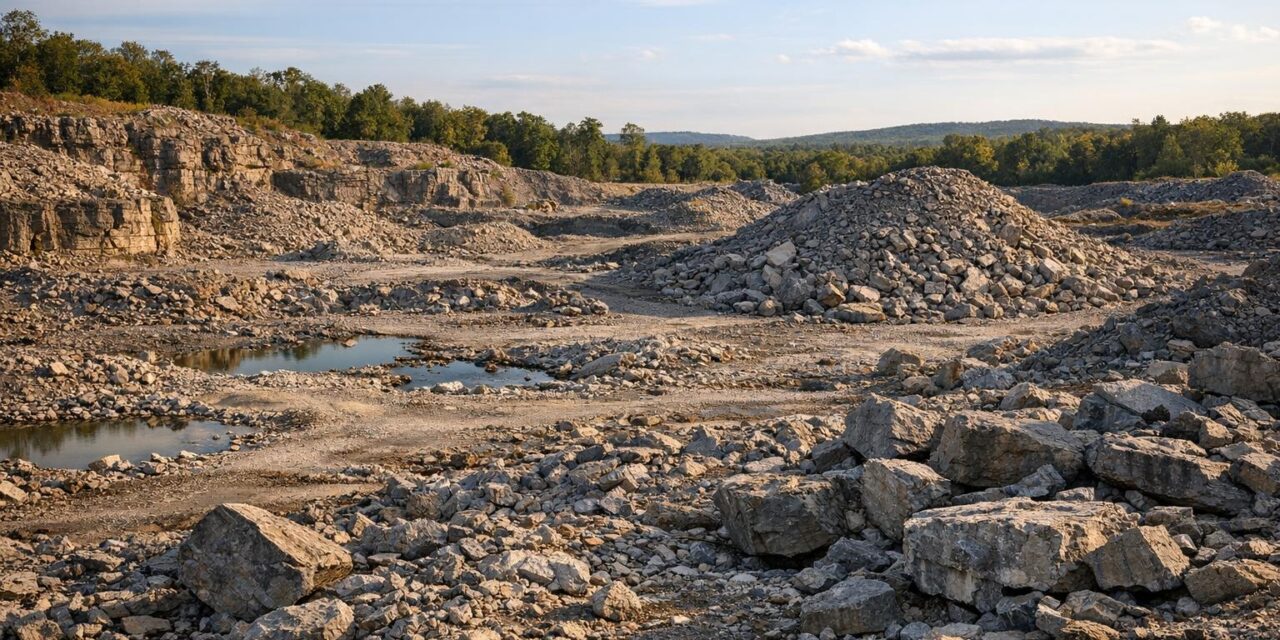
Visitors should come prepared for genuine outdoor conditions: this is exposed rock-pile digging, meaning extreme heat and cold depending on the season, and the terrain itself is uneven, made up of broken quarry spoil piles that require sure footing rather than a casual stroll across level ground.
The Legacy of Herkimer Diamond Mines
Herkimer Diamond Mines endures as one of the more approachable entry points into serious rockhounding, a site where five hundred million years of dolomite formation has produced a crystal distinctive and beautiful enough to earn a name usually reserved for a different mineral entirely. For anyone serious about this hobby, the site is worth understanding on its own specific terms: a straightforward, no-permit dig for a genuinely striking double-terminated quartz crystal, distinct from its similarly named neighbors, and grounded in a genuinely ancient geological story that predates almost everything else this hobby typically searches for. That’s a real accomplishment for a single rockhounding site to represent: genuine deep-time geology, an approachable and reliable hunt, and a crystal striking enough that it earned its nickname honestly, even if that nickname has confused more than a few first-time visitors expecting an actual diamond.
Story Source: herkimerdiamond.com
Location: Herkimer Diamond Mines, Herkimer, NY
Site Status: Open to public collecting
Legal Conditions: Matches the Tier 1 U.S. federal default for Pay-to-Dig Gem Mines: open to the public by design, since this is a privately owned commercial operation on private land selling the right to dig. Herkimer Diamond Mines charges admission to search the on-site dolomite rock piles for double-terminated quartz crystals, and visitors keep everything they find — no value cap, no permit beyond paying admission. This is a distinct site from other unaffiliated Herkimer-area pay-to-dig operations (Ace of Diamonds, Crystal Grove, Herkimer Mountain), each with its own separate access rules.
Hazards: Extreme heat/cold/exposure (outdoor rock-pile digging); Difficult terrain/remote access (uneven quarry spoil piles)
Google Map
Firsthand Accounts
Long before European settlement, Mohawk people gathered the crystals from stream sediment and plowed fields around the Mohawk Valley, prizing them as trade items and adornment — a tradition documented by regional geologists and historians studying the area’s mining heritage.
Per geology.com’s account of the region’s mining history, workmen cutting into Mohawk Valley dolomite outcrops in the late 1700s uncovered the crystals in large quantities, which is what first brought the name “Herkimer diamond” into wide use among collectors.
Per the mine’s own company history, the Scialdo family purchased the Herkimer Diamond KOA and its adjoining mine in 1979, and has run it as a family business for more than 50 years, turning it into one of the region’s best-known rockhounding destinations.
A fire in October 2017 destroyed the mine’s historic barn, which had housed the registration center, gem store, activity center, and museum, according to the mine’s official history page — prompting the 2018 launch of its rebuilt “Miners’ Village.”
The New York Times profiled the mine in its 2023 feature “Got Crystals? Gem Mining Could Be Your Full-Time Job,” covering how the site blends a tourist digging attraction with small-scale commercial crystal sales.