For hours, Kobayakawa Hideaki sat on Mount Matsuo with 15,000 men and did nothing. Both sides knew he held the battle’s outcome in his hands, and both sides waited. When Tokugawa Ieyasu’s patience finally ran out, he ordered his gunners to fire warning shots up the mountain — and the shots, not a change of heart, were what finally decided which way Kobayakawa would turn.
Sekigahara: The Road to Battle
By 1600, the death of the powerful unifier Toyotomi Hideyoshi two years earlier had left a fragile council of regents governing Japan on behalf of his young son, and the country’s most powerful warlords split into two rival coalitions over who would truly hold power. Tokugawa Ieyasu, the most formidable of the regents, led an Eastern coalition, while Ishida Mitsunari organized a Western coalition nominally loyal to the Toyotomi heir but which Ieyasu regarded, correctly, as a direct challenge to his own ambitions.
Both sides spent months maneuvering allies and mustering armies across Japan before their main forces finally converged near the small mountain village of Sekigahara, a strategically vital crossroads controlling the routes between Japan’s eastern and western regions. Numbers on both sides were roughly comparable, with each coalition fielding well over 80,000 men, but the outcome would ultimately turn less on troop strength than on the loyalty, or disloyalty, of commanders who had not fully committed to either side.
Mitsunari’s coalition included a number of daimyo whose personal loyalty to the Toyotomi cause was considerably weaker than their official alliance suggested, a weakness Ieyasu had spent months quietly cultivating through private correspondence and promises of reward before the armies ever met in the field. That behind-the-scenes campaign of persuasion would ultimately prove as decisive to the battle’s outcome as anything that happened on the field itself.
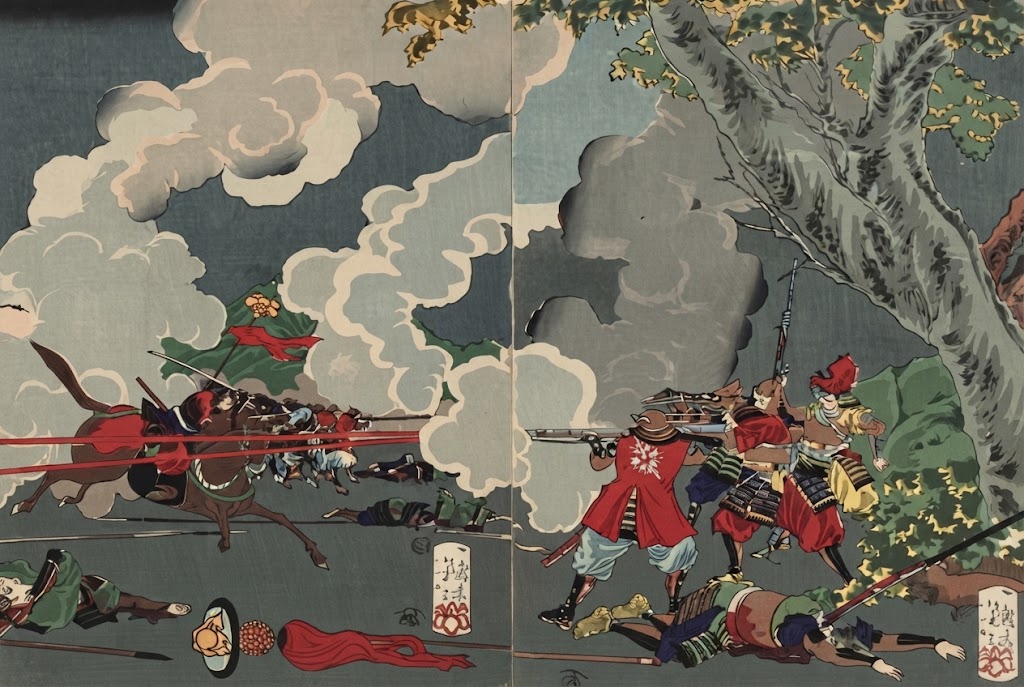
The Battle of Sekigahara
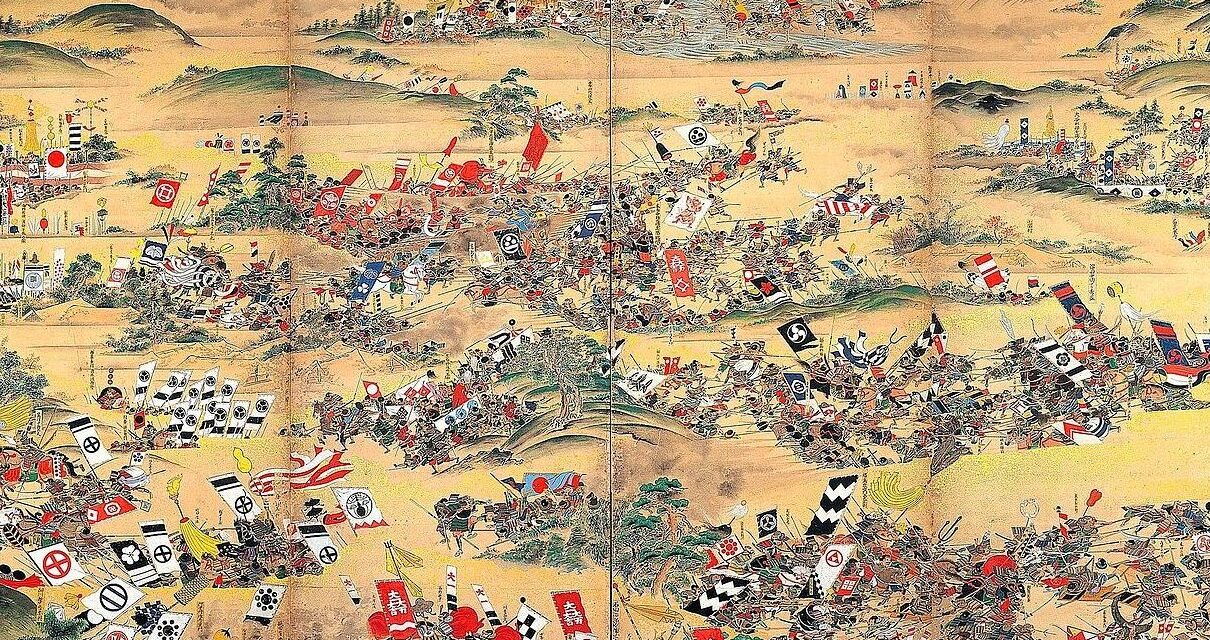
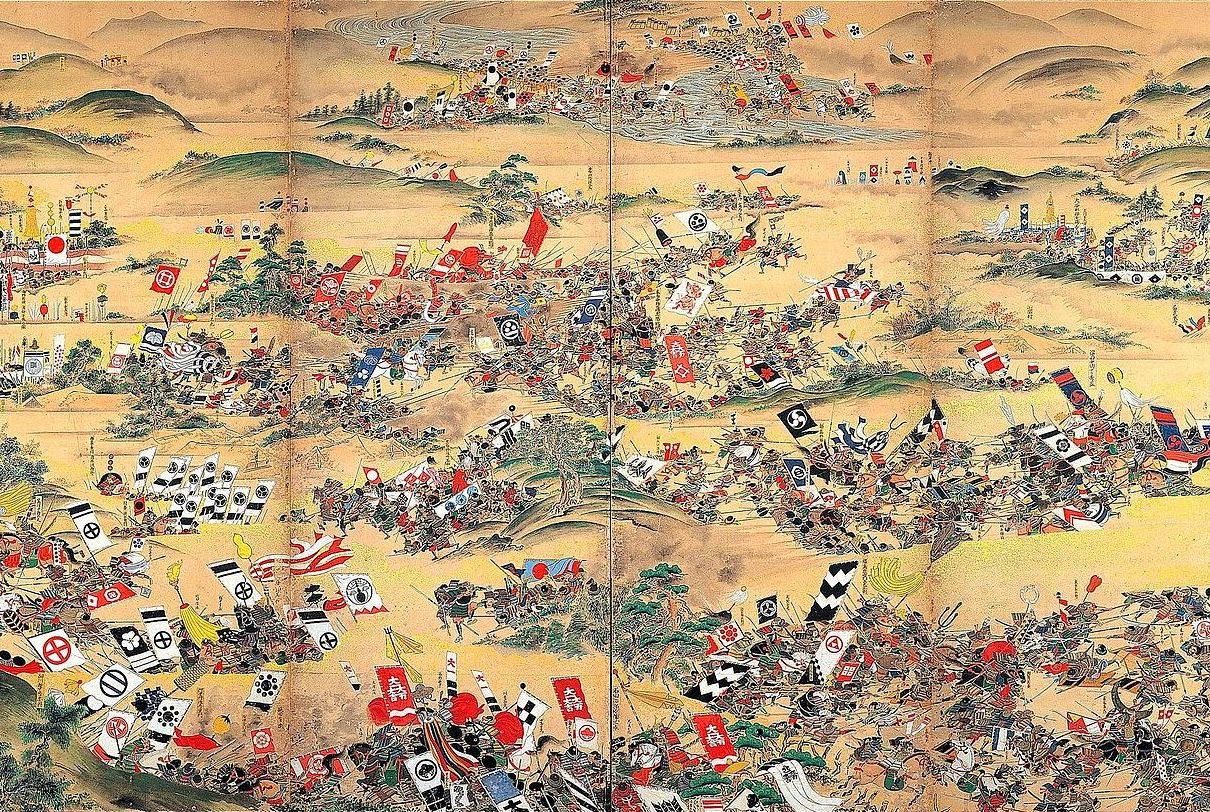
Fighting began in heavy fog on the morning of October 21, 1600, and for the battle’s opening hours the Western coalition, drawn up in strong defensive positions across the valley, appeared to have the advantage over the advancing Eastern forces. The decisive moment came from Kobayakawa Hideaki, who commanded roughly 15,000 troops on Mount Matsuo nominally aligned with Mitsunari’s Western army but who had been in secret negotiations with Ieyasu before the battle even began. For hours Kobayakawa held his position without committing to either side, until Ieyasu, growing impatient with the delay, ordered his arquebusiers to fire warning shots toward Kobayakawa’s position on the mountain, a signal that finally prompted him to commit his forces against the very army he had nominally joined.
Kobayakawa’s sudden charge downhill into the flank of Otani Yoshitsugu’s division triggered a cascade of further defections among wavering Western commanders, unraveling Mitsunari’s formation within hours and effectively deciding the battle in Ieyasu’s favor. Amid the collapse, Shimazu Yoshihiro, commanding a small contingent of roughly 1,500 Satsuma troops that had seen little direct action, refused the conventional route of retreat back through friendly territory and instead ordered his men to charge directly through the advancing Tokugawa forces toward the enemy rear, an audacious maneuver later called the Shimazu no Iehazushi, or breakthrough retreat. The charge absorbed devastating pursuit, and only a small remnant, reportedly fewer than 100 of his original force, survived to escort Yoshihiro back to his home domain in Kyushu, though the retreat itself became legendary in Japanese military history as an example of disciplined withdrawal under extreme pressure.
The Legacy of Sekigahara
Sekigahara’s outcome allowed Tokugawa Ieyasu to establish the shogunate that would govern Japan until 1868, ushering in more than two and a half centuries of relative internal peace known as the Edo period. Few single days of fighting anywhere in world history have determined a nation’s political structure for so long afterward, and the battle’s mix of massed formations, last-minute betrayal, and a suicidal breakthrough charge has made it a defining reference point in Japanese military memory ever since.
Visiting Sekigahara Today
The battlefield spans open farmland around the modern town of Sekigahara, marked by stone monuments at the historic commander positions of Ieyasu, Mitsunari, and other key generals who fought there. The Gifu Sekigahara Battlefield Memorial Museum, opened in 2020, anchors the site with English-subtitled exhibits and a rooftop observation deck overlooking the entire field, one of the few vantage points anywhere on the battlefield that lets a visitor take in the full valley at once rather than one monument at a time.
Well-marked walking and cycling routes connect the scattered monuments across the farmland, including a trail tracing Shimazu Yoshihiro’s famous breakthrough retreat through enemy lines. The site is easily reached on foot from JR Sekigahara Station, making it one of the more visitor-friendly premodern Japanese battlefields, particularly for travelers without a car.
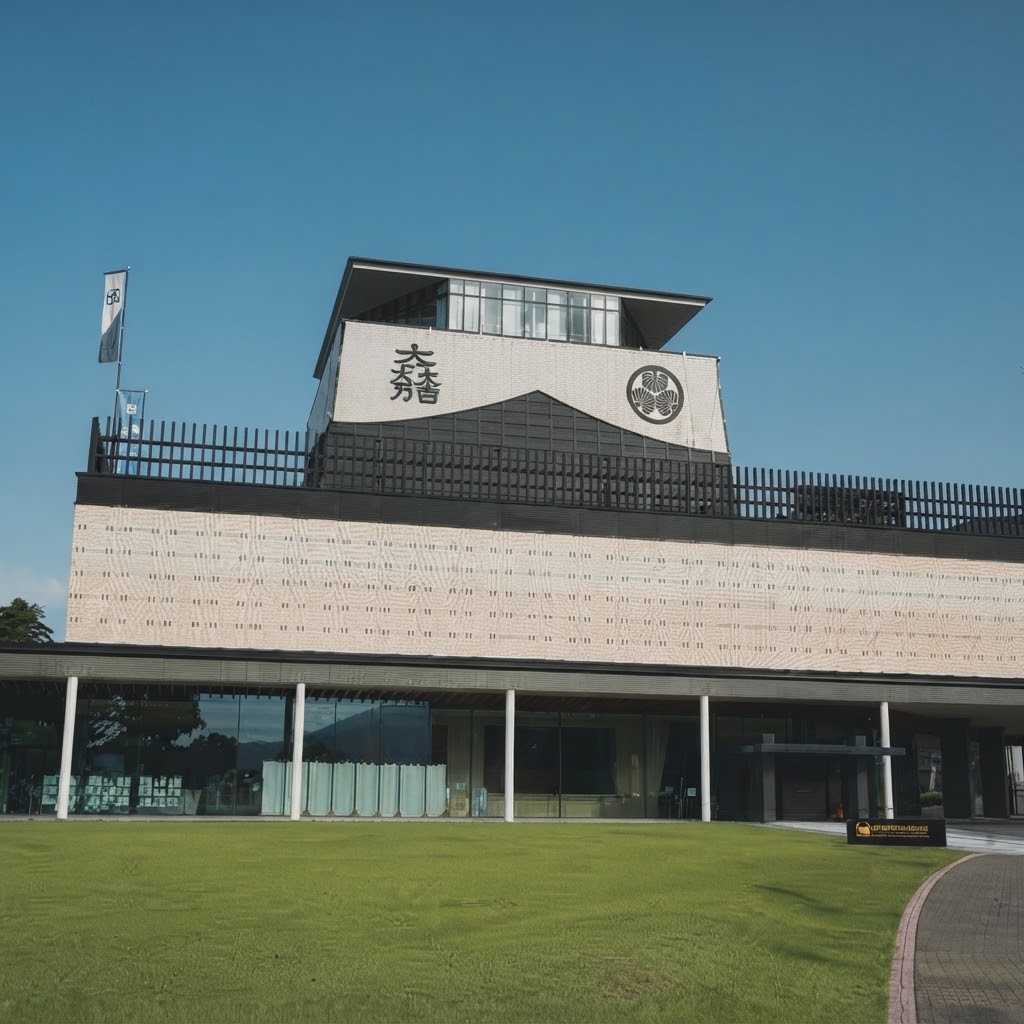
Remembrance at Sekigahara
Sekigahara occupies an outsized place in Japanese historical memory as the battle that effectively decided who would rule the country for the next two and a half centuries, and the modern museum’s exhibits work to convey both the day’s tactical complexity and the human stakes behind commanders like Kobayakawa, whose last-minute defection has made him a byword for opportunism in Japanese popular memory ever since. The stone markers placed at each commander’s historic position keep that memory tied directly to the actual ground where individual units stood, fought, and in Kobayakawa’s case, changed sides.
Visitor Info: Official Gifu Sekigahara Battlefield Memorial Museum (Gifu Prefecture), opened 2020, with English-subtitled film and exhibits
Location: 894-55 Sekigahara, Sekigahara Town, Fuwa District, Gifu Prefecture, Japan (Gifu Sekigahara Battlefield Memorial Museum and commander position markers)
Site Status: National Park / Managed Historic Site
Visitation Notes: The battlefield spans open farmland around modern Sekigahara town, marked by stone monuments at the historic commander positions of Ieyasu, Mitsunari, and other key generals. The Gifu Sekigahara Battlefield Memorial Museum, opened in 2020, anchors the site with English-subtitled exhibits and a rooftop observation deck overlooking the field. Well-marked walking and cycling routes connect the scattered monuments, including a trail tracing Shimazu Yoshihiro’s famous retreat through enemy lines. The site is easily reached on foot from JR Sekigahara Station, making it one of the more visitor-friendly premodern Japanese battlefields.
Google Map
Visitor Comments
Richard B called the new memorial museum impressively modern, highlighting the immersive theater presentation and detailed dioramas that helped make sense of the battle’s complex troop movements, and recommended allowing at least two hours to see everything.
— from TripAdvisor
ajsbxl2015 enjoyed cycling between the scattered battle markers across the surrounding rice fields, noting that most signage included English translations and that the walk to Shimazu’s retreat route marker was a highlight of the visit.
— from TripAdvisor
家庭円満 praised the museum’s rooftop observation deck for offering a clear view over the entire battlefield, making it easy to visualize how the opposing armies were arranged across the valley.
— from TripAdvisor
George Underwood, a travel writer, described Sekigahara as an essential day trip from Nagoya for history enthusiasts, noting the free bicycle rental near the station made covering the widely spread monument sites manageable in a single afternoon.
— from GaijinPot Travel