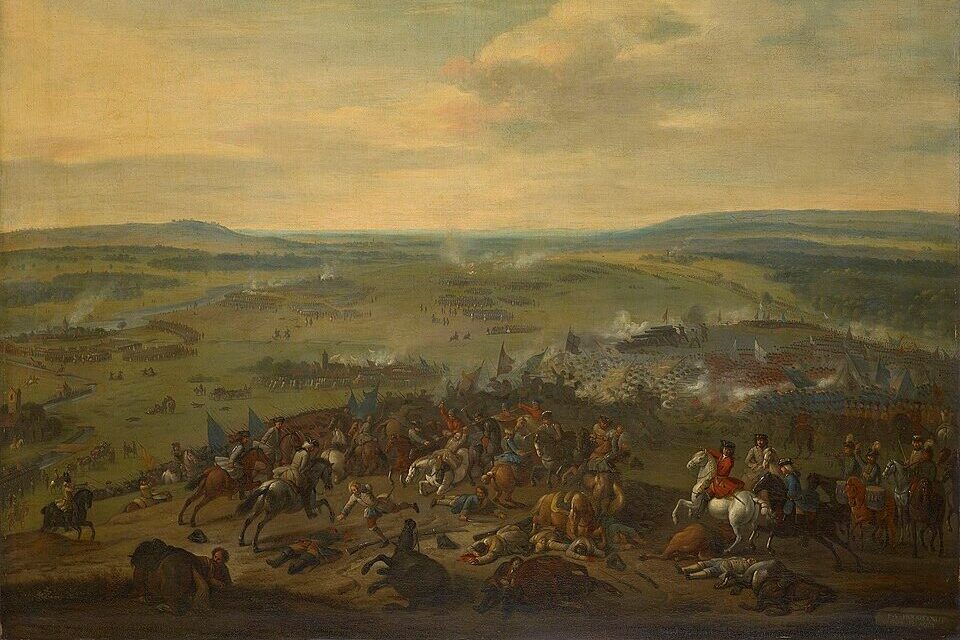
“I have no time to say more, but to beg you will give my duty to the Queen, and let her know Her Army has had a Glorious Victory.” John Churchill, Duke of Marlborough, scrawled those words on the back of a tavern bill in the middle of the battlefield, adding that he held Marshal Tallard and two other French generals prisoner in his own coach. It remains one of the most famous dispatches in British military history, written before the guns had even fully stopped.
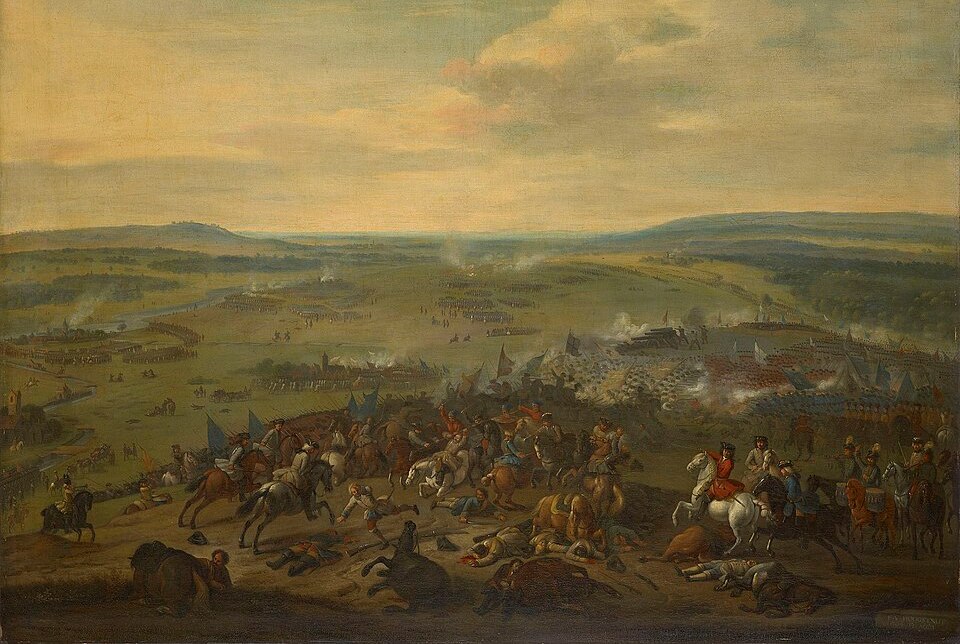
Blenheim: The Road to Battle
By 1704, the War of the Spanish Succession had put nearly all of continental Europe at odds with the ambitions of King Louis XIV of France, and a combined Franco-Bavarian army was threatening to march on Vienna itself, potentially knocking Austria out of the war and shattering the Grand Alliance opposing France. The Duke of Marlborough, commanding the English and Dutch forces in the Netherlands, recognized the danger and undertook one of the boldest strategic gambles of the era: a forced march of his entire army roughly 250 miles south to the Danube, deliberately concealing his true destination from allies and enemies alike to prevent French forces from repositioning to intercept him.
Marlborough’s march took his army through German territory in stages designed to disguise its ultimate purpose, and by the time French commanders realized Vienna itself was not the immediate target but rather a decisive battle on the Danube, Marlborough had already linked up with Imperial forces under Prince Eugene of Savoy, assembling a combined Allied army to confront the Franco-Bavarian force encamped near the villages of Blindheim and Lutzingen. The partnership between Marlborough and Eugene, two commanders from different armies and different chains of command who nonetheless coordinated with unusual trust and speed, would prove decisive to the campaign’s outcome and marked the beginning of one of the most effective military partnerships of the era.
The march itself was a considerable logistical achievement independent of the battle that followed: Marlborough arranged supply depots along the route in advance and kept his army disciplined enough to arrive at the Danube still fit to fight after weeks on the road, at a time when armies routinely lost cohesion and effectiveness over marches of even a fraction of that distance.
The Battle of Blenheim
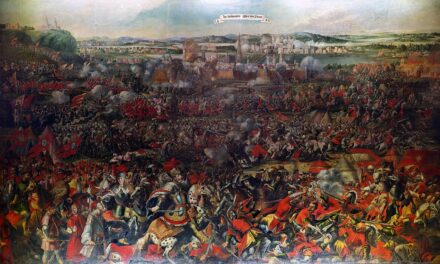
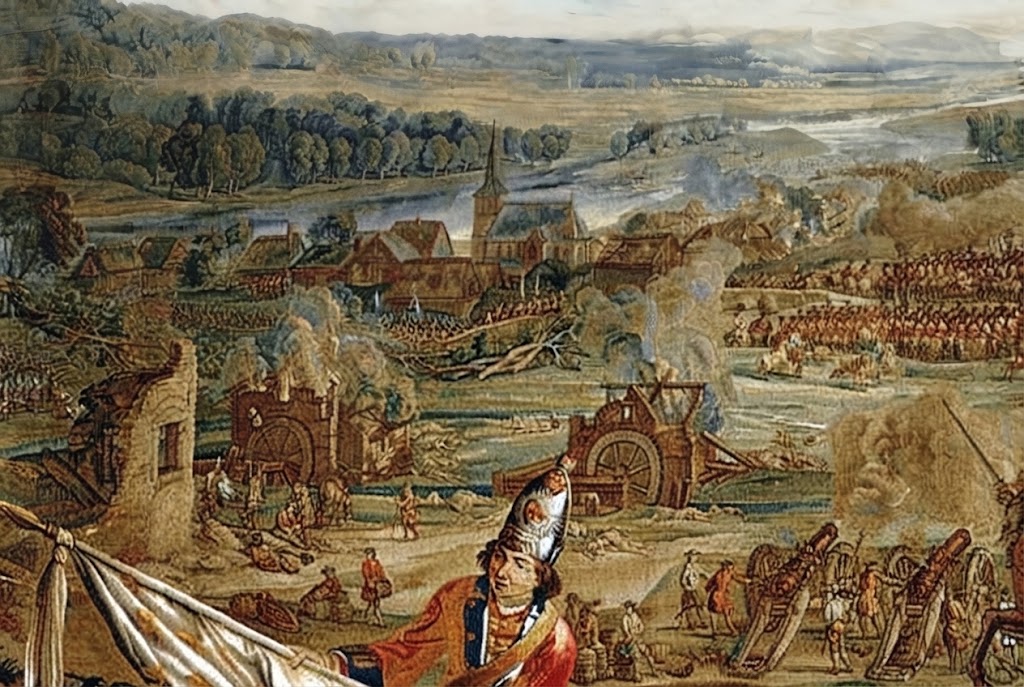
The armies met on August 13, 1704, near the village the English would render as “Blenheim,” with the Franco-Bavarian force under Marshal Tallard anchoring its position on the village itself and the Danube River, while Marlborough and Eugene commanded the Allied wings. Marlborough’s tactical plan hinged on pinning large numbers of French troops inside Blenheim village with a costly diversionary assault, then exploiting the resulting gap in the French center with a massed cavalry breakthrough.
Franco-Bavarian cavalry general Jean-Philippe-Eugene, Comte de Merode-Westerloo, who commanded cavalry in the Bourbon army that day, later described in his extensive memoirs the collapse of the French center once Marlborough’s breakthrough came, and the chaos of the rout that followed as retreating troops were driven into the Danube itself, many drowning in the panic rather than falling to Allied fire. The French garrison trapped inside Blenheim village, cut off from the rest of the army by the collapsing center, was eventually forced to surrender en masse, and it was from this chaotic final phase that Marlborough dashed off his famous note to his wife Sarah. Losses on the Franco-Bavarian side, killed, wounded, and captured combined, reportedly exceeded 25,000 men in a single day, a scale of defeat that effectively ended Louis XIV’s ambitions in Central Europe for years to come.
The Legacy of Blenheim
Blenheim broke the myth of French invincibility that had shaped European diplomacy for a generation, ending the immediate threat to Vienna and shifting the momentum of the War of the Spanish Succession decisively toward the Grand Alliance. For Marlborough personally, the victory secured his reputation as one of the era’s greatest commanders and, quite literally, bought him a palace, while for the thousands of Franco-Bavarian soldiers driven into the Danube that afternoon, the battle’s name would come to stand for one of the most complete defeats of the age.
Visiting Blenheim Today
The open farmland between Blindheim, Hochstadt, and Lutzingen along the Danube where the battle was actually fought remains freely accessible countryside, explorable on foot or by car, with a memorial stone at Lutzingen marking part of the ground. Schloss Hochstadt, a restored Renaissance palace overlooking the town, houses a permanent exhibition on the 1704 battle, including period artifacts and an animated troop-movement display that helps visitors follow the day’s shifting positions.
The site keeps a reduced season running roughly spring through autumn, and admission, hours, and the availability of English-language materials are worth confirming directly with the Bavarian Palace Administration before visiting. One important note for travelers: Blenheim Palace in Woodstock, England, though magnificent and UNESCO-listed as Marlborough’s own reward for the victory, is a separate destination entirely and not the historical battle site itself, a mix-up worth avoiding when planning a visit centered on the battle.
Remembrance at Blenheim
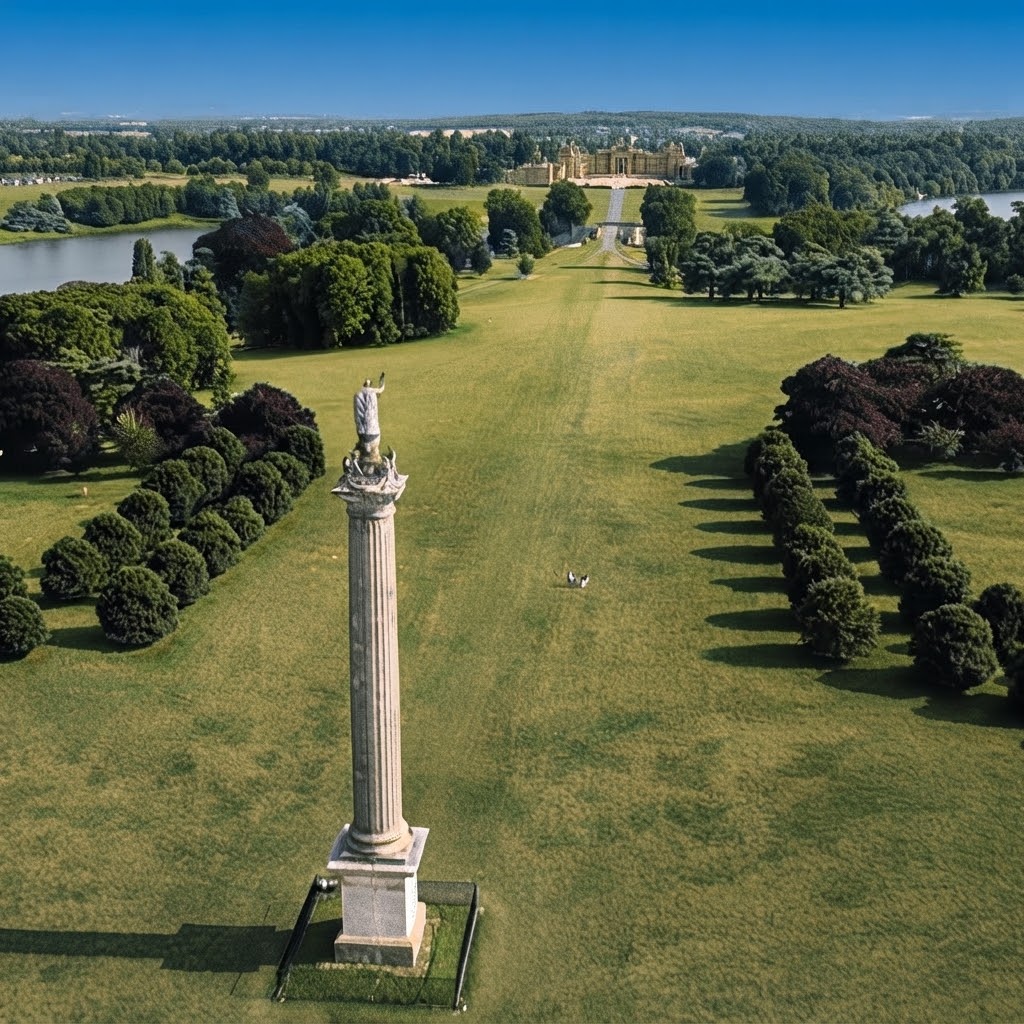
The battle’s name lives on more prominently in England than in Germany, largely because of Blenheim Palace, built at royal expense specifically to honor Marlborough’s victory and named for the battle itself. On the actual battlefield along the Danube, German memory of the engagement is quieter, preserved mainly through the Schloss Hochstadt exhibition and the scattered markers across farmland that give little outward sign today of the scale of what happened there in a single August afternoon.
Visitor Info: Permanent battle exhibition at Schloss Hochstadt (Bavarian Palace Administration); National Army Museum (London) overview
Location: Schloss Hochstadt, Herzogin-Anna-Strasse 52, 89420 Hochstadt an der Donau, Bavaria, Germany (battle exhibition and the Blindheim-Lutzingen battlefield)
Site Status: National Park / Managed Historic Site
Visitation Notes: The Danube-side farmland between Blindheim, Hochstadt, and Lutzingen where the battle was fought remains open countryside that can be freely explored on foot or by car, with a memorial stone at Lutzingen marking the ground. Schloss Hochstadt, a restored Renaissance palace overlooking the town, houses a permanent exhibition on the 1704 battle, including artifacts and an animated troop-movement display. The site has historically kept a reduced spring-through-autumn season, and admission, hours, and English-language materials are best confirmed with the Bavarian Palace Administration before visiting. Travelers hoping for the grand palatial ‘Blenheim’ experience should note that Blenheim Palace in Woodstock, England, though magnificent and UNESCO-listed, is a separate destination and not the historical battle site.
Google Map
Visitor Comments
martinhH5865RD called the castle at Hochstadt stunning, praising the museum’s excellent displays and modern computer simulations that gave a complete understanding of the battle, and recommended the easily accessible drive around the actual battlefield.
— from TripAdvisor
800Bobbo described a large lit table display showing the battle’s strategic troop movements, illustrating Marlborough’s reinforcement strategy and casualties exceeding 25,000 in a single day, with English audio available.
— from TripAdvisor
mjc5677 praised the site’s two permanent collections, including detailed military documentation of the Battle of Blenheim, and recommended it to anyone traveling through the Danube region.
— from TripAdvisor