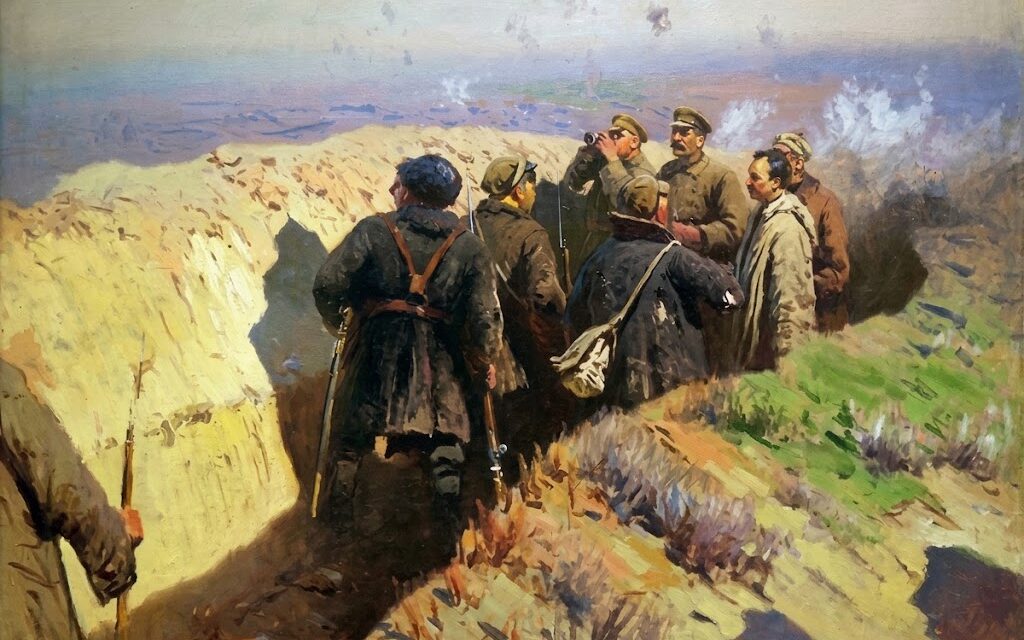
In October 1918, Joseph Stalin gave a matter-of-fact newspaper interview about the fighting at Tsaritsyn, discussing Red Army discipline and enemy strategy without once claiming personal command credit for the city’s defense. Within two decades, Soviet propagandists had transformed that same siege into the founding legend of Stalin’s military genius, casting him as the visionary commander who single-handedly saved the revolution on the Volga, a myth so useful to his later cult of personality that the city itself was renamed Stalingrad in his honor. The gap between what Stalin actually said at the time and what the Soviet state later claimed he did became, in itself, one of the more revealing case studies in how political power reshapes historical memory.
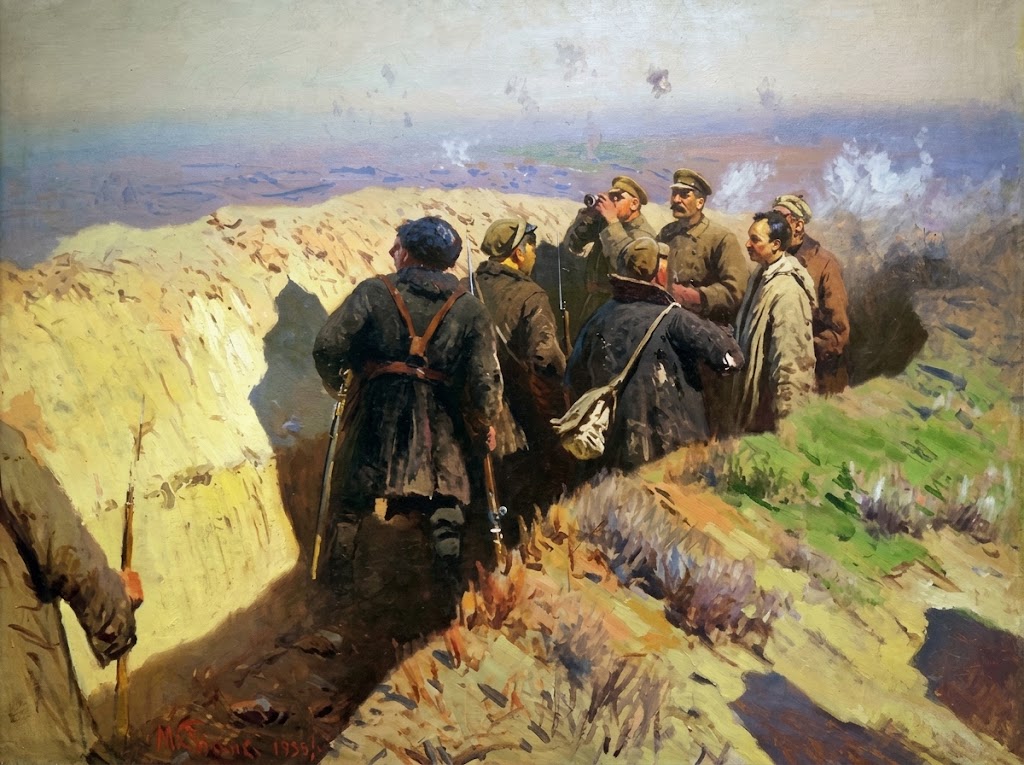
Tsaritsyn: The Road to Battle
By the summer of 1918, Russia’s civil war had settled into a brutal contest between the Bolshevik Red Army and a patchwork of anti-Bolshevik White forces, Cossack armies, and other opponents fighting to control the country’s food supply, transportation networks, and industrial centers. Tsaritsyn, a fortified industrial city on the western bank of the Volga River, held enormous strategic value as a rail and river junction connecting the grain-rich North Caucasus to Bolshevik-controlled central Russia, making its defense essential to feeding Red-held cities and sustaining the wider war effort. Stalin arrived in Tsaritsyn in June 1918 as a Bolshevik Party official tasked with securing grain shipments north to Moscow and Petrograd, a logistical assignment that quickly expanded into broader political and military authority over the city’s defense as White and Cossack forces under Ataman Pyotr Krasnov began pressing toward it, and as the deteriorating military situation gave Stalin justification to assert increasingly direct control over decisions that would normally have fallen to the Red Army’s military specialists rather than a party official sent to manage supply lines.
Stalin’s tenure in Tsaritsyn quickly became defined by sharp conflict with the Red Army’s professional military specialists, former Imperial officers whom Trotsky had recruited to provide expertise the revolutionary movement badly needed, and whom Stalin viewed with open suspicion as potential class enemies regardless of their loyalty to the new government. That conflict escalated dramatically when Stalin ordered the arrest of Andrei Snesarev, a former Imperial Russian Army general serving the Red Army as a respected military specialist, only for Snesarev to be released on Leon Trotsky’s direct order, an early and telling episode in the long rivalry between Stalin and Trotsky that would shape Soviet politics for years afterward. Cossack and White forces under Krasnov launched repeated assaults against Tsaritsyn’s defenses through the summer and autumn of 1918, probing the city’s fortified perimeter and threatening to sever it from the rest of Bolshevik-held territory at multiple points along the encircling front, while Red commanders inside the city struggled to reconcile Stalin’s political authority with the professional military judgment of the specialists Trotsky had sent to organize the defense.
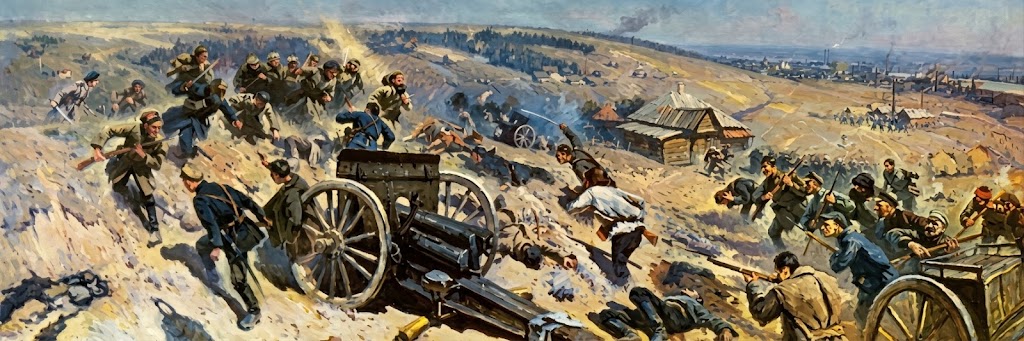
The Battle of Tsaritsyn
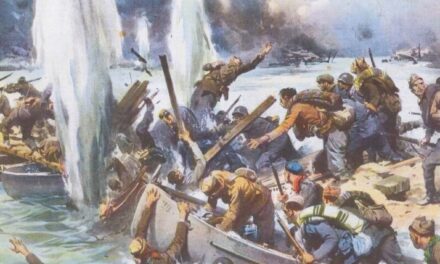
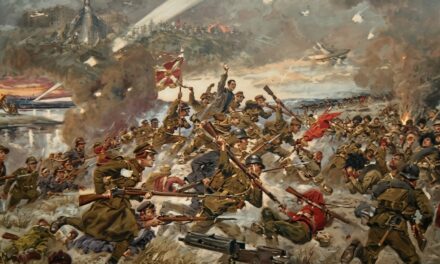
The defense of Tsaritsyn unfolded across a series of assaults rather than a single decisive engagement, with Krasnov’s Cossack forces launching major offensives in August and again in September and October of 1918, each time attempting to breach the city’s outer defensive lines and cut its rail and river connections to the rest of Red-held Russia. Red forces in the city, organized under a Military Council that included Stalin alongside military commanders such as Kliment Voroshilov, relied heavily on hastily mobilized workers, sailors from the Volga flotilla, and armored trains improvised from railway stock to shore up gaps in the defensive perimeter as Cossack cavalry probed for weaknesses along the city’s outer trench lines. The fighting grew especially fierce during the Cossacks’ late-August offensive, when White and Cossack units briefly broke through toward the city’s outskirts, reaching within artillery range of the rail yards and grain elevators that made the city so strategically valuable, before Red reinforcements, artillery batteries repositioned from other sectors, and the timely arrival of additional troops managed to stabilize the line and push the attackers back beyond the outer defenses after several days of intense, often hand-to-hand fighting in the trenches.
Stalin’s own conduct during the siege drew persistent controversy among Bolshevik leaders, particularly his interference in military command decisions best left to trained officers and his willingness to have specialists like Snesarev arrested on suspicion rather than deferring to their professional judgment, friction that repeatedly required Trotsky’s direct intervention from Moscow to resolve and that left the city’s defense hampered at times by internal political rivalry as much as by the Cossack assault itself. Despite the political turbulence within the city’s own command structure, Tsaritsyn’s defenders held the city through each successive Cossack assault, a defensive success that owed as much to the improvisational efforts of ordinary workers, sailors, and Red Army soldiers manning the trenches, often with mismatched equipment and inconsistent supplies, as to any single commander’s strategic direction from within the Military Council. By the close of 1918, Krasnov’s forces had failed in repeated attempts to take the city, a costly and demoralizing setback for the White cause that nonetheless came at a significant toll in casualties and resources for the city’s Red defenders as well, whose losses in the trenches and along the river approaches were rarely tallied with the same care as the political credit later claimed for the victory.
The fighting around Tsaritsyn would continue intermittently into 1919, with renewed White pressure under different commanders threatening the city again before Red forces ultimately secured the wider region later that year, but it was the dramatic 1918 defense, and Stalin’s presence during it, that later Soviet historiography would seize upon and inflate into a foundational chapter of his revolutionary legend, stripped of the command disputes and improvised chaos that actually characterized the siege.
The Legacy of Tsaritsyn
The successful defense of Tsaritsyn helped preserve a critical Bolshevik supply line during the civil war’s most precarious early phase, but its lasting historical significance lies chiefly in what Soviet propaganda later made of it. Decades afterward, the state-sponsored myth of Stalin as Tsaritsyn’s singular military savior became a cornerstone of his cult of personality, and the city was renamed Stalingrad in 1925 in tribute to that constructed legend, a name it would carry through its far more famous ordeal in the Second World War. The dispute between Stalin and the Red Army’s professional officer corps at Tsaritsyn also foreshadowed the deep distrust of military expertise that would resurface catastrophically in Stalin’s purges of the officer corps two decades later, when thousands of experienced commanders were arrested or executed on suspicions echoing the same instincts Stalin had first acted on against Snesarev in 1918. In that sense, the siege’s most enduring legacy may be less about the military outcome on the Volga than about the pattern of political control over the armed forces that Stalin refined there and carried with him for the rest of his career.
Tsaritsyn: A Site Off-Limits
Tsaritsyn itself no longer exists under that name, having been renamed Stalingrad in 1925 and then Volgograd in 1961, and the modern city that occupies the site was almost entirely rebuilt after suffering catastrophic destruction in the 1942–43 Battle of Stalingrad. Volgograd’s globally recognized memorial landscape, including the towering Mamayev Kurgan monument complex and the Battle of Stalingrad Panorama Museum, is overwhelmingly dedicated to that later World War II battle rather than to the 1918 Civil War fighting described here, and visitors should take care not to conflate the two very different conflicts separated by nearly a quarter century.
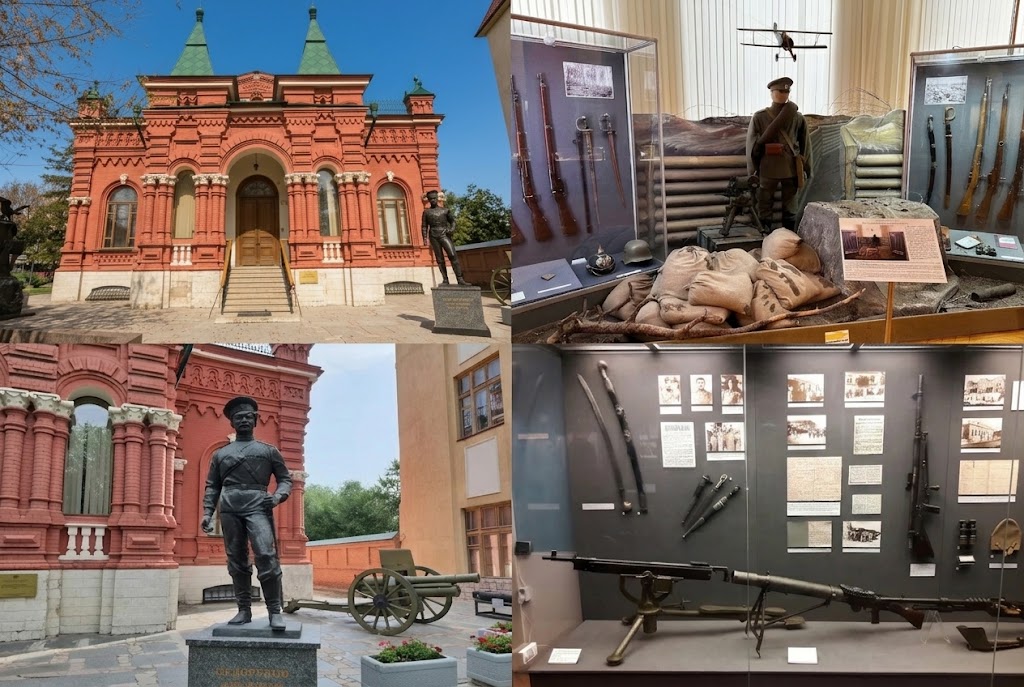
A dedicated resource for the earlier fighting does exist in the Volgograd Memorial Historical Museum, originally founded in 1937 as the Museum of the Defence of Tsaritsyn, which today presents both Red and White perspectives on the 1918-19 civil war campaign. The site’s layered history, an obscure 1918 civil war siege buried underneath a renamed city and a far larger World War II memorial landscape, makes it a useful reminder that not every historically significant battlefield remains accessible or even clearly marked for present-day visitors, and that a place’s political symbolism can outlast and obscure its original historical event by decades.
Remembrance of Tsaritsyn
Joseph Stalin himself gave a contemporary account of the fighting in a Pravda interview titled “The South of Russia,” published on October 30, 1918, a source notable for discussing Red Army discipline and enemy strategy in sober, procedural terms without claiming the personal command credit that later Soviet mythology would attribute to him. Andrei Snesarev, the former Imperial Russian Army general who served the Red Army as a military specialist during the siege, left a different kind of historical trace, his arrest on Stalin’s orders and subsequent release by Trotsky documented in later academic scholarship examining the strategic and political tensions of the campaign. Taken together, these two accounts, Stalin’s own restrained contemporary description of the fighting and the historical record of his conflict with a professional military specialist under his authority, offer a more grounded picture of Tsaritsyn than the heroic myth later constructed around it, one in which political suspicion and improvised defense mattered as much as any single commander’s genius, and one that later Soviet censors and propagandists worked hard to obscure once Stalin’s cult of personality required a simpler, more flattering story of the siege.
Further Exploration: Book titled “Stalin: Paradoxes of Power, 1878-1928” by Stephen Kotkin (Penguin Press, 2014)
Location: Volgograd (historic Tsaritsyn), Volga River, Russia — Volgograd Memorial Historical Museum, 10 Ulitsa Gogola, Volgograd
Site Status: Access Restricted or Unsafe
Visitation Notes: Tsaritsyn is now Volgograd, a large modern Russian city almost entirely rebuilt after WWII. Its globally famous memorial landscape (Mamayev Kurgan, the Battle of Stalingrad Panorama Museum) is overwhelmingly about the 1942–43 WWII battle, not this 1918 Civil War fighting — the two should not be conflated. A genuine dedicated substitute exists for the 1918 material: the Volgograd Memorial Historical Museum, originally founded in 1937 as the Museum of the Defence of Tsaritsyn, which now presents both Red and White perspectives on the 1918–19 fighting. As of late 2025, the U.S. State Department maintains a Level 4 “Do Not Travel” advisory for Russia and the UK FCDO advises against all travel there, so this is not currently a realistic destination for Western visitors; content here is framed as historical and educational rather than as a near-term travel itinerary.
Google Map
Visitor Comments
Antonius described the museum as housed in a 1903 mansion built in the Russian style, with exhibits covering the First World War and the Civil War, the defense of Tsaritsyn, and the history of the Cossacks.
— from Google Reviews
Svetlana Skorikova called it a very interesting museum with objects and documents dating from 1915 to 1920, mostly relating to World War I, and said she’d recommend it to anyone even if they never studied much history.
— from Google Reviews