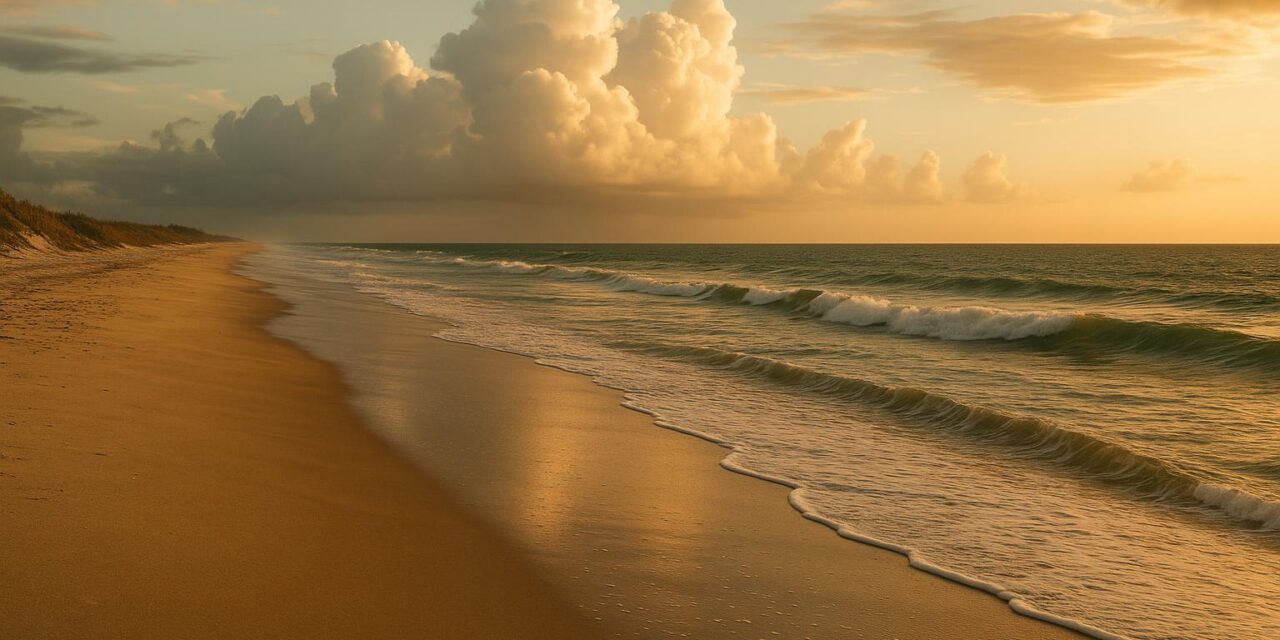
The sand here gives up silver after every big storm, the way it has for three hundred years, tumbling loose from wherever the waves last disturbed it. Locals know to walk this beach after a squall, not before, because the ocean does the digging on its own schedule. Three centuries on, the Atlantic is still finishing the job that one hurricane started in a single violent night. No single expedition has ever fully closed the books on what that storm scattered across these miles of coast.
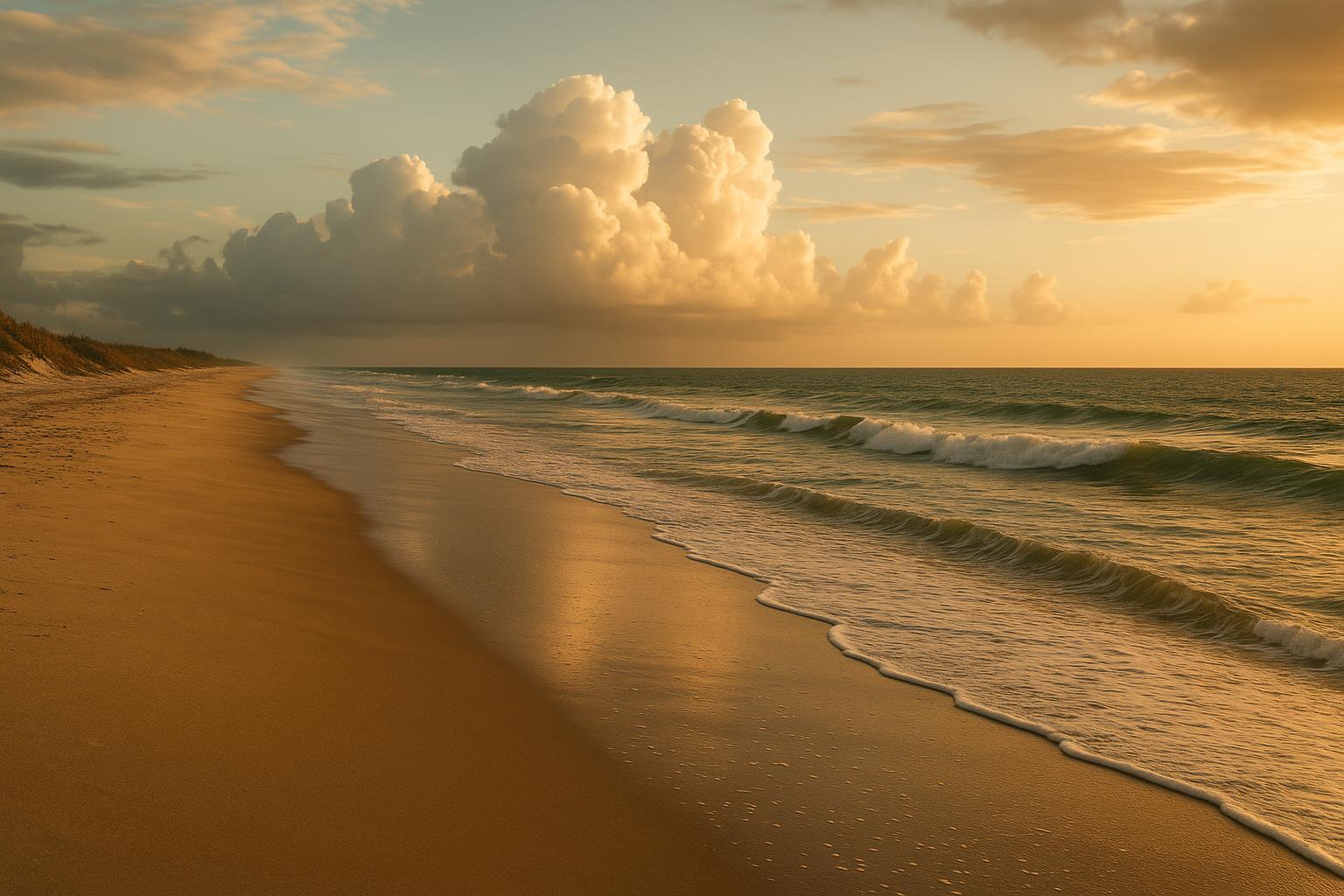
Florida’s Treasure Coast: The 1715 Fleet Wrecks
The stretch of Atlantic shoreline running from Melbourne to Fort Pierce, Florida, earned its nickname from a single catastrophic event: a hurricane in 1715 that sank eleven Spanish treasure ships along this coast in one violent night. That fleet had been carrying wealth back across the Atlantic, and when the storm broke it apart, it scattered ships and cargo across miles of Florida coastline, creating what would eventually be called the Treasure Coast. A hurricane strong enough to destroy eleven ships in a single night represents a catastrophic failure of an entire fleet’s passage at once, rather than the loss of a single vessel caught alone in bad weather. That scale of destruction is part of why the disaster left such a lasting mark on this particular stretch of Florida coastline, and why the region’s very name still carries the memory of it three centuries later.
Eleven ships lost in a single storm is an extraordinary concentration of shipwrecks in one place, and that concentration is exactly what makes this stretch of Florida coastline so significant to treasure hunting and maritime archaeology alike. Rather than a single wreck with a single story, the 1715 Fleet represents an entire disaster spread across a wide area, with material still surfacing on beaches and just offshore centuries later as storms and shifting sand continue to disturb the wreck sites. Most shipwreck stories in this hobby center on a single vessel, a single cargo manifest, a single moment of loss. The 1715 Fleet is different by an order of magnitude: eleven separate ships, each with its own cargo and its own debris field, all destroyed within the same handful of hours by the same storm.
The scale of the 1715 Fleet’s loss also shaped how the region developed a lasting identity around it. Unlike a wreck whose location remains uncertain or contested, the general location of the fleet’s destruction has long been known, documented in the historical record of the disaster itself. What has taken far longer to fully resolve is exactly what survives where, since a fleet-wide loss scattered across miles of coastline does not behave like a single, contained wreck site. That distinction, a known general location but an unresolved fine-grained picture of what lies where, is part of why recovery along this coast has stretched across generations rather than concluding with a single expedition. A single-vessel wreck can, in principle, be fully surveyed, recovered, and closed out. A fleet-wide disaster spread across miles of shifting Florida coastline resists that kind of tidy conclusion almost by definition.

Centuries of Recovery Along the Treasure Coast
Recovery efforts along the Treasure Coast have unfolded over generations, aided considerably by the fact that storms continue to expose new material from the 1715 Fleet even now, three hundred years after the ships went down. Modern recovery work has been documented as recently as recovered silver coins reported found along these wrecks, evidence that the fleet’s cargo has not been fully accounted for even after centuries of search and salvage. That pattern, storms uncovering material that has sat undisturbed for decades or centuries, means the Treasure Coast has never fully closed as an active recovery site the way many single-vessel wrecks eventually do once their cargo is accounted for.
That ongoing recovery does not happen without a legal structure behind it. Florida regulates historic shipwreck recovery on state-owned submerged lands through the Florida Administrative Code, specifically Chapter 1A-31, which the state’s Division of Historical Resources uses to issue exploration and recovery permits. Under that framework, permitted salvors typically keep about eighty percent of what they recover, while the state retains roughly twenty percent, a split formalized through actual contracts, including agreements associated with the 1715 Fleet-Queens Jewels, LLC recovery operation. That eighty-twenty split is a specific, documented arrangement rather than a vague policy, meaning anyone operating under one of these permits knows precisely how recovered material will be divided before they ever begin searching.
That permitting system exists because unpermitted removal of material from Florida’s state-owned submerged lands is prohibited. The 1715 Fleet’s material significance, and the ongoing recovery of new coins and artifacts even in recent years, is exactly why Florida maintains this kind of formal oversight rather than leaving a resource of this scale unregulated. The split between salvor and state reflects a deliberate policy choice: allowing continued recovery of historically and financially significant material while ensuring the state retains a documented share and a role in overseeing how the sites are worked. Formal contracts, like the arrangement associated with the 1715 Fleet-Queens Jewels, LLC operation, give both the state and the permitted salvor a clear, documented stake in what continues to be recovered along this coastline, which matters enormously given how much material has already surfaced and how much likely remains.
Accessing the 1715 Fleet Wrecks Today
Searching or recovering material from the 1715 Fleet wreck sites today requires a state-issued exploration or recovery permit under Florida Administrative Code Chapter 1A-31. This is not open beachcombing territory in the sense of casual, unregulated searching; anyone conducting organized recovery work on these state-owned submerged lands needs formal authorization, and the resulting split of recovered material, roughly eighty percent to the permitted salvor and twenty percent to the state, is set by that same regulatory framework. That said, this is a permit-based system rather than an outright prohibition, meaning organized, authorized recovery genuinely continues along this coast under the right conditions, distinct from sites where any recovery at all is closed off entirely. For a prospector or treasure hunter genuinely interested in this coastline, that permit process is the actual path forward, not an obstacle standing between them and the sand.
For anyone interested in the Treasure Coast specifically because of its ongoing yield, that reality is worth understanding clearly: the wrecks continue to surface material because storms keep disturbing centuries-old wreckage across a wide area, not because the sites are informally open to anyone with a metal detector and a free weekend. Organized, permitted recovery is what has allowed this material to keep surfacing under lawful conditions. The distinction matters: interest in the Treasure Coast’s ongoing yield should translate into interest in how permitted recovery actually works here, not an assumption that three centuries of storms have left the coastline as informal, unregulated searching ground.
The Legacy of the 1715 Fleet
The 1715 Fleet stands as one of the most significant maritime disasters in the history of Spanish treasure shipping, and its legacy along Florida’s Treasure Coast is unusual in how directly it continues into the present: this is not a story confined entirely to the past, since storms and permitted recovery efforts keep bringing new material to light centuries later. For the treasure-hunting and salvage community, the Treasure Coast represents a rare case where an entire region’s identity has been shaped by a single historical catastrophe, and where the formal permitting system governing recovery reflects just how much material remains genuinely at stake along these Florida beaches. Few sites in this hobby offer such a direct, ongoing link between a specific historical disaster and material still being lawfully recovered today, three hundred years after the storm that caused it.
Story Source: www.cbsnews.com
Location: Atlantic beaches, Melbourne to Fort Pierce, FL
Site Status: Permission or permit required
Legal Conditions: This is a new Tier 2 finding: under Florida Administrative Code Chapter 1A-31, the Division of Historical Resources issues exploration/recovery permits for historic shipwrecks on state-owned submerged lands and typically retains about 20% of recovered material, with 80% going to the permitted salvor (Verified confidence, e.g. the 1715 Fleet-Queens Jewels, LLC contract). Unpermitted removal from state submerged lands is prohibited.
Hazards: This stretch of Florida’s Atlantic coast carries strong rip currents and rough surf, particularly right after the storms that expose new material — exactly when beachcombers are likeliest to be out searching. Check local rip current forecasts before searching post-storm. Sun and heat exposure are a factor during extended beach searching. Diving or excavating the state-owned submerged lands offshore without the permit described in column V is a legal violation, separate from the beach’s physical hazards.
Google Map
Firsthand Accounts
Local resident Kip Wagner found a piece of eight on the beach after a hurricane in the late 1950s and traced it to the wrecked fleet, eventually incorporating the Real Eight Company with seven partners in 1961 to salvage the site.
Real Eight Company member Dr. Kip Kelso traveled to the Library of Congress in the summer of 1959 and located a copy of the Romans manuscript map marking where “the Admiral, commanding the Plate Fleet 1715” and 14 other ships were lost.
From 1964 to 1968, the Real Eight Company conducted intensive recovery at the wreck of the Nuestra Senora de la Regla near Sebastian Inlet, bringing up thousands of silver pieces of eight, per the company’s own documented operations history.
On July 31, 2015, the exact 300th anniversary of the sinking, salvor Brent Brisben and his 1715 Fleet-Queens Jewels, LLC crew recovered 300 gold coins including 7 Royals off Vero Beach, adding 50 more coins within the following week.
Mel Fisher joined Kip Wagner’s team on a 50-50 basis in 1962; after 360 days without a find, his own invention — a prop-wash “mailbox” device — uncovered over a thousand gold coins, launching his treasure-hunting career seven years before he began the Atocha search.