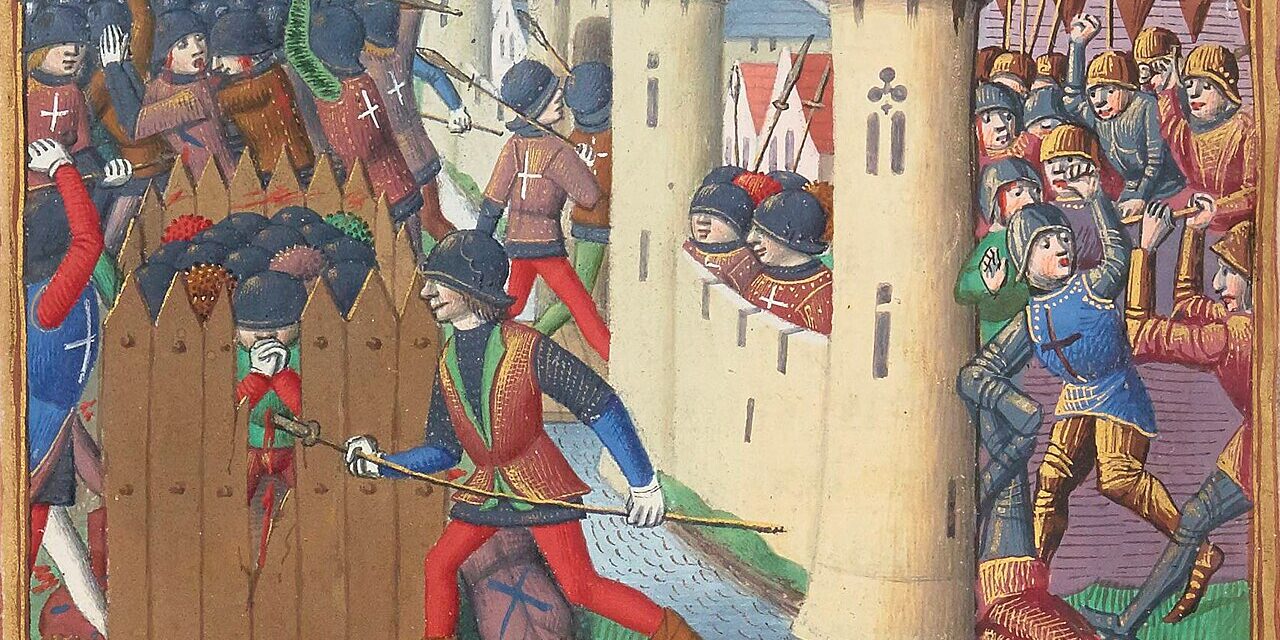
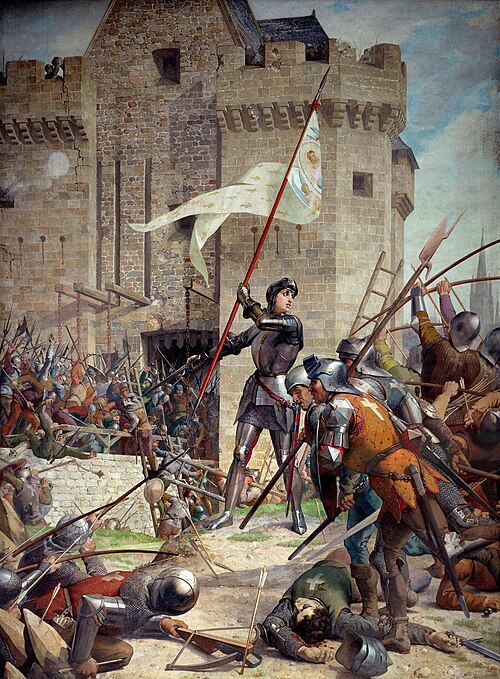
An arrow struck Joan of Arc between the neck and shoulder during the assault on the Tourelles fortress, and for a moment the seventeen-year-old peasant girl who had convinced a starving city and a desperate dauphin that God had sent her to save France was carried from the field bleeding. She did not stay away. Joan returned to the fighting before the day was over, rallied the faltering French troops with her banner raised, and watched the fortress fall to them that same evening. The English abandoned the siege of Orléans the very next day, and the war that had ground on for nearly a century tilted, almost overnight, toward France.
Orléans: The Road to Battle
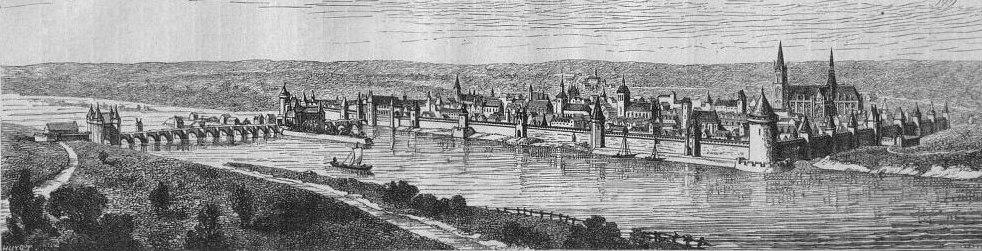
By the autumn of 1428, English forces besieging the city of Orléans under the command of Thomas Montagu, 4th Earl of Salisbury, had constructed a network of fortified positions ringing the city, including the formidable Tourelles fortress guarding the southern approach across the Loire River, part of a broader English strategy aimed at conquering the remaining unoccupied portions of France following decades of intermittent warfare. On October 27, 1428, while personally supervising siege operations from a tower near the Tourelles, Salisbury was struck by stone splinters when an English cannonball unexpectedly hit the structure he was observing from, and he died of his wounds days later, an ironic and consequential loss that removed the siege’s original driving commander months before its most famous chapter had even begun. Jean de Dunois, known to history as the Bastard of Orléans, organized the city’s defense in the months that followed Salisbury’s death, coordinating a resilient resistance that kept Orléans from falling even as English siege works tightened around the city and French relief efforts repeatedly failed to break through.
The broader French cause, meanwhile, remained in a precarious state under the uncrowned Dauphin Charles, whose claim to the French throne was contested and whose military position had been steadily deteriorating in the face of continued English and Burgundian pressure across much of northern France. Into this desperate situation arrived Joan of Arc, a seventeen-year-old peasant girl from Domrémy who claimed to have received divine visions instructing her to help the Dauphin reclaim his kingdom, and who had somehow convinced Charles’s court, after considerable skepticism and examination, to grant her a small military role and a place at the front of the relief effort. Joan entered Orléans on April 29, 1429, to a reception that Jean de Dunois himself helped arrange, her arrival immediately lifting the morale of a garrison and civilian population that had endured months of grinding siege with dwindling hope of relief.
The Siege of Orléans
In the days following her arrival, Joan of Arc pressed for aggressive action against the English siege works rather than continued passive defense, a stance that put her at odds with some of the city’s more cautious military commanders but that increasingly won support as her presence galvanized both soldiers and civilians alike. On May 4, French forces under Dunois and other commanders, with Joan present and visibly inspiring the troops, successfully assaulted and captured the fortified position known as Saint Loup, an early success that demonstrated the shifting momentum favoring the besieged French garrison. Further French attacks in the following days targeted other English fortifications ringing the city, with Joan consistently positioning herself at the front of the fighting rather than remaining in a purely symbolic or ceremonial role, a choice that exposed her to genuine danger but that also reinforced her growing reputation among the soldiers as something more than an ordinary battlefield figurehead.
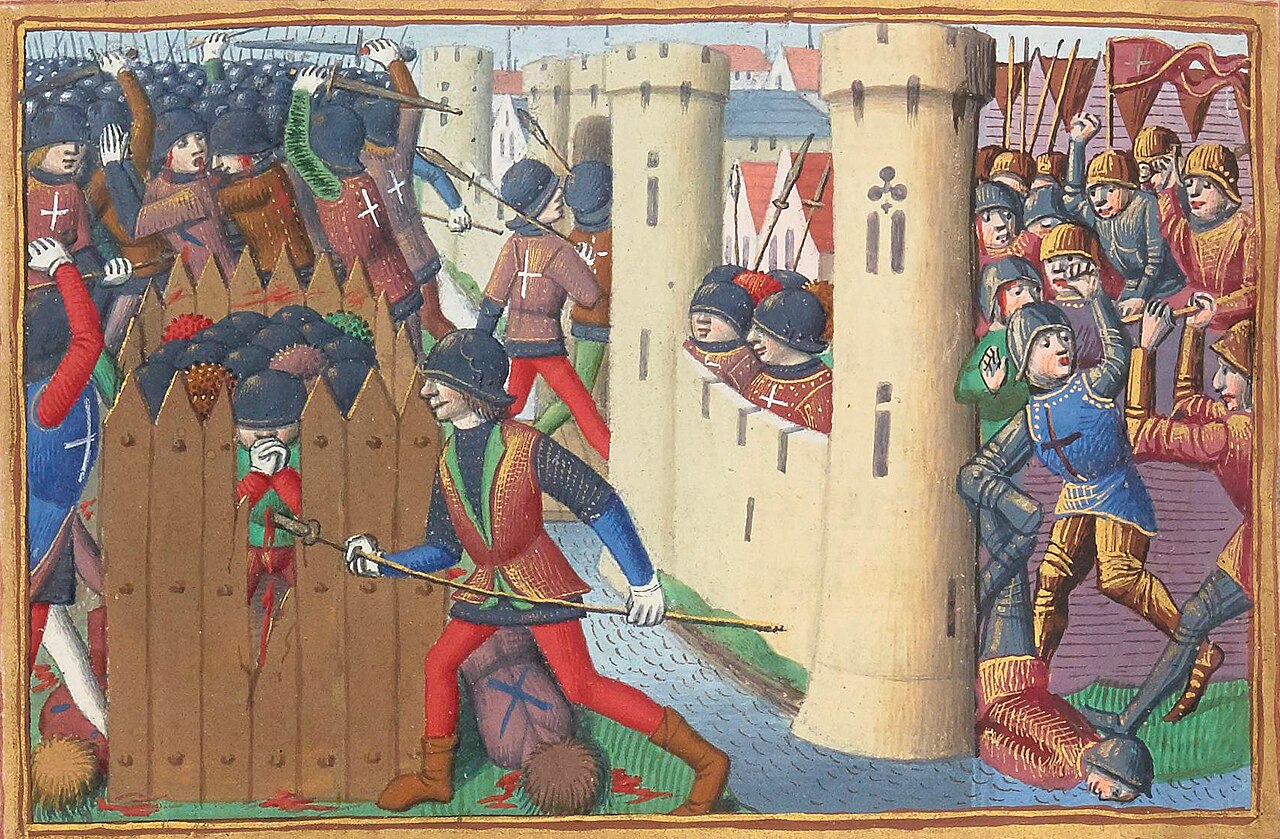
The decisive assault came on May 7 against the Tourelles fortress itself, the most heavily fortified English position and the key to controlling the southern crossing of the Loire, where French forces launched a determined attack against defenses that English commanders had spent months reinforcing. During this assault, Joan was struck by an arrow between her neck and shoulder, a wound serious enough that she was carried from the immediate fighting and, according to multiple accounts, wept from the pain even as she insisted the wound was not mortal. Rather than withdrawing from the battle entirely, Joan had the arrow removed and returned to the fighting before the day’s assault had concluded, raising her banner once more at the front of the French forces in a moment that participants and later chroniclers alike credited with rallying flagging French momentum at a critical juncture in the attack.
The Tourelles fell to the French that same evening, a major and highly symbolic victory that broke the back of the English siege’s southern defenses and demonstrated conclusively that the momentum of the nearly seven-month siege had shifted decisively in France’s favor. The following day, English commanders, recognizing that their remaining positions around Orléans were no longer tenable following the loss of the Tourelles and the collapse of morale among their own troops, made the consequential decision to abandon the siege entirely and withdraw their forces from the area around the city. The lifting of the siege after nearly seven months of grinding conflict represented an enormous psychological and strategic victory for the French cause, ending immediate fears that Orléans, one of the last major obstacles protecting the unoccupied French heartland, might fall to English control. Joan’s role in the siege’s final, decisive days, her insistence on aggressive action, her presence at the front of the fighting, and her dramatic return to battle after being wounded, transformed her almost overnight from an unproven and widely doubted figure at Charles’s court into a genuine national symbol of French resistance and divine favor. News of the English withdrawal spread quickly beyond Orléans itself, carrying with it the striking image of a wounded peasant girl who had refused to leave the field, and that image did as much to shift French and English perceptions of the war’s momentum as the tactical details of the siege’s final days ever could.
The Legacy of Orléans
The lifting of the siege of Orléans marked the true turning point of the Hundred Years’ War, reversing a long period of English military dominance and setting in motion a series of French victories that would eventually lead to Charles’s coronation and the gradual expulsion of English forces from French territory over subsequent decades. Joan of Arc’s role at Orléans established her as an indispensable figure in the French war effort and a powerful symbol of national identity, a reputation that would carry her through further military campaigns even as her ultimate fate, capture and execution, lay only two years in the future. The siege’s dramatic reversal, following Salisbury’s freakish death and Joan’s equally dramatic wounding and return to battle, has made Orléans one of the most frequently retold and mythologized episodes of the entire medieval period. Jean de Dunois, who had defended the city for months before Joan’s arrival and fought alongside her throughout the relief effort, went on to become one of her most steadfast supporters and defenders of her memory in the years following her later capture and execution, a loyalty that speaks to how thoroughly her conduct at Orléans won over even the seasoned commanders who might otherwise have viewed an unproven peasant girl with skepticism.
Visiting Orléans Today
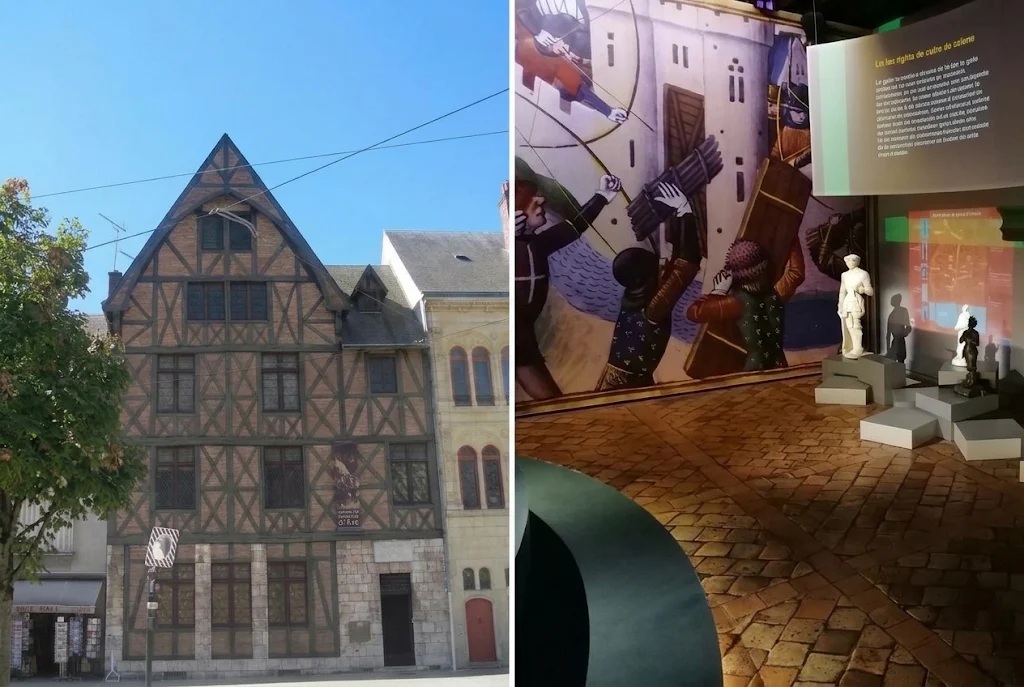
Orléans today is a thriving, fully modern French city, and none of the siege-era fortifications, including the Tourelles bridge tower where Joan was wounded and the siege’s decisive final battle took place, have survived into the present day. Visitors can instead explore the Maison de Jeanne d’Arc, a museum built as a 1960s reconstruction on the site of the medieval house where Joan reportedly stayed during the siege, since the original structure was destroyed during fighting in 1940; the museum offers a short film and small exhibits covering her time in the city. At Place du Martroi, a striking bronze equestrian statue of Joan of Arc stands at the center of a grand open square surrounded by elegant townhouses and cafes, serving as the city’s most visible and photographed tribute to the young woman who helped save it.
The Cathédrale Sainte-Croix, where Joan reportedly gave thanks after the siege was successfully lifted, remains an active and visitable place of worship that adds a further layer of historical connection for visitors tracing her time in the city. Every May, Orléans holds the multi-day Fêtes de Jeanne d’Arc, featuring processions, a medieval market, and a sound-and-light show that together mark the anniversary of the siege’s end, giving visitors who time their trip accordingly a far more immersive way to engage with the city’s history than the permanent sites alone provide. Because so little of the medieval city survives physically, a visit to Orléans today is as much about tracing the layered memory and commemoration of the siege across the centuries as it is about standing on any single preserved battlefield location.
Remembrance of Orléans
Contemporary and near-contemporary chronicles documenting Joan of Arc’s arrival, her wounding at the Tourelles, and her role in the siege’s dramatic final days remain central to how historians reconstruct the events of May 1429, even as certain details, including the precise nature of her wound and its immediate aftermath, are recorded with variations across different accounts. The Maison de Jeanne d’Arc and the equestrian statue at Place du Martroi together anchor the modern city’s relationship with its most famous historical episode, ensuring that Joan’s role in lifting the siege remains vividly present in Orléans’s civic identity despite the complete disappearance of the physical battlefield itself. The annual Fêtes de Jeanne d’Arc, drawing crowds each May to commemorate the anniversary of the liberation, demonstrates how thoroughly the memory of a nine-day military turning point nearly six centuries ago continues to shape the identity and public life of the modern city that grew up around it.
Further Exploration: Book titled “Joan of Arc: A History” by Helen Castor (Faber & Faber, 2014)
Location: Maison de Jeanne d’Arc, 3 Place du Général de Gaulle, 45000 Orléans, France (the original medieval house was destroyed in 1940; this is a 1960s reconstruction on the same site)
Site Status: Built Over / Urbanized
Visitation Notes: Orléans is a living modern city, and none of the siege-era fortifications or the Tourelles bridge tower survive. Visitors can see the Maison de Jeanne d’Arc museum (a 1960s reconstruction on the site of the house destroyed in 1940, with a short film and small exhibits), the striking bronze equestrian statue of Joan of Arc at Place du Martroi, and the Cathédrale Sainte-Croix, where Joan reportedly gave thanks after the siege was lifted. Every May, the city holds the Fêtes de Jeanne d’Arc, a multi-day festival with processions, a medieval market, and a sound-and-light show marking the anniversary of the liberation.
Google Map
Visitor Comments
Roseline D calls it a “very good and interesting story of Orleans and Joan of Arc well told.”
— from TripAdvisor
djmmyv found it a “disappointing attraction” with limited capacity — visitors watch a low-tech animated film about Joan of Arc’s life for about 10 minutes before being guided back out.
— from TripAdvisor
Stéphanie A was underwhelmed, noting it’s “only a room where a 17-minute film is broadcast,” and in unsubtitled English at that.
— from TripAdvisor
Marianne A points out it’s a 1960s reconstruction offering a short film and a small documentary collection about Joan of Arc.
— from TripAdvisor