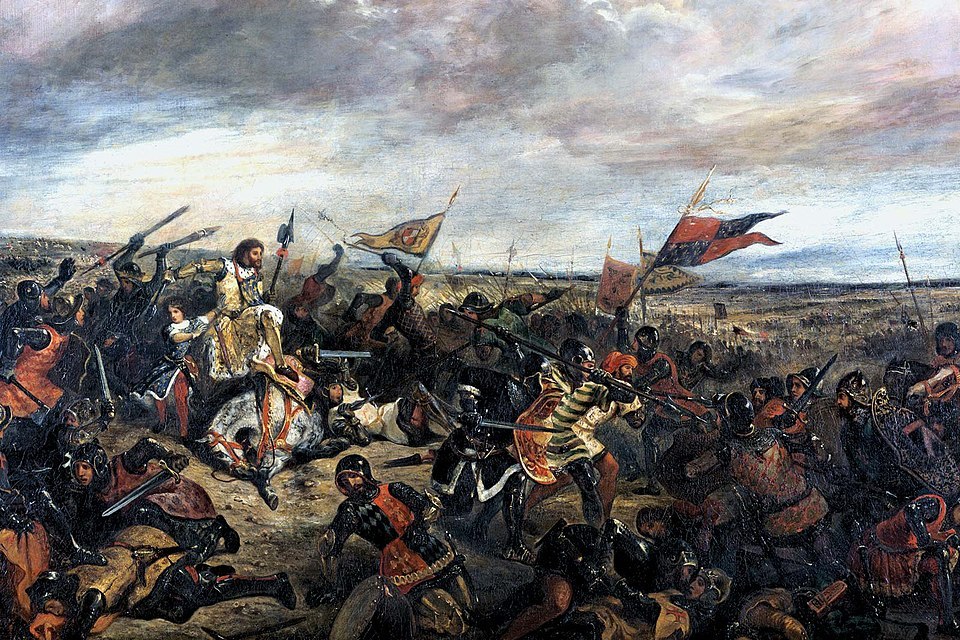
By the end of the fighting at Poitiers, so many men had claimed to have personally captured the King of France that historians still cannot say for certain whose hands actually took John II prisoner. What is certain is that a French king, fighting on foot after his cavalry attacks had failed around him, was surrounded and taken alive on English soil, an outcome so valuable and so unprecedented that it would reshape the course of the Hundred Years’ War for a generation. Tradition credits a French knight who had switched sides to serve England with formally receiving the surrender, but even that detail remains disputed among the chroniclers who tried to sort out the chaos of that September afternoon.
Poitiers: The Road to Battle
By 1356, a decade after his father Edward III’s stunning victory at Crécy, Edward, the Black Prince, was leading an English and Gascon raiding force deep into French territory from the south, part of the ongoing chevauchée strategy of destructive raids intended to weaken French royal authority and finances rather than seize and hold territory outright. King John II of France, determined to catch and destroy this raiding army before it could return safely to English-held Gascony, assembled a substantial French force and pursued the Black Prince’s smaller army, eventually cornering it near Nouaillé-Maupertuis, not far from the city of Poitiers, where the English found themselves considerably outnumbered and forced to make a stand rather than continue retreating.
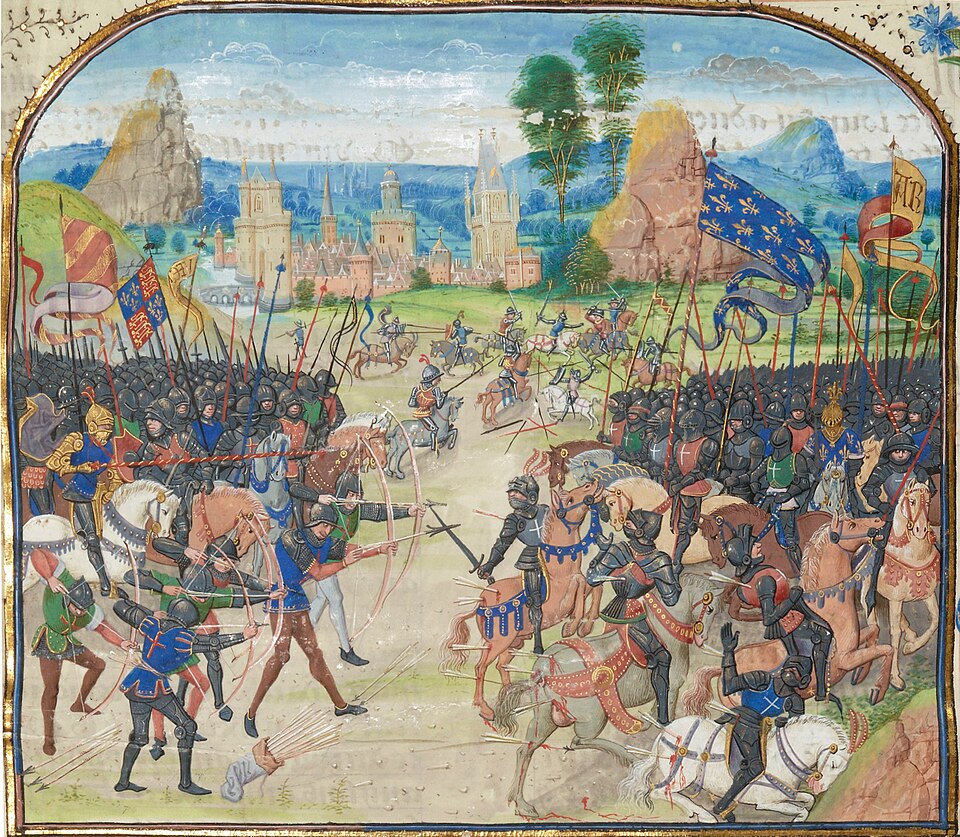
The Black Prince, drawing on the tactical lessons of Crécy, selected a strong defensive position on a wooded hillside, using hedgerows, vineyard terraces, and marshy, broken ground to disrupt the momentum of any French cavalry charge and to funnel attackers into narrow, disadvantageous approaches. English and Gascon longbowmen took up positions behind the hedgerows and among the terraces, prepared once again to pour arrows into attacking French knights and men-at-arms much as their predecessors had done a decade earlier at Crécy. King John, for his part, organized his substantially larger French army into several divisions intended to attack in successive waves, a plan that reflected confidence in his numerical superiority but that would prove poorly suited to the broken, hedge-choked terrain the Black Prince had chosen for the engagement. As negotiations between the two sides broke down on the day before the battle, with a papal legate’s attempts at mediation failing to produce a truce, both commanders understood that a major engagement, with the French holding an overwhelming numerical advantage, was now unavoidable.
The Battle of Poitiers
The battle began with a French cavalry assault against the English position that ran directly into the hedgerows and terraced vineyards the Black Prince had chosen specifically to blunt such a charge, and English and Gascon longbowmen inflicted heavy casualties on the attacking horsemen before the assault could gain any real momentum. Successive French divisions advanced into the same broken terrain with much the same result, each wave finding its cohesion and momentum disrupted by the very ground the Black Prince had selected, while sustained English arrow fire and determined defense from dismounted men-at-arms ground down the attacking French forces division by division. As the battle wore on and English casualties and exhaustion mounted from repeated French assaults, the Black Prince recognized an opportunity when King John’s own division, the largest and most formidable French force still uncommitted, began its advance, and he ordered Jean III de Grailly, the Captal de Buch, to lead a small mounted force of only around one hundred sixty to two hundred men on a flanking maneuver around the English position.
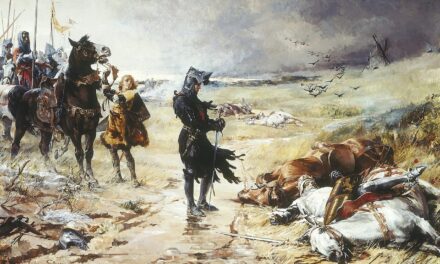
This mounted force struck King John’s division from the rear at the precise moment the Black Prince ordered a general advance of his own remaining troops from the front, catching the French king’s division in a pincer between two simultaneous assaults that its already-tired soldiers could not withstand. The French line collapsed under this combined pressure, and King John himself, having chosen to fight on foot alongside his household troops after earlier French cavalry attacks had already failed, found himself and his immediate entourage surrounded and cut off from any hope of retreat or rescue as the rest of his army broke and fled the field around him. In the chaotic final struggle around the French king’s position, numerous English and Gascon soldiers reportedly claimed to have personally captured him, each apparently hoping to secure the enormous ransom and prestige that capturing a reigning monarch would bring, a scramble so confused that chroniclers’ accounts of exactly who accepted the king’s surrender continue to vary and conflict even today.
Tradition has settled on Denis de Morbecque, a French knight who had been exiled from his homeland and taken service with the English crown, as the man who formally received King John’s surrender, a detail whose irony, a Frenchman serving England taking a French king prisoner, was not lost on contemporary observers even as its precise accuracy remained disputed. The Black Prince, upon confirming that the French king had indeed been captured alive, treated his royal prisoner with conspicuous chivalric courtesy in the battle’s immediate aftermath, a gesture calculated as much to enhance English prestige and John’s eventual ransom value as to honor the conventions of knightly warfare. French losses at Poitiers proved catastrophic, particularly among the nobility, with a substantial portion of France’s fighting aristocracy either killed or captured alongside their king, a blow to French military leadership comparable in scale to the devastation England had inflicted a decade earlier at Crécy.
The Legacy of Poitiers
The capture of King John II threw France into a prolonged political and financial crisis, since the kingdom now had to govern itself without its monarch while simultaneously negotiating and raising an enormous ransom for his eventual release, a burden that fell heavily on an already war-strained population. Poitiers cemented the Black Prince’s reputation as one of the greatest English commanders of his generation, following his conduct at Crécy with an even more spectacular personal triumph that included the almost unprecedented feat of capturing an enemy king outright. The battle also reinforced, for a second time within a decade, the devastating effectiveness of combining defensive terrain, longbow archery, and disciplined dismounted men-at-arms against numerically superior French chivalry, a tactical pattern that would recur throughout the Hundred Years’ War.
Visiting Poitiers Today
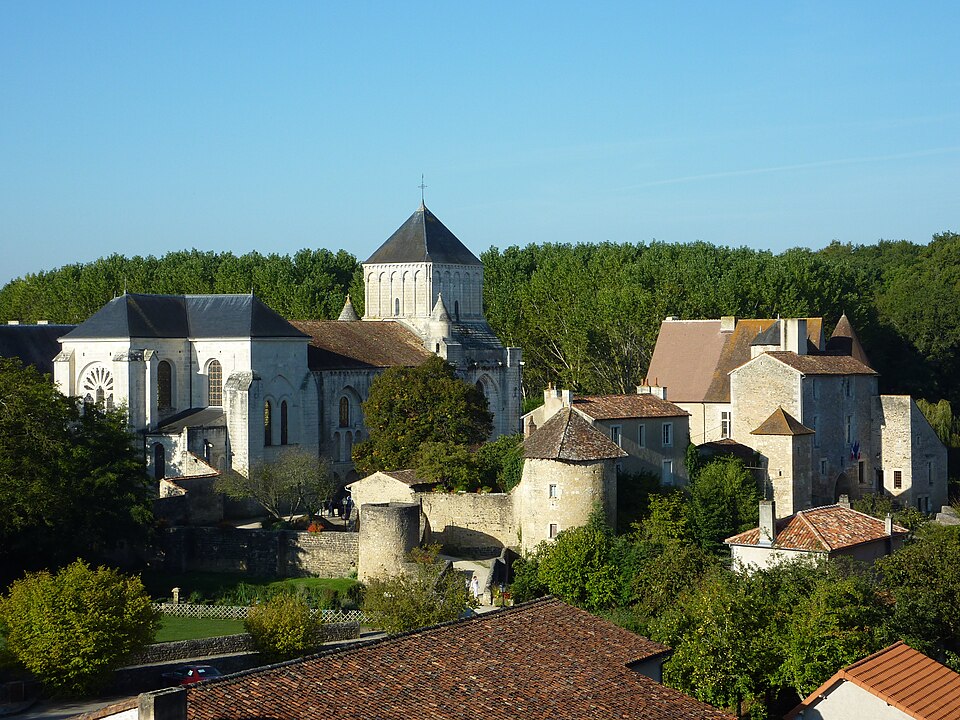
The heart of the modern visitor experience at Poitiers is the seventh-century Abbaye Saint-Junien de Nouaillé-Maupertuis, fortified in the fifteenth century and open to visit freely year-round, whose grounds include a medieval-style garden of roughly one hundred labeled medicinal and culinary plants that give visitors a tangible sense of daily life in the period surrounding the battle. A walking trail departs from the abbey and follows the Miosson river through the wooded Garenne toward the Omme ford, one of the day’s key tactical points, with interpretive panels along the route explaining the day’s fighting and the positions of the opposing forces across the terrain. A riverside picnic area along the trail makes the site suitable for a longer, unhurried visit rather than a quick stop, allowing travelers to properly absorb both the natural setting and its historical significance at a relaxed pace.
Each June, the local Nouaillé 1356 association hosts La Rançon du Roy, a medieval fair and battle-reenactment event whose dates and admission vary from year to year, offering visitors a livelier, more immersive way to engage with the battle’s history if their trip happens to align with the event. The combination of a genuinely preserved medieval abbey, a well-marked walking trail through the actual terrain that shaped the battle’s outcome, and an annual reenactment gives Poitiers a noticeably richer and more accessible visitor experience than many other battlefields from the same era. The hilly, hedge-lined, and wooded landscape visitors encounter along the trail today reflects the same broken terrain that shaped the battle itself, with the hedgerows and terraced ground the Black Prince used to blunt repeated French cavalry assaults still recognizable in the modern countryside. Because the battlefield trail covers a meaningful distance along the river and through the woods, visitors are generally encouraged to allow at least a couple of hours to properly explore the route and its interpretive panels rather than treating it as a brief roadside stop.
Remembrance of Poitiers
Multiple medieval chroniclers recorded the battle and its aftermath, though their accounts differ in detail, particularly regarding the exact circumstances of King John’s capture and which individual soldiers deserve credit for it, leaving modern historians to work with a genuinely contested record rather than a single authoritative narrative. The abbey and its surrounding walking trail continue to serve as the primary physical anchor for remembering the battle, preserving both the terrain’s medieval character and the broader historical context through their interpretive panels and annual reenactment events. The enduring uncertainty over who truly captured King John II, and the layered irony of Denis de Morbecque’s disputed role in that capture, remain among the most frequently discussed unresolved details of a battle whose broader outcome, the capture of a reigning French king, was never in doubt. Modern historians continue to sift through the surviving chronicle accounts in an effort to reconstruct the most plausible sequence of events around the king’s capture, a task complicated by the fact that so many participants and their descendants had a strong personal or financial incentive to claim credit for a moment of such enormous historical and monetary significance. That this single unresolved question can still generate scholarly debate nearly seven centuries later says as much about the scale of what happened at Poitiers as any single account of the fighting itself.
Further Exploration: Book titled “The Battle of Poitiers 1356” by David Green (Tempus Publishing, 2002)
Location: Abbaye Saint-Junien de Nouaillé-Maupertuis, Rue de l’Abbaye, 86340 Nouaillé-Maupertuis, France (battlefield trail follows the Miosson river from the abbey; exact house number varies by map service)
Site Status: Marker or Monument Only
Visitation Notes: The 7th-century Abbaye Saint-Junien de Nouaillé-Maupertuis, fortified in the 15th century, is open to visit freely year-round and includes a medieval-style garden of roughly 100 labeled medicinal and culinary plants. A walking trail follows the Miosson river from the abbey through the Garenne woods to the Omme ford, with interpretive panels covering the day’s fighting and troop positions, plus a riverside picnic area. Each June, the local ‘Nouaillé 1356’ association hosts ‘La Rançon du Roy,’ a medieval fair and battle-reenactment event (dates and admission vary by year).
Google Map
Visitor Comments
One visitor praised the battlefield site for combining history with its rich botanical surroundings, including wild orchids on the limestone plateau, and said the quality of the signage made for a lovely journey back to the feudal era.
— from TripAdvisor
Another visitor recommended the site for understanding the Hundred Years’ War, noting that seeing the real hilly, wooded terrain along the river corrects the common assumption of a flat battlefield, and praised the day-by-day combat panels and maps showing troop positions.
— from TripAdvisor