The rock splits along a hairline seam, and there it is — a perfect oval outline pressed into gray shale, ridged and segmented like something that crawled out of a nightmare and into stone. It has three lobes running the length of its body, a pair of crescent eyes, and it hasn’t moved in half a billion years. Split the next slab, and there’s a decent chance another one is waiting just like it. That’s the strange promise of this particular stretch of Utah desert: patience measured in minutes, not months.
Wheeler Shale: A Cambrian Seafloor in Utah’s Desert
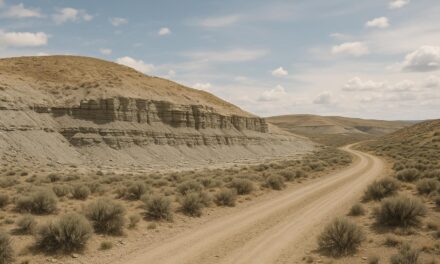
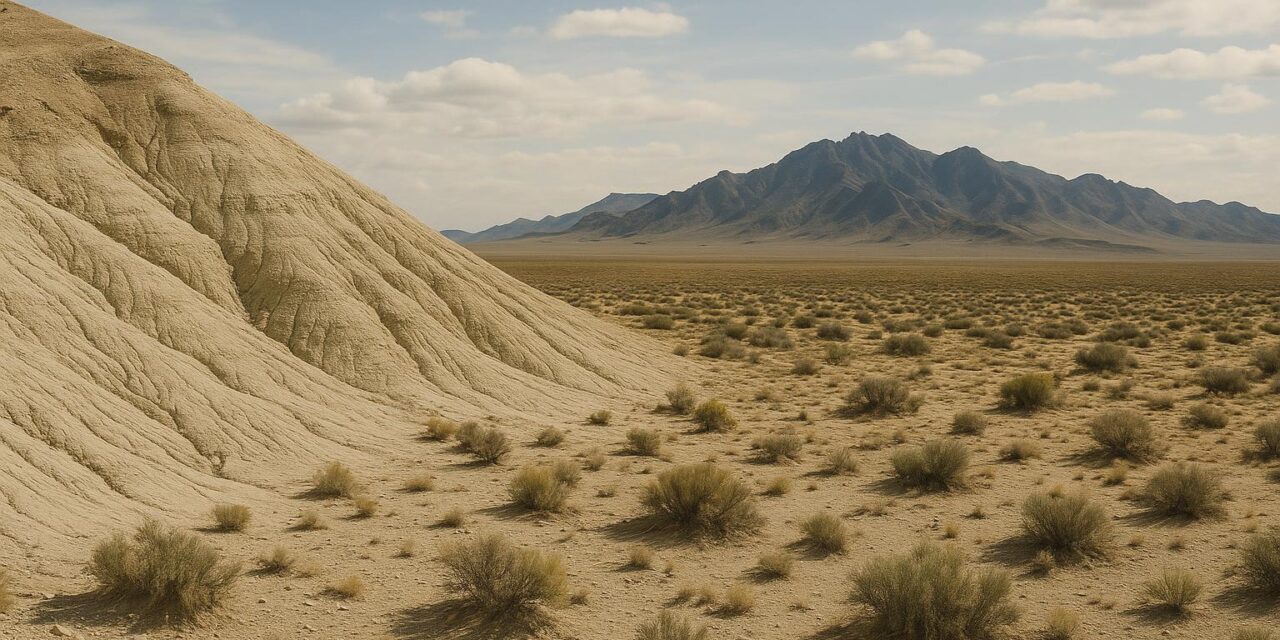
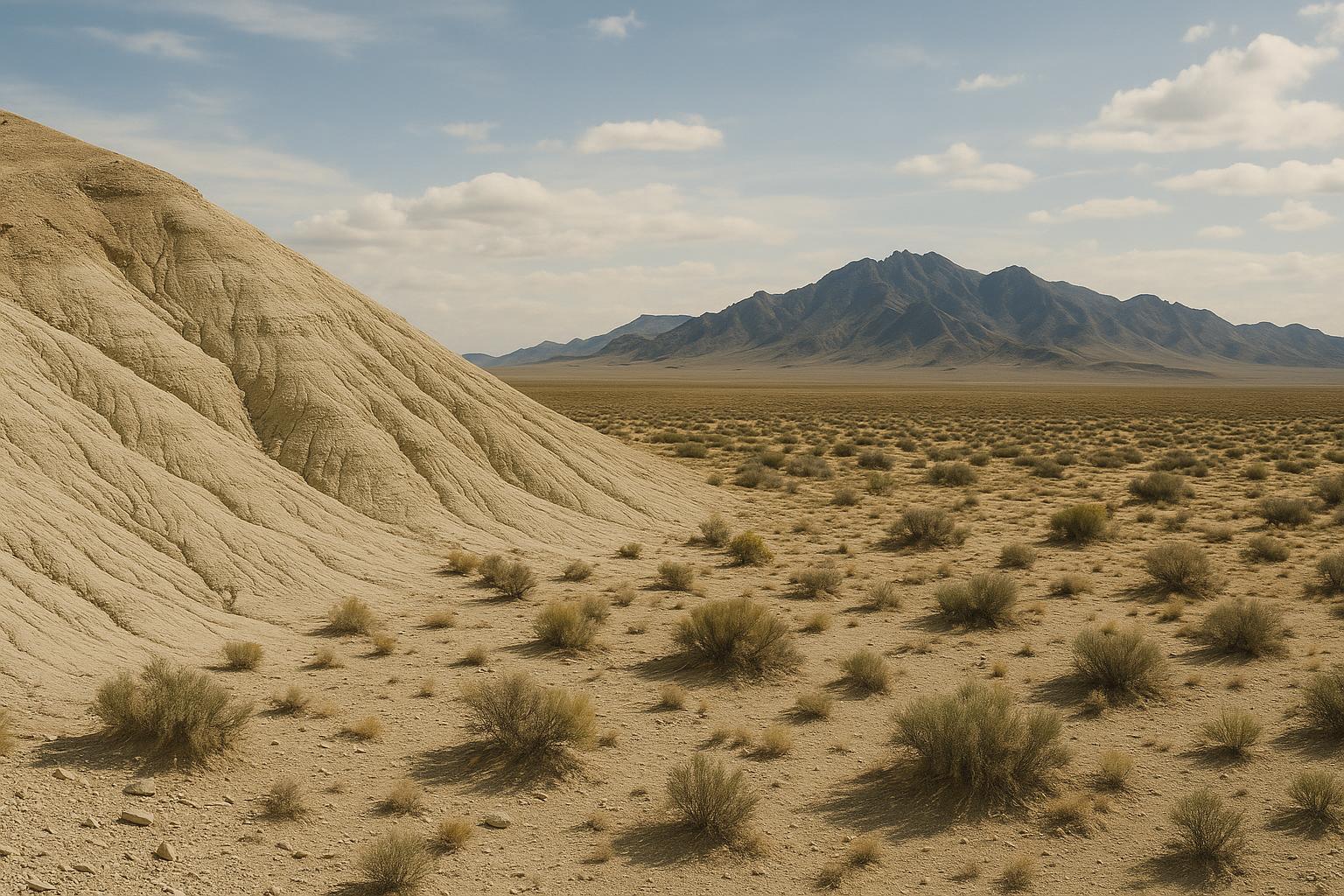
The Wheeler Shale sits in Utah’s House Range, roughly an hour west of Delta, a stretch of high desert that doesn’t look like it was ever anything but dry. Nothing about the surface suggests what’s underfoot. Roughly 500 million years ago, though, this ground was the floor of a shallow sea during the Cambrian period, and the fine-grained shale that formed there preserved an extraordinary record of the marine life that lived and died on that seafloor. Trilobites are the signature fossil of the formation, and Elrathia kingii in particular turns up here in numbers rarely matched anywhere else in the world, making the Wheeler Shale one of the most productive and well-known trilobite localities on the planet. The fine grain of the shale is exactly what makes such detailed preservation possible — sediment settling in thin, even layers on a quiet seafloor captured body outlines with a level of clarity that coarser rock simply can’t match, which is part of why the House Range has such an outsized reputation relative to its size.
U-Dig Fossils operates as a private, pay-to-dig quarry directly on the Wheeler Shale, splitting shale by design so visitors can search for trilobites themselves rather than buying finished specimens. That business model has made the House Range a genuine destination within the fossil-hunting and rockhounding community, since it offers something rare: hands-on access to a world-class Cambrian deposit without needing a research permit or an academic affiliation. Anyone with the price of admission and a willingness to swing a hammer can take part. Visitors split their own shale, layer by layer, and keep what they find as part of the standard arrangement at the quarry. There’s something genuinely satisfying about the process itself: each thin layer of shale represents a discrete moment in time, and splitting through one after another feels less like digging and more like paging backward through a 500-million-year-old book, never quite knowing which page will have a trilobite pressed into it.

Elrathia Kingii and the House Range’s Fossil Record
Elrathia kingii is the trilobite species most closely associated with the Wheeler Shale, and it’s abundant enough in these particular layers that a single afternoon of splitting shale routinely turns up multiple specimens, sometimes more than a visitor can carry home. The species preserves in remarkable detail in this particular shale, with segmented bodies, lobed structure, and even fine features like eyes visible on well-preserved pieces, which is part of why this formation has become so well known both scientifically and commercially. The sheer density of trilobites in the Wheeler Shale is what separates it from most fossil localities, where a good find might take hours or days of searching rather than being a near-certainty within a single session of splitting rock. That density is precisely what has made the Wheeler Shale such an effective introduction to fossil hunting for people who’ve never tried the hobby before — the odds of walking away empty-handed are genuinely low, which keeps first-timers engaged in a way that a slower, more uncertain site never could.
That abundance isn’t limited to the private quarry, either. The House Range sits largely on land managed by the Bureau of Land Management, and under the federal default for invertebrate and plant fossils, trilobites and other common invertebrates can be collected on BLM land in reasonable personal-use quantities without a permit. The rules allow up to 25 pounds of material per day, plus one additional piece, with an annual cap of 250 pounds, and collecting is limited to non-powered hand tools. Those limits mirror the personal-use rules that govern most BLM invertebrate fossil collecting nationwide, giving the House Range a predictable, well-documented legal framework rather than a patchwork of local exceptions. Utah state guidance, through the Utah Geological Survey, confirms that same federal default applies here, with no additional state-specific restriction layered on top. That combination — a commercial pay-to-dig quarry sitting right next to public land governed by a genuinely permissive federal rule — is part of what makes the House Range such a well-rounded destination for anyone serious about trilobite collecting, whether they want a guaranteed dig experience or a more open-ended search on public ground. Few fossil-hunting regions in the country offer both options within the same small stretch of desert: a paid, structured dig with high odds of success, and a free, self-directed search on public land governed by clear, published rules rather than ambiguity.
The scientific value of the Wheeler Shale runs alongside its popularity with collectors. A locality this productive, preserving this much anatomical detail across such a large number of specimens, has made the formation a genuinely important reference point for understanding Cambrian marine life, not just a source of attractive rock-shop specimens. Specimens from this exact formation have made their way into museum collections and scientific literature precisely because there are so many of them available for careful study, in a density that few other Cambrian sites anywhere in the world can match.
Visiting Wheeler Shale Today
The Wheeler Shale remains open to collectors today through two distinct paths. U-Dig Fossils operates as a private, pay-to-dig quarry where visitors split shale themselves and keep what they find as part of the standard arrangement. On the surrounding BLM land, the federal default for invertebrate fossils applies without a permit, allowing up to 25 pounds per day plus one piece, and 250 pounds annually, using only non-powered hand tools.
The House Range demands real preparation despite that accessibility. Rattlesnakes, scorpions, and other desert wildlife are common throughout the range, and daytime heat in this exposed high desert can be extreme. Watching where hands and feet land before reaching into any crevice or rock pile is basic, necessary caution in country like this. The quarry itself sits roughly 52 miles down gravel road from Delta, far from cell service or nearby emergency help, so visitors should plan for a genuinely remote trip rather than a quick roadside stop. Bringing extra water, sun protection, and a full tank of gas before leaving Delta isn’t optional caution out here — it’s a basic requirement for a trip this far from the nearest town.
The Legacy of Utah’s Wheeler Shale
The Wheeler Shale matters to fossil hunters because it delivers something genuinely rare: a near-guarantee of finding real, museum-quality trilobites in a single visit, whether through a pay-to-dig quarry or free collecting on adjacent BLM land. Elrathia kingii’s abundance here has made this formation a household name well beyond Utah, introducing more people to hands-on paleontology than almost any other single fossil locality in the country. It’s often the very first fossil a beginner ever splits out of rock themselves, and that first-find moment is a large part of why the Wheeler Shale holds such an outsized place in the hobby’s collective memory. For anyone serious about the hobby, splitting open a slab of 500-million-year-old shale and finding a perfectly preserved trilobite staring back is about as direct a connection to deep time as fossil hunting offers. Few other places let a first-time hunter and a lifelong collector stand at the same slab of rock with the same real chance of success.
Story Source: u-digfossils.com
Location: U-Dig Fossils, Wheeler Shale, House Range, ~1 hr west of Delta, UT
Site Status: Open to public collecting
Legal Conditions: U-Dig Fossils is a private quarry (pay-to-dig, open to the public by design). On adjacent BLM land, the Tier 1 federal default for invertebrate/plant fossils applies (Verified): trilobites and other common invertebrates may be collected in reasonable personal-use quantities without a permit, up to 25 lbs/day plus one piece and 250 lbs/year, using only non-powered hand tools. Utah state guidance (Utah Geological Survey) confirms this default, with no state-specific override found.
Hazards: Wildlife (rattlesnakes, scorpions, and other desert wildlife are common in the House Range); Extreme heat/cold/exposure (remote high desert with extreme daytime heat); Difficult terrain/altitude/remote access (quarry is roughly 52 miles of gravel road from Delta, far from cell service and emergency help).
Google Map
Firsthand Accounts
Paleontology writer Jayson Kowinsky documented a firsthand “Trilobite Jam” camping trip in the House Range, hosted by American Trilobite Suppliers and led by organizers Jason and Jake, where his group split Wheeler Shale across several small quarries and came home with eight complete trilobites, including a 3-inch Asaphiscus wheeleri. Source: Jayson Kowinsky, “Trilobite Hunt in the House Range of Utah,” Fossilguy.com, 2011.
Andy Secher, described as a leading trilobite collector, wrote The Trilobite Collector’s Guide drawing on his own decades of collecting experience, including species common to the Wheeler Shale such as Elrathia kingii. Source: Andy Secher, The Trilobite Collector’s Guide (Columbia University Press, 2024).
Paleontologist Richard A. Robison documented and classified the Wheeler Shale’s Middle Cambrian trilobite fauna in foundational academic papers, work that remains the scientific baseline collectors and researchers use to identify House Range specimens today. Source: Richard A. Robison, “Late Middle Cambrian Faunas from Western Utah,” Journal of Paleontology, 1964, and “Additional Middle Cambrian Trilobites from the Wheeler Shale of Utah,” 1971.