The man who built the system that won the battle was fired within weeks of winning it. Air Chief Marshal Hugh Dowding had spent years constructing the integrated air-defense network that let a heavily outnumbered RAF beat back the Luftwaffe over the skies of southern England in the summer of 1940. By November, with Britain’s survival secured, he was removed from Fighter Command amid criticism over the ongoing night Blitz—a controversial sidelining of the officer most responsible for a victory that Winston Churchill called the moment so much was “owed by so many to so few.”
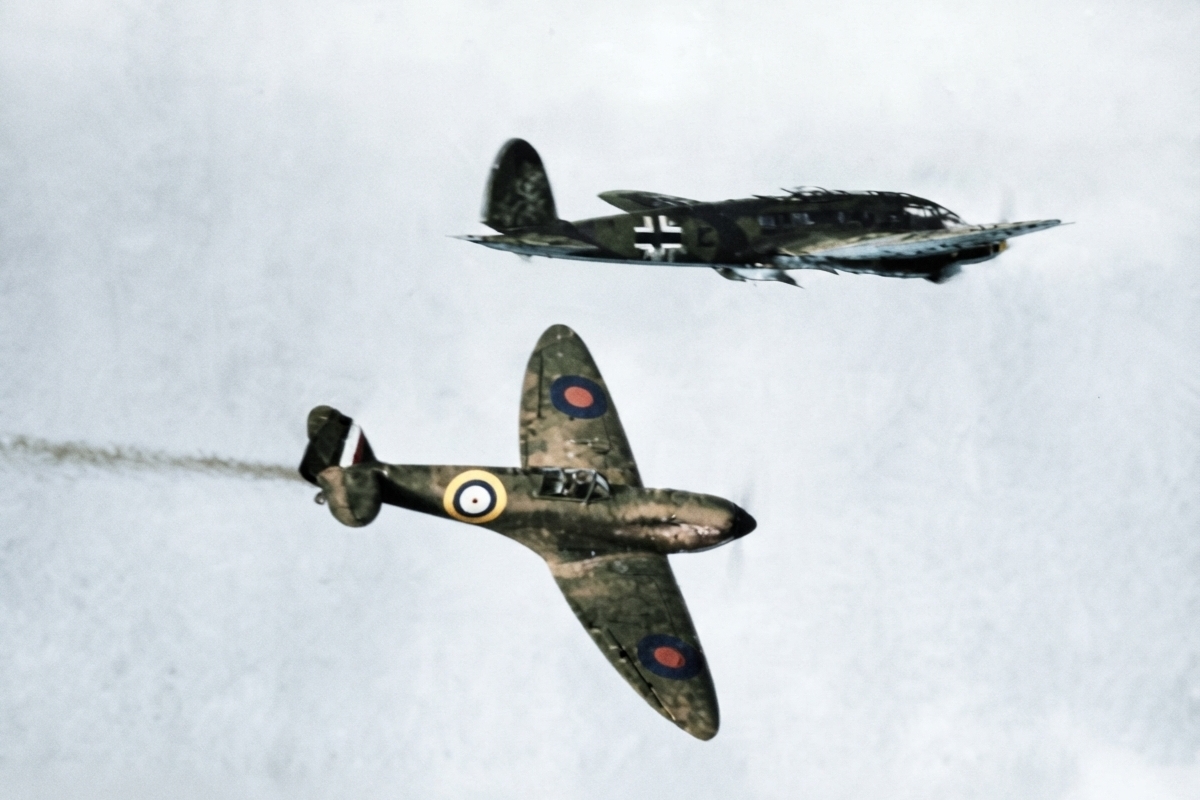
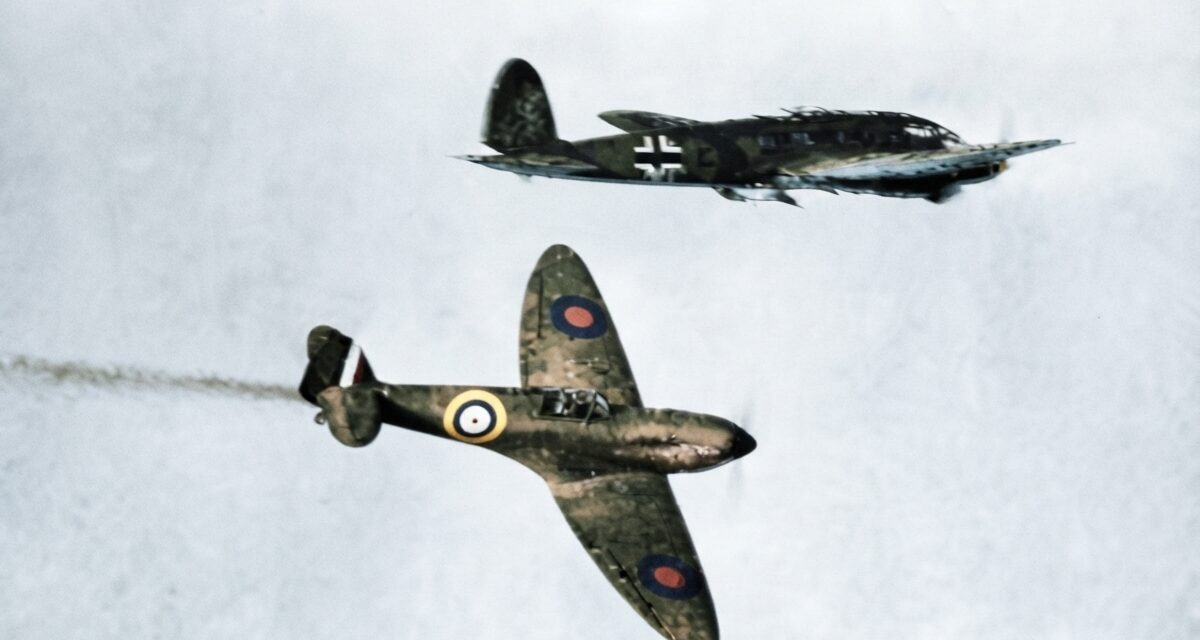
Battle of Britain: The Road to Battle
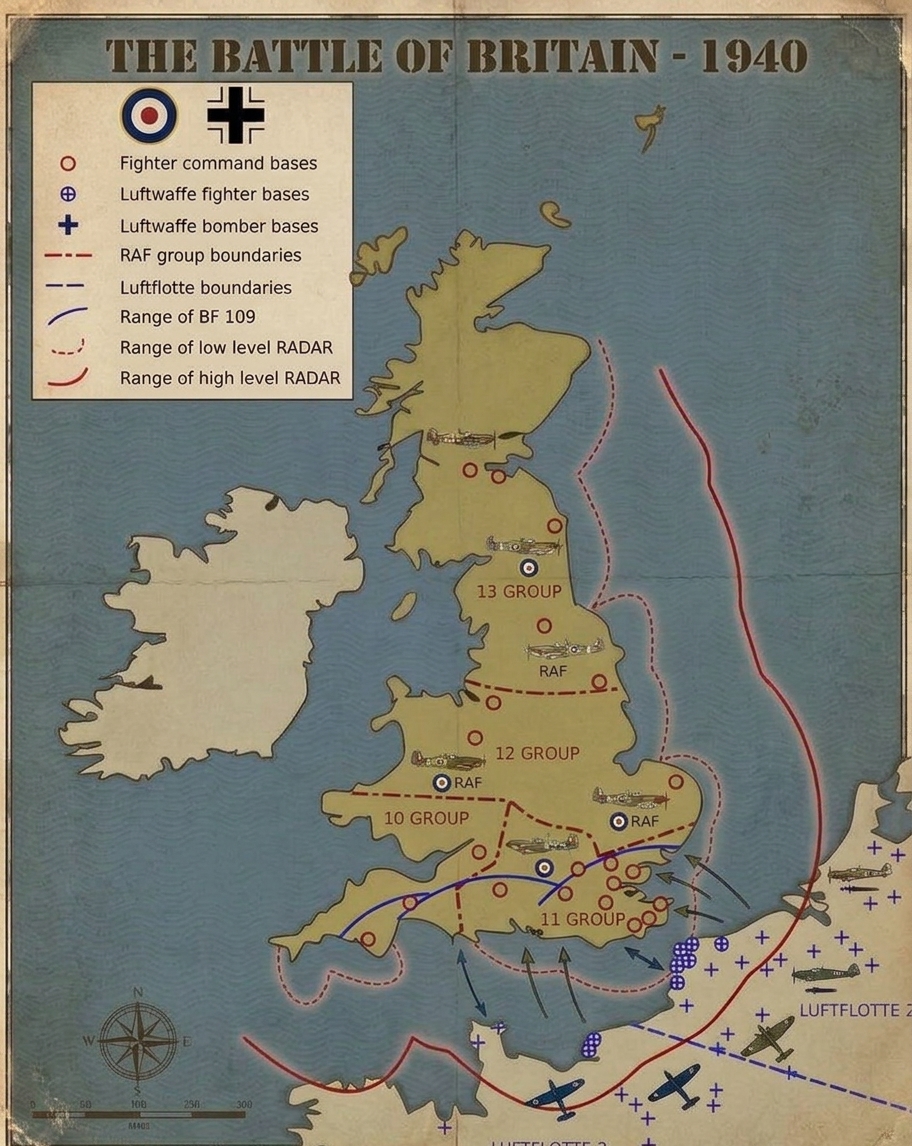
After the fall of France in June 1940, Nazi Germany stood in complete control of continental Europe’s Atlantic coast, with Britain isolated and facing the real prospect of invasion. Adolf Hitler’s plan, codenamed Operation Sea Lion, required the Luftwaffe to first destroy the Royal Air Force and win control of the skies over the English Channel before any German invasion fleet could safely attempt a crossing. Without air superiority, an amphibious assault against a defended island would be suicidal, so the coming air campaign would effectively decide whether an invasion could happen at all.
Britain’s defense rested on a system built over the preceding years by Air Chief Marshal Hugh Dowding, Commander-in-Chief of RAF Fighter Command. His “Dowding System” linked a chain of coastal radar stations, ground-based observer corps, and centralized sector-station control rooms into a single network capable of detecting incoming German raids and vectoring RAF fighter squadrons to intercept them with a speed no other air force in the world could match at the time. Through the preceding Battle of France, Dowding had deliberately husbanded his fighter squadrons, resisting intense political pressure to commit more aircraft to a campaign he judged already lost, a decision that preserved the fighter strength Britain would desperately need in the months ahead. Churchill set the stakes for what was coming in stark terms, warning the House of Commons in June 1940 that its outcome would determine whether the world sank into “a new Dark Age” or advanced toward “broad, sunlit uplands.”
The Battle of Britain
Through July and August 1940, the Luftwaffe launched sustained attacks in overlapping phases, first against British shipping convoys in the Channel, then against RAF airfields and the coastal radar stations that formed the backbone of the Dowding System, hoping to grind Fighter Command down and clear the skies for invasion. British squadrons, guided to intercept incoming raids with a precision the Germans struggled to counter or even fully understand, inflicted serious losses on German bomber formations, though at real cost to their own strength in aircraft and, more critically, in experienced pilots, who could not be replaced nearly as quickly as the airframes themselves rolling off British production lines.
By mid-August, in what the RAF later termed “Eagle Day,” the Luftwaffe committed itself fully to destroying Fighter Command as an organized force, launching massed raids intended to overwhelm British defenses in a single sustained push. The fighting that followed through the rest of August pushed both sides to their limits: German bomber crews faced mounting losses to increasingly well-coordinated RAF interceptions, while British squadrons, flying multiple sorties a day, approached genuine exhaustion. By late August, the campaign had become a true battle of attrition, with Fighter Command sustaining serious losses of aircraft and airfield infrastructure under the sustained German pressure, its forward airfields in southern England repeatedly cratered by bombs and hurriedly patched back into service. Dowding continued to favor cautious, radar-directed interceptions at squadron scale over the more aggressive “Big Wing” tactics pushed by a rival commander, Air Vice-Marshal Trafford Leigh-Mallory, a tactical disagreement over how best to commit scarce fighters that would later feed into the criticism used against him. As the campaign reached its peak in late August, Churchill delivered the speech to Parliament that would define the battle’s place in British memory, declaring on August 20, 1940 that “never in the field of human conflict was so much owed by so many to so few,” permanently attaching the name “The Few” to the RAF’s outnumbered fighter pilots.
The decisive turn came in early September, when Hermann Göring, frustrated that his airfield and radar campaign had failed to achieve the air superiority Sea Lion required, authorized a shift to mass bombing raids on London itself, inaugurating what would become known as the Blitz. The decision remains one of the most debated of the war: many historians argue it was a critical German error, giving Fighter Command’s battered airfields and radar stations crucial breathing room to repair runways, replace aircraft, and rotate exhausted pilots at the precise moment the RAF was closest to being ground down. Others note British aircraft production was already outpacing losses regardless, meaning the switch’s decisiveness may be overstated—though both readings agree the shift to bombing London ultimately failed to break civilian morale or force any kind of capitulation.
The climax came on September 15, 1940, later commemorated as Battle of Britain Day, when the Luftwaffe launched its largest and most concentrated daylight raids of the entire campaign against London, hoping to finally break Fighter Command in one decisive stroke. RAF squadrons, drawing on reserves that German intelligence had wrongly assumed were exhausted, rose to meet the raids in far greater numbers than the Luftwaffe expected, inflicting the campaign’s heaviest single-day losses on the German bomber force. The scale of that failure convinced the German high command that air superiority over southern England was not going to be achieved on any near-term timetable. By the end of October, with the Luftwaffe unable to establish the air superiority Sea Lion demanded and autumn weather closing the narrow window in which any Channel crossing could plausibly be attempted, Hitler indefinitely postponed the invasion of Britain, shifting his strategic attention eastward toward the following year’s invasion of the Soviet Union.
The Legacy of the Battle of Britain
The Battle of Britain marked Nazi Germany’s first major strategic failure of the war and preserved Britain as an undefeated base from which the eventual liberation of Western Europe could later be launched, years afterward, on D-Day. It also elevated the RAF’s outnumbered fighter pilots into one of the most enduring symbols of British wartime resistance, a status cemented by Churchill’s oratory and reinforced every year since in British popular memory. Dowding’s own reward for architecting the victory was removal from his command within months, following renewed criticism over difficulties countering the ongoing night Blitz—a controversial sidelining that historians still debate, viewing it as an unjust conclusion to one of the more consequential defensive campaigns in military history, engineered in part by rivals who had long pushed for a more aggressive doctrine than his own.
Visiting the Battle of Britain Today
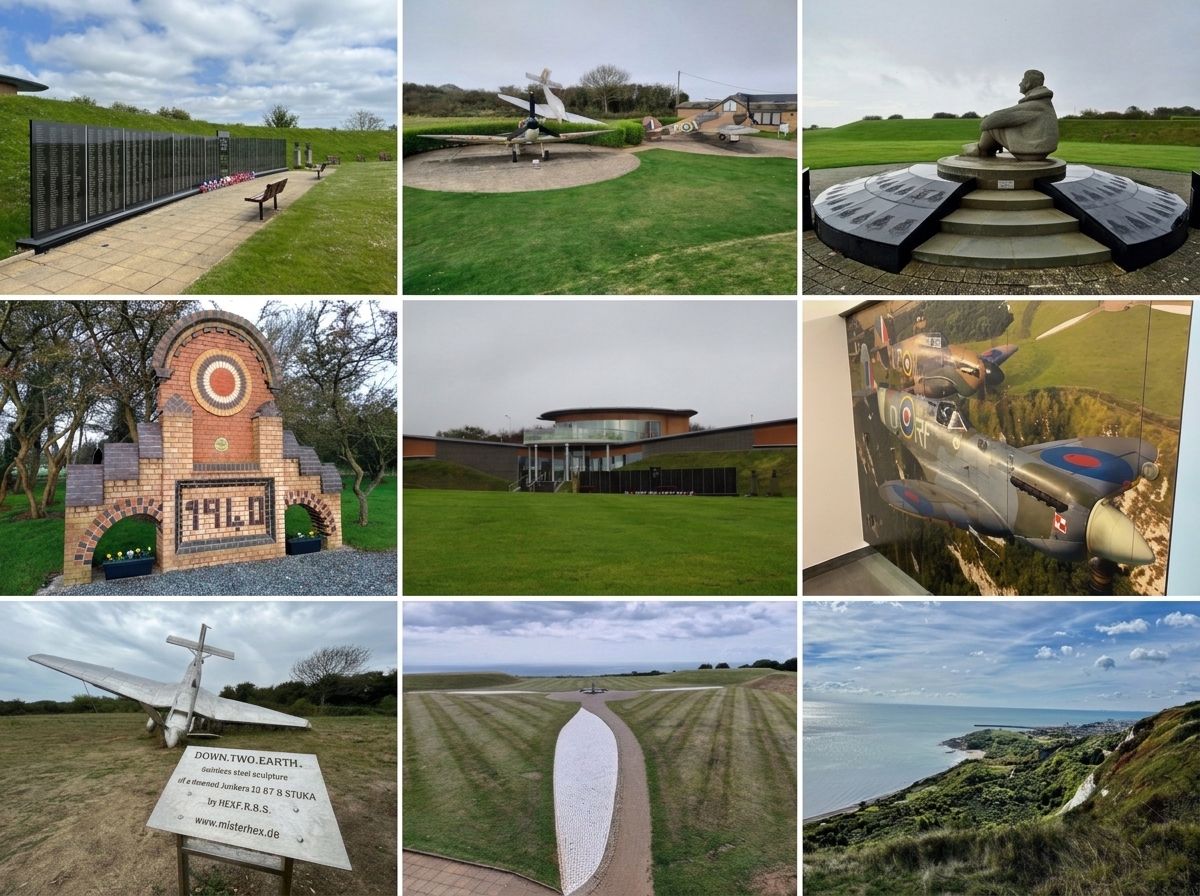
Because the battle was fought almost entirely in the air over southern England and the Channel, there is no single ground battlefield to visit in the traditional sense, unlike the trench lines or fortified positions that mark most of the twentieth century’s other major engagements. Instead, the sites that commemorate the campaign are spread across the airfields, coastline, and museums of what was once known as “Hellfire Corner.” The most significant memorial site is the Battle of Britain Memorial, set on the White Cliffs between Folkestone and Dover, with grounds that are free and open to the public year-round. Its centerpiece is the seated “Scramble” statue of an RAF pilot, mounted on a stone base shaped like a propeller, looking out toward the Channel his squadron once defended.
Nearby, the Christopher Foxley-Norris Memorial Wall is inscribed with the names of almost 3,000 aircrew from Britain and Allied nations, including Poland, Czechoslovakia, Canada, and New Zealand, who flew in the battle and qualify as “The Few.” The Wing, a visitor centre shaped like a Spitfire’s wing that was opened by Queen Elizabeth II in 2015, houses a paid immersive exhibit along with a cafe featuring a viewing balcony that looks out toward France across the water, close enough on a clear day to see the coastline the pilots were defending against. For visitors wanting to see the aircraft themselves, IWM Duxford and the RAF Museum London both hold dedicated Battle of Britain exhibitions with preserved Spitfires and Hurricanes on display, several of them restored to flying condition and still taking to the air for special anniversary events.
Remembrance of the Battle of Britain
Britain commemorates the battle each year on September 15, Battle of Britain Day, marking the anniversary of the campaign’s largest daylight raids in 1940, when the Luftwaffe suffered its heaviest single-day losses and the tide of the battle turned decisively. Services and flypasts are held across the country, often featuring surviving airworthy Spitfires and Hurricanes from the period, drawing crowds to former fighter stations that are still active RAF bases today. The RAF continues to formally honor the veterans of the campaign as “The Few,” a title drawn directly from Churchill’s wartime tribute and now inseparable from how Britain remembers the summer of 1940. As the number of surviving veterans who actually flew in the battle has dwindled toward zero in recent years, commemorations have increasingly shifted toward preserving their recorded testimony and honoring the memory of a campaign now passing from living history into national legend, ensuring the sacrifice of the pilots who flew that summer is not forgotten by generations with no direct connection to the war.
Visitor Info: Battle of Britain Memorial (Battle of Britain Memorial Trust)
Location: Battle of Britain Memorial, New Dover Road, Capel-le-Ferne, Folkestone, Kent, CT18 7JJ, England (the battle was fought across the skies of southern England over several months; this clifftop memorial marks the coastline much of it was fought over)
Site Status: National Park / Managed Historic Site
Visitation Notes: The Memorial sits on the White Cliffs between Folkestone and Dover. Grounds are free and open year-round; the centerpiece is the seated ‘Scramble’ statue of an RAF pilot, set in a stone base shaped like a propeller. Nearby, the Christopher Foxley-Norris Memorial Wall is inscribed with the names of almost 3,000 aircrew from Britain and Allied nations — including Poland, Czechoslovakia, Canada, and New Zealand — who flew in the battle and qualify as ‘The Few.’ The Wing, a visitor centre shaped like a Spitfire wing opened by Queen Elizabeth II in 2015, houses the paid ‘Scramble Experience’ immersive exhibit and a cafe with a viewing balcony toward France. The site holds commemorations around Battle of Britain Day (September 15), the anniversary of the battle’s largest daylight raids in 1940. IWM Duxford and the RAF Museum London also hold relevant Battle of Britain exhibitions and preserved Spitfires and Hurricanes for visitors wanting to see further afield.
Google Map
Visitor Comments
Jwyl2240 wrote the site “also has a brilliant visitor centre where you can spend a lot of time reading all the information about the Battle of Britain.”
— from TripAdvisor
Matthew V called it “a sobering memorial to those who fought in the Battle of Britain, in a spectacular location,” with “thoughtfully designed displays and lots of interactivity.”
— from TripAdvisor
Samantha K praised it as “very informative, lovely friendly staff and so well kept.”
— from TripAdvisor
Nik J found the front-desk greeting felt “hostile,” which affected their willingness to purchase tickets — a notable outlier against the site’s overwhelmingly positive reviews.
— from TripAdvisor