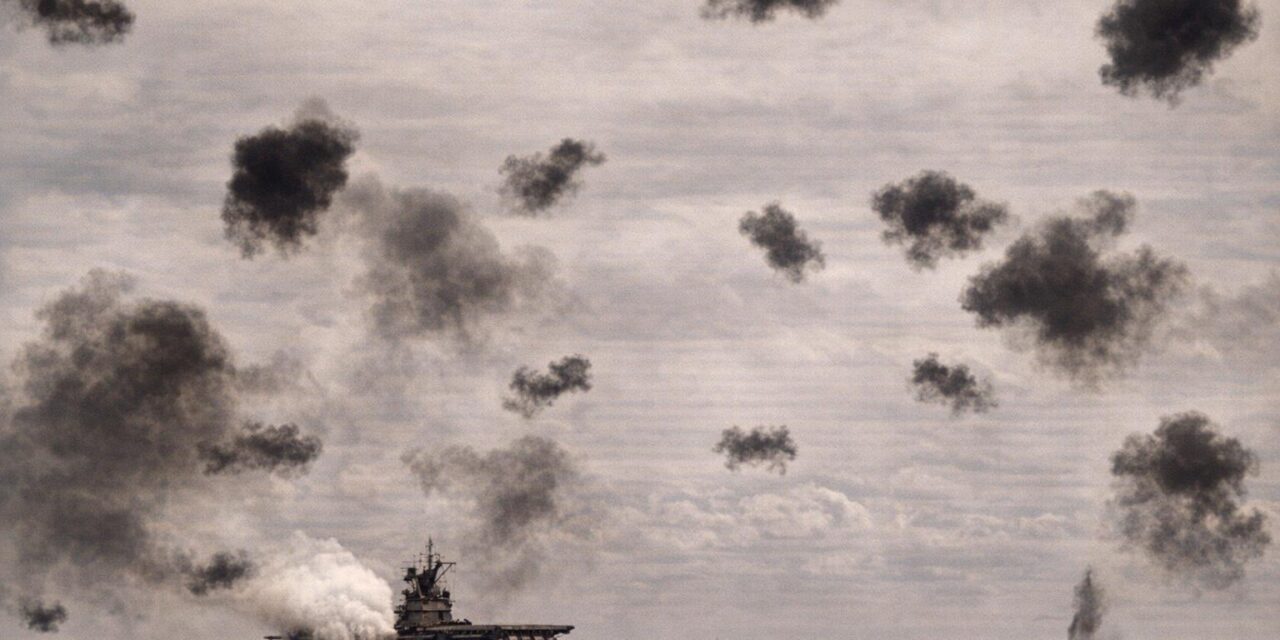
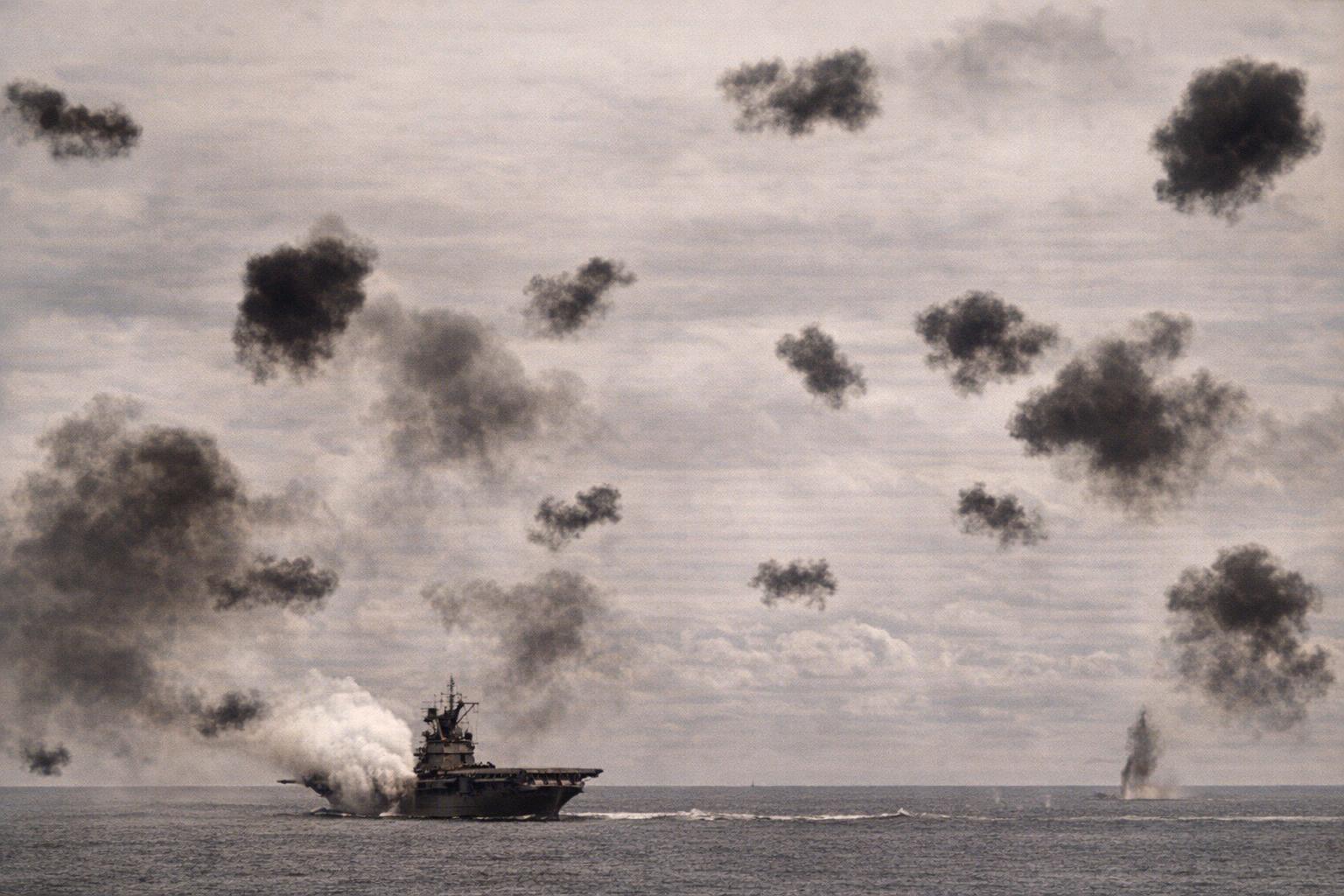
Ensign George Gay watched the battle that would decide the Pacific War from underneath a black rubber seat cushion, treading water in an ocean stained with burning aviation fuel. Every other aircraft in his squadron, Torpedo Squadron Eight off the USS Hornet, had gone down around him in the space of a few minutes, cut apart by Japanese fighters as the American torpedo bombers pressed their attack at wave-top height with no fighter escort of their own. Gay would spend the better part of a day floating within sight of the battle’s climax, watching three Japanese aircraft carriers burn against the horizon, before a passing seaplane finally pulled him from the water. His entire fifteen-plane squadron had been wiped out that morning; his own survival, and the sacrifice of the men who died beside him, had helped clear the sky for what came next.
Midway: The Road to Battle
By the spring of 1942, Admiral Isoroku Yamamoto had grown convinced that Japan’s best chance to secure lasting dominance in the Pacific lay in forcing a decisive battle against the United States Navy’s remaining aircraft carriers, which had escaped destruction at Pearl Harbor the previous December. Yamamoto’s plan called for a diversionary strike on the Aleutian Islands paired with a main assault on Midway Atoll, a tiny pair of islands roughly 1,300 miles northwest of Honolulu that hosted an American naval air station. He expected that seizing Midway would draw the U.S. Pacific Fleet out to defend it, allowing his superior force of four fleet carriers, seven battleships, and dozens of supporting vessels to destroy the Americans once and for all. The plan depended entirely on surprise, and on the assumption that the United States had no way of knowing where or when the blow would fall.
That assumption collapsed months before a single shot was fired. Commander Joseph Rochefort, leading the Navy’s Station HYPO codebreaking unit in a windowless basement at Pearl Harbor, had spent the early months of 1942 chipping away at the Japanese Navy’s JN-25 cipher, working around the clock with a small team of cryptanalysts against Washington-based rivals who initially favored a different theory about where Japan intended to strike next. By May his team had recovered enough of the code to see that a major operation was being planned against a target referred to only by the designator “AF.” To confirm their suspicion that “AF” meant Midway, Rochefort’s team arranged for the base there to transmit an uncoded message reporting a freshwater shortage; when Japanese radio traffic shortly afterward referenced a water shortage at “AF,” the identification was confirmed, and Rochefort was able to give Nimitz not only the target but the approximate date and strength of the coming attack. Armed with that intelligence, Nimitz positioned the carriers USS Enterprise, USS Hornet, and a hastily repaired USS Yorktown, still smoldering from damage suffered weeks earlier at the Battle of the Coral Sea, northeast of Midway, waiting in ambush for a Japanese fleet that believed itself undetected.
The Battle of Midway
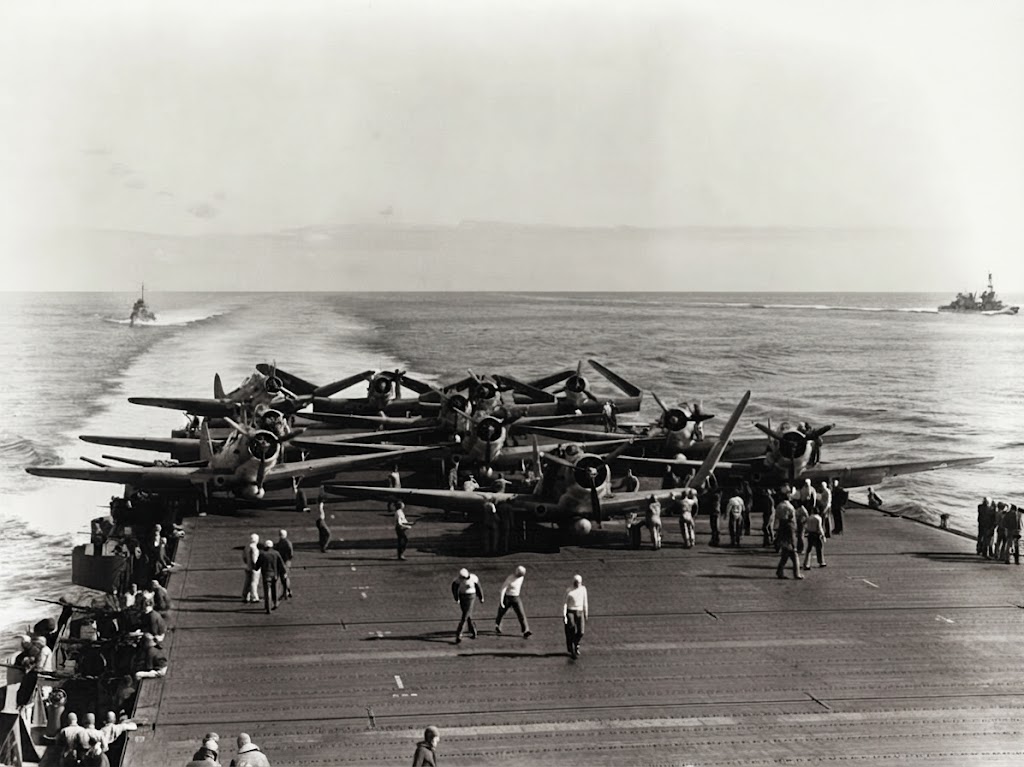
The battle opened before dawn on June 4, 1942, when Japanese carrier aircraft under Vice Admiral Chuichi Nagumo struck Midway’s airfields, inflicting heavy damage but failing to knock the base out of action. American torpedo squadrons launched from the three U.S. carriers in response, and what followed was one of the most lopsided and consequential exchanges of the entire war. Torpedo Squadron Eight, George Gay’s unit, attacked the Japanese carriers alone and without fighter cover after becoming separated from the rest of Hornet’s air group; every one of its fifteen aircraft was shot down, and Gay’s survival left him the sole witness among his squadron to what the sacrifice had bought. The low-altitude torpedo attacks, though militarily unsuccessful in themselves, pulled Japanese combat air patrols down to sea level and left the skies open above the Japanese fleet at the exact moment American dive bombers arrived.
Squadron mate and dive-bomber pilot Norman “Dusty” Kleiss, flying an SBD Dauntless from USS Enterprise with Scouting Squadron Six, was part of the force that found the Japanese carriers virtually defenseless at altitude. Nagumo’s crews had spent the morning shuttling between arming their aircraft with bombs for a second strike on Midway’s airfields and then rearming them with torpedoes once American ships were sighted, leaving the hangar decks of all four carriers littered with fuel hoses, stacked ordnance, and aircraft caught mid-changeover at the worst possible moment. Within a span of about five minutes that morning, American dive bombers descended almost unopposed and set three of Japan’s four fleet carriers, Akagi, Kaga, and Soryu, ablaze with their decks packed full of fueled and armed aircraft. Kleiss himself was credited with direct hits on both Kaga and, in a second strike later that day, the fourth carrier Hiryu, one of only a handful of American pilots credited with bomb hits on multiple Japanese carriers during the battle; he recounted the experience decades later in his 2017 memoir, Never Call Me a Hero.
Aboard the flagship carrier Akagi, Captain Mitsuo Fuchida, the officer who had led the aerial strike force against Pearl Harbor and was recovering from an appendectomy that kept him grounded that day, watched the American dive bombers arrive and later described the attack, and the fires it set among the fully armed aircraft crowding Akagi’s deck, in vivid and unsparing detail in his postwar writing. Hiryu, the last surviving Japanese carrier, launched two counterstrikes that afternoon that critically damaged USS Yorktown, but American dive bombers located and set Hiryu ablaze by early evening, and Fuchida survived the sinking of Akagi that followed, later abandoning ship along with much of her crew. By the next day, all four of the Japanese carriers that had launched the Pearl Harbor attack six months earlier lay at the bottom of the Pacific, along with hundreds of experienced Japanese naval aviators, mechanics, and deck crew who could not be quickly replaced. Yorktown, crippled but still afloat after Hiryu’s strikes, was finally sunk on June 7 by the Japanese submarine I-168 while under tow back toward Pearl Harbor, the only American carrier lost in the battle.
The Legacy of Midway
Midway is widely regarded by historians as the turning point of the Pacific War, the moment at which Japan’s early strategic initiative collapsed and the balance of naval air power shifted decisively toward the United States. The loss of four fleet carriers and their veteran aircrews in a single battle was a blow Japan’s wartime industrial base and pilot training programs could never fully repair, while the United States entered the war’s later years with a rapidly expanding fleet of new carriers and a growing pool of combat-tested aviators. The victory owed as much to Rochefort’s codebreaking as to the courage of pilots like Gay and Kleiss in the air, a pairing of intelligence work and sacrifice that historians still cite as a model of how the two can combine to alter the course of a war. Few naval battles in history have turned on so little time — a matter of minutes one June morning, in which torpedo pilots who never lived to see the outcome helped clear the sky for the dive bombers who decided it.
Midway Atoll: A Site Off-Limits
Midway Atoll cannot be visited today, and prospective travelers should not expect to plan a trip there. The atoll is administered by the U.S. Fish and Wildlife Service as the Midway Atoll National Wildlife Refuge and forms part of the Papahānaumokuākea Marine National Monument, one of the largest protected marine areas on Earth, and public tourism to the islands has been suspended for years due to the site’s remoteness, its fragile seabird habitat, and the logistical burden of supporting visitors roughly 1,300 miles from Honolulu with no regular commercial transport. Access today is limited to refuge staff, wildlife researchers, and occasional authorized personnel traveling on infrequent charter flights arranged directly through the Fish and Wildlife Service, and there is no public infrastructure, ferry, or tour operator through which an ordinary visitor could arrange passage.
What draws researchers who do reach the atoll is now overwhelmingly its wildlife rather than its wartime history: Midway hosts one of the largest albatross colonies on Earth, with well over a million Laysan albatrosses nesting across the islands each year alongside recovering populations of other seabirds. Scattered remnants of the 1942 air station, including former runways, bunkers, and gun emplacements, remain on the atoll and are documented by refuge staff and historians who do have access, but there is no public visitor center, no scheduled tour, and no realistic path for a member of the public to stand on the ground where the battle was fought. Anyone hoping to experience this history in person is better served by the exhibits and archives maintained by institutions such as the Naval History and Heritage Command than by any expectation of reaching Midway itself.
Remembrance at Midway
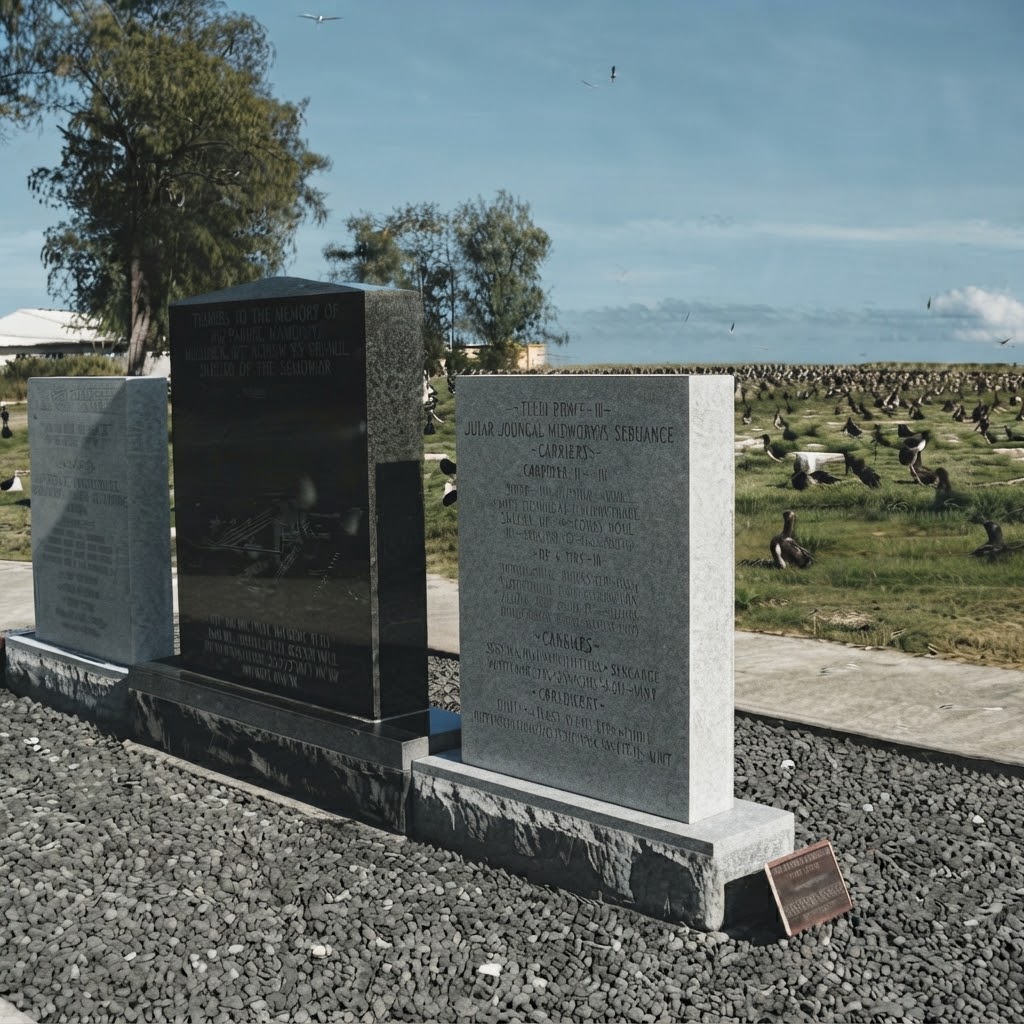
Midway is remembered today primarily through archives, museums, and the written accounts left by the men who fought there, rather than through any monument that visitors can walk among. The Naval History and Heritage Command maintains extensive documentation of the battle, including after-action reports and oral histories, preserving the testimony of participants like Rochefort, Kleiss, Gay, and Fuchida for historians and the public alike. Veterans’ memoirs, most notably Kleiss’s own account, and postwar historical works co-authored by former combatants such as Fuchida have kept the individual, human experience of the battle in circulation long after most of its participants have died, ensuring that the story is carried forward through written testimony even where the physical battlefield itself remains far beyond ordinary reach. Rochefort himself received little public recognition during his lifetime, having been passed over for the Distinguished Service Medal recommended after the battle amid interservice rivalries in Washington; the decoration was finally awarded posthumously decades later, a reminder that some of Midway’s most decisive contributions were made far from the flight decks and were only fully credited long after the fact. Naval aviation museums across the United States, including exhibits built around surviving aircraft types like the SBD Dauntless and TBD Devastator, allow visitors to see the machines flown at Midway even though the atoll itself is closed to them.
Visitor Info: www.fws.gov
Location: Midway Atoll, an unincorporated U.S. territory in the North Pacific Ocean, roughly 1,300 miles northwest of Honolulu, Hawaii
Site Status: Access Restricted or Unsafe
Visitation Notes: Midway Atoll itself cannot be visited due to its remote location and its status as a protected wildlife refuge. The Battle of Midway is covered in depth at the National Museum of the Pacific War (Admiral Nimitz Museum), 311 E Austin St, Fredericksburg, Texas — the leading U.S. institution for Pacific War history, where Midway receives substantial treatment within the museum’s main George H.W. Bush Gallery rather than as a standalone exhibit. The museum is open to the public Wednesday through Monday, closed Tuesdays.
Google Map
Firsthand Accounts
Diane B, visiting from the United States, highlighted the George H.W. Bush Gallery specifically, spending two and a half hours there before touring the separate Nimitz Museum wing, and praised how the exhibits honor Pacific War service members.
— from TripAdvisor
Carole G toured on a slow weekday and, while disappointed that the George H.W. Bush Gallery was temporarily closed for remodeling during her visit, still found the museum’s remaining artifacts and photos engaging, calling it a must-see for anyone interested in WWII.
— from Google Reviews
Alan G called it loaded with artifacts and stories across the major Pacific War battles, and spent five hours over two days covering both the main campus and the Pacific Combat Zone, including a PT boat and TBM Avenger on display.
— from TripAdvisor