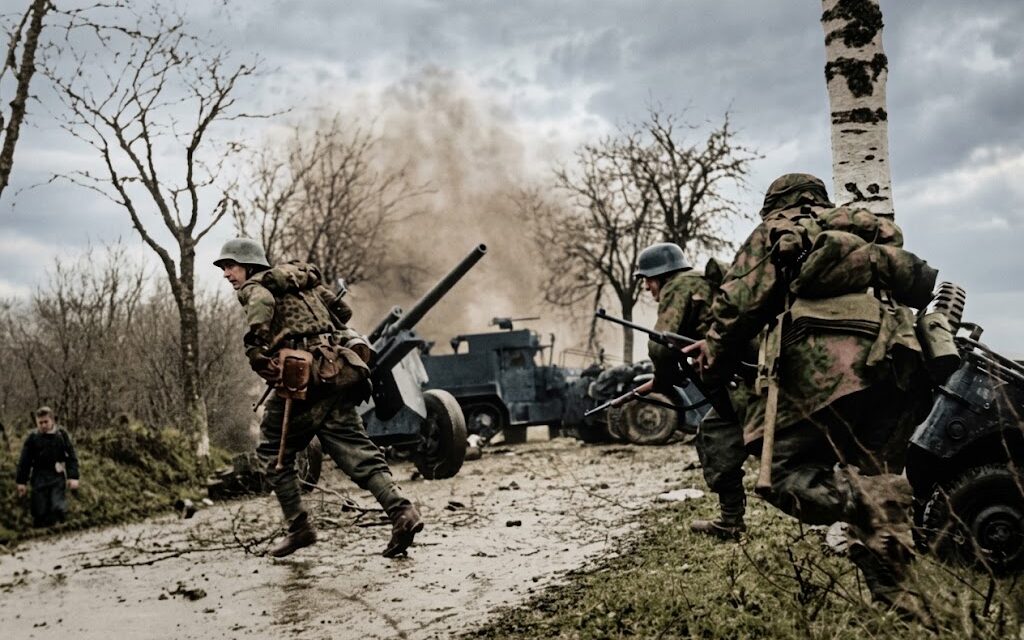
In December 1944, American soldiers in the Ardennes Forest faced two enemies at once: a massive German offensive launched in near-total secrecy, and one of the coldest winters Western Europe had seen in decades. Temperatures fell well below freezing for weeks on end, snow piled deep across the forest roads, and thousands of men on both sides suffered frostbite and exposure severe enough to be pulled from the line entirely, a toll that rivaled combat wounds in some units. Fog and heavy cloud cover grounded Allied airpower during the offensive’s critical opening days, stripping American commanders of the aerial reconnaissance and close air support that had shaped the campaign since the Normandy landings. Fought in conditions this brutal, the Battle of the Bulge became not only Germany’s last major offensive in the west but also a grueling test of simple physical endurance for the soldiers, and in a few notable cases the civilians, who found themselves caught in its path.
The Bulge: The Road to Battle
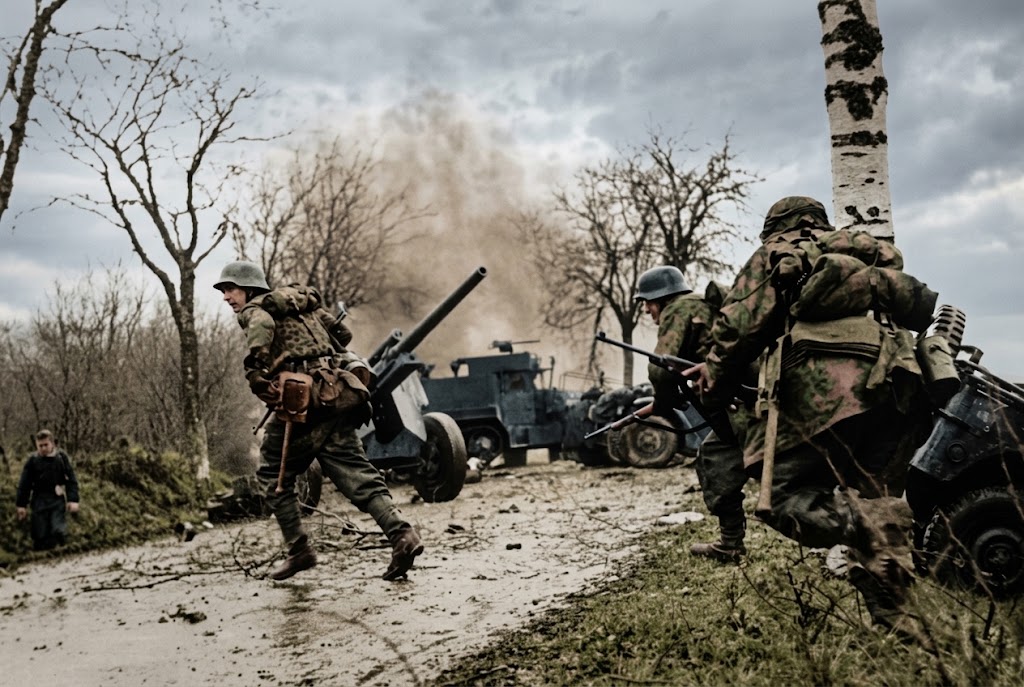
By the autumn of 1944, Germany’s military position on the Western Front had deteriorated badly following the collapse of its forces in France that summer, yet Adolf Hitler, against the advice of several of his own generals, ordered a massive counteroffensive through the Ardennes Forest, a rugged, heavily wooded region of Belgium and Luxembourg that Allied commanders considered unsuitable for large-scale armored operations and had left correspondingly thin of troops. Hitler’s plan called for German forces to punch through this lightly held sector, cross the Meuse River, and drive all the way to the port of Antwerp, splitting American and British forces and, he hoped, forcing the Western Allies to negotiate a separate peace that would let Germany concentrate its remaining strength against the advancing Soviet army in the east. German commanders assembled the attack in exceptional secrecy, moving roughly 400,000 troops, hundreds of tanks, and thousands of artillery pieces into position under strict radio silence and cover of night, exploiting the same persistent bad weather that would later ground Allied aircraft to conceal their buildup from Allied reconnaissance almost entirely. American forces in the Ardennes sector were thinly spread and included both battle-hardened divisions resting after earlier fighting and inexperienced units recently arrived in Europe, none of them expecting a major German offensive in a region widely regarded as a quiet part of the front. When the attack began before dawn on December 16, 1944, it caught American commanders almost completely by surprise, achieving a degree of tactical surprise rivaled by few other operations of the war in the west. Allied intelligence had picked up scattered signs of a German buildup in the weeks beforehand, but analysts largely dismissed them, reasoning that Germany no longer possessed the manpower, fuel, or armor reserves needed to mount an offensive of this scale, an assumption the German high command had deliberately worked to reinforce through its elaborate deception measures.
The Battle of the Bulge
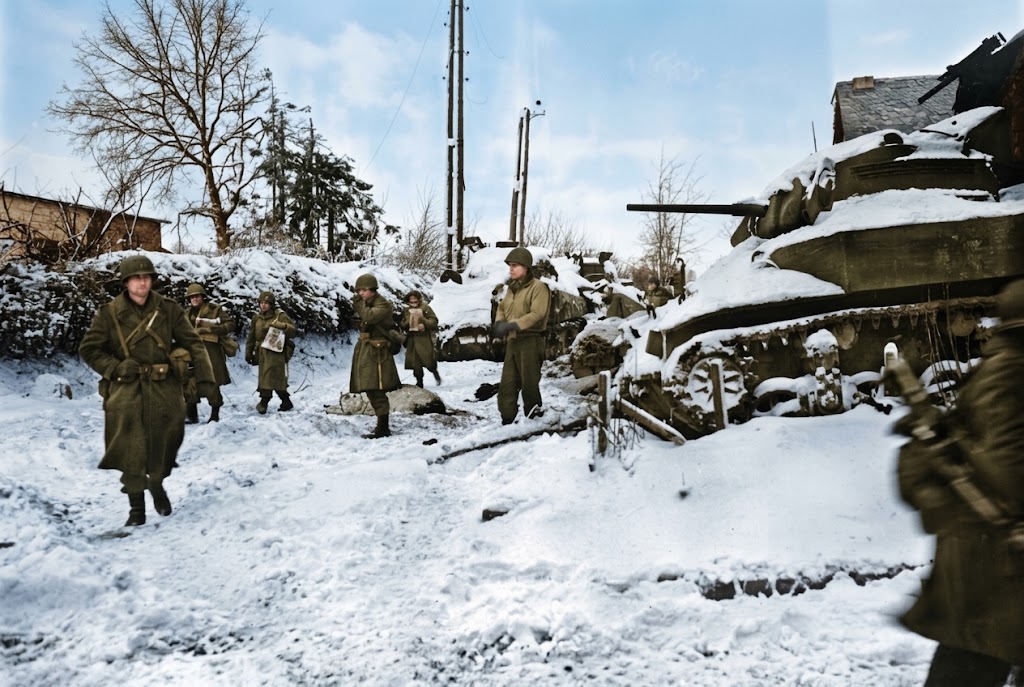
German forces struck along an eighty-mile front in the early hours of December 16, quickly overwhelming forward American positions and creating the deep westward bulge in the Allied line that gave the battle its name. At Lanzerath Ridge, an eighteen-man American intelligence and reconnaissance platoon under 2nd Lt. Lyle Bouck Jr. held off a vastly larger force of German paratroopers for roughly eight hours, a delaying action that bought American commanders critical time to organize their defense elsewhere along the collapsing front, even though Bouck himself would later reflect with characteristic modesty that he felt his stand had been a failure rather than the extraordinary feat of arms it was later recognized as. Elsewhere along the front that same day, soldiers of Kampfgruppe Peiper, an armored spearhead of the 1st SS Panzer Division, machine-gunned more than eighty captured American prisoners of war in a field near the Baugnez crossroads outside the town of Malmedy, a war crime that became known as the Malmedy massacre and that hardened American resolve against the German advance once news of it spread through the ranks. The German advance depended heavily on capturing the road network running through the town of Bastogne, a critical transportation hub, but the 101st Airborne Division and supporting units rushed into the town and held it under encirclement for days against repeated German attacks, famously rejecting a German surrender demand with Brigadier General Anthony McAuliffe’s one-word reply of “Nuts!” Inside besieged Bastogne, Belgian civilian nurses Renee Lemaire and Augusta Chiwy worked around the clock alongside American Army medics to treat the mounting numbers of wounded soldiers, with Lemaire ultimately killed on Christmas Eve when a German bomb struck the aid station where she was tending patients. As skies finally cleared on December 23, Allied aircraft resumed flying in force, striking German columns and supply lines while resupplying the encircled defenders at Bastogne, and General George Patton’s Third Army, having wheeled north in a remarkable feat of logistics and maneuver, broke through to relieve the town on December 26. Fighting continued for several more weeks as Allied forces gradually pushed the German salient back to its starting positions, and by the time the battle effectively ended in late January 1945, German forces had suffered losses in men and equipment they could never replace, while American casualties numbered among the heaviest of any single battle the United States Army fought in the entire war, with total American losses across the roughly six-week campaign eventually reaching well over 75,000 killed, wounded, captured, or missing. German losses in men, tanks, and aircraft were comparably severe, and unlike the United States, Germany by early 1945 had no remaining strategic reserve capable of replacing them, a shortfall that would prove decisive as Allied forces resumed their advance into Germany itself only weeks later.
The Legacy of the Bulge
The Battle of the Bulge destroyed Germany’s last reserves of trained manpower and armor in the west, leaving its forces unable to mount any serious defense against the Allied advance into Germany that followed in the months ahead. For the United States Army, the battle became a defining symbol of resilience under extreme pressure, commemorated ever since as a test in which outnumbered, poorly supplied units held their ground through brutal winter conditions long enough for reinforcements to arrive and turn the tide. The battle’s cost in American lives, among the highest of any engagement the country fought in the war, ensured that its memory would remain deeply woven into how the United States commemorates its role in the conflict’s final year.
Visiting the Bulge Today
The Ardennes battlefield today ranks among the best-preserved land-battle landscapes of the entire war, anchored by the town of Bastogne, where the immersive, audio-guided Bastogne War Museum walks visitors through the battle across roughly two to three hours using four composite wartime perspectives, paired with the adjacent Mardasson Memorial, a free star-shaped monument with an orientation table overlooking the surrounding battlefield. Original American foxhole lines dug by Easy Company of the 506th Parachute Infantry Regiment near Foy and the Bois Jacques forest remain visible and walkable today, drawing visitors familiar with the unit’s story from published histories and television adaptations, while Bastogne Barracks preserves the wartime command post used by General McAuliffe during the siege. Further afield, the December 44 Museum in the village of La Gleize displays an actual German King Tiger tank abandoned in place since the fighting in 1944, left essentially where it was disabled, and the Baugnez 44 Historical Center marks the exact site of the Malmedy massacre with a memorial and an audio-guided exhibit built directly on the ground where the killings took place. The Henri-Chapelle American Cemetery, free and open to visitors year-round, holds the graves of nearly eight thousand American service members who died in the campaign, offering a quieter, more contemplative counterpoint to the battlefield’s more active tourist sites. Because these locations are spread across a fairly wide stretch of the Ardennes countryside, visitors typically need a full day or more to see the major sites properly, and Bastogne itself hosts annual commemorations each December that draw veterans’ descendants, foreign dignitaries, and battle reenactors from across Europe and the United States, with anniversary events timed each year to the actual dates of the siege and its relief, drawing crowds substantial enough that accommodations in the town can book up well in advance of the December anniversary period.
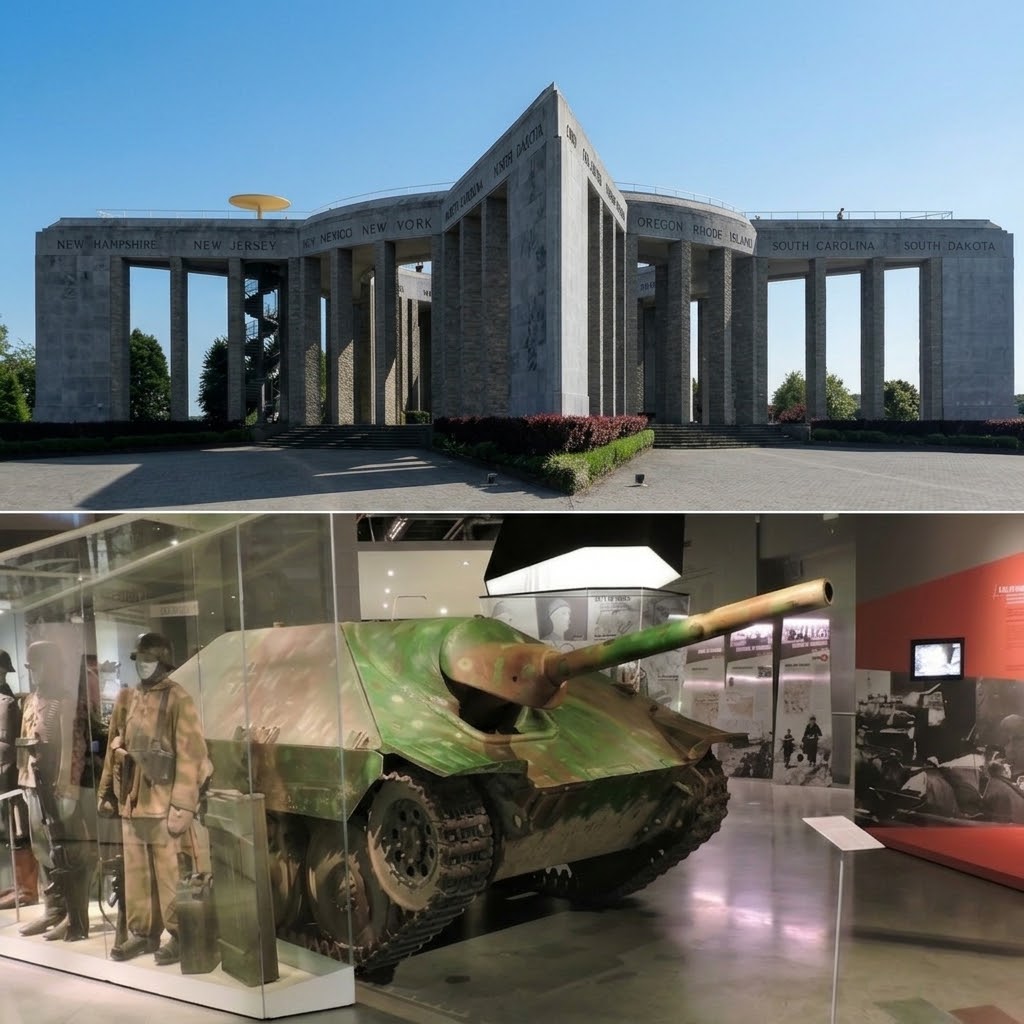
Remembrance at the Bulge
The eighteen-man stand led by 2nd Lt. Lyle Bouck Jr. at Lanzerath Ridge became, by the war’s end, the most decorated platoon of its size in the history of the United States Army, its story preserved in Alex Kershaw’s book “The Longest Winter” and in interviews later archived by the National WWII Museum. The wartime sacrifice of Belgian civilian nurse Renee Lemaire, killed while treating wounded soldiers in besieged Bastogne, survives in wartime records and the numerous published histories of the siege that followed, while her fellow nurse Augusta Chiwy, who treated soldiers under fire despite having no formal combat medical training, saw her own long-unrecognized contribution finally honored by both the American and Belgian governments late in her life, a story documented in the 2011 film “Search for Augusta” before her death in 2015. Sgt. Henry “Roy” Zach, who survived the Malmedy massacre outside Baugnez, left documented survivor testimony, preserved today by the Wisconsin Veterans Museum, that later provided key evidence in the postwar war crimes trial brought against the soldiers responsible for the killings. Taken together, these four accounts, a self-effacing platoon commander, two civilian nurses who worked under fire without formal military standing, and a massacre survivor whose testimony helped secure a war crimes conviction, capture a battle whose heroism extended well beyond the ranks of the soldiers who fought it.
Visitor Info: Book titled “Ardennes 1944: Hitler’s Last Gamble” by Antony Beevor (Viking, 2015); Documentary titled “Band of Brothers” (HBO, 2001)
Location: Colline du Mardasson 5, 6600 Bastogne, Belgium
Site Status: National Park / Managed Historic Site
Visitation Notes: The Ardennes battlefield is one of the best-preserved WWII land-battle landscapes in Europe. The Bastogne War Museum offers an immersive, audio-guided tour (2-3 hours) following four composite wartime perspectives, paired with the adjacent Mardasson Memorial, a free star-shaped monument with an orientation table overlooking the battlefield. Nearby, the original foxhole lines dug by Easy Company, 506th PIR near Foy and Bois Jacques are still visible and walkable, a pilgrimage site for Band of Brothers fans. Bastogne Barracks preserves McAuliffe’s wartime command post, the December 44 Museum in La Gleize displays an actual abandoned King Tiger tank left in place since 1944, and the Baugnez 44 Historical Center marks the exact site of the Malmedy massacre with a memorial and audio-guided exhibits. Henri-Chapelle American Cemetery, free and open year-round, holds nearly 8,000 American war dead. Bastogne hosts annual December commemorations drawing veterans’ descendants, dignitaries, and reenactors.
Google Map
Visitor Comments
dsalmasian from Jupiter, Florida recommended stopping at the Bastogne War Museum if anywhere in the area, describing the exhibits as well laid out and clearly organized for visitors unfamiliar with the battle’s full timeline.
— from TripAdvisor
William S praised the Baugnez 44 Historical Center’s authenticity, noting that its location directly at the actual site of the Malmedy massacre made the audio-guided tour and displayed uniforms and equipment especially powerful, and recommended reading up on the massacre beforehand for context.
— from TripAdvisor
Karin, a guided-tour visitor, praised her guide’s deep knowledge of the battle’s history, saying he was able to answer everything she wanted to know and made the historical sites feel immersive and personal.
— from GetYourGuide
Susan, a guided-tour visitor, praised the guide’s knowledge and enthusiasm but noted the day felt rushed, without quite enough time to take in all of the museum’s exhibits alongside the outdoor memorial stops.
— from GetYourGuide