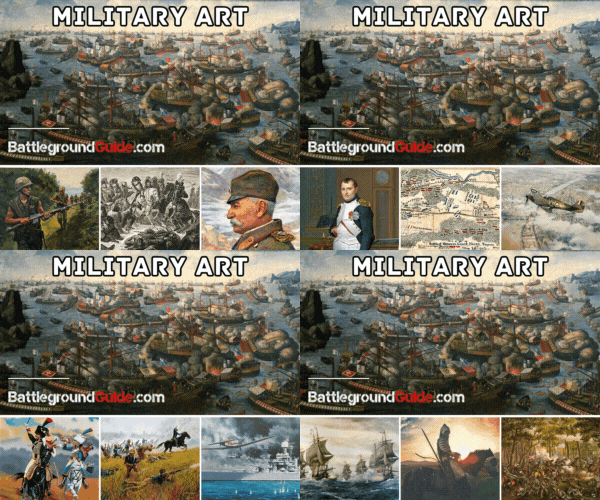
Among the thousands of soldiers crowded aboard the Holy League’s galleys on October 7, 1571, one young Spaniard was fighting through a fever so severe that his own comrades had urged him to stay below deck rather than take his post. He refused, and before the day ended he had been shot three times, permanently losing the use of his left hand. Nobody aboard the galley Marquesa that morning had any reason to suspect that this obscure, badly wounded infantryman would one day write one of the most influential novels in the history of world literature. His name was Miguel de Cervantes, and the battle that maimed him, fought in the Gulf of Patras off the coast of Greece, shattered a myth that had shaped European politics for decades: that the Ottoman navy could not be beaten at sea.
Lepanto: The Road to Battle
By the middle of the sixteenth century, the Ottoman Empire’s navy dominated the Mediterranean so thoroughly that Christian states had largely resigned themselves to a defensive posture, ceding effective control of the sea to Ottoman fleets that raided coastlines and seized island possessions with little sustained resistance for decades at a stretch. That dominance reached a brutal new peak in 1571, when Ottoman forces captured the Venetian stronghold of Famagusta on Cyprus after a prolonged siege, an atrocity-marked conquest that included the flaying alive of the Venetian commander who had negotiated the surrender under promise of safe passage, an act that shocked and outraged courts across Christian Europe once word of it spread. In response, Pope Pius V worked for months to assemble a Holy League uniting Spain, Venice, Genoa, the Papal States, the Knights of Malta, and several smaller Italian states into a single combined fleet, an alliance of frequently rival powers, Venice and Spain chief among them, that had rarely cooperated so closely against a common enemy before and whose competing interests threatened more than once to unravel the coalition before it ever put to sea. Command of the assembled Christian fleet, numbering roughly two hundred galleys crewed by tens of thousands of sailors, soldiers, and oarsmen drawn from across southern Europe, went to Don John of Austria, the illegitimate half-brother of King Philip II of Spain, a young but capable commander in his mid-twenties whose royal blood helped smooth the rivalries among the League’s proud and independently minded contingents in a way a lower-born admiral likely could not have managed. The Ottoman fleet, similarly built around roughly two hundred and thirty galleys and commanded by the admiral Ali Pasha, sailed west to meet the Holy League in the Gulf of Patras near the Greek town of Lepanto, confident in a navy that had not suffered a major defeat at Christian hands in living memory.
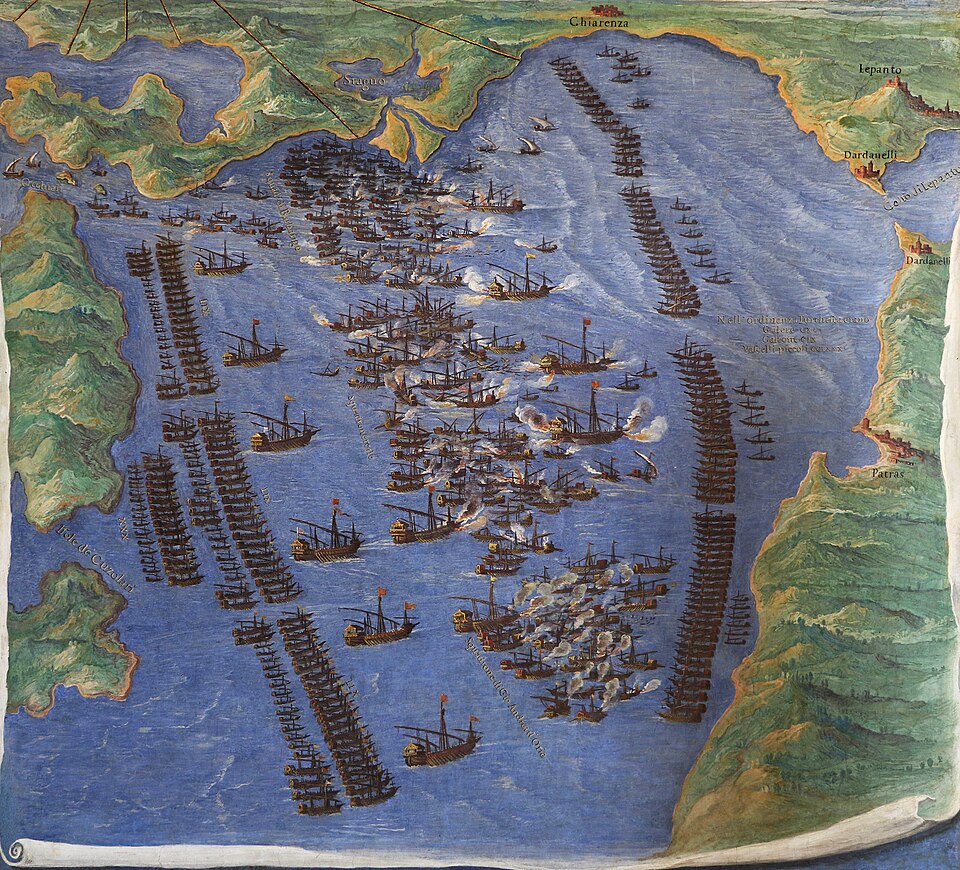
The Battle of Lepanto
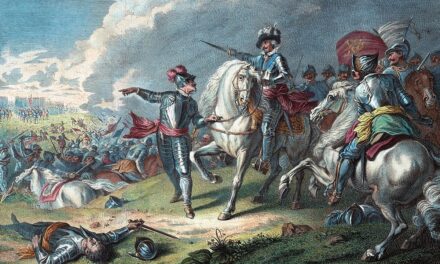
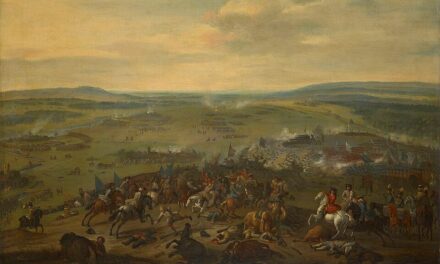
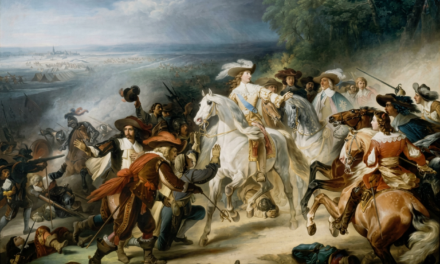
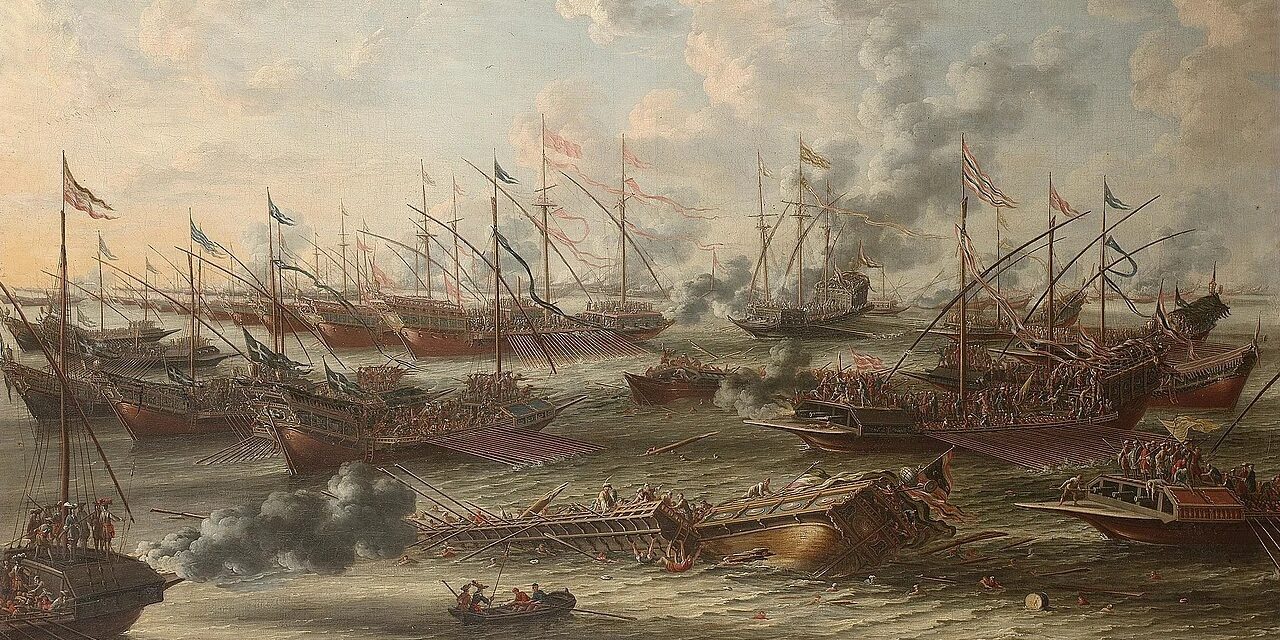
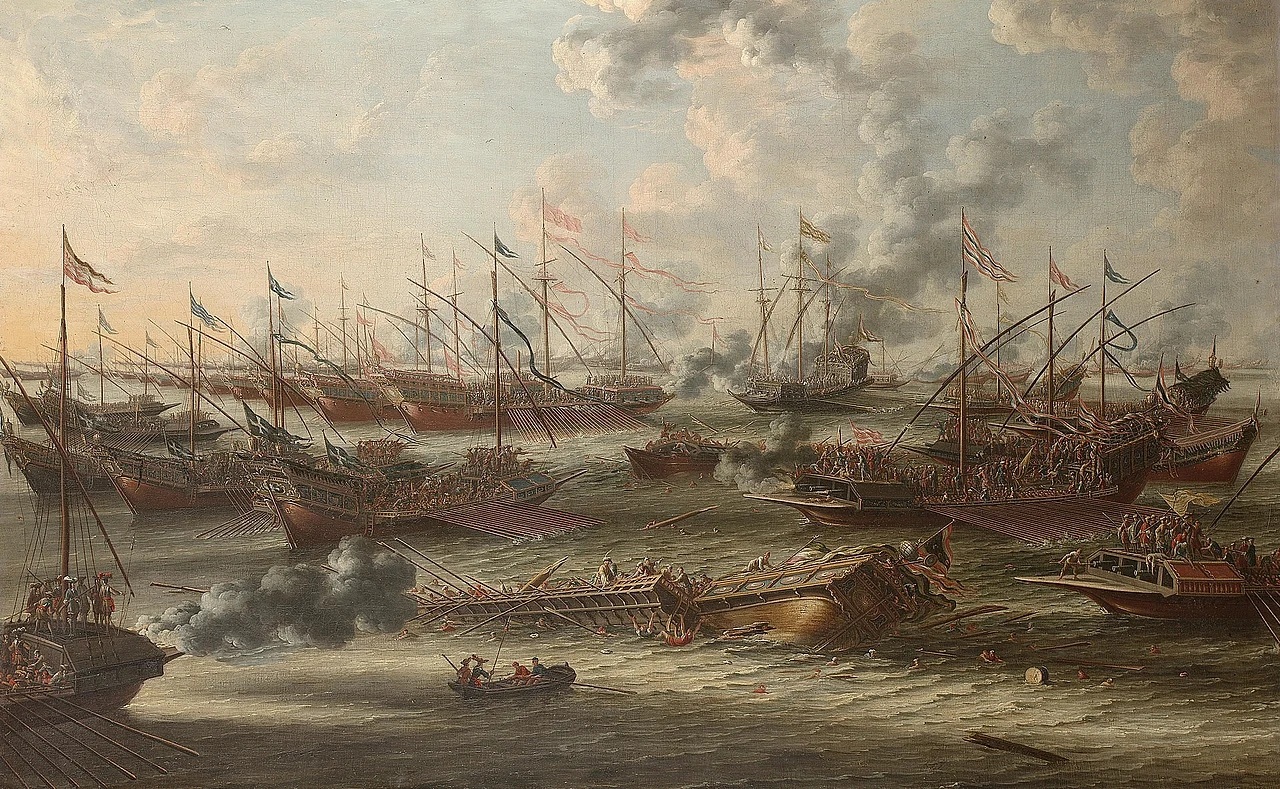
The two fleets, representing the largest concentration of oar-powered war galleys ever assembled for a single battle, formed opposing lines stretching for miles across the gulf on the morning of October 7, a scale of naval combat that would never again be matched once sailing ships and gunpowder fully displaced the galley in the following century. Before the main lines closed, Don John positioned several massive Venetian galleasses, oversized, heavily armed galleys bristling with cannon on multiple decks, well ahead of the Christian formation, and their opening broadsides tore into the approaching Ottoman ships and disrupted the tight, disciplined formation Ali Pasha had intended to bring into the fighting, sinking or crippling several vessels before the fleets had even properly engaged. When the main battle lines finally collided along nearly the entire length of the gulf, the fighting quickly became a series of brutal, close-quarters engagements as galleys rammed and grappled one another, with soldiers crossing directly from deck to deck armed with swords, pikes, and early firearms in fighting that more closely resembled land combat than a naval engagement in the modern sense. Don John’s flagship, the Real, engaged Ali Pasha’s own flagship, the Sultana, directly in the battle’s center, and after prolonged, desperate fighting across both vessels’ decks that reportedly required several separate boarding attempts, Christian soldiers finally overwhelmed the Ottoman flagship and killed Ali Pasha himself, an event that visibly began to unravel Ottoman morale and coordination across the wider battle within minutes. On the Christian left, Venetian galleys under Agostino Barbarigo fought a punishing engagement close to shore against Ottoman ships attempting to outflank the line by hugging the coastline, a fight in which Barbarigo himself was mortally wounded by an arrow through the eye even as his squadron held its position and helped prevent a Christian collapse on that flank that could have unraveled the entire battle. On the opposite flank, the Genoese commander Giovanni Andrea Doria found himself drawn into a more open, maneuvering fight against an Ottoman squadron attempting a similar flanking maneuver, a contest that briefly threatened to expose the Christian center to attack from the seaward side, but the battle’s outcome had already been substantially decided by the collapse of the Ottoman center and the death of its commanding admiral. By the time the fighting ended in the late afternoon after several hours of continuous, exhausting combat fought at close quarters across the length of the gulf, the great majority of the Ottoman fleet, well over one hundred of its roughly two hundred and thirty galleys, had been sunk, burned, or captured, and thousands of Christian galley slaves, chained to the oars of Ottoman ships for years or even decades, were freed as their vessels fell into Holy League hands, many of them taking up arms themselves against their former captors before the fighting was fully over.
The Legacy of Lepanto
Lepanto inflicted the most devastating single defeat the Ottoman navy had suffered in generations, killing or capturing tens of thousands of Ottoman sailors and soldiers against a smaller but still substantial toll of several thousand dead among the Holy League’s own crews. News of the victory triggered wide celebration across Christian Europe, arriving in cities from Rome to Madrid within weeks amid public processions and thanksgiving services, and Pope Pius V established a new feast day commemorating it, crediting the outcome to the intervention of the Virgin Mary through the prayers of the rosary. The Ottoman Empire, however, rebuilt a new fleet within roughly a year through an extraordinary mobilization of shipyards and resources that stunned Christian observers who had assumed Ottoman naval power broken for a generation, and Cyprus itself remained under Ottoman control despite the battle’s outcome, so the victory’s lasting strategic impact on the Mediterranean’s balance of power proved considerably more modest in practical terms than its enormous symbolic weight at the time.
Lepanto Today
There is no battlefield to visit at Lepanto itself, since the entire engagement was fought at sea in the Gulf of Patras, several miles from any coastline, and left no physical site connected to the fighting on land for visitors to walk today. The closest connection is the Venetian-era Botsaris Tower overlooking the harbor of Nafpaktos, the historic Greek town the battle is named after and the same fortified harbor Venetian and Ottoman fleets once contested for control of, which houses a modest permanent exhibition of roughly eighty replica paintings depicting the battle and its major figures. A separate memorial park on the western side of the same harbor honors Miguel de Cervantes specifically, commemorating the wound he suffered at Lepanto years before he became one of the most celebrated writers in world literature, offering a quieter, more contemplative counterpoint to the tower’s exhibition. Visitors generally describe the tower’s exhibition as a small, modest display rather than a major museum experience, offering limited depth beyond the paintings themselves for those unfamiliar with the battle’s history, and it rewards a visitor who arrives with some background on the fighting already in mind rather than expecting the exhibits alone to tell the full story, so it is best paired with a walk around Nafpaktos’s atmospheric historic harbor, still ringed by its Venetian fortifications, rather than treated as a standalone destination worth a special trip on its own. The town itself, sometimes still known by its older Italian name of Lepanto in historical writing, makes for a pleasant stop along Greece’s Gulf of Corinth coastline even for visitors with only a passing interest in the naval battle it lent its name to.
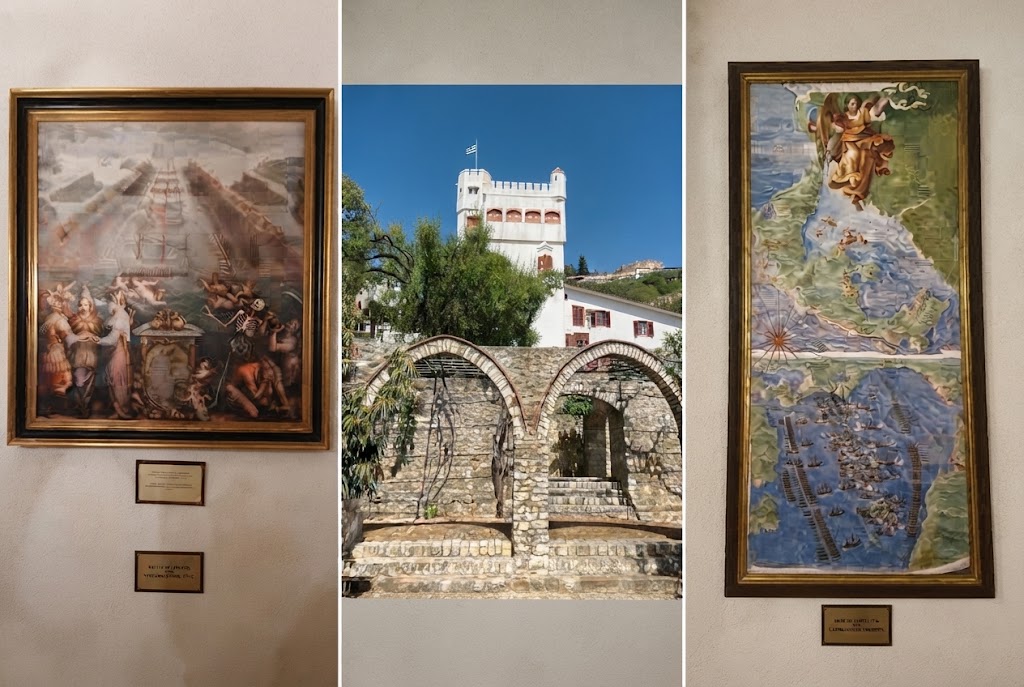
Remembrance at Lepanto
No account of Lepanto is more famous than that of Miguel de Cervantes himself, who fought aboard the galley Marquesa despite a serious fever that had left him confined below deck, insisting on taking his post regardless, and was wounded three times before the day ended, permanently losing the use of his left hand and earning the nickname “El Manco de Lepanto,” the one-handed man of Lepanto, a name that followed him for the rest of his life. He returned to the battle repeatedly in his later writing, decades before composing Don Quixote, the work that would eventually make him famous across Europe, once describing Lepanto as the greatest occasion that past or present ages had seen, or that future ages could hope to see, a judgment he never appears to have revised even after decades spent reflecting on it in his fiction and letters. A very different perspective survives from Onorato Caetani, Duke of Sermoneta and captain general of the Papal infantry, who fought aboard the galley Grifona, the first Christian ship to engage the Ottoman fleet that morning, and personally helped capture two enemy vessels during the fighting; his surviving letters describing the campaign, written from a commander’s vantage point rather than an ordinary soldier’s, offer a very different angle to set alongside Cervantes’s more personal, literary account of the same single afternoon of fighting.
Visitor Info: Book titled “Lepanto 1571: The Greatest Naval Battle of the Renaissance” by Angus Konstam (Osprey Publishing, 2003)
Location: Gulf of Patras, off Nafpaktos, Greece — the battle was fought at sea; no land battlefield exists to visit.
Site Status: Site No Longer Exists
Visitation Notes: The battle was fought entirely at sea, so there is no battlefield to visit — but the Venetian-era Botsaris Tower on the Nafpaktos harbor, at the actual site of the historic town the battle is named after, houses a permanent exhibition of roughly 80 replica paintings depicting the battle. A nearby memorial park on the west side of the same harbor honors Miguel de Cervantes, who was wounded fighting at Lepanto and later wrote about the battle. Visitors describe it as a modest, small-scale exhibit rather than a major museum, best combined with a walk around the historic harbor.
Google Map
Visitor Comments
“A place full of history” says Iordanis S.
— from TripAdvisor
AsterixThessaloniki called the tower “Impressive,” noting its connection to the Battle of Lepanto.
— from TripAdvisor
A more critical visitor, Fergs85, noted the tower contains “copies of famous paintings of the battle and not much more,” with insufficient explanatory information for visitors unfamiliar with the story.
— from TripAdvisor
Maria T noted that the tower “stores replica artworks of the Battle of Lepanto,” though she felt the surrounding grounds needed better upkeep.
— from TripAdvisor