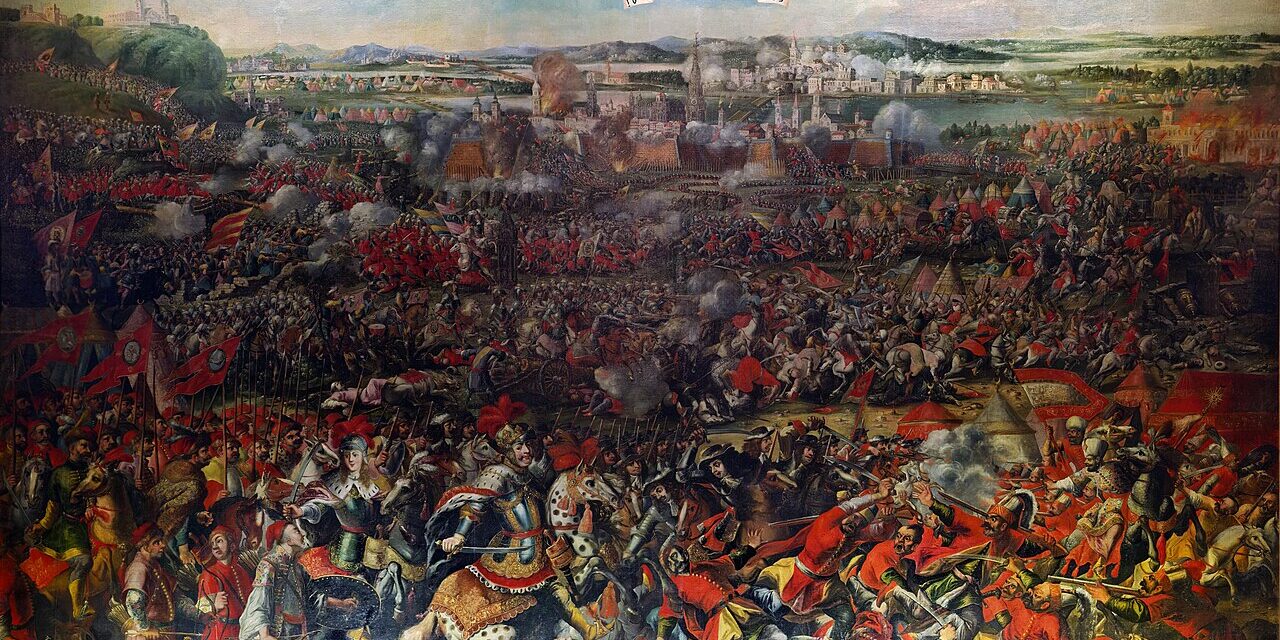
Even the Ottoman Empire’s own chronicler could not soften what had happened outside Vienna in September 1683. Silahdar Findiklili Mehmed Agha, a court chronicler who recorded the campaign from inside the Ottoman ranks, called the defeat the most disastrous the empire had suffered since its founding nearly four hundred years earlier. It was not an exaggeration. A siege that had brought the largest Ottoman field army in a generation to the gates of the Habsburg capital, and had come within days of forcing the city’s surrender, collapsed in a single afternoon of fighting on the wooded slopes above the Danube, broken by the largest cavalry charge in European history.
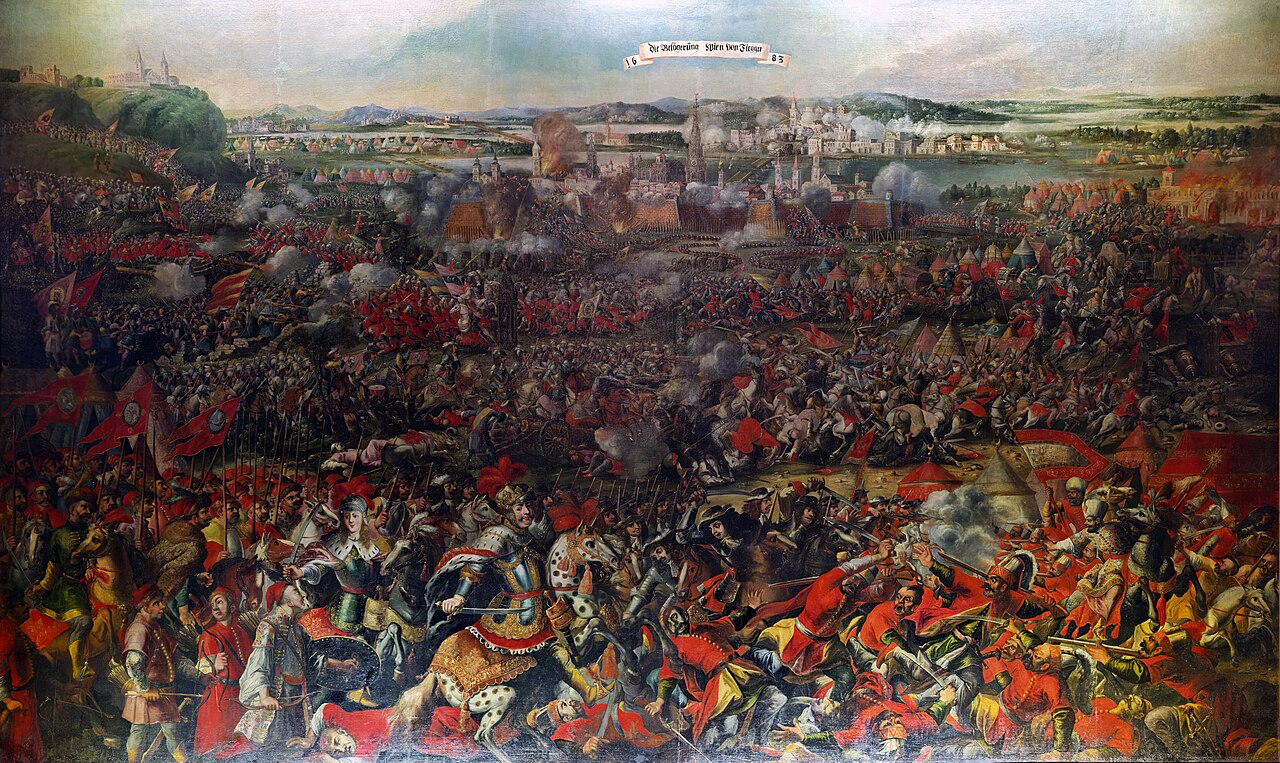
Vienna: The Road to Battle
By the summer of 1683, the Ottoman Empire under Sultan Mehmed IV had committed itself to its most ambitious European campaign in over a century, assembling a field army that may have numbered well over one hundred thousand soldiers, laborers, and camp followers under the command of Grand Vizier Kara Mustafa Pasha. The campaign’s target was Vienna itself, the seat of the Holy Roman Emperor Leopold I and, for the Ottomans, the long-sought prize that had eluded Suleiman the Magnificent’s army a century and a half earlier in 1529. Leopold, judging the city indefensible against such numbers, withdrew from Vienna as the Ottoman army approached in July, leaving its defense to Ernst Rudiger von Starhemberg, a veteran military commander who had roughly eleven thousand soldiers and several thousand armed civilians to hold a city ringed only by aging fortifications against a besieging force many times that size. Kara Mustafa’s army invested Vienna in mid-July and settled into a methodical siege built around tunneling and mining beneath the walls rather than direct assault, a slow, grinding campaign of underground explosions and counter-mines that steadily wore down the city’s defenses and its garrison’s dwindling reserves of men and gunpowder over the following weeks, while Ottoman engineers pushed their trenches ever closer to the Burg and Lowel bastions guarding the city’s most vulnerable stretch of wall. Recognizing that Vienna could not hold indefinitely alone, Emperor Leopold and Pope Innocent XI worked urgently through the summer to assemble a relief coalition, a diplomatic effort led in no small part by the Capuchin friar Marco d’Aviano, whose personal standing with several of the continent’s Catholic rulers helped hold together an alliance of frequently competing German and Central European princes long enough to put a combined army into the field. The coalition’s most crucial commitment came from King John III Sobieski of Poland, whose army and personal battlefield reputation as a cavalry commander made him the natural choice to lead the combined Holy League relief force, alongside German contingents from Saxony, Bavaria, and Franconia and an Austrian force under Charles V, Duke of Lorraine, once the full army converged outside the city in early September.
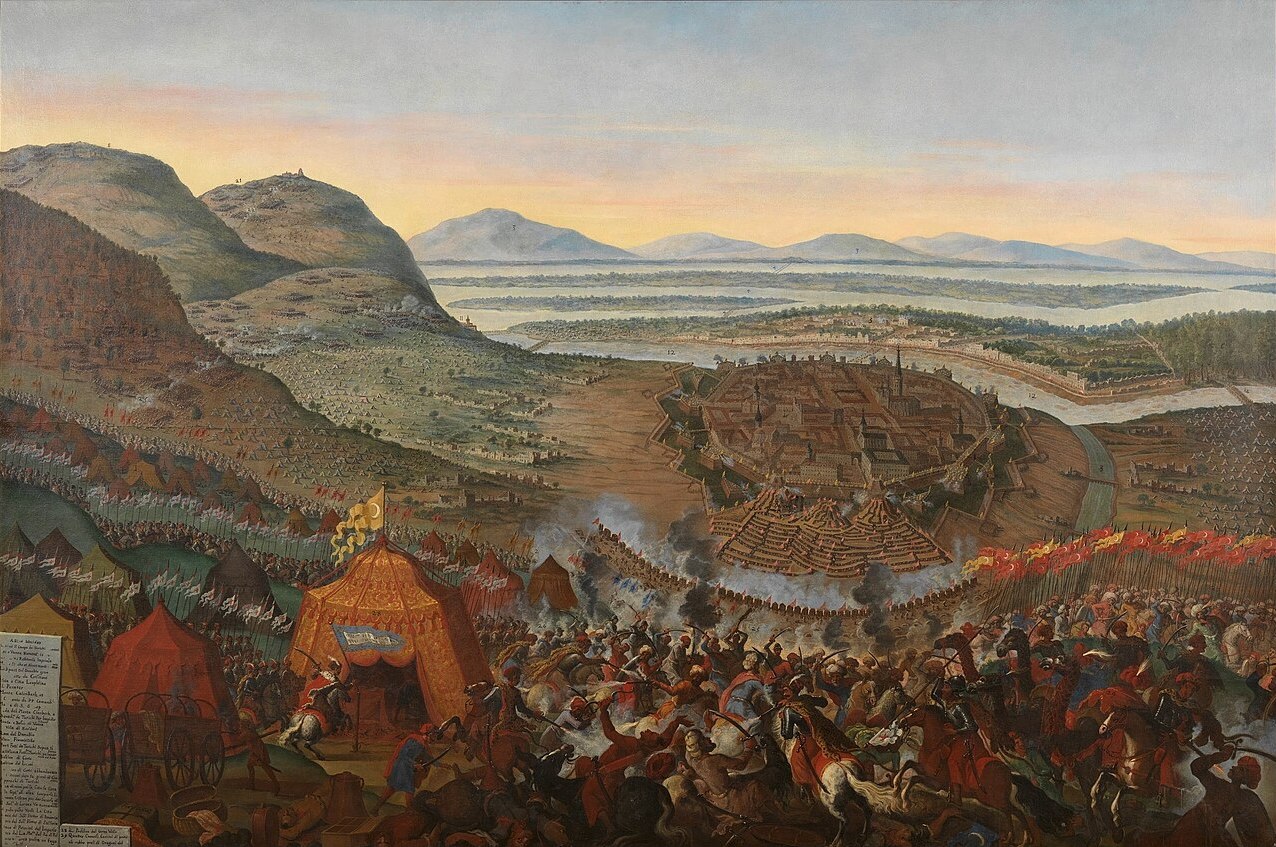
The Battle of Vienna
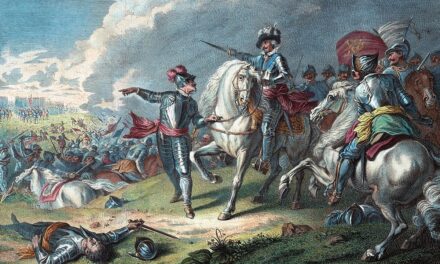
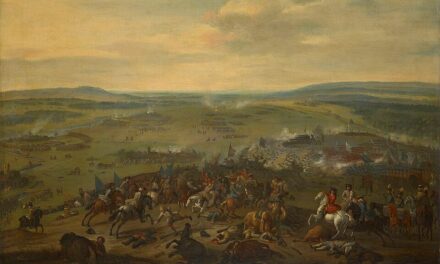
By the time Sobieski’s relief army, a combined force of Polish, Austrian, and German troops numbering roughly seventy to eighty thousand men, reached the hills northwest of Vienna on September 11, the city’s defenders inside were down to their last reserves of gunpowder and had been fighting off nightly breaches in the walls for days, with some accounts suggesting the garrison could not have held more than another day or two without relief. The Holy League army spent the night before the battle assembling on the wooded, difficult terrain of the Kahlenberg and Leopoldsberg heights overlooking the city and the besieging Ottoman camp below, a slow and exhausting climb through forest and vineyard that left the allied commanders uncertain until the following morning whether their full force would even be in position in time to fight as a coordinated army. Fighting began early on September 12 as Habsburg and German infantry and cavalry under Charles of Lorraine descended from the heights through vineyards and broken, wooded ground and engaged Ottoman positions across a wide front, a grinding, hours-long struggle fought village by village through Nussdorf, Heiligenstadt, and Dobling that gradually pushed Kara Mustafa’s forces back toward their siege lines around the city while Sobieski held the bulk of his Polish cavalry in reserve on the high ground above, waiting for the moment when the Ottoman center would be fully committed against the advancing infantry below. Late in the afternoon, with the Ottoman army’s attention and reserves increasingly committed to holding its center and left against the advancing Habsburg and German troops, Sobieski personally led an enormous mounted charge, roughly eighteen thousand cavalry including his famed Winged Hussars, down from the Kahlenberg heights directly into the Ottoman camp and rear, one of the largest cavalry charges ever mounted in European warfare. The charge struck with overwhelming force and speed, shattering Kara Mustafa’s already strained lines and triggering a rapid collapse across the Ottoman position as units broke and fled rather than face the converging allied attack from the heights and the city simultaneously. Kara Mustafa himself escaped the field, but his army abandoned its siege equipment, treasury, and much of its baggage train in a chaotic retreat that scattered Ottoman units across the countryside west of the city, and Sobieski entered the grand vizier’s captured tent that evening to find it still stocked with the Ottoman commander’s personal provisions and even his coffee service, a striking symbol of how completely the siege had unraveled within the space of a single day’s fighting. Among the abandoned supplies were sacks of coffee beans that, according to a persistent Viennese legend of uncertain reliability, later helped seed the city’s own coffeehouse culture, a small but enduring afterlife for a siege otherwise remembered mainly for its violence. Starhemberg’s exhausted garrison, watching the relief force descend and the Ottoman camp collapse from the city walls, had endured a siege of roughly two months, and the relief arrived with days, and by some assessments considerably less, to spare before the city’s defenses and provisions would have given out entirely.
The Legacy of Vienna
The relief of Vienna marked the high-water mark of Ottoman expansion into Central Europe and the beginning of a sustained Habsburg-led counteroffensive across the following decades, the Great Turkish War, that would eventually push Ottoman control out of Hungary entirely by the century’s end. Kara Mustafa Pasha was executed by order of the sultan that December, strangled with a silk cord in Belgrade, a common fate for Ottoman commanders held responsible for catastrophic military failure. Sobieski’s charge became one of the most celebrated feats of arms in Polish history, commemorated for generations afterward in painting, verse, and civic memory, and the victory was widely credited across Christian Europe with having permanently ended the Ottoman threat to Central Europe, a turning point later historians would treat as the moment the long balance of power between the Ottoman Empire and its Christian neighbors began to shift decisively westward.
Visiting Vienna Today
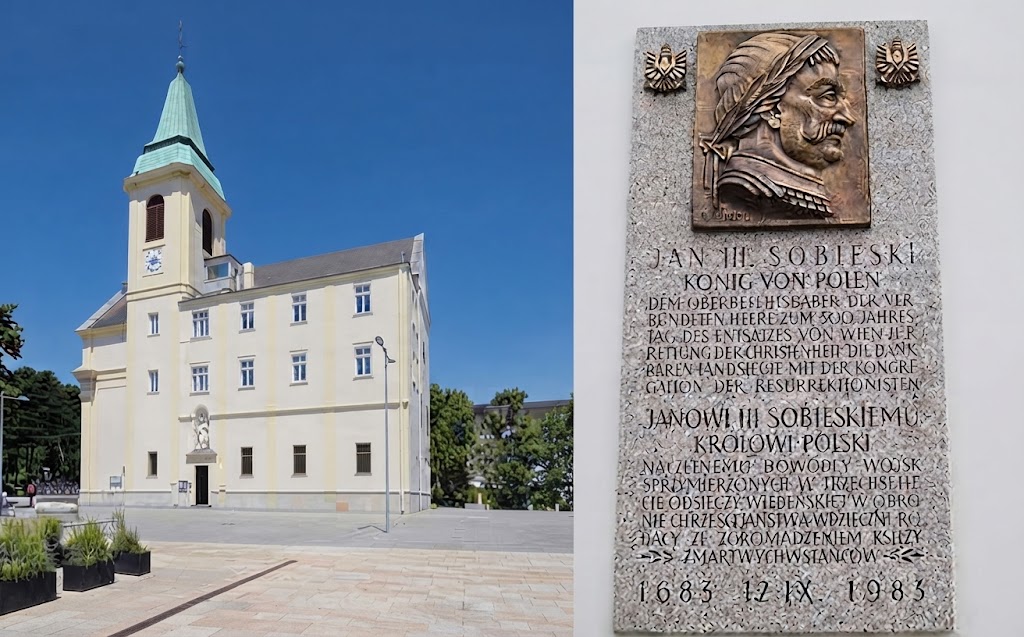
The Kahlenberg, the wooded hill on Vienna’s northwestern edge from which Sobieski launched his decisive charge, remains the single best-preserved connection to the siege and is reached by the 38A bus from Heiligenstadt station on Vienna’s U4 metro line, or on foot by hiking up through the vineyards from the nearby districts of Grinzing or Nussdorf, a popular route among local walkers as much as history visitors. At the summit stands St. Josefskirche, home to a dedicated Sobieski memorial chapel decorated with historical scenes of the 1683 relief painted in 1929 and 1930, standing beside a viewing terrace that offers one of the finest panoramas over Vienna and the Danube valley below, a vantage point that makes the scale of Sobieski’s downhill charge considerably easier to appreciate than any account in words. Admission to both the hilltop grounds and the church itself is free, and spring and early evening are the most popular times to visit, both for comfortable walking weather and for the light across the city view. Down in central Vienna, a gilded Ottoman cannonball from the siege remains embedded in the exterior wall outside Am Hof 11, a small but tangible piece of the fighting still visible on an ordinary city street centuries later, and the Heeresgeschichtliches Museum holds further siege-era artifacts for visitors wanting a deeper look. The Kahlenberg itself offers minimal visitor facilities beyond the church and a nearby restaurant, so those planning a visit should treat it as a scenic, historically rich half-day outing from central Vienna rather than a destination with extensive on-site programming, and should bring a jacket even in warmer months, since the hilltop can be considerably breezier than the city below.
Remembrance at Vienna
The most famous eyewitness account of the battle comes from Sobieski himself, who wrote to his wife Marie Casimire the day after the fighting to describe the victory, closing his letter with a line echoing Julius Caesar that has followed the battle ever since: “We came, we saw, God conquered.” The original letter survives today and is held by the Wilanow Palace Museum in Warsaw. From inside the besieged city, Ernst Rudiger von Starhemberg’s own siege journals and correspondence document the day-to-day desperation of holding Vienna’s walls through two months of mining, bombardment, and dwindling supplies, a defender’s account that historians still rely on for the granular texture of the siege itself. A third and rarer perspective survives from the Ottoman side in the chronicle of Silahdar Findiklili Mehmed Agha, a court chronicler whose blunt assessment of the defeat as the empire’s worst disaster since its thirteenth-century founding offers a striking counterpoint to the triumphant language of Sobieski’s own letter describing the very same afternoon. Marco d’Aviano, the Capuchin friar whose diplomacy had helped assemble the Holy League in the first place, remained with the allied camp throughout the campaign, and his own surviving letters to Emperor Leopold, preserved in Vatican archives and discussed in multiple biographies, add a fourth angle from the alliance’s own behind-the-scenes architect.
Visitor Info: Book titled “The Siege of Vienna: The Last Great Trial Between Cross and Crescent” by John Stoye (Birlinn, 2006)
Location: St. Josefskirche am Kahlenberg (Sobieski Memorial Chapel), Josefsdorf, 1190 Vienna, Austria
Site Status: Preserved Site, Minimal Facilities
Visitation Notes: Kahlenberg, the wooded hill on Vienna’s northwestern edge from which Sobieski’s relief army launched its decisive charge, is reached via the 38A bus from Heiligenstadt (U4 metro) or by hiking up through the vineyards from Grinzing or Nussdorf. At the summit, St. Josefskirche houses a Sobieski memorial chapel with historical scenes of the 1683 relief painted in 1929-30, and a nearby viewing terrace offers one of the best panoramas of Vienna and the Danube. In central Vienna, a gilded Ottoman cannonball from the siege is embedded in the wall outside Am Hof 11, and the Heeresgeschichtliches Museum holds further siege-era artifacts. Spring and early evening are popular times to visit for the views; admission to the hilltop and church is free.
Google Map
Visitor Comments
valerio v remarks that its a “nice viewpoint to enjoy a beautiful view of Vienna and the Danube.” Also a good starting point for hiking in the nearby Nussberg valley with its vineyards.
— from TripAdvisor
“You take the 38A bus up — best bus journey of my life says Judy L. Great views from the top overlooking Vienna. Definitely bring a jacket. I ordered a coffee at the local shop there and stayed to watch the sunset.”
— from Google Reviews (via Wanderlog)
According to Andreas Platzl, as Vienna’s local mountain, the 484 meter high Kahlenberg offers a magnificent view over the city. On clear days, you can spot the Schneeberg, Vienna’s nearest two-thousander, about 70 km to the east.
— from Komoot
Ignacy B commented… “Very nice view, however the peak itself hasn’t got any — maybe through the tower, but it is closed during the week. For the view you have to go to the Kahlenberg restaurant nearby.”
— from Google Reviews (via Wanderlog)