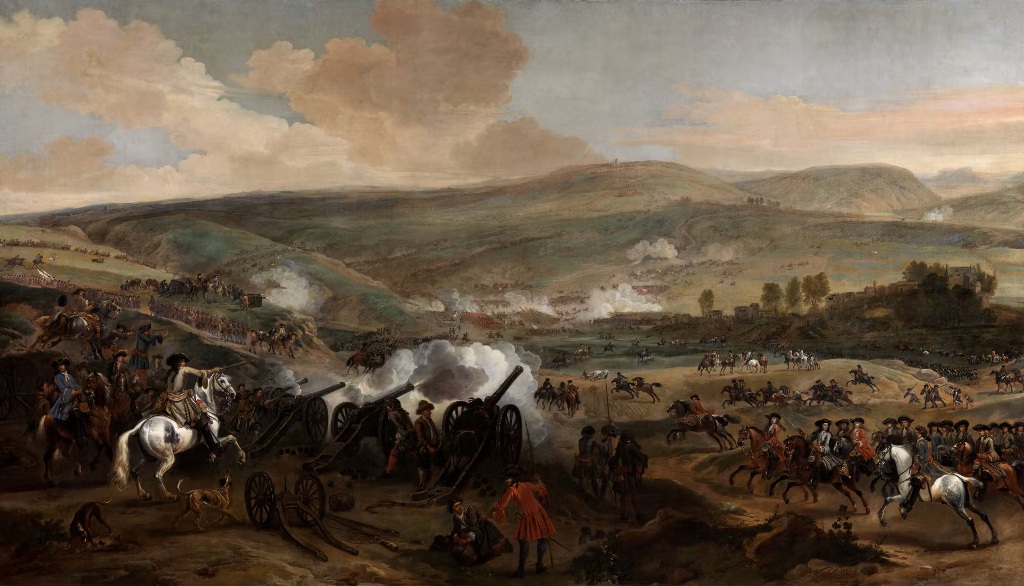
The day before the two rival kings of England and Ireland met in battle along the River Boyne, William III rode out to survey the crossing his army would force at dawn, and a Jacobite cannonball grazed his shoulder so closely that it tore through his coat, prompting the wounded king to quip that the shot “need not have come so near” before returning to camp to finish planning the attack he would personally lead the following morning. His rival, King James II, would spend the actual battle positioned safely away from the fighting and leave the field before its outcome was even decided, a contrast in royal conduct so stark that it shaped how the Battle of the Boyne would be remembered for centuries afterward, not merely as a military engagement but as a study in the difference between a king willing to bleed for his crown and one who was not.
The Boyne: The Road to Battle
By the summer of 1690, the conflict between the Catholic King James II, deposed from the English throne in 1688 but still recognized by many in Ireland, and the Protestant King William III, who had taken the English crown in the Glorious Revolution, had escalated into open warfare on Irish soil, with James relying heavily on French military support and Irish Catholic loyalty to reclaim his position. William, determined to secure his hold on the English and Irish crowns decisively, personally led a substantial army into Ireland, bringing with him a diverse force that included English, Dutch, Danish, and Huguenot troops united under his command, a coalition reflecting the broader European dimensions of what was fundamentally a contest between Catholic and Protestant claims to power. The two armies converged near the River Boyne, not far from Drogheda, where James’s Jacobite forces took up a defensive position on the river’s southern bank while William’s Williamite army approached from the north, both sides recognizing that the crossing itself would likely determine the battle’s outcome given the tactical advantages of holding the opposite shore.
William’s reconnaissance of the river crossing on the day before the battle, during which he suffered his shoulder wound from Jacobite artillery fire, reflected his characteristic willingness to expose himself personally to danger while planning operations, a trait that stood in sharp contrast to the more cautious and ultimately more distant command style James would display once the fighting began. The Duke of Schomberg, William’s seventy-four-year-old commander-in-chief and a veteran Huguenot general with decades of continental campaigning experience, played a central role in organizing the Williamite crossing plan, lending his considerable military reputation to an operation that would ultimately cost him his life. As dawn broke on July 1, 1690, William’s forces began their crossing of the Boyne at multiple points simultaneously, a tactic designed to stretch and confuse the Jacobite defenders who could not be certain which crossing represented the main Williamite thrust.
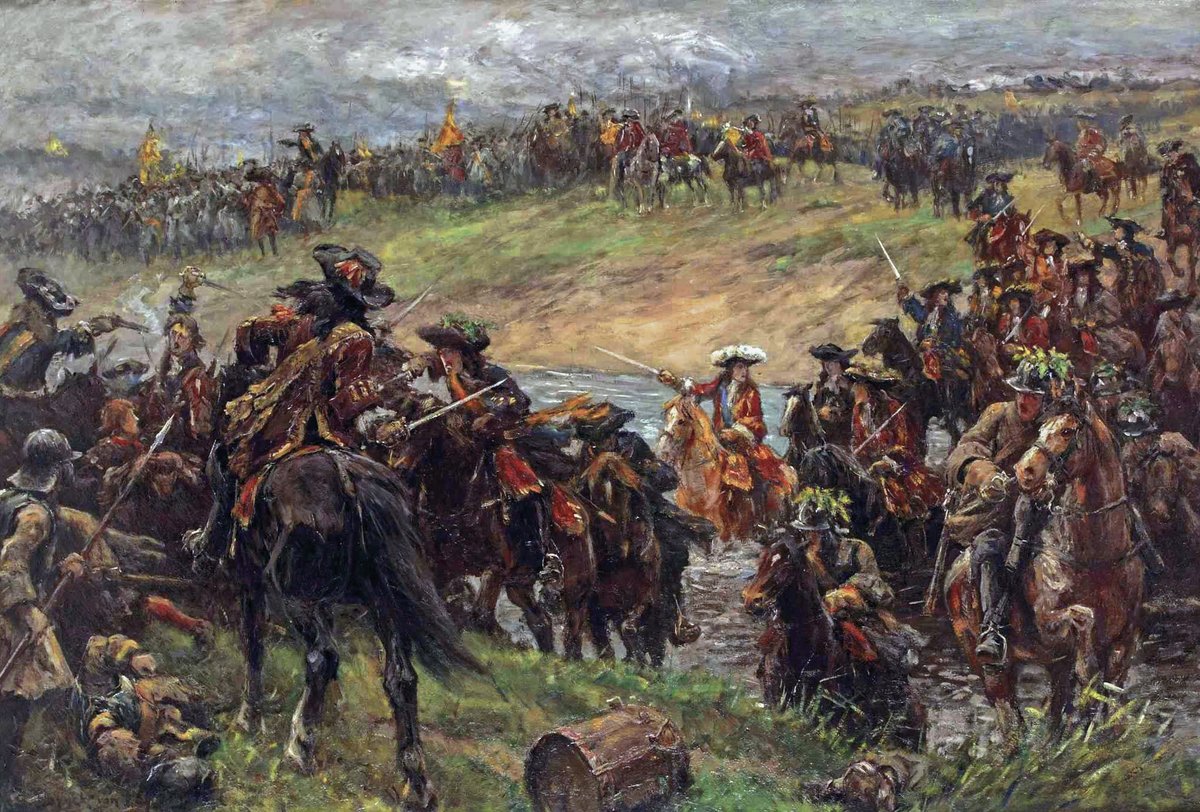
The Battle of the Boyne
William’s Williamite army forced its crossing of the River Boyne at several points on the morning of July 1, 1690, with infantry wading through the shallow river under covering artillery fire while Jacobite forces on the southern bank attempted to repel the advance with a combination of infantry volleys and cavalry counterattacks aimed at the most vulnerable crossing points. The fighting proved fiercest around the cavalry engagement at the river crossing, where the Duke of Schomberg, having crossed with his men to help stabilize the Williamite advance, found himself surrounded in the chaos of the melee and was killed by a musket shot to the neck, a loss that deprived William of his most experienced battlefield commander at a critical moment in the engagement. Despite Schomberg’s death and determined Jacobite resistance at several crossing points, the sheer weight and coordination of William’s multi-pronged assault gradually overwhelmed the defenders, forcing Jacobite units to fall back from the riverbank in the face of superior numbers and increasingly compromised defensive positions.
King James II, watching the battle unfold from a position removed from the heaviest fighting, made the consequential decision to leave the field before the engagement had been fully resolved, a choice that Jacobite soldiers and officers alike would later view as a profound failure of royal leadership at the very moment his personal presence and resolve might have mattered most. William’s forces continued to press their advantage as Jacobite resistance crumbled across the battlefield, and though the Williamite pursuit proved less than total, allowing much of the Jacobite army to escape destruction, the psychological and strategic damage inflicted by the defeat, and by James’s abrupt departure from the field, proved far more consequential than the battle’s relatively moderate casualty figures might suggest on their own. James fled first to Dublin and then onward to France, never again personally leading Jacobite forces in the field, effectively ending his active military challenge to William’s rule even though scattered Jacobite resistance in Ireland would continue for another year before final Williamite victory was secured.
Contemporary accounts, including a letter from Edward Brabazon, the fourth Earl of Meath, written just days after the battle, preserve details of William’s wounding during his pre-battle reconnaissance and offer a valuable eyewitness perspective on how quickly news of the king’s near-injury and subsequent battlefield conduct spread among his own officers and allies. Casualty figures from the battle itself, while significant, were considerably lower than the engagement’s outsized historical reputation might suggest, since the fighting at the crossing points, though intense in places, never escalated into the kind of prolonged general engagement that produced the massive casualty totals seen in other major battles of the era. Williamite forces benefited throughout the day from superior coordination between their infantry and cavalry elements, allowing commanders to reinforce weakening points in the advance more effectively than the Jacobite defenders, whose response to the multi-pronged crossing attempt grew increasingly disorganized as the morning wore on and it became clear that no single crossing point could be reliably identified and reinforced against as the primary Williamite effort.
The Legacy of the Boyne
The Battle of the Boyne became one of the most politically and symbolically significant engagements in Irish history, cementing Protestant Williamite control over Ireland for generations and establishing an anniversary still commemorated by Protestant communities in Northern Ireland today as a foundational moment in their historical identity. James’s flight from the field, contrasted against William’s willingness to personally risk injury in the campaign’s planning stages, became a defining narrative element that shaped popular memory of the battle far beyond its immediate military significance, reinforcing William’s reputation for personal courage while cementing James’s for irresolution. The battle’s outcome also carried lasting consequences for Ireland’s political and religious landscape, reinforcing a Protestant ascendancy that would shape land ownership, political representation, and sectarian relations across the island for generations, effects whose historical echoes remain a subject of active discussion and commemoration in Ireland today.
Visiting the Boyne Today
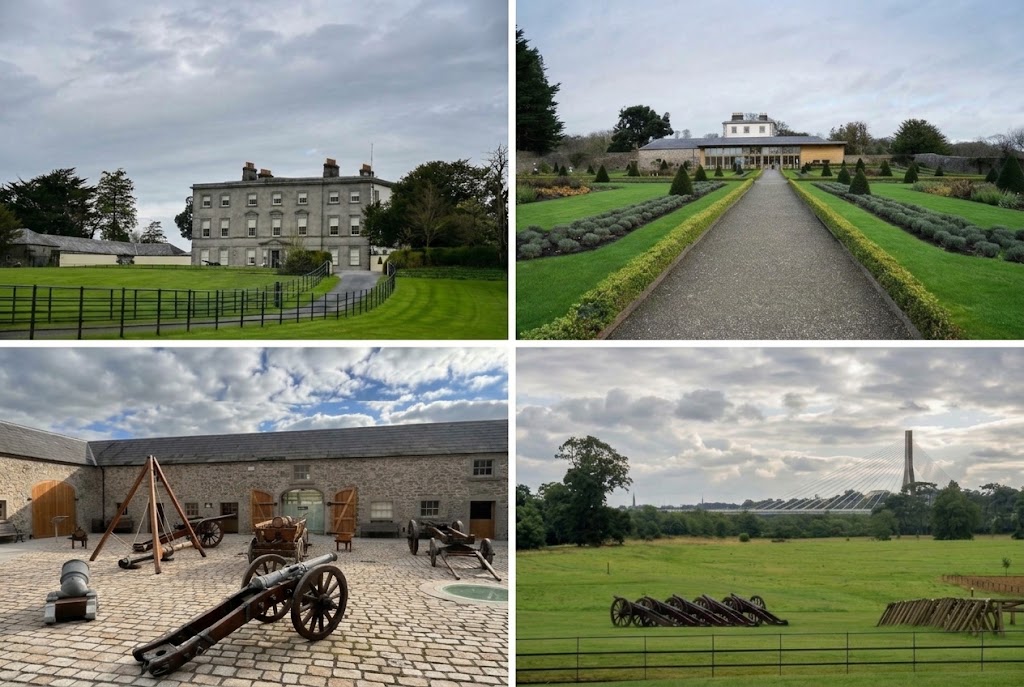
The Battle of the Boyne Visitor Centre, housed in the restored eighteenth-century Oldbridge House on the actual historic battleground beside the River Boyne, offers visitors an interactive exhibition featuring original period weapons alongside a laser-projected model of the battle and an audio-visual presentation that recounts the events of July 1, 1690, in vivid detail. Outside the house, self-guided walking trails lead visitors through parkland and a walled garden and along the riverside toward the actual crossing points where William’s forces waded through the shallow water under fire, allowing modern visitors to trace the battle’s geography on the same ground where it unfolded. A cafe on site provides refreshment after exploring the grounds, and access to the parkland and gardens remains free even for visitors who choose not to enter the paid exhibition, making the site accessible to a range of travelers with different interests and time constraints.
Visitors should be aware that the riverside rampart path can occasionally close for seasonal maintenance work, though the house, exhibition, and surrounding grounds typically remain open even during such closures, so a visit generally remains worthwhile despite any temporary path restrictions. The site’s management by Ireland’s Office of Public Works ensures a well-maintained and professionally interpreted experience, with the audio-visual presentation and interactive exhibits widely regarded as effectively bringing the historical drama of the crossing and the fall of two rival kingdoms’ fortunes to life for visitors unfamiliar with the battle’s details before arriving. The walking trails along the riverside also give visitors a rare chance to stand at the actual crossing points where infantry once waded through cannon smoke, a level of direct physical connection to the battlefield that many similarly significant historic sites, altered by centuries of development, are no longer able to offer.
Remembrance of the Boyne
The contemporary letter of Edward Brabazon, the fourth Earl of Meath, written on July 5, 1690, just days after the battle, preserves firsthand testimony of King William’s wounding during his reconnaissance of the river crossing and his characteristically dismissive remark about the near-miss, offering historians valuable insight into how the king’s conduct was perceived by his own supporters in the immediate aftermath. The death of the Duke of Schomberg during the cavalry action at the crossing is documented in a contemporary account by his adjutant-general St. Felix, which describes the veteran commander being surrounded and shot in the neck, a primary source that historians continue to rely on for understanding the chaotic fighting at the river’s edge. Both eyewitness accounts, preserved and made accessible today through resources including the Meath History Hub, continue to anchor modern understanding of a battle whose political and symbolic legacy in Ireland has long outlasted the relatively brief and, in purely military terms, indecisive fighting that actually took place along the riverbank in 1690.
Visitor Info: Battle of the Boyne Visitor Centre (Office of Public Works)
Location: Battle of the Boyne Visitor Centre, Oldbridge House, Oldbridge, Drogheda, Co. Meath, A92 CY68, Ireland
Site Status: National Park/Managed Historic Site
Visitation Notes: Visitors arrive at the restored 18th-century Oldbridge House, which sits on the historic battleground beside the River Boyne. Inside, an interactive exhibition includes original period weapons, a laser-projected model of the battle, and an audio-visual presentation recounting the 1690 clash. Outside, self-guided battlefield walking trails lead through parkland, a walled garden, and along the riverside toward the crossing points; a cafe and free parkland and garden access are also available. Note that the riverside rampart path can occasionally close for seasonal maintenance, though the house, exhibition, and grounds typically remain open.
Google Map
Visitor Comments
Erica D from Winchester, MA was impressed by the audiovisual presentation at the visitor centre, which she felt brought the battle to life, and loved wandering through the walled gardens afterward. She said the on-site tea room was a welcome touch after the walk, calling it “a blessing.”
— from TripAdvisor
Grahamal, a regular visitor from Dublin, was disappointed to find the riverside rampart path temporarily closed for renovation work during a recent visit. He noted, though, that the house, gardens, and cafe all remained open and the visit was still worthwhile.
— from TripAdvisor
scholsey, visiting from Dublin, praised how well-organized the site felt overall but pointed out that roughly half the bulbs in the light-up battle-route display were burned out, a minor detail that took away from an otherwise strong exhibit.
— from TripAdvisor