After capturing Byzantine Emperor Romanos IV Diogenes on the battlefield, the Seljuk sultan Alp Arslan did something few conquerors of the age would have considered: he ritually humiliated his captive, then released him within about a week under a peace agreement, sparing his life entirely. It was an act of remarkable mercy from the victor of one of the most consequential battles of the medieval period. It did the defeated emperor no good at all. Romanos returned home only to be overthrown by his own rivals, defeated in the civil war that followed, blinded, and dead within months from the wound’s infection, a fall as complete and as merciless as anything Alp Arslan might have ordered on the battlefield itself.
Manzikert: The Road to Battle
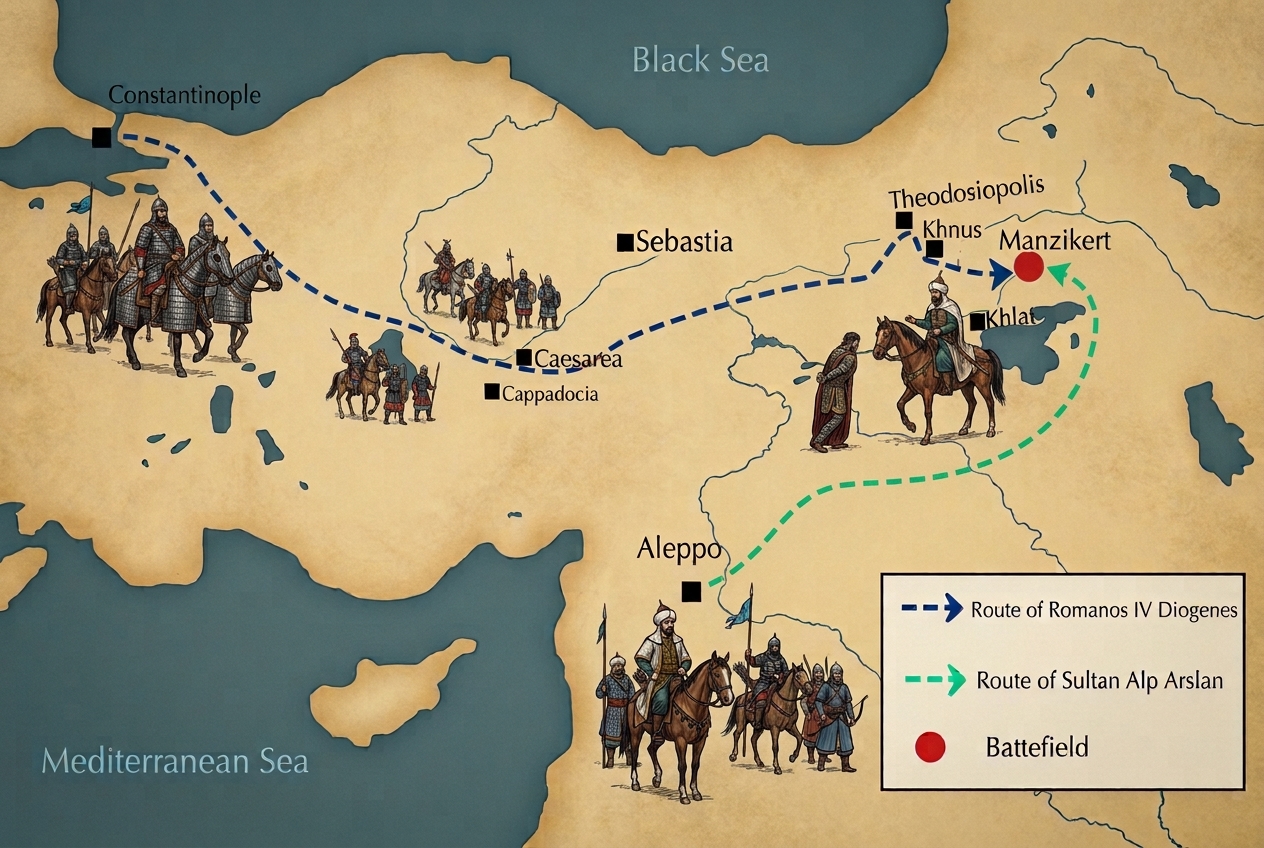
By 1071, the Byzantine Empire faced growing pressure along its eastern frontier in Anatolia from the Seljuk Turks, a rising Muslim power under Sultan Alp Arslan that had already absorbed large portions of the Islamic world and was pushing steadily into traditionally Byzantine territory. Emperor Romanos IV Diogenes, a capable military commander who had seized the throne through marriage to the widowed empress, assembled a large and diverse imperial army, including Byzantine regulars, Norman and Frankish mercenaries, and Turkic Pecheneg cavalry, intending to confront the Seljuk threat decisively and restore Byzantine control over the contested eastern territories. Alp Arslan, whose own priorities lay primarily with campaigns against the Fatimid Caliphate in Egypt rather than a full-scale war with Byzantium, initially sought to avoid a major confrontation and reportedly offered peace terms as Romanos advanced, an overture the emperor rejected in his determination to settle the eastern question through a decisive military victory.
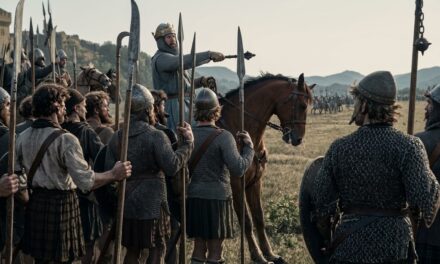
As the two armies maneuvered near the fortress town of Manzikert in eastern Anatolia, the Byzantine force suffered from serious internal divisions, with tensions running high between the emperor and several of his senior commanders, including Andronikos Doukas, a rival from a powerful noble family with its own claims on imperial power. The Byzantine army’s reliance on mercenary and allied contingents whose loyalty to Romanos personally was uncertain at best added further instability to a force that, on paper, appeared formidable but lacked the internal cohesion needed to withstand a serious reversal in the field. As battle became unavoidable, both sides prepared for an engagement whose outcome would determine control over Anatolia, the heartland from which the Byzantine Empire had long drawn much of its manpower, revenue, and strategic depth. Romanos, confident in the size of his assembled force despite its internal divisions, positioned his army near Manzikert expecting either a swift Seljuk withdrawal in the face of superior numbers or a conventional pitched battle he believed his heavier Byzantine cavalry and infantry were well equipped to win, an assumption that badly underestimated both the mobility of Seljuk horse-archer tactics and the fragility of his own polyglot command structure.
The Battle of Manzikert
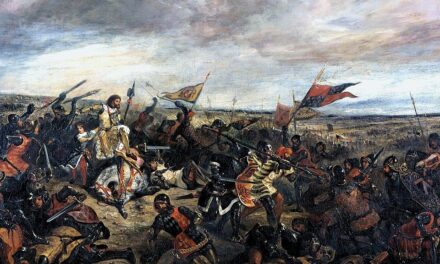
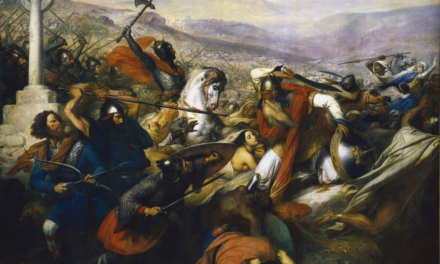
The battle opened with Seljuk horse archers employing classic steppe cavalry tactics, riding in loose formations around the more heavily armored Byzantine lines, loosing volleys of arrows while avoiding direct engagement, and gradually drawing Byzantine units out of formation in pursuit of an enemy that refused to stand and fight conventionally. Romanos, recognizing the danger of his army being worn down by these hit-and-run tactics without ever bringing the Seljuks to a decisive engagement, eventually ordered a general withdrawal back toward the Byzantine camp as daylight faded, a maneuver that under the best of circumstances required precise coordination and discipline to execute safely. It was during this critical withdrawal that Andronikos Doukas, commanding the Byzantine reserve, failed to support the retreating main force, a failure traditionally described by contemporary and later chroniclers as a deliberate act of betrayal driven by his family’s rivalry with Romanos, though modern scholarship has increasingly challenged this narrative, suggesting instead that Doukas’s force had simply become separated and disorganized as the Byzantine line began to disintegrate under pressure.
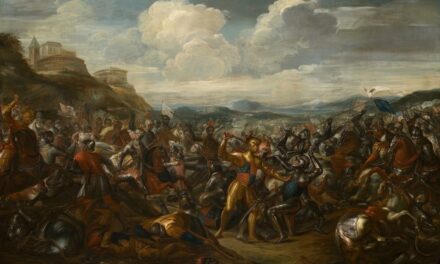
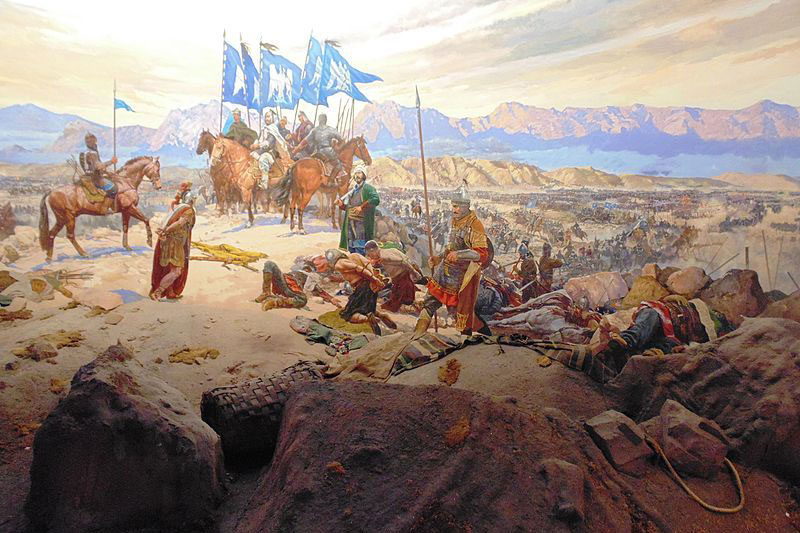
Whatever the true cause, the absence of reserve support at the critical moment allowed the Seljuk cavalry to exploit the gap, encircling the Byzantine center and turning an orderly withdrawal into a chaotic rout as units lost contact with each other in the confusion. Romanos himself, fighting on despite the collapse of the formation around him, was eventually wounded and captured by Seljuk forces after his personal guard was overwhelmed, an extraordinary outcome that placed a reigning Byzantine emperor directly in the hands of the enemy commander. Brought before Alp Arslan, Romanos reportedly expected execution or severe punishment befitting the scale of the defeat his army had just suffered, and contemporary accounts describe an initial period of ritual humiliation in which the sultan placed his boot upon the emperor’s neck in a symbolic display of the reversal in their fortunes. Alp Arslan then chose a markedly different path than expected, treating his royal captive with calculated generosity, negotiating a peace treaty involving territorial concessions and a ransom, and releasing Romanos within roughly a week to return to Constantinople under the terms of their agreement.
This act of leniency, remarkable by the standards of medieval warfare, reflected Alp Arslan’s broader strategic priorities, since his primary military ambitions lay elsewhere against the Fatimids, and a stable, cooperative Byzantine neighbor served his interests better than a destabilized empire in chaos following the death of its ruler. The peace terms Alp Arslan extracted from Romanos included a substantial ransom, an annual tribute, and the release of Muslim prisoners held by Byzantium, along with territorial concessions in the border regions closest to Seljuk-controlled land, terms that, had they held, would have secured a durable and comparatively favorable settlement for the defeated emperor. Contemporary accounts suggest that Alp Arslan even provided Romanos with an armed escort and financial assistance for his journey home, a gesture of practical generosity that went well beyond the minimum requirements of the peace agreement and reflected the sultan’s apparent confidence that a grateful, reinstated emperor would prove a more useful neighbor than a martyred one.
The Legacy of Manzikert
Manzikert’s true consequences unfolded not on the battlefield but in the political chaos that followed the emperor’s return, as rival factions within Byzantium refused to honor the peace Romanos had negotiated and moved instead to depose him entirely. Andronikos Doukas’s family, whose loyalty during the battle remained contested, played a central role in the coup that followed, and Romanos was defeated in the ensuing civil war, blinded in a brutal punishment traditional to Byzantine politics, and died of the resulting wound’s infection within months, never able to enforce the treaty he had personally negotiated with his captor. The resulting collapse of centralized Byzantine authority in Anatolia, rather than the battle’s direct casualties, opened the region to gradual and largely unopposed Turkish settlement over the following decades, permanently and dramatically altering Anatolia’s demographic and political character in a way that shaped the region for the remainder of its history.
Visiting Manzikert Today
The exact site of the 1071 battlefield remains the subject of ongoing archaeological investigation and has not been developed as a formal visitor destination, meaning travelers cannot walk a clearly marked historical battlefield in the way they might at more thoroughly excavated sites from other periods. The modern town of Malazgirt, built near the traditional battle site in eastern Türkiye, instead offers a themed museum tracing the arc of Turkish history from the battle’s outcome through to the present day, giving visitors historical context even without direct access to the original terrain. A Victory Monument in the town includes a viewing terrace overlooking the surrounding landscape, providing a vantage point for visitors to take in the same open Anatolian steppe where the battle’s decisive cavalry maneuvers unfolded nearly a thousand years ago.
The standing Malazgirt Castle, which local tradition closely associates with the battle and its aftermath, remains the town’s most visually striking historical landmark, its stone walls rising above the surrounding streets much as they likely did in the medieval period. Each year on August 26, Turkey marks Malazgirt Victory Day with state-level commemorations, transforming the town into the center of a national holiday that draws far more visitors and media attention than it typically sees the rest of the year. Outside of that annual observance, Malazgirt remains a quiet, seldom-reviewed corner of eastern Türkiye rather than a developed international tourist destination, appealing primarily to visitors with a specific interest in Seljuk and Byzantine history rather than casual travelers passing through the region. Because the precise battlefield itself is still being studied and mapped by archaeologists, visitors should treat a trip to Malazgirt as an opportunity to engage with the battle’s legacy and commemoration rather than to stand on a definitively identified patch of contested ground.
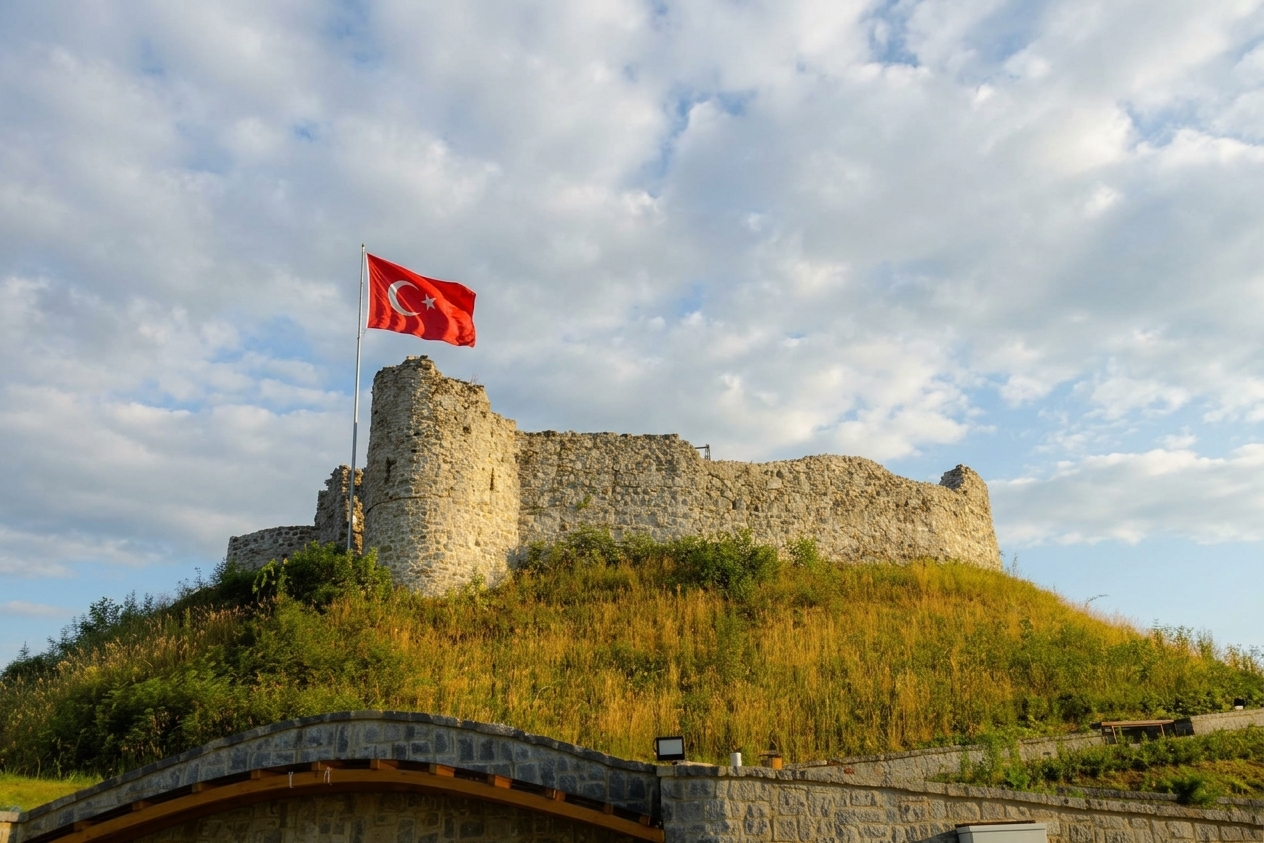
Remembrance of Manzikert
Byzantine and Seljuk chroniclers alike recorded the battle’s dramatic reversal of fortune, from Romanos’s capture and ritual humiliation to Alp Arslan’s calculated mercy, and these accounts remain central to how historians understand both the immediate encounter and its far larger political consequences. Modern scholarship’s reassessment of Andronikos Doukas’s conduct during the critical withdrawal illustrates how even a battle studied for nearly a millennium can still yield new interpretations as historians revisit long-accepted narratives of villainy and betrayal. Malazgirt’s annual Victory Day commemoration ensures that the battle remains vividly present in Turkish national memory, even as the precise archaeological footprint of the original battlefield continues to be studied rather than definitively fixed. The stark contrast between Alp Arslan’s mercy toward his defeated rival and the merciless fate Romanos ultimately met at the hands of his own countrymen continues to strike historians and visitors alike as one of the most bitterly ironic outcomes in medieval military history.
Further Exploration: Book titled “Road to Manzikert: Byzantine and Islamic Warfare, 527-1071” by Brian Todd Carey, Joshua B. Allfree and John Cairns (Pen & Sword, 2012)
Location: 1071’den 2071’e Malazgirt Müzesi, Danişmentgazi Mahallesi, Malazgirt, Muş Province, Türkiye (the exact 1071 battlefield location is still under archaeological investigation near Afşin Village; the museum, victory monument, and Malazgirt Castle in town are the visitable anchors)
Site Status: Marker or Monument Only
Visitation Notes: The exact 1071 battlefield remains under active archaeological investigation and is not a formal visitor site, but the modern town of Malazgirt offers a themed museum tracing Turkish history from the battle to the present, a Victory Monument with a viewing terrace, and the standing Malazgirt Castle, which local tradition ties to the battle. Turkey marks August 26 each year as Malazgirt Victory Day with state-level commemorations. This is a quiet, seldom-reviewed corner of eastern Türkiye rather than a developed tourist destination.
Google Map
Visitor Comments
A visitor named perrygrinate visited Malazgirt Castle and noted that Alp Arslan defeated the Byzantine army here in 1071, opening the way for Turkish settlement, and said the castle still dominates the town and is well worth visiting.
— from TripAdvisor