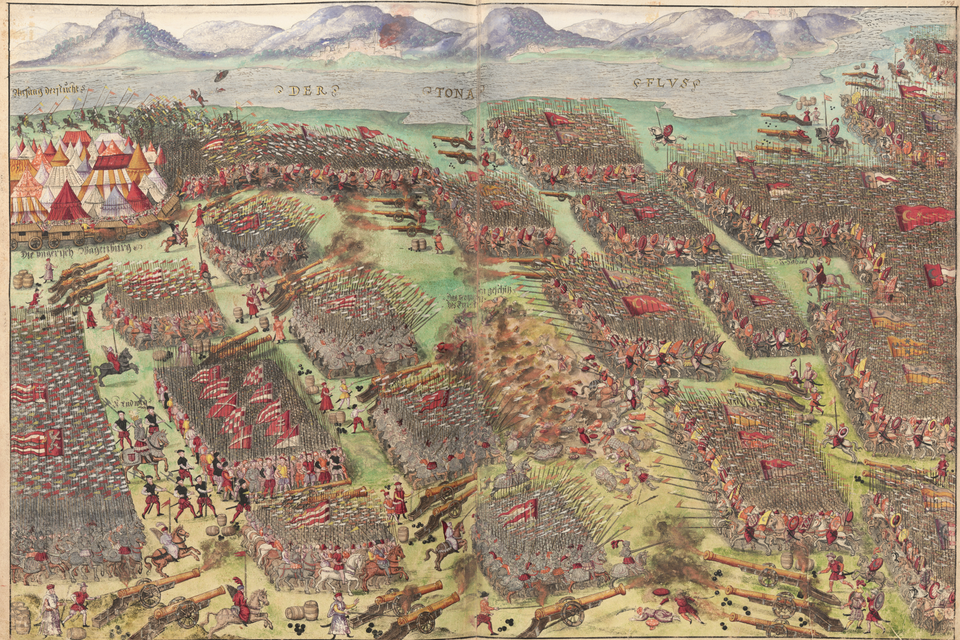
King Louis II of Hungary, just twenty years old, rode onto the field at Mohács against a Sultan’s army several times the size of his own, gambling everything on a single afternoon rather than waiting for reinforcements still marching from Transylvania and Croatia. When the Hungarian line collapsed under Ottoman cannon and disciplined infantry, the young king turned to flee across marshy ground near the Csele stream, weighed down by the very armor meant to protect him, and drowned in shallow water within sight of his own retreating army. His body would not be found for weeks, and with his death the last king of an independent medieval Hungary vanished into a stream too small to have any business ending a kingdom, leaving behind no heir and a throne that would fracture the country for generations.
Mohács: The Road to Battle
By the early sixteenth century, Suleiman the Magnificent had built the Ottoman Empire into the dominant military power in southeastern Europe, and Hungary, weakened by internal political division and chronically underfunded border defenses, stood as one of the last significant obstacles to further Ottoman expansion northward and westward into the continent. Pál Tomori, a Franciscan friar who had risen to become Archbishop of Kalocsa, had spent years personally funding repairs to Hungary’s crumbling southern fortifications out of his own church revenues, a measure of just how inadequately the kingdom’s central government had prepared for the threat gathering on its border. When Suleiman marched north with a massive, well-organized invasion force built around disciplined Janissary infantry and roughly three hundred pieces of artillery, King Louis II found himself commanding an army numbering only twenty-five to thirty thousand men against an Ottoman force most estimates place between fifty and one hundred thousand, a disparity that alarmed even his own commanders.
Tomori, appointed co-commander of the Hungarian field army, argued forcefully for striking before the full weight of Ottoman numbers could mass and consolidate, rather than waiting for the reinforcements from Transylvania and Croatia that might have evened the odds considerably. This was a genuinely contested strategic decision even among the Hungarians themselves, and historians still debate how much responsibility for choosing to engage immediately rather than delay rests with Tomori personally versus the royal council’s collective judgment under mounting political pressure. As the two armies converged on the flat, marshy plains near Mohács in August 1526, Louis committed his young kingdom to a battle it could have avoided, wagering everything on the hope that Hungarian courage and a well-timed cavalry strike could offset the Ottomans’ overwhelming numerical and technological advantage. Reinforcements from Transylvania under John Zápolya, which might have substantially changed the battle’s arithmetic, were still days away when the two armies finally engaged, never arriving in time to influence the outcome one way or another.
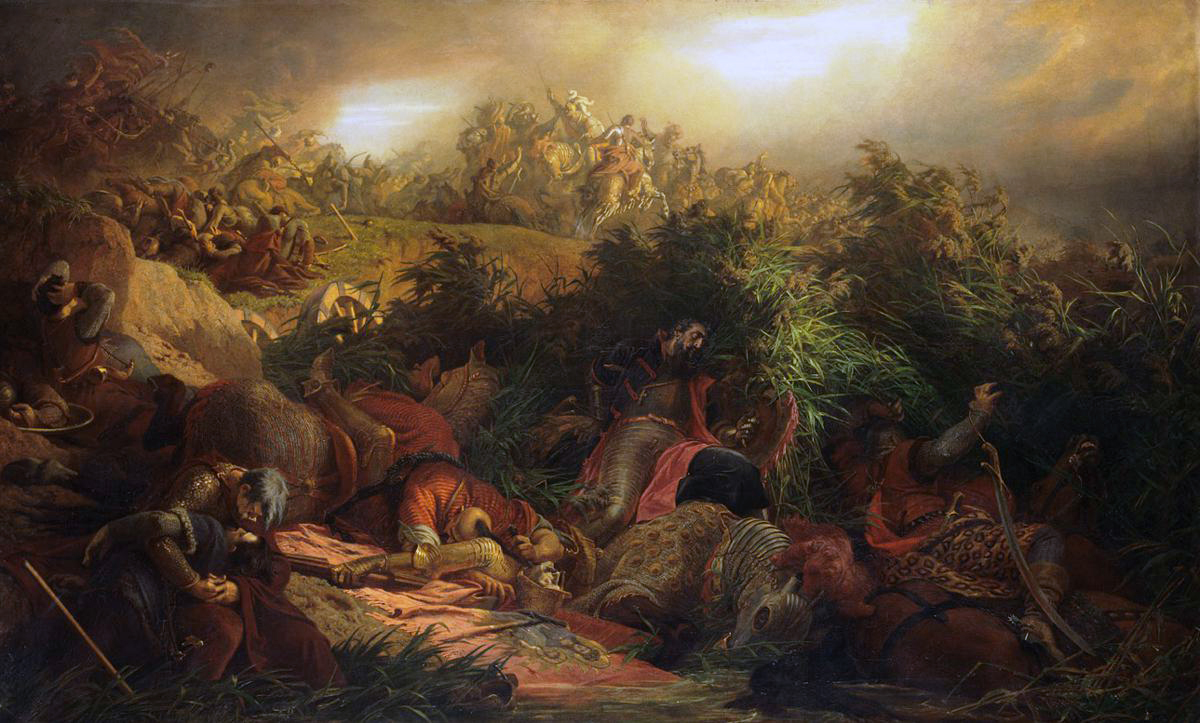
The Battle of Mohács
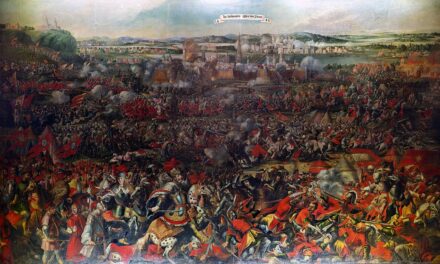
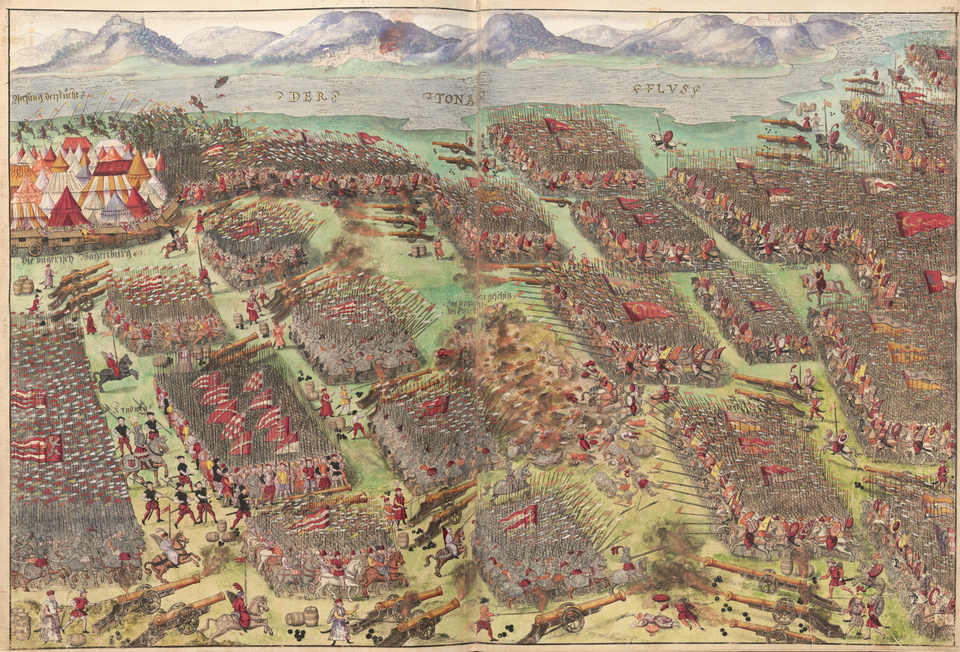
The battle opened with Pál Tomori leading an aggressive Hungarian cavalry charge directly at the Ottoman front line, an opening move that initially achieved real success, driving back the forward Ottoman positions and creating a brief moment where the outnumbered Hungarian force appeared to have seized genuine momentum. That early success proved to be the battle’s undoing rather than its salvation, however, as the charge outran its own supporting infantry and left the Hungarian cavalry dangerously exposed just as it reached Suleiman’s carefully prepared main defensive line. Grand Vizier Ibrahim Pasha, orchestrating the Ottoman defense with considerably more coordination than his Hungarian counterparts could muster, executed a feigned retreat that deliberately drew the overextended Hungarian cavalry deeper into range of the roughly three hundred massed Ottoman cannons waiting behind the front line.
When the guns opened fire on the advancing Hungarian horsemen at close range, the effect was devastating and immediate, shattering the cavalry’s cohesion and momentum in a matter of minutes and exposing the rest of the Hungarian army to a rapidly closing Ottoman encirclement. Janissary infantry, among the most disciplined fighting forces in Europe at the time, pressed forward methodically as the Ottoman cavalry wings swept around both flanks, trapping the bulk of the Hungarian force in a collapsing pocket with no organized route of escape. Pál Tomori was killed in the fighting as the Hungarian position disintegrated, one of a staggering number of Hungarian nobles, bishops, and senior commanders who died on the field that afternoon, a casualty toll so severe it would gut the kingdom’s entire governing class in a single engagement. King Louis II, recognizing the battle was irretrievably lost, attempted to flee the collapsing field toward the Csele stream, only to drown in its marshy shallows while still weighed down by his armor, his death unwitnessed and his body left unrecovered for weeks afterward.
Ottoman accounts suggest that Suleiman’s own camp did not immediately grasp the full scale of what had been achieved, only recognizing the true magnitude of the victory the following day as reports confirmed just how completely the Hungarian army and its leadership had been destroyed in a single afternoon of fighting. The scale of the Hungarian collapse was almost total: entire noble families lost their male heirs in the fighting, and the kingdom’s senior clergy, many of whom had ridden into battle alongside the nobility, were similarly decimated, leaving the country’s governing institutions gutted at every level within the space of a single afternoon. Survivors who managed to escape the encirclement described a battlefield transformed within hours from an organized formation into a chaotic scramble for the few available escape routes, with the marshy ground near the Csele stream, the same terrain that claimed the king’s own life, becoming a lethal trap for many who might otherwise have reached safety. Ottoman cavalry pursued the scattered remnants of the Hungarian force for some distance beyond the main battlefield itself, ensuring that the day’s losses continued mounting well past the point where organized resistance had already collapsed.
The Legacy of Mohács
Louis II’s death without an heir triggered an immediate and prolonged succession crisis that ultimately split Hungary into three separately governed pieces, ending the medieval kingdom’s independent existence for well over a century and reshaping the political map of central Europe. Suleiman entered Buda days later essentially unopposed, and upon later locating Louis’s recovered body is said to have remarked that the young king had “scarcely tasted the sweets of life and royalty,” a line likely embellished by later chroniclers but one that captured how completely the battle had ended one ruler’s story and begun another empire’s dominance over the region. The battle is still widely regarded by historians as the single most consequential defeat in Hungarian military history, a verdict that has only grown more entrenched with each subsequent generation of scholarship rather than softened by distance from the event.
Visiting Mohács Today
The national memorial sits directly on the historic battlefield at Sátorhely, roughly seven kilometers from the town of Mohács itself, anchored by a 2011 exhibition building shaped like Hungary’s Holy Crown that displays archaeological finds and period weaponry recovered from the site alongside an observation deck overlooking the surrounding grounds. Wooden carved kopjafák sculptures depicting King Louis II, Suleiman the Magnificent, Pál Tomori, and anonymous soldiers stand arranged in concentric circles around the mass war graves, surrounded by roughly fourteen thousand native trees planted as living memorial landscaping across the site. Hungary marks the battle’s anniversary each August 29, and 2026 marks the battle’s five-hundredth anniversary, with expanded commemorations planned across both Mohács and the nearby city of Pécs to mark the milestone.
As of late 2025, however, the site was undergoing reconstruction specifically ahead of this anniversary and was temporarily closed to visitors, so anyone planning a trip should check current opening status directly before traveling rather than assuming the memorial is accessible on any given date. The nearby town of Mohács is separately known for its UNESCO-recognized Busójárás carnival, an entirely distinct and unrelated folk tradition that draws its own visitors to the region at a different time of year and offers an additional reason to build a longer visit around the area once the memorial itself has reopened. Between the crown-shaped exhibition hall, the thousands of memorial trees, and the concentric rings of carved wooden grave markers, the site is designed to be walked slowly rather than rushed through, with most of its emotional and historical weight concentrated in the quiet, deliberately spaced arrangement of the markers themselves rather than in any single dramatic exhibit.
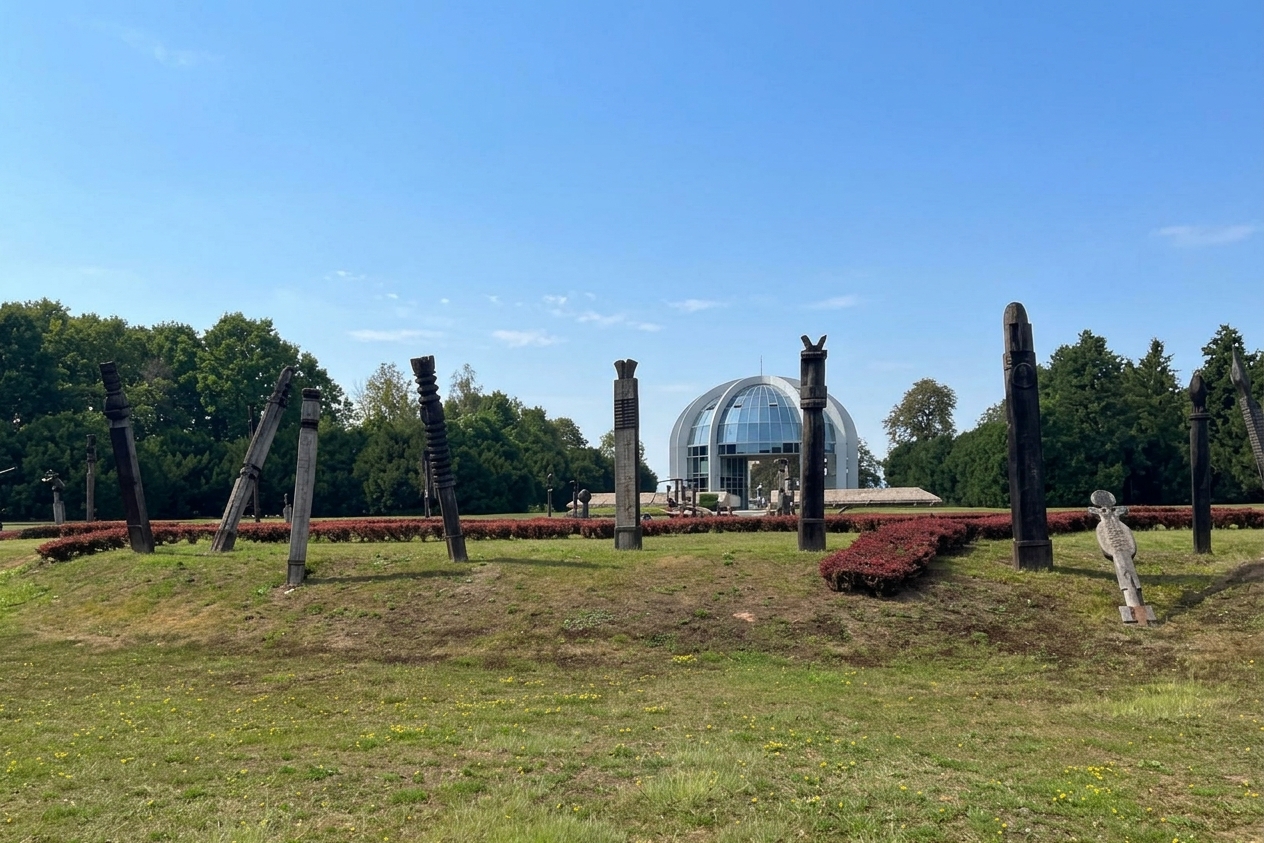
Remembrance of Mohács
The battle itself remains one of the most consequential single-day defeats in Hungarian history, its five-hundredth anniversary in 2026 prompting a renewed wave of national reflection on a loss whose consequences reshaped the country’s political existence for well over a century afterward. The memorial’s design, with its concentric rings of carved kopjafák standing watch over the mass graves and its thousands of planted trees slowly maturing into a living landscape around the site, reflects a deliberate choice to commemorate the battle through quiet, cumulative scale rather than through any single dramatic monument. Hungary’s decision to rebuild and expand the site specifically ahead of the anniversary underscores how far from settled the country’s reckoning with Mohács remains, even five centuries on, with each new generation returning to reinterpret and physically reshape how the defeat is remembered. That the exhibition hall itself takes the shape of the Holy Crown, the very symbol of the medieval kingdom Mohács effectively ended, makes the memorial’s architecture itself a quiet argument about what exactly was lost on that single afternoon in 1526, an argument renewed with each passing anniversary and, this year, with each new stone laid as the site is rebuilt.
Visitor Info: Mohács National Memorial (Duna-Dráva National Park Directorate)
Location: Mohács National Memorial Site (Mohácsi Nemzeti Emlékhely), Sátorhely, Baranya County, Hungary (rural battlefield memorial, no street address, ~7 km from Mohács town)
Site Status: National Park / Managed Historic Site
Visitation Notes: The memorial sits on the actual battlefield in Sátorhely, about 7 km from Mohács. A 2011 exhibition building shaped like Hungary’s Holy Crown displays archaeological finds and period weaponry alongside an observation deck over the grounds. Wooden carved kopjafák sculptures depict King Louis II, Suleiman the Magnificent, Pál Tomori, and anonymous soldiers, arranged in concentric circles around the war graves, with roughly 14,000 native trees planted as memorial landscaping. Hungary marks the battle’s anniversary each August 29, and 2026 marks its 500th anniversary with expanded commemorations planned in Mohács and Pécs. Note: as of late 2025 the site was undergoing reconstruction ahead of the anniversary and was temporarily closed to visitors — check current opening status before traveling. The nearby town of Mohács is separately known for its UNESCO-recognized Busojárás carnival.
Google Map
Visitor Comments
John T described the memorial as moving, noting the wooden statues depicting fallen soldiers and horses arranged in concentric circles around the graves.
— from TripAdvisor
Ron R described an emotional atmosphere commemorating the battle, with weapon displays and period-costumed reenactors present during the visit.
— from TripAdvisor
Gabriel H praised the memorial’s educational value and its connection to the historical significance of the 1526 battle.
— from TripAdvisor
Matthew Ainge recommended visiting in summer for the best experience and noted that some of the site’s memorial items were being repaired at the time of his visit.
— from Google Reviews