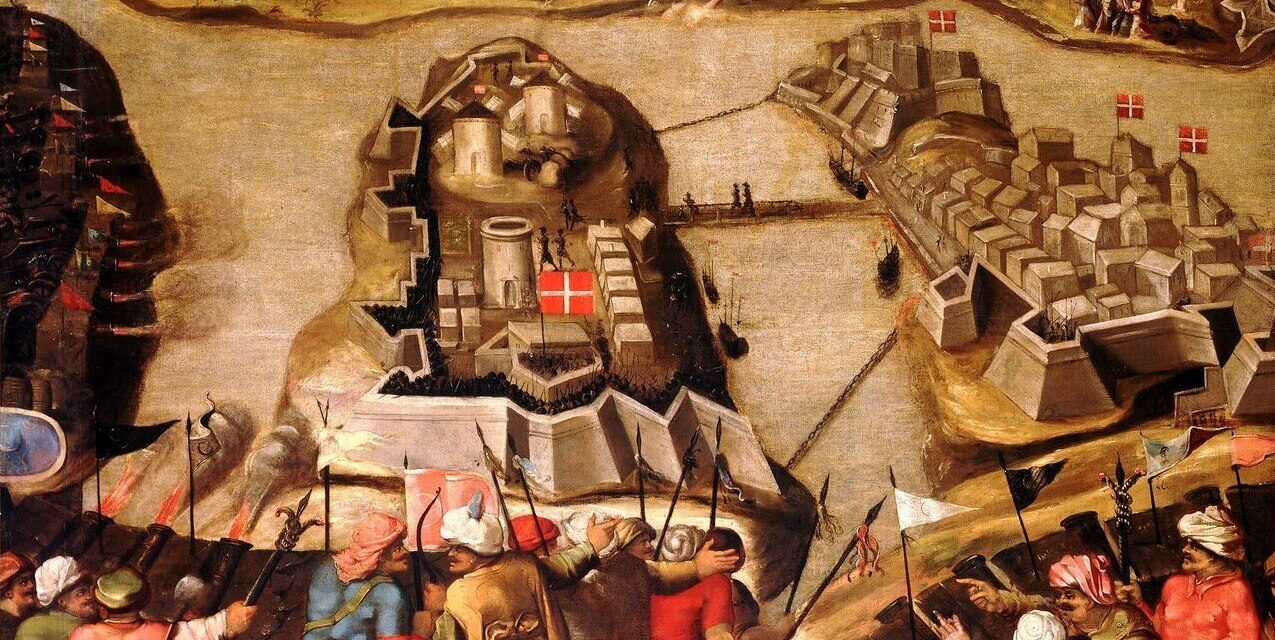
Dragut, the most feared corsair-admiral in the Ottoman fleet, arrived at Malta to personally direct the assault on Fort St. Elmo, only to be struck down during the very siege he had come to finish. Accounts of his death diverge sharply: some sources blame Christian artillery fired from the fort he was besieging, while others point to Ottoman guns whose shells fell short and killed their own commander instead. No one alive at the time could settle the question with certainty, and historians today still cannot say for sure whether the Ottomans’ most celebrated naval commander was killed by his enemies or by his own side’s cannon fire, a fittingly murky end for a siege that would turn on similarly desperate, chaotic margins for both armies.
Malta: The Road to Battle
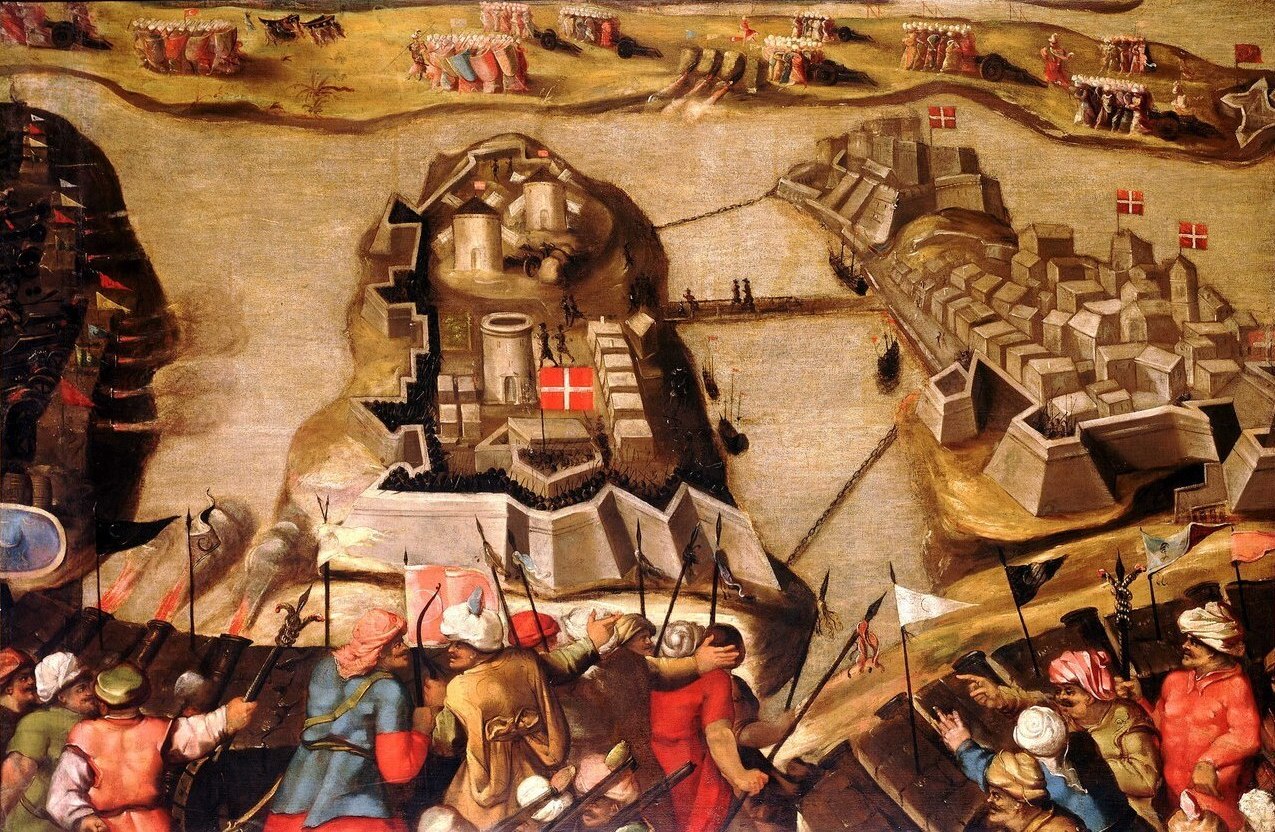
By 1565, the Ottoman Empire under Suleiman the Magnificent had spent decades expanding Turkish naval dominance across the Mediterranean, and the small island of Malta, held by the Knights of St. John since their expulsion from Rhodes decades earlier, sat squarely astride the sea lanes the Ottomans needed to control. The Knights, a military-religious order with a long history of naval warfare against Muslim shipping, had used Malta as a base for raids that increasingly antagonized Ottoman commanders, making the island’s elimination a matter the Sultan considered both strategically necessary and personally overdue. Suleiman dispatched an enormous invasion fleet, carrying tens of thousands of troops against a defending garrison of only a few thousand Knights and Maltese militia, a disparity so severe that most European observers expected the island to fall within weeks.
Grand Master Jean Parisot de Valette, roughly seventy years old by the time the Ottoman fleet appeared off Malta’s coast, had spent years preparing the island’s fortifications specifically anticipating exactly this kind of overwhelming assault, strengthening key positions including Fort St. Elmo, Fort St. Angelo, and the fortified town of Birgu. Dragut, the renowned Ottoman corsair-admiral whose raids had terrorized Christian Mediterranean shipping for years, joined the invasion force partway through the campaign, lending his considerable tactical experience to an Ottoman command structure that would prove less unified than the scale of their force suggested. As Ottoman troops began landing and establishing siege lines around Malta’s fortified positions in May 1565, both sides understood that the outcome would determine not just the island’s fate but the broader balance of naval power across the entire Mediterranean for years to come. European powers watched anxiously from a distance, many privately doubting the small garrison could hold out for more than a few weeks against a force of such overwhelming size, and few outside observers expected the siege to become the drawn-out, costly affair it ultimately proved to be for the Ottomans.
The Siege of Malta
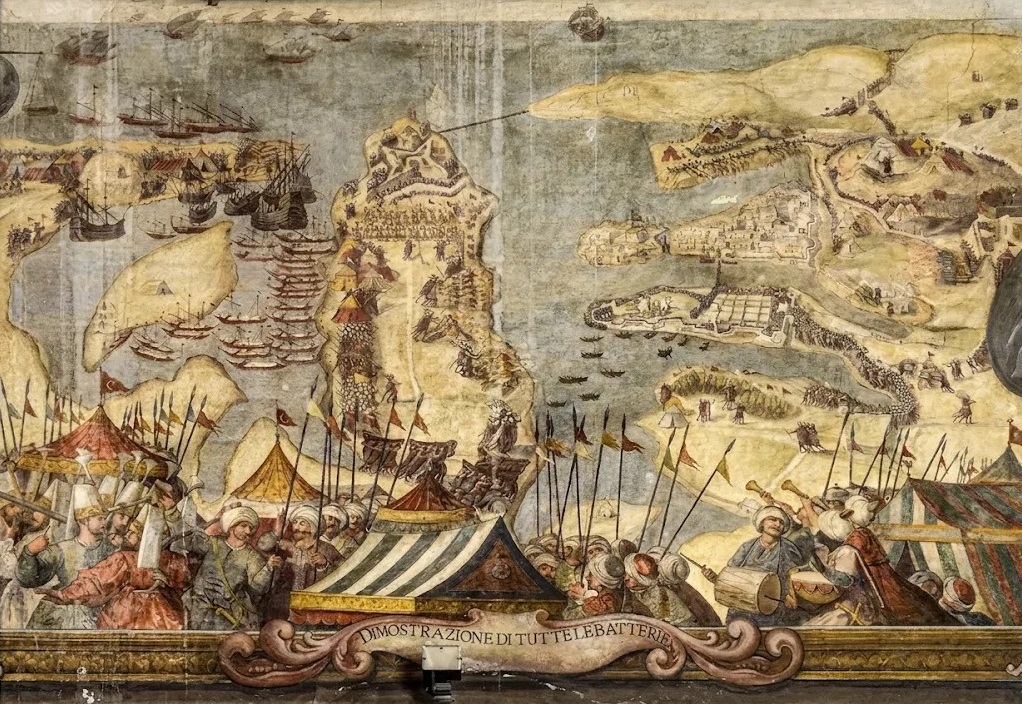
The Ottoman assault fell first and hardest on Fort St. Elmo, a comparatively small fortification guarding the entrance to Malta’s Grand Harbour that Ottoman commanders initially expected to fall within days given the overwhelming disparity in numbers. Instead, St. Elmo’s garrison held out for 28 grueling days against continuous bombardment and repeated infantry assaults, absorbing losses that stunned Ottoman commanders and consumed far more of their army’s strength and morale than the small fort’s size would have suggested possible. Dragut personally oversaw much of the bombardment effort against St. Elmo, bringing his considerable experience in siege warfare to bear, but was struck down during the fighting there, with contemporary and later accounts disagreeing on whether Ottoman or Christian guns were actually responsible for the fatal blow. When St. Elmo finally fell, nearly its entire garrison had been killed in the fighting, but the prolonged defense had already bought Valette’s main forces at Birgu and Fort St. Angelo critical additional weeks to strengthen their own fortifications and await the arrival of reinforcements from Sicily.
Valette, despite his advanced age, personally took up arms and fought alongside his men on the walls throughout the following siege of the main fortified positions, his direct presence in the fighting becoming a rallying point that historians credit as central to sustaining the defenders’ morale through months of relentless bombardment and assault. Ottoman forces launched repeated massed assaults against Birgu and Fort St. Angelo through the summer months, each one absorbed by defenders who had used St. Elmo’s costly delay to prepare exactly the kind of layered defense capable of grinding down an attacking force far larger than their own. The fighting during these months was often brutally close-quarters, with breaches in the walls fought over hand-to-hand and defenders repeatedly plugging gaps with whatever men and materials could be spared from quieter sections of the line. Disease and the punishing Mediterranean summer heat took a steady toll on both besiegers and defenders alike, but the Ottomans, camped in the open without the shelter and supply lines available to the fortified garrison, suffered disproportionately as the siege dragged on far longer than their commanders had ever anticipated.
By early September, with Ottoman troops exhausted, disease spreading through their camps, and a relief force finally arriving from Sicily to reinforce the beleaguered defenders, the Ottoman commanders made the decision to abandon the siege entirely and withdraw their remaining forces from the island. The defenders who marched out to confirm the Ottoman withdrawal found an invasion force that had arrived confident of a swift victory reduced to a shattered remnant of its original strength, its momentum and reputation broken by four months of resistance from a garrison a fraction of its size. Ottoman losses across the full campaign are estimated to have run into the tens of thousands, a catastrophic toll for an army that had expected to take the island within weeks rather than grind through an entire summer of costly, ultimately fruitless assaults.
The Legacy of Malta
The Great Siege’s failure marked a significant check on Ottoman naval expansion westward across the Mediterranean, and the Knights’ successful defense elevated Malta and the Order of St. John to legendary status across Christian Europe as a bulwark against Ottoman advance. Grand Master de Valette used the victory’s momentum to found an entirely new fortified capital city, ordering construction to begin almost immediately on what would become Valletta, named in his own honor and built specifically to prevent any future siege from succeeding as narrowly as this one nearly had. News of the Christian victory spread rapidly across Europe, offering a badly needed morale boost to powers that had spent decades anxiously watching Ottoman naval expansion with little to show by way of successful resistance, and the Knights’ stand at Malta became a rallying reference point invoked again just six years later at the naval battle of Lepanto.
Visiting Malta Today
Fort St. Elmo, where the siege’s fiercest and most costly fighting unfolded, now houses the National War Museum and hosts the “In Guardia” historical reenactment recreating the Knights’ traditional fort inspection ceremony, giving visitors a genuinely immersive sense of the fortress’s military heritage. Fort St. Angelo, which served as the Knights’ headquarters across the Grand Harbour throughout the siege, is likewise open to visitors and offers commanding views over the same waters Ottoman ships once filled. Valletta itself stands as perhaps the siege’s most remarkable living legacy: the entire fortified capital exists because of this battle, ordered built immediately after the victory specifically to ensure Malta could never again come so close to falling. The Church of Our Lady of Victory, the very first building completed within the new city, still stands today as a direct physical link between the 1565 siege and the Valletta that visitors walk through now, its foundations laid within the same generation that had fought off Suleiman’s invasion fleet.
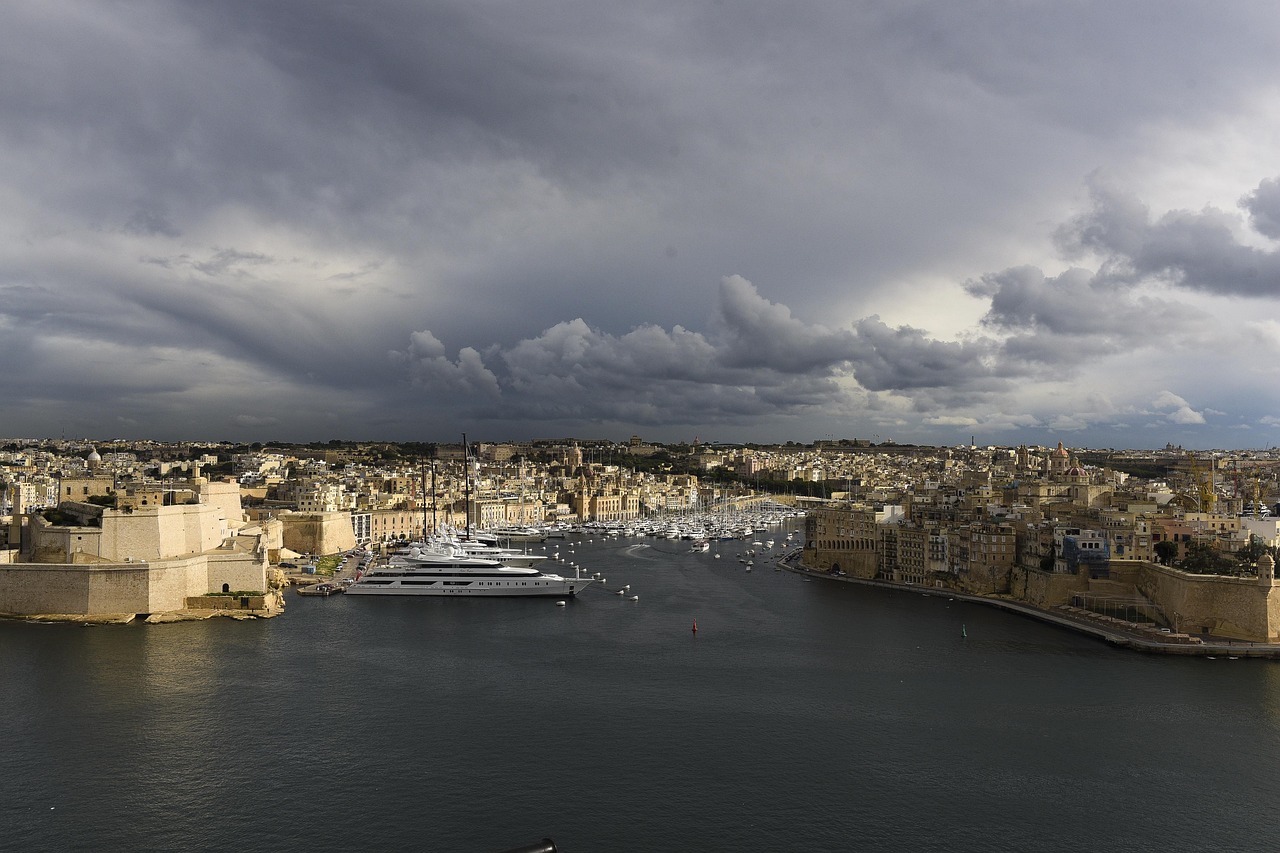
Malta marks the siege’s end each September 8 with Jum il-Vittorja, or Victory Day, a public holiday celebrated with processions and fireworks that draw both locals and visitors into a genuinely living commemoration rather than a purely historical curiosity. Between the War Museum’s exhibits, the fortifications themselves, and the surrounding streets of Valletta, a visitor can spend a full day or more tracing the siege’s full arc from Fort St. Elmo’s costly sacrifice to the fortified capital that ultimately rose from its lessons. The Grand Harbour itself, still lined with the bastions and watchtowers built in the siege’s aftermath, offers one of the most historically layered waterfronts in the Mediterranean, with boat tours available that trace the same waters the Ottoman fleet once filled.
Remembrance of Malta
Contemporary accounts of the siege, recorded by both Knights and Ottoman chroniclers, documented the shifting fortunes of a four-month campaign that swung from near-certain Ottoman victory to a defense so effective it reshaped Mediterranean naval strategy for a generation. Dragut’s disputed death, still debated by historians centuries later, stands as a small but telling emblem of how chaotic and uncertain even a well-organized siege could become once fighting was fully underway on both sides. Valette’s decision to fight personally alongside his men, and his subsequent decision to build an entirely new fortified capital bearing his own name, together transformed a desperate defensive stand into a permanent architectural and civic legacy that still defines Malta’s built landscape. The annual Jum il-Vittorja celebrations ensure that the siege remains an active part of Maltese civic identity rather than a static historical footnote, with each September’s processions renewing a connection between modern Malta and the outnumbered garrison that once held these same walls against overwhelming odds. Few sieges in European history left behind so complete a physical record of their own outcome: an entire capital city, still lived in and governed from today, stands as a direct architectural response to four months of desperate fighting nearly five centuries ago.
Visitor Info: Fort St Elmo and the National War Museum (Heritage Malta)
Location: Fort St. Elmo (National War Museum), Valletta, Malta
Site Status: National Park / Managed Historic Site
Visitation Notes: Fort St. Elmo, where the Ottoman assault fell hardest, now houses the National War Museum and hosts the “In Guardia” historical reenactment of the Knights’ fort inspection ceremony. Fort St. Angelo, the Knights’ headquarters across the Grand Harbour, is also open to visitors. Valletta itself exists because of this siege: Grand Master Jean de Valette ordered the city built as a fortified capital immediately after the victory, and it bears his name. The Church of Our Lady of Victory, the first building completed in the new city, still stands. Malta marks the siege’s end each September 8 with Jum il-Vittorja (Victory Day), a public holiday with processions and fireworks.
Google Map
Visitor Comments
taz12e4 calls it “well worth a visit,” praising the chance to see the history of the nation evolve and calling the achievement of the George Cross “great” for a country.
— from TripAdvisor
ChrisEgham finds it “a great museum with good things to see inside and out,” noting it succeeds in bringing history to life and offers good photo opportunities.
— from TripAdvisor
PaulT938 recounts stumbling onto “this gem” while walking around Valletta, describing the museum as an easy-to-digest guide to 500 years of Maltese history with timelines that link well and a strong closing film inside the fort’s strongest point.
— from TripAdvisor
FionaC1968 admits initial reluctance but ends up glad she went, spending several hours exploring the fort, praising the views, and coming away with a better understanding of WWII’s impact on the island.
— from TripAdvisor