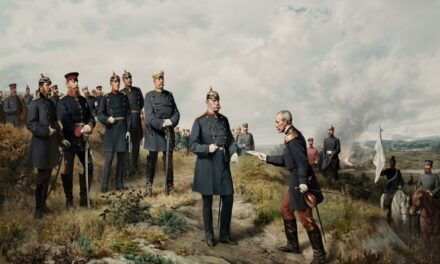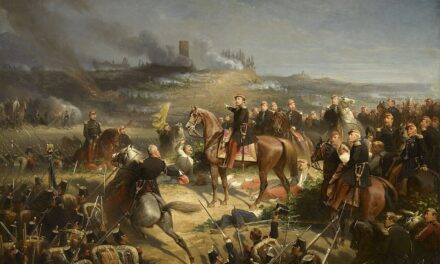
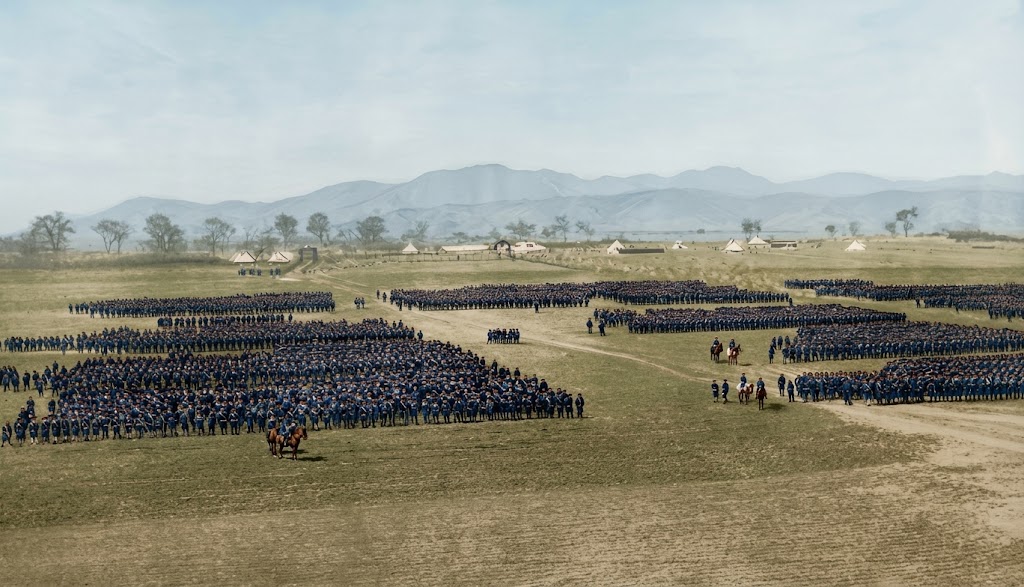
In the closing weeks of winter 1905, more than half a million soldiers converged on the Manchurian plains around a Chinese city few Westerners had ever heard of, assembling the largest land battle the world had yet seen, larger than any single engagement of the Napoleonic Wars or the American Civil War, and a scale that would not be matched again until the trench-bound slaughters of the First World War arrived a decade later. For nearly three weeks, Russian and Japanese armies fought across a front stretching more than ninety miles, trading artillery barrages and machine-gun fire that foreshadowed the industrialized carnage soon to engulf Europe. When the fighting finally ended, the city of Mukden had witnessed one of the most consequential and least remembered battles in modern military history.
Mukden: The Road to Battle
By early 1905, the Russo-Japanese War had already produced a string of costly engagements across Manchuria and the brutal siege of Port Arthur, yet neither side had delivered the decisive blow needed to end the conflict. Japanese forces under the overall command of Field Marshal Ōyama Iwao, with General Kodama Gentarō serving as his chief strategist, had steadily pushed Russian forces northward through a series of grinding battles, while Russian commander General Aleksei Kuropatkin sought to consolidate his scattered armies around the rail hub of Mukden, a critical junction on the Trans-Siberian-linked railway supplying Russian forces in the field. Both sides spent the winter months of early 1905 pouring reinforcements into the region, transforming Mukden into the staging ground for what both commands understood would be a climactic confrontation, with Japanese planners hoping to encircle and destroy Kuropatkin’s army before it could retreat to safety, and Russian commanders hoping their numerical advantage and fortified positions would finally break Japan’s costly offensive momentum. Foreign military observers flocked to the front from around the world, drawn by the unprecedented scale of the coming engagement and eager to study a modern industrial war between a European power and a rising Asian one, a novelty that had never before been tested on this scale.
Governments as far away as Washington and London dispatched attachés specifically to observe how machine guns, quick-firing artillery, and modern rail logistics would shape a confrontation between armies each numbering in the hundreds of thousands, questions of intense interest to militaries across Europe who were quietly reassessing their own doctrines in light of these new industrial weapons. Among them was British General Sir Ian Hamilton, attached to the Japanese First Army, who would later produce one of the most detailed firsthand campaign accounts of the entire war, while American military attachés embedded with Russian forces prepared to witness the battle from the opposite side of the lines, unaware of how directly they themselves would soon become entangled in the fighting.
The Battle of Mukden
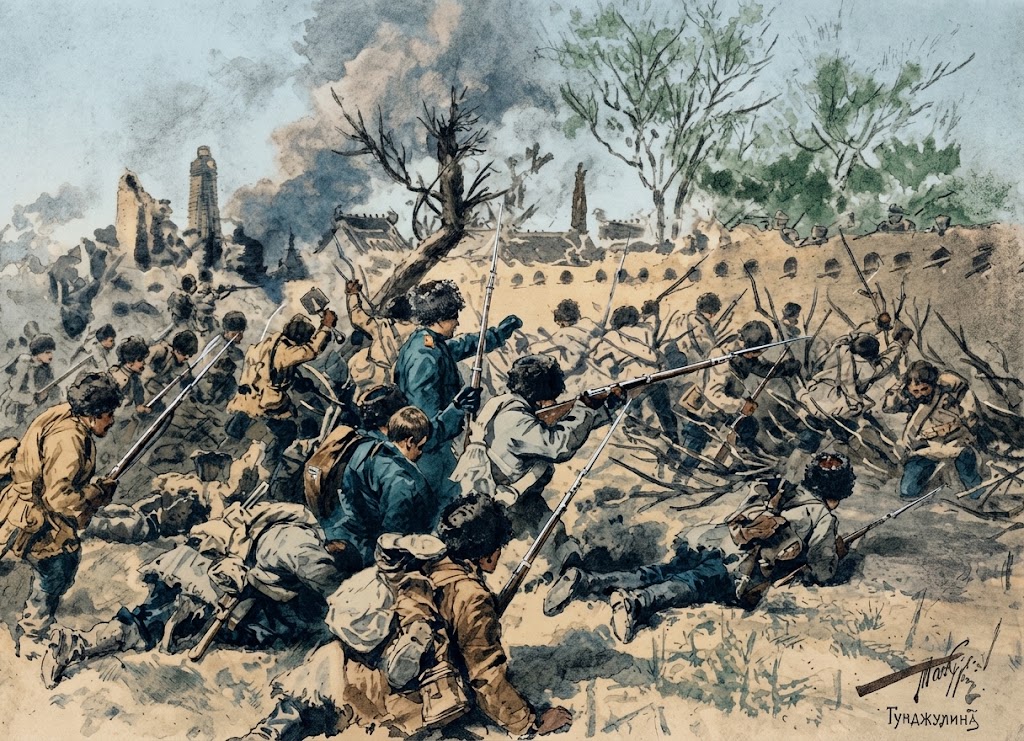
The Battle of Mukden opened on February 20, 1905, as Japanese forces launched a series of coordinated flanking maneuvers designed to envelop Kuropatkin’s army from both the east and west simultaneously, a maneuver of enormous ambition given that the combined armies numbered well over half a million men strung across a front of more than ninety miles. Ōyama and Kodama’s plan called for a wide double envelopment, drawing Russian reserves toward the flanks while a central force pressed forward to prevent Kuropatkin from reinforcing wherever the decisive blow might land, a strategy that required extraordinary coordination across a battlefield too vast for any single commander to observe directly. Russian forces resisted fiercely for days, and the fighting devolved into brutal trench and artillery warfare eerily anticipating the Western Front a decade later, with machine guns cutting down advancing infantry in the thousands and heavy guns pounding fixed positions for days on end. American military attaché Captain William Voorhees Judson, embedded with Russian forces to observe the fighting, was himself captured by advancing Japanese troops on March 10, 1905, along with fellow U.S. Army observer Colonel Valery Havard, a Medical Corps officer who had reached the front only weeks earlier and who documented invaluable battlefield-medicine lessons drawn from the machine-gun and artillery casualties he treated and witnessed.
As Japanese forces gradually closed their encirclement around the Russian flanks, Kuropatkin recognized the mounting danger of encirclement and ordered a general withdrawal northward toward Tieling, narrowly avoiding the complete destruction of his army but conceding the field and the city of Mukden itself to Japanese forces after nearly three weeks of continuous fighting. Casualties on both sides were staggering by any prior historical standard, with combined losses estimated well above 150,000 killed, wounded, and captured, a toll that stunned military observers accustomed to the comparatively contained battles of earlier decades and that offered an unmistakable preview of the mechanized slaughter industrial armies would soon inflict on one another in Europe. General Hamilton’s detailed campaign account, published as A Staff Officer’s Scrap-Book During the Russo-Japanese War, captured the scale and horror of the fighting from the Japanese side of the lines, while the American attachés’ testimony, delivered after their eventual release, gave Washington some of its first direct insights into the character of modern industrialized combat.
The sheer logistical scale of the engagement strained both armies’ capacities well beyond anything either had previously managed, with hundreds of thousands of men requiring continuous resupply of ammunition, food, and medical care across a front too vast for any single rail line or road network to serve efficiently. Winter conditions compounded the difficulty for both sides, with subfreezing temperatures across the Manchurian plain adding frostbite and exposure to the list of hazards facing soldiers already contending with some of the heaviest concentrated artillery and machine-gun fire yet seen in warfare. Reports from the field described entire regiments pinned for days under sustained bombardment, unable to advance or retreat, in conditions that several foreign observers explicitly compared to nothing they had witnessed in any prior conflict.
The Legacy of Mukden
Despite its staggering scale, Mukden did not end the Russo-Japanese War outright: Kuropatkin’s army survived the retreat largely intact, and the conflict continued at sea until Japan’s decisive naval victory at Tsushima that May finally forced Russia to the negotiating table. Military planners and observers around the world studied Mukden intensively in the years that followed, recognizing in its machine guns, extended trench lines, and horrific casualty figures an unmistakable preview of the industrialized warfare that would engulf Europe within a decade, though the lessons went largely unheeded until the First World War made them impossible to ignore. The battle also marked a turning point in global perceptions of military power, as Japan’s ability to inflict such a defeat on a major European empire reshaped assumptions about Asian military capability that had prevailed for centuries.
Mukden: A Vanished Battlefield
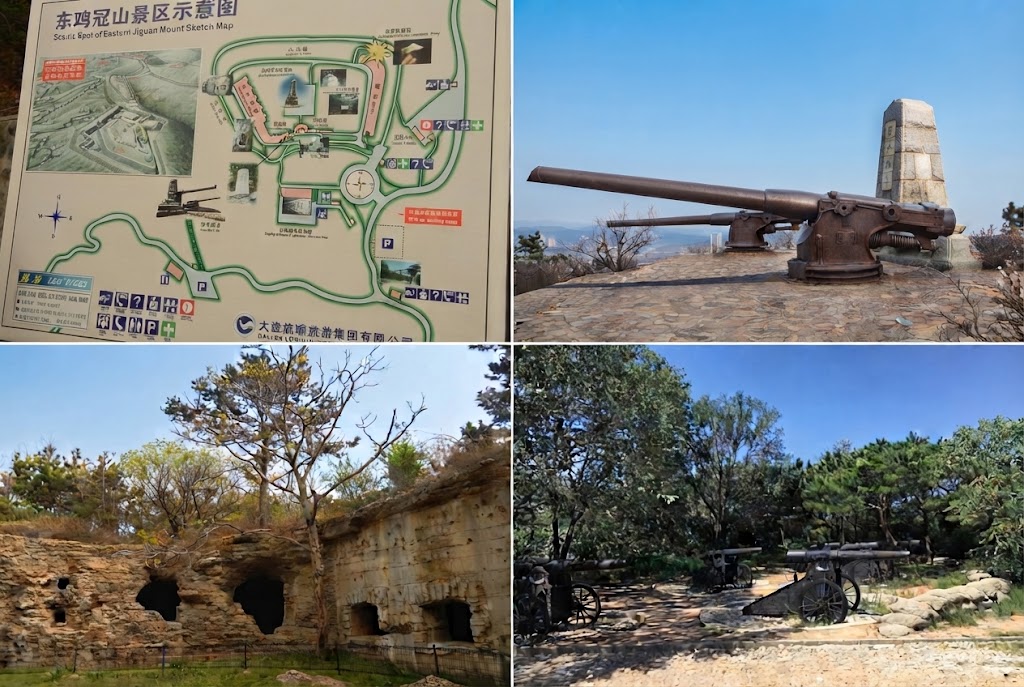
The city once known as Mukden is today Shenyang, a sprawling modern industrial metropolis in China’s Liaoning Province, and the plains where more than half a million soldiers once fought have been entirely absorbed into more than a century of urban and industrial development, leaving no dedicated battlefield park, visitor center, or monument marking this specific engagement anywhere in the city. Travelers should take particular care not to confuse this 1905 battle with Shenyang’s well-known “9.18” Historical Museum, which commemorates the unrelated 1931 Mukden Incident that later triggered Japan’s invasion of Manchuria, an entirely separate chapter of East Asian history separated from this battle by more than a quarter century. The nearest sites connected to the broader Russo-Japanese War lie roughly 300 kilometers south in Lüshunkou, near Dalian, where preserved fortifications and a dedicated museum commemorate the related but distinct 1904 Siege of Port Arthur. China carries a general United States State Department Level 2 “Exercise Increased Caution” advisory with no specific concerns tied to Shenyang itself, and the city remains a well-connected, broadly accessible major urban center for Western travelers passing through the region, even though it offers no on-the-ground infrastructure for visitors seeking to engage with this particular chapter of its history.
Travelers with a serious interest in the Russo-Japanese War are generally better served combining a stop in Shenyang with the more substantial heritage sites around Port Arthur, rather than expecting to find traces of the 1905 battle itself within the modern city. Shenyang itself does retain other historical attractions unconnected to this battle, including the Mukden Palace complex built by the early Qing dynasty, giving visitors reason to spend time in the city even without any dedicated 1905 battlefield infrastructure to explore.
Remembrance of Mukden
General Sir Ian Hamilton, the senior British military observer attached to Japan’s First Army throughout the campaign, produced the war’s most extensive firsthand account from the Japanese side in his two-volume A Staff Officer’s Scrap-Book During the Russo-Japanese War, a work still cited by military historians studying the battle’s tactics and scale. Captain William Voorhees Judson, the American attaché captured by Japanese forces at Mukden on March 10, 1905, later documented comparative casualty observations drawn from his time embedded with Russian forces, offering Washington rare firsthand insight into the Russian army’s experience of the fighting. Colonel Valery Havard, a U.S. Army Medical Corps officer who reached the front in February 1905 shortly before his own capture, recorded invaluable battlefield-medicine lessons drawn from treating the machine-gun and artillery casualties that made Mukden such a grim preview of industrialized warfare. Together, these three foreign observers, a British staff officer’s sweeping campaign narrative and two captured American attachés’ firsthand testimony, preserved an outside perspective on a battle whose true scale and significance were only fully appreciated once the First World War made its lessons impossible to ignore, a delayed recognition that speaks to how thoroughly Mukden’s warnings were overshadowed at the time by the era’s fascination with the naval drama still to come at Tsushima.
Further Exploration: Book titled “The Tide at Sunrise: A History of the Russo-Japanese War, 1904-1905” by Denis Warner and Peggy Warner (Charterhouse, 1974)
Location: Shenyang, Liaoning Province, China (historic Mukden) — related Russo-Japanese War heritage sites are in Lüshunkou (Port Arthur), Dalian, about 300 km south
Site Status: Built Over/Urbanized
Visitation Notes: Shenyang is today a large modern Chinese industrial city, and the 1905 battlefield terrain has been entirely absorbed into urban and industrial development over 120 years — there is no dedicated battlefield park, visitor center, or monument marking this specific battle. Shenyang’s well-known “9.18” Historical Museum commemorates a different, later event, the 1931 Mukden Incident, and should not be confused with this 1905 battle. Shenyang itself, is a well-connected, broadly accessible major city for Western travelers, it simply has no on-the-ground infrastructure for this particular battle. The nearest related Russo-Japanese War heritage sites are in Lüshunkou (Port Arthur), Dalian, about 300 km south, which has preserved fortifications and a museum tied to the 1904 Siege of Port Arthur — a related but distinct chapter of the same war.
Google Map
Visitor Comments
A visitor described 203 Hill at Port Arthur as the site of a permanent fortress from the Russo-Japanese War, noting the main battlefields of the war are difficult to tour on foot and recommending chartering a taxi to spend half a day at the site.
— from Google Reviews
ZEN333, who lived in Dalian and often brought visiting friends to the site, said he offered a prayer while reflecting on the more than 30,000 soldiers killed there.
— from Google Reviews
Chi Xiao (Chang) noted this is the place where Japanese General Nogi’s son was killed in action during the war, and that a memorial monument now stands at the site of his death.
— from Google Reviews