Napoleon III could barely sit a horse. Racked by a kidney stone that left him in agony he could no longer hide from his own staff, the emperor of France rode out anyway that September morning along a battle line collapsing in front of him, past shell bursts he did not flinch from and artillery fire he seemed almost to invite. Several of the men who saw him that day took it for less a display of courage than a quiet hope that one of the German guns would finish what illness and defeat together were about to do to him. No shell obliged him. By evening, the man who had once styled himself heir to Napoleon Bonaparte would be a prisoner of the army he had gone to war to humiliate.
Battle of Sedan: The Road to Battle
The war that ended at Sedan had begun barely six weeks earlier, in July 1870, when France declared war on Prussia over a dispute involving a Hohenzollern candidate for the Spanish throne, confident its professional army could win a short, decisive campaign against a rival German state. That confidence collapsed almost immediately. France’s declaration caught its own army only partly prepared, and mobilization plans built around a rapid thrust into German territory instead gave way within days to a defensive scramble, as better-organized Prussian and allied German forces crossed into French Lorraine and Alsace and inflicted a string of sharp early defeats. Prussian mobilization, faster and better organized than anything the French general staff had planned for, delivered a string of French defeats within the war’s first weeks, and by mid-August one French army under Marshal Bazaine found itself besieged inside the fortress city of Metz.
A second French force, the Army of Chalons under Marshal Patrice de MacMahon, marched northeast in a bid to relieve Bazaine at Metz, but Prussian commander Helmuth von Moltke read the movement correctly and maneuvered two German armies to cut it off first. Rather than reaching Metz, MacMahon’s army was steadily pushed toward the fortress town of Sedan, near the Belgian border, arriving exhausted and undersupplied into a position that put its back against a frontier it could not legally cross without being interned. Sedan itself sat in a bend of the Meuse River, ringed by wooded heights that gave a commanding advantage to whichever army occupied them first — terrain that would prove disastrous for a French force arriving there not by choice but because every other route had already been closed off by Moltke’s converging armies. By the last day of August, Sedan was nearly surrounded, and the battle fought there the next morning would decide far more than the fate of one army.
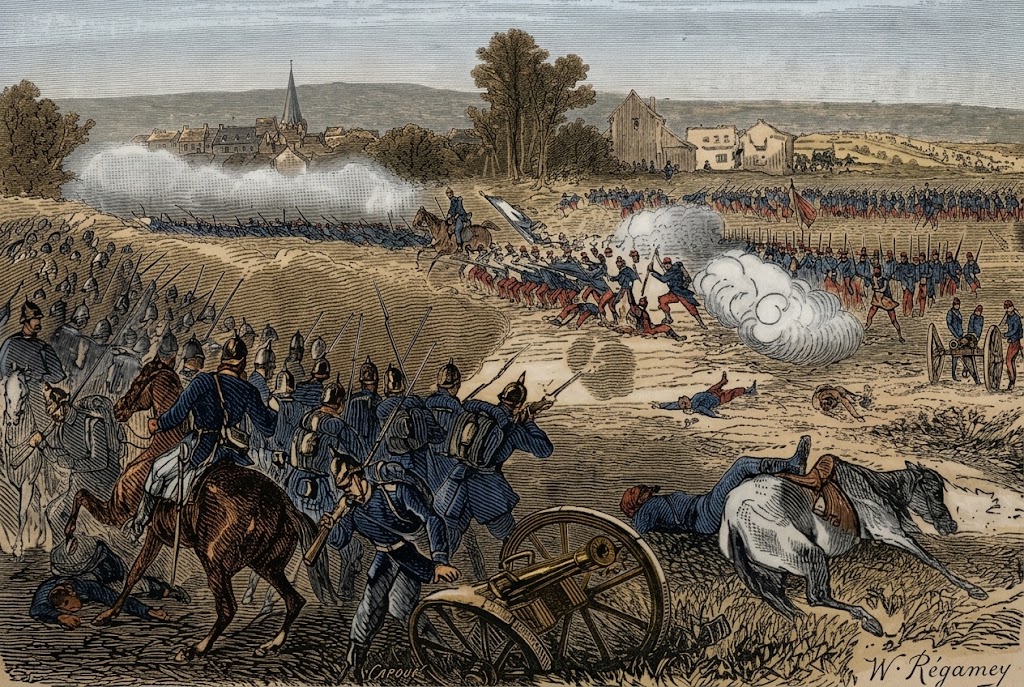
The Battle of Sedan
The German pincer closed on the morning of September 1, as the Prussian Crown Prince’s Third Army and the Army of the Meuse under the Crown Prince of Saxony converged from the west and east to seal off every route out of Sedan. By this point the two German armies numbered nearly 200,000 men encircling roughly 120,000 exhausted French troops, a numerical and positional advantage that made the outcome all but certain within hours of the first shots. Marshal MacMahon was wounded by a shell fragment within the battle’s opening hours and command passed briefly to General Auguste Ducrot, who watched the German armies close the ring from the high ground at Illy and recognized, in blunt terms he made no effort to soften for his own staff, that the French position was hopeless and escape no longer possible. Many of the French troops had been marching and fighting with little rest for days before reaching Sedan, arriving depleted of supplies and morale even before the encirclement closed around them. Ducrot’s judgment was overruled almost immediately when General Emmanuel Felix de Wimpffen arrived carrying orders from Paris that gave him seniority, and Wimpffen insisted on continuing to fight rather than accept what Ducrot had already concluded.
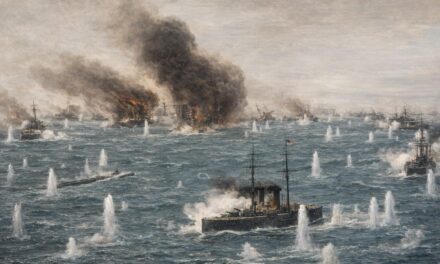
German artillery, positioned on the high ground ringing Sedan on nearly every side, poured a bombardment down onto the French army and the town below that American General Philip Sheridan, observing the battle as an official military attache with the Prussian headquarters, later described in his memoirs as some of the most punishing and effective artillery fire he had witnessed, driving the French army back in growing disorder from the surrounding villages of Bazeilles, Floing, and La Moncelle into Sedan’s own fortifications. French casualties mounted quickly under the bombardment, with thousands killed or wounded before midday, while the encircling German guns, positioned on higher ground on nearly every side, faced little effective counter-battery fire from the French artillery trapped in the valley below. Wimpffen attempted a breakout to the southeast toward Carignan that afternoon, hoping to punch through the German lines before they fully closed, but the attempt failed against overwhelming numbers, and by evening even Wimpffen had to accept what Ducrot had recognized hours earlier: there was no way out.
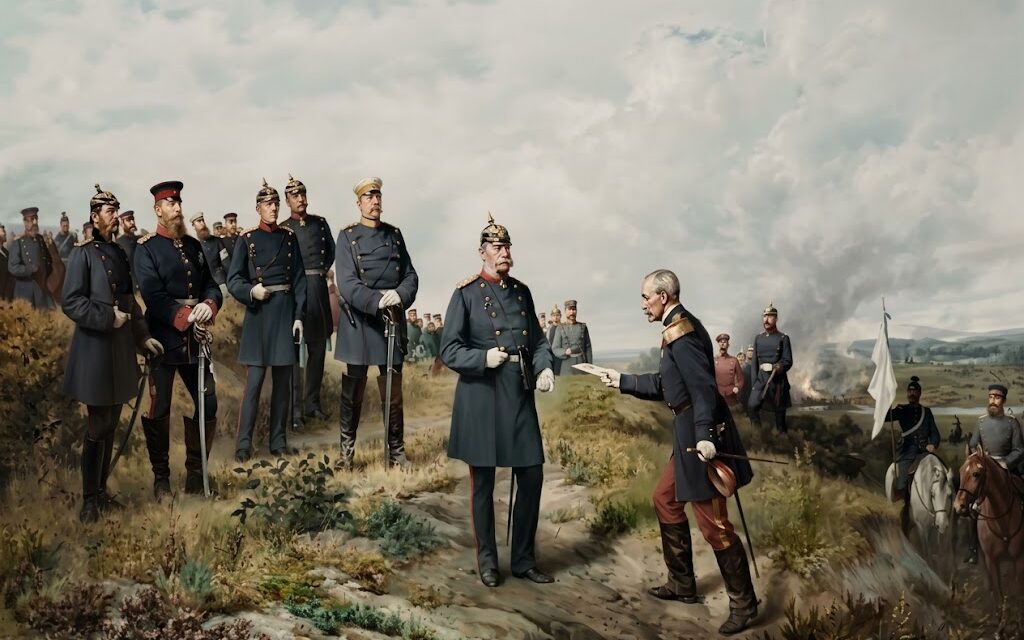
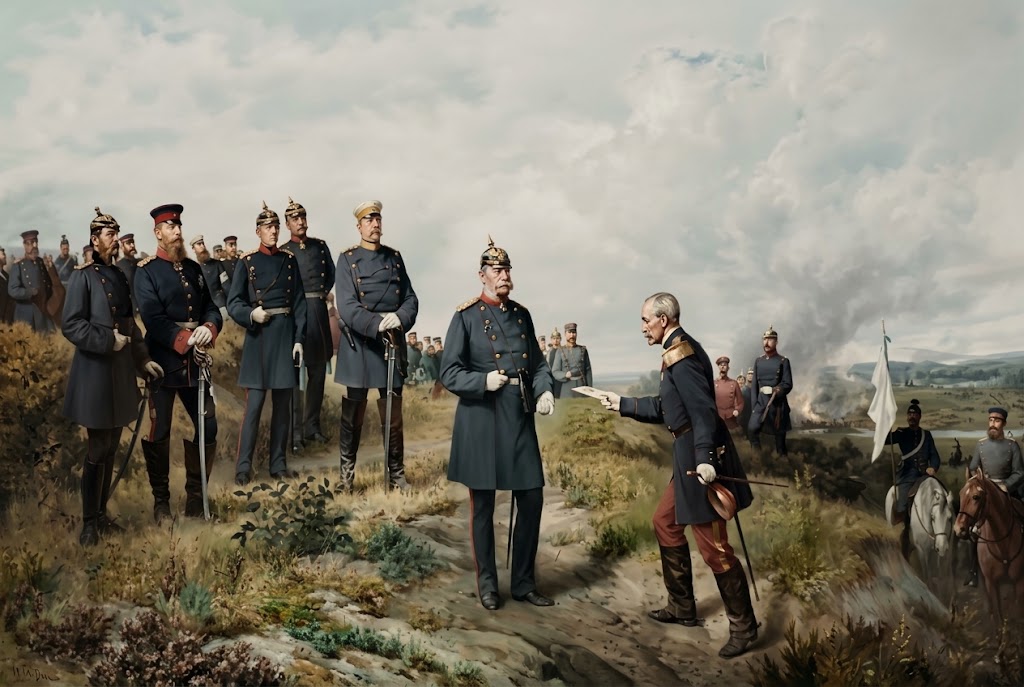
Wimpffen requested terms from the Prussians that evening, and the formal surrender negotiations took place the following morning at the Chateau de Bellevue outside the town. In a personal letter delivered to King Wilhelm I of Prussia the previous evening, Napoleon III had already offered his sword in surrender, a gesture that became one of the most reproduced documents of the war and a stark symbol of how completely the campaign’s fortunes had reversed in a matter of weeks. Moritz Busch, a press secretary attached to Otto von Bismarck’s headquarters, recorded in his diary the direct exchange between Bismarck and Napoleon III himself on September 2, one of the most detailed firsthand accounts of the moment an emperor personally capitulated to the chancellor who had maneuvered his country into war. Roughly 100,000 French soldiers surrendered along with Napoleon III, one of the largest single capitulations of the century and a defeat so complete that it ended the war’s first phase in a single stroke. Word of the surrender reached Paris within a day, and the shock of losing an entire field army and its emperor in one blow did more to break French public confidence in the war than any single defeat that had come before it.
The Legacy of Sedan
Napoleon III’s capture at Sedan destroyed the Second French Empire almost overnight; within two days, crowds in Paris had proclaimed the Third Republic, and the emperor who had ruled France for eighteen years would never return to it as a free man. The war itself dragged on for months afterward through the siege of Paris, but Sedan was the moment that decided it, and the moment that cleared the last real obstacle to German unification — a process that culminated barely four months later with the proclamation of the German Empire. In French, the battle’s name entered the language much as another battle’s had entered English a half-century earlier: “un Sedan” became shorthand for a total, humiliating collapse. The peace that followed forced France to cede Alsace and Lorraine to the new German Empire, a loss that shaped French politics and Franco-German relations for decades to come.
Visiting Sedan Today
Unlike a single, preserved battlefield park, the fighting at Sedan sprawled across open farmland and several villages north of the town — Bazeilles, Floing, La Moncelle, and Illy — with no unified historic site tying the ground together. Visitors can still walk much of this terrain and find scattered memorials marking specific phases of the fighting, but there are no formal visitor facilities out on the battlefield itself, and a car is the practical way to cover the distances between the different villages involved. The Chateau Fort de Sedan, a large fortified castle in the town itself overlooking the surrounding countryside, offers historical exhibits and is by far the most accessible anchor point for anyone wanting a single, well-organized stop. Because the various sites lie several kilometers apart across open countryside, visitors without a car often find it difficult to cover more than one or two locations in a single day, and even those with transportation should expect a visit that mixes driving with walking rather than a single self-contained park experience.
Because the battlefield proper is unmarked farmland rather than a managed park, a visit here rewards travelers willing to do a little of their own orienting — following the terrain from the heights at Illy down toward the town gives a real sense of how completely the German armies encircled Sedan, in a way that a single museum stop cannot fully convey on its own. Pairing the castle’s exhibits with even a short drive out to one or two of the outlying village sites is the most complete way to take in both the history and the ground it happened on.
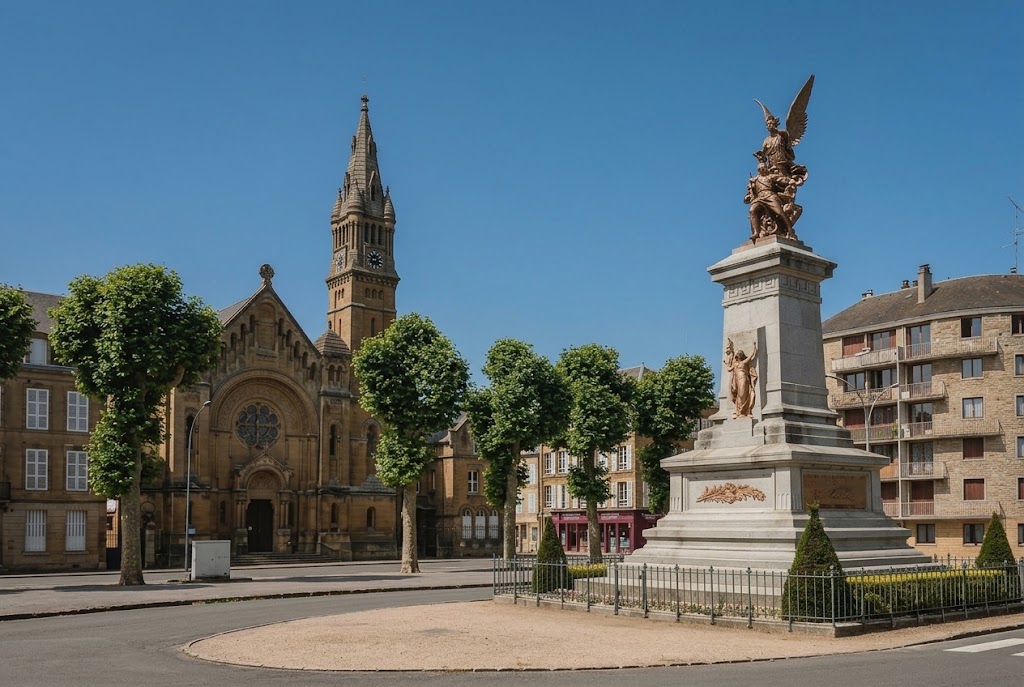
Remembrance at Sedan
Sedan does not hold a major annual commemoration on the scale of some Napoleonic-era battlefields, and the site’s memory is kept less by ceremony than by the scattered physical markers still standing across the farmland where the fighting actually took place — modest monuments at Bazeilles, Floing, and Illy that mark specific moments of the encirclement without drawing large annual crowds. The Chateau Fort de Sedan’s own exhibits carry a share of that remembrance work year-round, situating the 1870 battle within the fortress town’s much longer military history rather than isolating it as a single dramatic day. What remains, more than anything, is the terrain itself: quiet farmland today, largely unchanged in outline from the ground German artillery once ringed on every side. That absence of a single large gathering reflects the nature of the battle itself: fought as a widening encirclement across several villages rather than one climactic clash on a single field, Sedan left no one spot equivalent to a Waterloo ridge around which a unified annual memory could form.
Visitor Info: Official website titled “Sedan 1870” (Fondation Napoléon, napoleon.org)
Location: Château Fort de Sedan, Cours du Château, 08200 Sedan, France (overlooks the battle sites of Bazeilles, Floing, and La Moncelle)
Site Status: Preserved Site, Minimal Facilities
Visitation Notes: The battle sprawled across open farmland and villages north of Sedan (Bazeilles, Floing, La Moncelle, Illy) with no unified battlefield park; visitors can walk the terrain and view scattered memorials, but there are no formal visitor facilities. The Château Fort de Sedan in town offers historical exhibits and is the most accessible anchor point.
Google Map
Visitor Comments
pascal P described the Château Fort de Sedan as an impressive fortress with informative displays on the town’s history, noting that the open battlefield sites nearby require a car and some imagination since little formal signage marks the 1870 engagement.
— from TripAdvisor
Gwynnie praised the panoramic views from the Sedan citadel and recommended combining a castle visit with a drive out to Bazeilles to see the Maison de la Dernière Cartouche, calling the pairing the best way to understand the 1870 battle’s scale.
— from TripAdvisor
Traveler O described walking the quiet countryside around Floing and Illy, noting how peaceful the rolling farmland feels today compared to accounts of the 1870 battle, with only a scattering of small memorials to mark the fighting.
— from TripAdvisor
akaluzny called the Sedan citadel one of the largest fortified castles in Europe and well worth the entry fee, though noted the exhibits focus more on the fortress’s medieval and Renaissance history than on the 1870 battle itself.
— from TripAdvisor