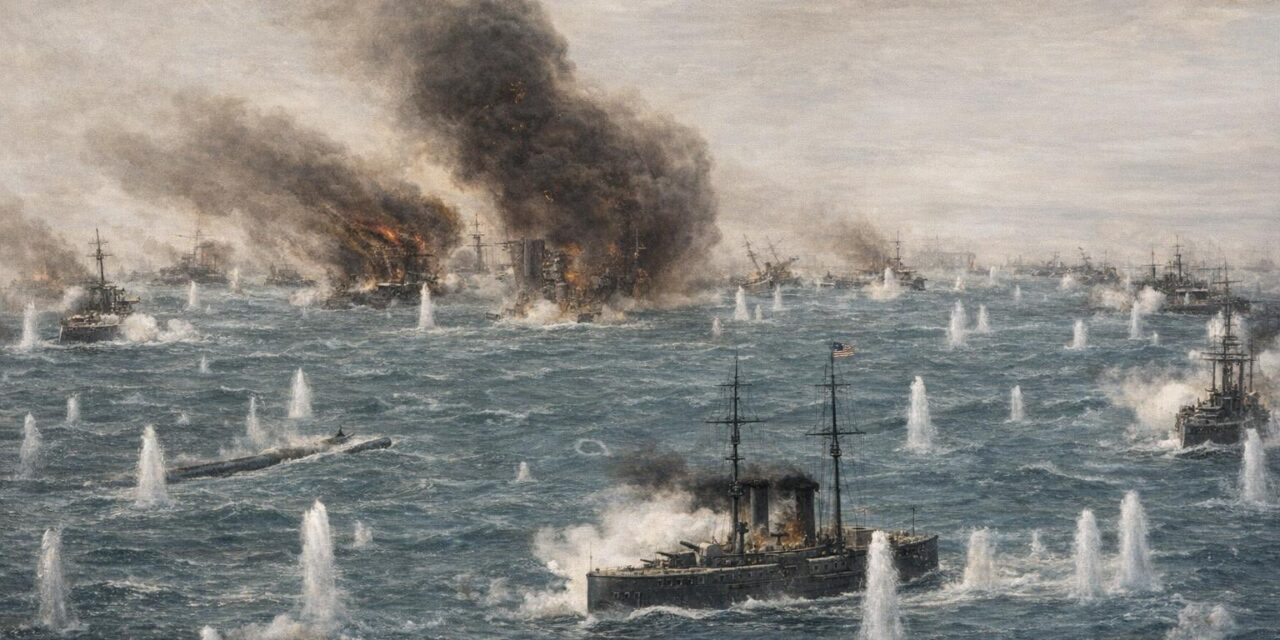
Before a single shot had been fired, Admiral Togo Heihachiro ran a signal flag up the mast of his flagship telling every sailor in the Japanese Combined Fleet that the fate of the Empire rested on the battle they were about to fight. By the next morning, an entire Russian fleet that had sailed halfway around the world to reach that spot in the Tsushima Strait had been all but annihilated, and Japan had announced itself, in a single engagement, as a modern naval power the rest of the world could no longer afford to underestimate.
Tsushima: The Road to Battle
By 1904, Japan and Russia were locked in a war over competing imperial ambitions in Manchuria and Korea, and Japan’s early successes on land and at sea had left Russia’s Pacific naval presence badly weakened, prompting the Russian government to dispatch its Baltic Fleet halfway around the globe to reinforce it. Under Admiral Zinovy Rozhestvensky, the fleet endured a grueling seven-month voyage of roughly 18,000 miles around the coast of Africa, since the Suez Canal route through British-controlled waters was effectively closed to a fleet at war with a British ally, arriving in East Asian waters exhausted, undersupplied, and manned largely by crews with limited combat experience aboard ships that had fouled hulls and worn machinery after so many months at sea.
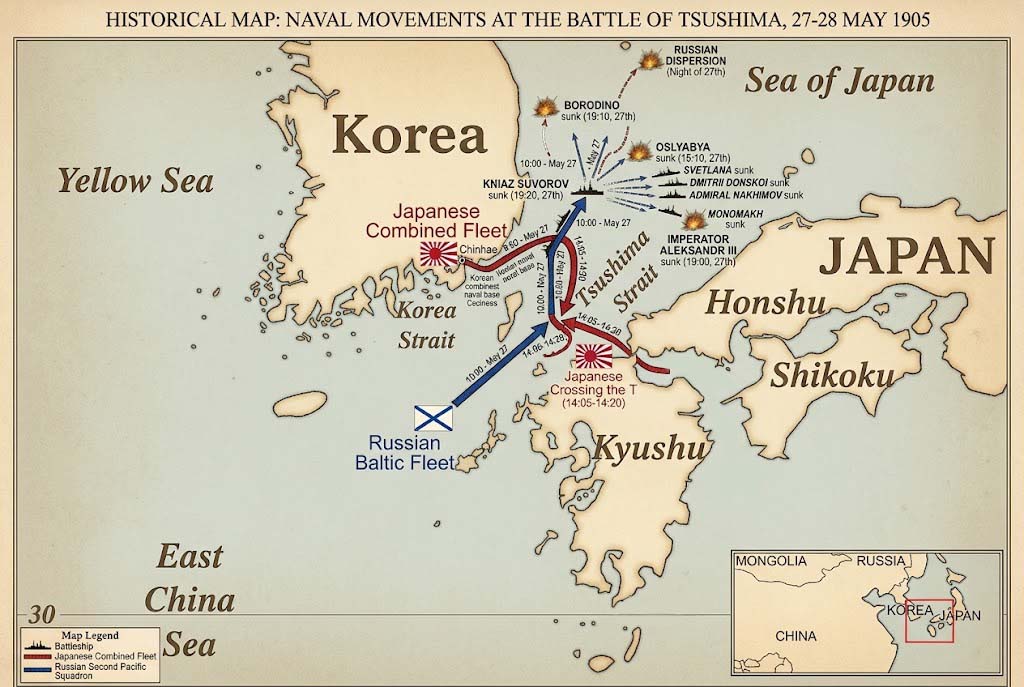
Japan, by contrast, had spent years modernizing its navy with British-built battleships and cruisers and training its crews specifically for a decisive fleet engagement, drawing on a close naval partnership with Britain that supplied both ships and expertise, and Admiral Togo positioned the Combined Fleet to intercept Rozhestvensky’s exhausted armada as it attempted to reach the Russian port of Vladivostok by threading the narrow Tsushima Strait between Korea and Japan, the most direct route available and one Togo had anticipated and prepared for months in advance. Japanese scout ships and wireless telegraphy, still a relatively new technology at the time, allowed Togo to track the Russian fleet’s approach and position his own ships with a precision that would have been impossible in earlier naval conflicts, giving him a decisive intelligence advantage before the two fleets ever came within firing range of one another.
The Battle of Tsushima
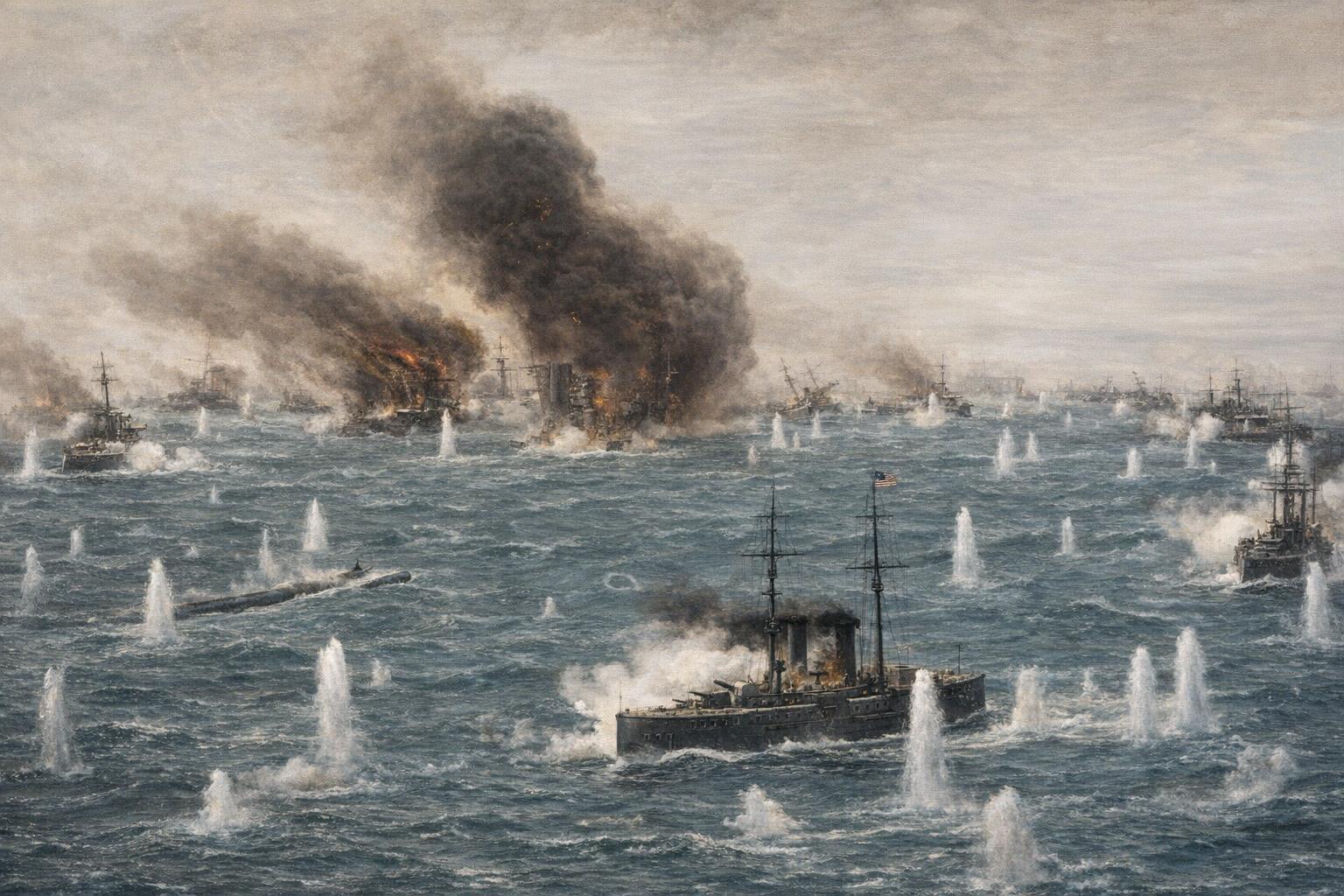
On May 27, 1905, as the two fleets sighted each other in the strait, Togo executed a bold and, in the moment, extremely risky maneuver, turning his battle line across the Russian fleet’s path in full view of their guns in order to concentrate the fire of his entire squadron on the lead Russian vessels rather than engaging in a more conventional parallel exchange. The gamble paid off decisively: superior Japanese gunnery, aided by better rangefinding equipment and years of dedicated training, began systematically battering the lead Russian ships even as they struggled to bring their own guns fully to bear, and within the battle’s opening hours several of Russia’s most powerful battleships were already burning or sinking.
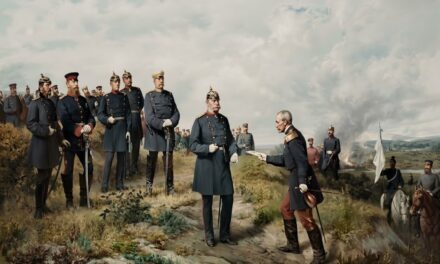
Rozhestvensky himself was wounded twice in the fighting, struck first in the back and then in the head and legs, and lost consciousness aboard his sinking flagship Knyaz Suvorov before being transferred to a destroyer that was itself captured by the Japanese soon after; he awoke a prisoner of war. Togo, in a gesture that impressed observers on both sides, visited his defeated adversary in the hospital where he was recovering, treating him with a courtesy that stood in marked contrast to the scale of the defeat Russia had just suffered, and at his later court-martial back in Russia, Rozhestvensky refused to shift blame onto his subordinates, pleading guilty to the defeat and accepting full personal responsibility for the outcome. Captain William Pakenham of the Royal Navy, observing the battle firsthand from the deck of the Japanese battleship Asahi, had a shell fragment kill crewmen standing near him during the fighting, and rather than retreat from his post he simply changed out of his bloodstained uniform into a fresh dress white one and returned to observing the action, a small but telling detail of the battle’s intensity. By the time the fighting ended the following day, Russia had lost most of its Baltic Fleet, including multiple battleships sunk outright and thousands of sailors killed, wounded, or captured, while Japan lost only a handful of small torpedo boats and a comparatively small number of casualties, a lopsided outcome that remains one of the most decisive naval victories in modern history and one historians still cite as the closest thing to a complete annihilation of one battle fleet by another in the age of the modern battleship.
The Legacy of Tsushima
Tsushima proved decisive well beyond the battle itself: the scale of Russia’s defeat, compounding a war already going badly on land and fueling growing unrest at home that would erupt into the Russian Revolution of 1905, helped push both nations toward the negotiating table, and the Treaty of Portsmouth later that year, brokered with the involvement of American President Theodore Roosevelt, ended the Russo-Japanese War on terms that confirmed Japan’s emergence as a major regional and naval power, the first Asian nation in the modern era to defeat a European great power decisively in a major war. Captain Pakenham’s detailed reports on Japanese gunnery and tactics during the battle fed directly into the Royal Navy’s subsequent decision to build the revolutionary all-big-gun HMS Dreadnought, meaning Tsushima’s tactical lessons reshaped naval warfare and battleship design well beyond the Pacific and for decades to come. Naval academies still teach the battle as the clearest lesson in concentrated firepower and superior training over raw numbers — and on Tsushima Island itself, the quieter story of villagers who sheltered their nation’s shipwrecked enemies is remembered right alongside the victory, a reminder that even history’s most lopsided military triumphs carry human stories that outlast the tactics historians still study.
Visiting Memorial Ship Mikasa Today
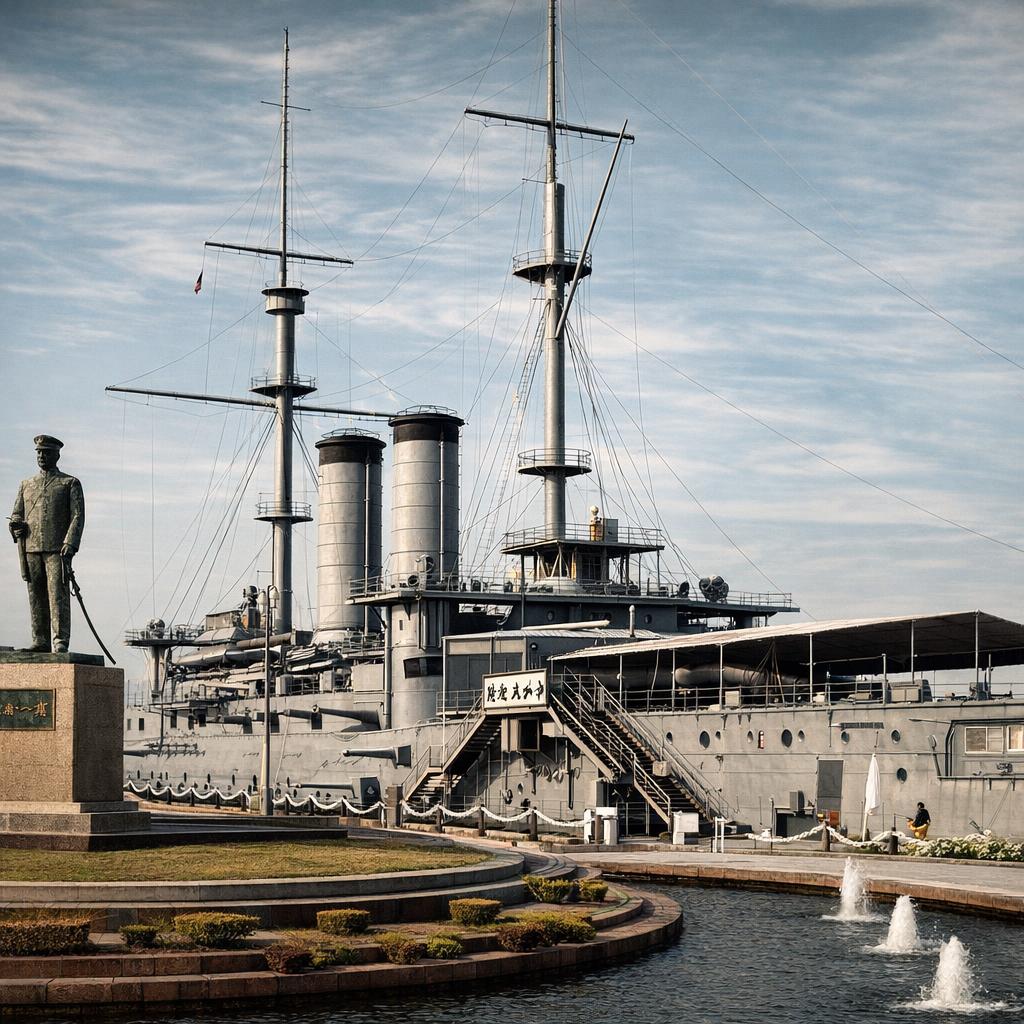
Since the battle itself was fought entirely at sea in the Tsushima Strait, the best place to experience the story firsthand is Memorial Ship Mikasa in Yokosuka, Admiral Togo’s actual flagship at Tsushima and now the oldest surviving steel battleship in the world. Preserved as a museum ship with exhibits detailing both the battle and the broader Russo-Japanese War, Mikasa is open year-round with hours that run longer in summer and shorter in winter, and the ship is closed to visitors for a few days at the very end of December each year.
For travelers able to reach the actual battle site, Tonosaki Park on Tsushima Island in Nagasaki Prefecture holds a monument originally erected in 1911 commemorating both the battle’s dead and the islanders of Nishidomari village who rescued shipwrecked Russian sailors afterward, a genuinely moving detail of the story easy to miss entirely if a visit is limited to the Mikasa alone. The park’s memorial has since been expanded, with a later addition listing thousands of Russian and Japanese names side by side, and the site remains a quiet, low-key destination that draws relatively little foreign tourist traffic despite its significance.
Remembrance at Tsushima
In the battle’s aftermath, roughly 143 survivors from the sunk Russian cruiser Vladimir Monomakh washed ashore near the fishing village of Nishidomari on Tsushima Island, and local villagers took the shipwrecked sailors in, an act of ordinary compassion toward yesterday’s enemy that Japan later chose to memorialize alongside the military victory itself. Six years after the battle, Togo himself had a stone monument raised on Tsushima inscribed with his own four-character poem honoring the dead of both navies, a striking gesture of reconciliation from the admiral who had just delivered Russia’s worst naval defeat in its history. Visitors today describe the Tonosaki Park memorial as a quiet, contemplative place that functions effectively as a shared cenotaph for sailors of both nations, with several recommending Shiba Ryotaro’s novel Clouds Above the Hill as background reading beforehand, and more than one noting the parallel between the Nishidomari rescue and Japan’s later Ertugrul rescue tradition of aiding shipwrecked foreign sailors regardless of nationality.
Visitor Info: www.kinenkan-mikasa.or.jp
Location: Memorial Ship Mikasa, 82-19 Inaoka-cho, Yokosuka, Kanagawa Prefecture, Japan
Site Status: National Park / Managed Historic Site
Visitation Notes: Since the naval battle itself was fought at sea in the Tsushima Strait, the best place to experience the story firsthand is Memorial Ship Mikasa in Yokosuka, Admiral Togo’s actual flagship at Tsushima and now the oldest surviving steel battleship in the world. It’s preserved as a museum ship with exhibits on the battle and the Russo-Japanese War, open year-round with hours that run longer in summer and shorter in winter, and closed to visitors for a few days at the very end of December each year. For those able to travel to the actual battle site, Tonosaki Park on Tsushima Island in Nagasaki Prefecture has a monument erected in 1911 commemorating both the battle and the islanders of Nishidomari village who rescued 143 shipwrecked Russian sailors afterward, a genuinely moving detail of the story that’s easy to miss if you only visit the Mikasa.
Google Map
Visitor Comments
Footprints805042 from Tokyo, Japan commented that this is a quiet, contemplative place, effectively a cenotaph for both the Russian and Japanese sailors who died in the battle. Worth reading up on the history beforehand, Shiba Ryotaro’s novel Clouds Above the Hill is a great starting point, so you understand what you’re looking at when you visit.
— from TripAdvisor
OnAir807222 from Fukuoka Prefecture, Japan comments that the monument lists about 5,000 Russian names and 120 Japanese names side by side, it was erected in 2005 for the battle’s centennial. A striking, low-key place that doesn’t get much foreign tourist traffic, but well worth the detour if you’re on Tsushima.
— from TripAdvisor
Quentin H, a self-described fan of history and naval battles, felt the ship, though not preserved in its fully original state, still conveyed how significant the vessel and its history are, calling it a must-visit for anyone interested in naval history.
— from Google Reviews
According to HANAKOTO, you can still see Admiral Togo’s own calligraphy carved into the stone at the monument. It quietly commemorates the local islanders who rescued shipwrecked Russian sailors after the battle, a side of the story that doesn’t get told as often as the naval victory itself.
— from TripAdvisor