Aboard the flagship USS Olympia in the predawn darkness of May 1, 1898, a New York Herald correspondent named Joseph L. Stickney stood beside Commodore George Dewey as the American squadron steamed into Manila Bay, watching the commodore issue the order that would become one of the most quoted lines of the entire Spanish-American War: “You may fire when you are ready, Gridley.” Within hours, Stickney would witness an entire Spanish fleet reduced to burning wreckage without the loss of a single American life, a lopsided naval victory so complete that it seemed to belong to an earlier, more decisive age of warfare even as it announced the arrival of the United States as a Pacific power. Few battles in naval history have produced so total a result in so short a span of time, and fewer still have carried consequences so disproportionate to the modest scale of the forces actually engaged that morning.
Manila Bay: The Road to Battle
When the United States declared war on Spain in April 1898 over Cuba’s struggle for independence, few observers expected the conflict’s opening blow to fall not in the Caribbean but on the far side of the world in the Philippines, a Spanish colonial possession that had barely figured into American war planning before the crisis began. Commodore George Dewey, commanding the U.S. Navy’s Asiatic Squadron from a base in Hong Kong, received orders to seek out and destroy Spain’s Pacific fleet the moment war was declared, a directive that sent his squadron of six warships steaming toward Manila Bay, where Rear Admiral Patricio Montojo had positioned the Spanish Pacific squadron for what he judged to be its strongest defensive stance. Montojo, aware that his aging, poorly armed vessels stood little chance against Dewey’s modern steel cruisers in open water, anchored his ships near the shore batteries of the Cavite naval arsenal, hoping that shallow water and shore-based artillery support might offset his fleet’s serious material disadvantages.
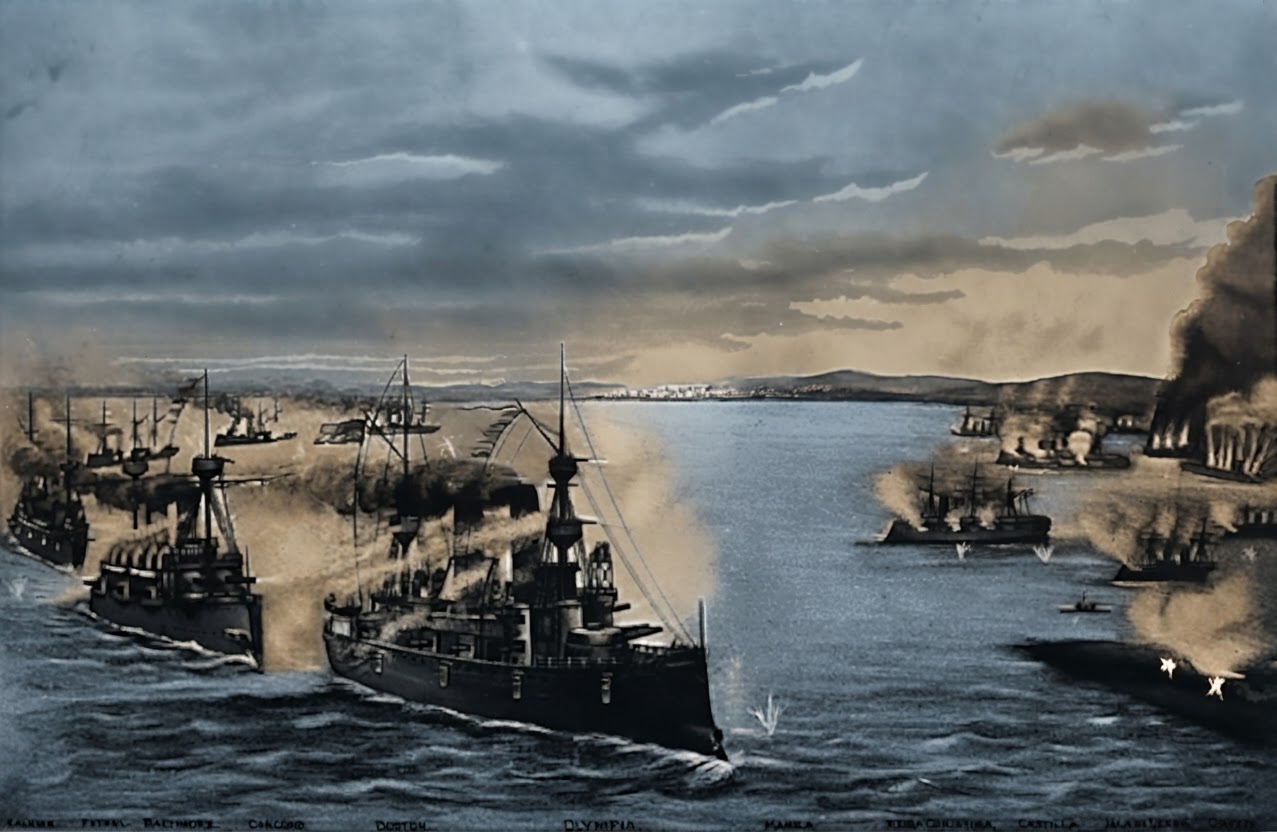
Dewey’s squadron navigated into Manila Bay under cover of darkness on the night of April 30 into May 1, slipping past the shore defenses at the bay’s entrance with minimal resistance despite the very real risk of underwater mines, and by dawn his six warships stood arrayed against Montojo’s assembled fleet at Cavite, ready to open what both commanders understood would be a decisive engagement. Aboard the flagship Olympia, embedded correspondent Joseph L. Stickney of the New York Herald prepared to witness the action firsthand, positioned to file one of the most detailed eyewitness accounts of any naval battle of the era. Dewey’s six vessels, though smaller in number than the Spanish squadron they faced, carried modern steel construction, quick-firing guns, and trained crews that gave them a decisive material edge over Montojo’s aging and mismatched collection of warships, several of which dated back decades and lacked the armor or firepower to withstand sustained modern naval gunnery.
The Battle of Manila Bay
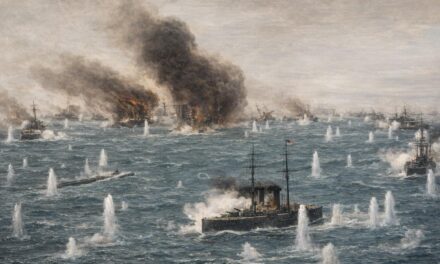
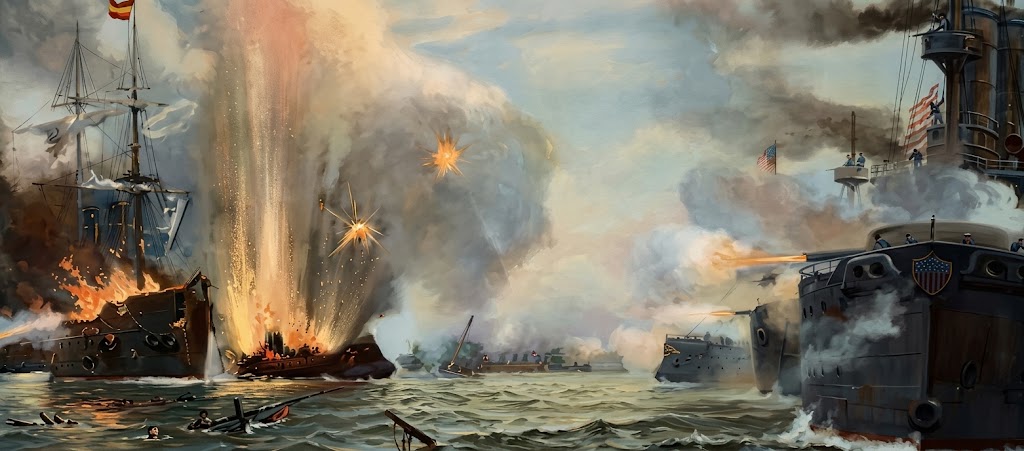
At dawn on May 1, 1898, Dewey’s squadron opened fire on Montojo’s anchored fleet at Cavite, launching a methodical, almost leisurely engagement in which the American ships steamed back and forth across the bay in a firing line, delivering broadside after broadside against Spanish vessels that were badly outgunned and, in several cases, unable to maneuver effectively in the confined anchorage. It was in the opening minutes of this action that Dewey turned to his flag captain and issued the famous order, “You may fire when you are ready, Gridley,” a line correspondent Joseph Stickney captured for his New York Herald readers and one that would echo through American naval lore for generations afterward. The battle proceeded in remarkably one-sided fashion: Spanish gunnery, hampered by outdated equipment and poor ammunition, inflicted almost no meaningful damage on the American squadron, while Dewey’s guns systematically destroyed Montojo’s ships one after another, setting several ablaze and forcing others to be scuttled by their own crews rather than face continued bombardment.
By late morning, following a brief pause during which Dewey’s squadron withdrew to confirm ammunition supplies before resuming the attack, the entire Spanish Pacific squadron had been destroyed or disabled, with Spanish casualties numbering roughly 370 killed and wounded against a mere handful of minor American injuries and no American deaths in combat. Montojo himself survived the battle and later submitted an official report to Spain’s Ministry of Marine defending his defensive positioning at Cavite and explaining the overwhelming material disadvantages his outdated fleet had faced against Dewey’s modern warships. Dewey’s own official report, filed with the Secretary of the Navy on May 4, 1898, described the engagement in characteristically understated terms, an account he would later expand upon in his 1913 autobiography, offering additional detail on the tactical decisions that produced such a complete and lopsided victory. News of the triumph, once it reached Washington via cable days later, transformed Dewey into an overnight national hero and handed the United States uncontested control of Manila Bay, though the city of Manila itself, defended by Spanish land forces, would not actually fall to American and Filipino besiegers until August of that year.
The lopsidedness of the outcome startled naval observers around the world, who scrutinized the battle for lessons about the value of modern steel warships, trained gun crews, and superior ammunition quality over sheer numbers of vessels, and the engagement quickly became a case study in the tactical academies of several major navies. Filipino revolutionary forces under Emilio Aguinaldo, who had been fighting Spanish colonial rule for years before Dewey’s arrival, watched the destruction of the Spanish fleet with cautious hope that it might finally open the door to their own independence, an expectation that would soon collide painfully with American territorial ambitions in the islands.
The Legacy of Manila Bay
Dewey’s victory at Manila Bay effectively ended Spanish naval power in the Pacific in a single morning and instantly established the United States as a serious Pacific power, but the battle’s aftermath proved far more complicated than its lopsided outcome suggested. Manila itself held out until August 1898, and Spain did not formally cede the Philippines until the December 1898 Treaty of Paris, an agreement that transferred the islands to American control over the bitter objections of Filipino revolutionary forces who had been fighting for their own independence from Spain, a betrayal that directly triggered the brutal Philippine-American War of 1899 to 1902. Dewey returned home to a hero’s welcome and was promoted to the specially created rank of Admiral of the Navy, the only officer in American history to hold that title, cementing Manila Bay’s place as one of the most celebrated yet historically fraught victories in United States naval history, one whose near-bloodless triumph for the American side helped obscure, for many years, the far costlier war it ultimately launched in the Philippines.
Visiting Manila Bay Today
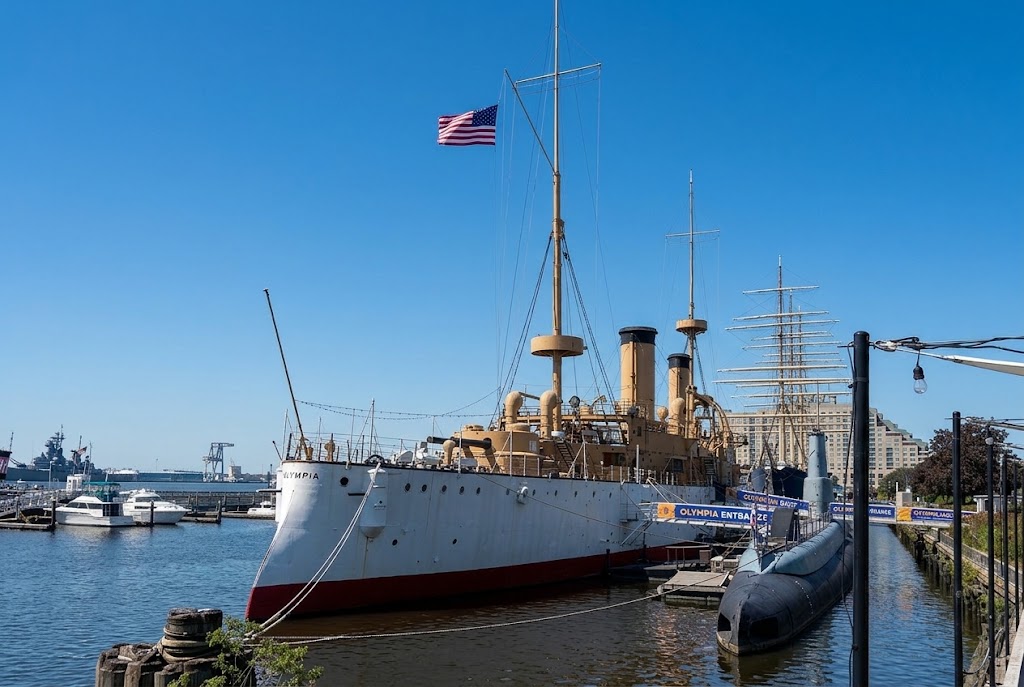
Manila Bay and the adjacent Cavite naval base, including Sangley Point where much of the fighting concentrated, remain an active Philippine Navy facility today, and there is no public memorial or museum on-site marking the 1898 battle for visitors hoping to walk the ground where it occurred. Commodore Dewey’s actual flagship, the protected cruiser USS Olympia, does survive intact, though not in the Philippines: it is preserved as a floating museum ship at the Independence Seaport Museum in Philadelphia, offering visitors a genuine, if geographically distant, connection to the vessel that carried Dewey into the battle. Visitors touring the Olympia can walk her decks and interior spaces as part of the broader Independence Seaport Museum campus, and many find the ship itself so absorbing that they run short of time to see the museum’s main building, a common visitor experience worth planning around when scheduling a visit.
Preservation of the Olympia has required ongoing restoration work over the decades since she was designated a museum ship, and visitors who appreciate her survival as a rare intact example of a Spanish-American War-era steel cruiser are frequently encouraged to support that continuing effort. For travelers actually in the Philippines, no comparable on-site infrastructure exists at Manila Bay itself, making the Philadelphia museum the most substantive way to engage directly with the physical legacy of the battle. Visitors to Manila can still take in the bay’s dramatic sunsets from the waterfront promenade along Roxas Boulevard, a popular local gathering spot that offers sweeping views across the same waters where Dewey’s squadron once maneuvered, even without any interpretive signage connecting the scenery to the events of 1898.
Remembrance of Manila Bay
Commodore George Dewey’s own official report to the Secretary of the Navy, filed May 4, 1898, and later expanded in his 1913 autobiography, remains the authoritative American account of the battle’s execution and his tactical reasoning throughout the engagement. Rear Admiral Patricio Montojo, commander of the defeated Spanish squadron, left his own official report to Spain’s Ministry of Marine, offering a candid Spanish perspective on the defensive positioning and material disadvantages that doomed his fleet before the first shots were even fired. Joseph L. Stickney, the New York Herald correspondent embedded aboard the Olympia throughout the action, filed a vivid firsthand account of the battle that captured both its methodical destruction and its most famous line of dialogue for readers back home. Together, these three accounts, the victorious commander’s official record, the defeated admiral’s candid explanation, and an embedded journalist’s eyewitness narrative, preserve Manila Bay from three distinct vantage points, a rare completeness that lets historians reconstruct one of the most one-sided naval engagements in modern history from every side of the firing line, down to the exact wording of the order that sent Dewey’s guns into action that May morning and the quiet dread aboard the Spanish ships as they watched the American squadron close the distance.
Visitor Info: Independence Seaport Museum (Independence Seaport Museum)
Location: Manila Bay / Sangley Point, Cavite Province, Philippines (historic naval battle site, now an active Philippine Navy facility)
Site Status: Built Over/Urbanized
Visitation Notes: Manila Bay and the adjacent Cavite naval base (including Sangley Point) remain an active Philippine Navy facility today, with no public memorial or museum on-site marking the 1898 battle. Commodore Dewey’s actual flagship, the protected cruiser USS Olympia, survives as a preserved floating museum ship at the Independence Seaport Museum in Philadelphia, USA — a genuine but out-of-country substitute for visitors wanting to see the real vessel from the battle. Worth noting: Dewey’s naval victory was won in a single morning, but it did not instantly end Spanish rule — Manila itself didn’t fall until August 1898, and Spain formally ceded the Philippines only in the December 1898 Treaty of Paris. That treaty also transferred the islands to the United States over the objections of Filipino revolutionary forces who had been fighting for independence, directly triggering the Philippine-American War (1899-1902).
Google Map
Visitor Comments
A visitor named zebrasky praised the USS Olympia as a wonderful stop for history buffs, calling it a genuinely impressive ship to walk through. They noted spending so much time exploring Olympia and the adjoining submarine USS Becuna that they ran out of time to see the main museum building itself.
— from TripAdvisor
Another visitor’s review focused on the preservation effort behind the ship, expressing appreciation that Olympia has been kept intact as a rare surviving example of a Spanish-American War-era vessel and encouraging others to support ongoing restoration work.
— from TripAdvisor