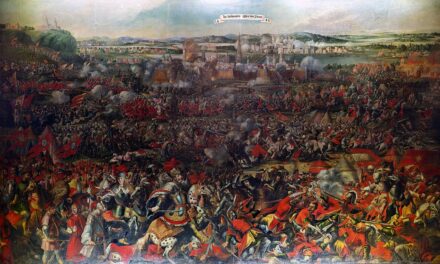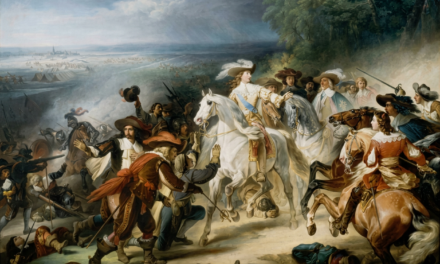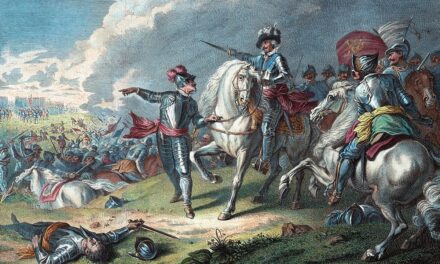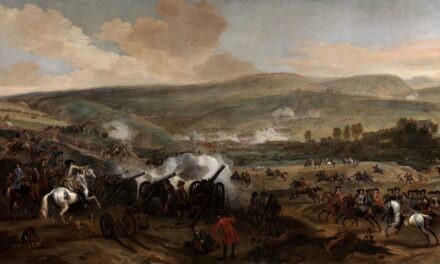
Sir Edmund Verney died on the field at Edgehill with the King’s standard still gripped in his hand, and family tradition holds that even after he fell, his fingers would not let go of the pole. His own son fought that same afternoon on the opposing side, for Parliament, one family split down the middle on the first great battlefield of a war that would divide thousands of English families the same way. Neither side won that day at Edgehill, but the war the battle opened would not let go of England for another four years, and no family’s split loyalties would ever fully heal from the day two of their own faced each other across the same muddy field.
Edgehill: The Road to Battle
By October 1642, months of escalating political and religious conflict between King Charles I and Parliament had hardened into open civil war, with both sides raising armies across England and maneuvering for position rather than immediately seeking a decisive engagement. King Charles, having raised his standard at Nottingham in August, marched his Royalist army toward London in hopes of ending the rebellion quickly, while the Parliamentarian army under Robert Devereux, 3rd Earl of Essex, moved to intercept him before he could reach the capital. The two armies encountered each other unexpectedly near the village of Kineton in Warwickshire, with the Royalists occupying the high ground of Edge Hill itself and the Parliamentarians drawing up on the plain below, each side realizing that a major battle, the first pitched engagement of the war, was now unavoidable.
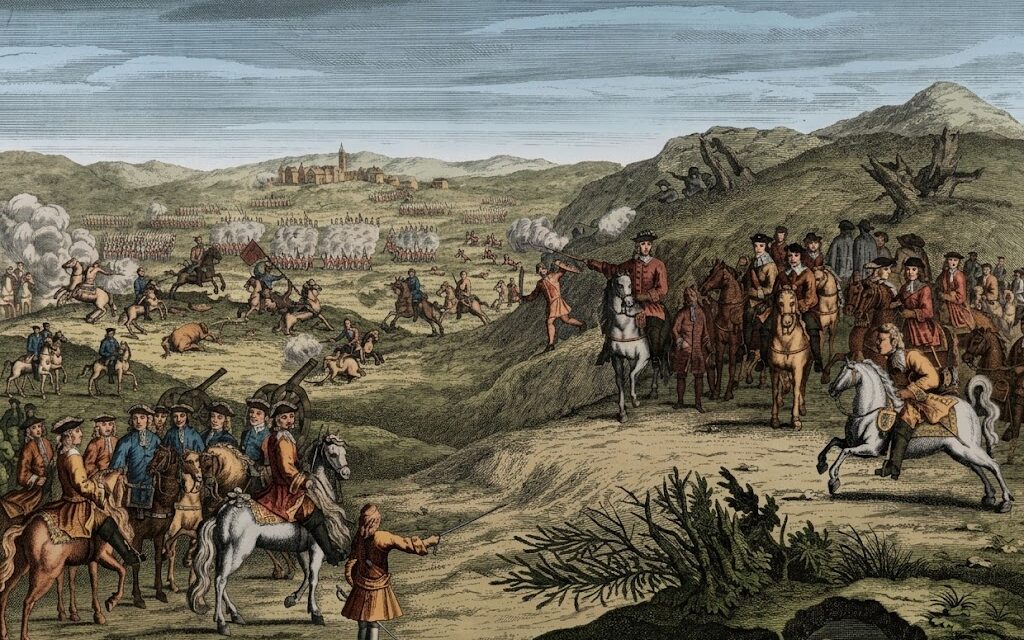
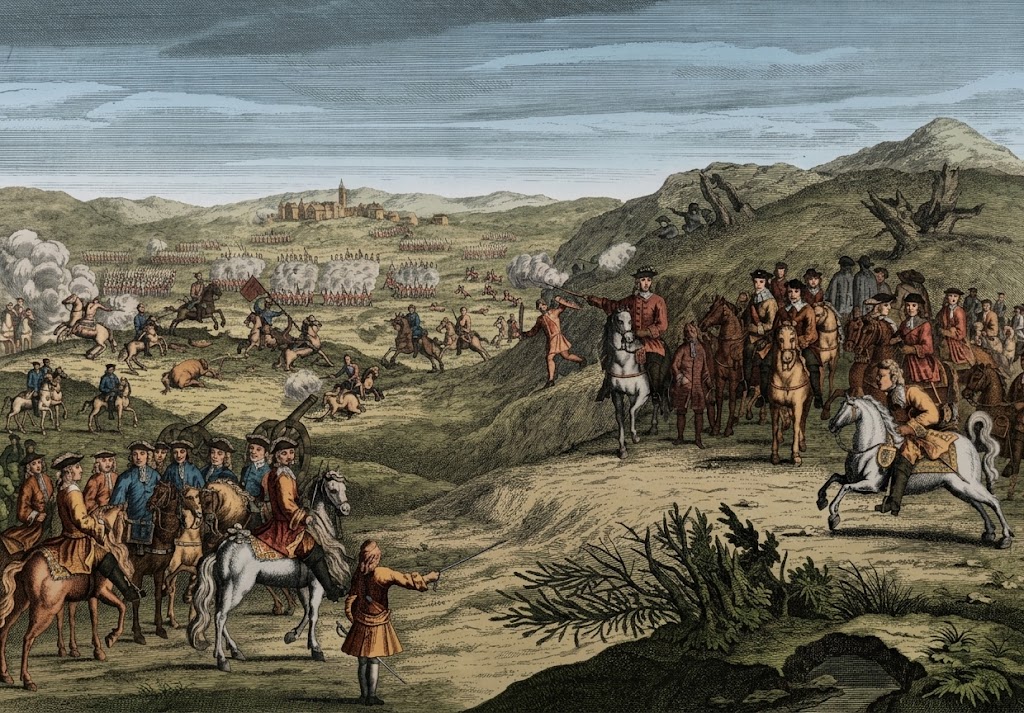
Neither army possessed extensive combat experience, since England had not fought a major domestic battle in generations, and many of the soldiers on both sides were essentially amateurs led by a mix of experienced continental veterans and enthusiastic but untested noblemen. Prince Rupert of the Rhine, King Charles’s nephew and a veteran of continental warfare despite his youth, commanded the Royalist cavalry on the right wing, bringing with him aggressive cavalry tactics learned from European campaigns that emphasized speed and shock over caution. As both armies deployed on the afternoon of October 23, the stage was set for a battle whose outcome, whichever way it went, would signal to the rest of England that the political crisis had become a full-scale war with no easy end in sight. Commanders on both sides drew up their forces in the conventional continental fashion of the period, infantry pike-and-shot blocks anchoring the center with cavalry massed on the wings, a formation that reflected how recently English officers had studied or served in the ongoing wars on the European continent rather than any native tradition of large-scale pitched battle.
The Battle of Edgehill
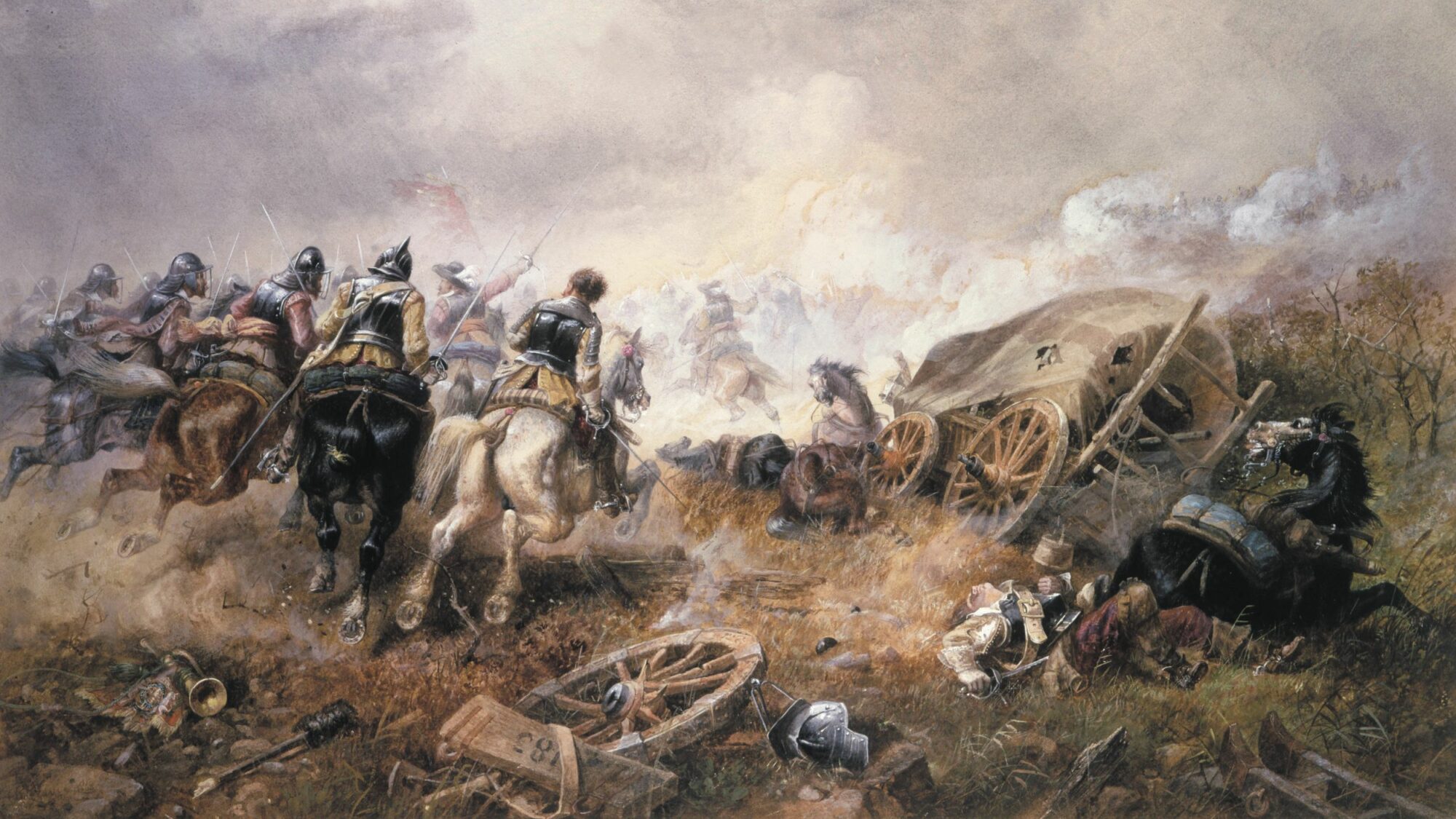
The battle opened with an artillery exchange and infantry advance before Prince Rupert launched his Royalist cavalry in a devastating charge against the Parliamentarian horse on the opposing flank, commanded by Sir James Ramsey, routing them almost immediately and sending them fleeing from the field in disarray. Rather than regrouping to exploit this success against the exposed Parliamentarian infantry and artillery, however, Rupert’s cavalry pursued the fleeing enemy horsemen far beyond the immediate battlefield, chasing them through and past the village of Kineton and falling upon the Parliamentarian baggage train to plunder it, a catastrophic loss of discipline that removed the Royalist cavalry from the battle at the exact moment its presence might have proven decisive. With Rupert’s horsemen scattered across the countryside looting wagons rather than fighting, Essex seized the opportunity created by their absence, using two Parliamentarian cavalry regiments that had not been part of the initial rout to strike back hard at the now-exposed Royalist infantry and artillery positions, helping stabilize a Parliamentarian line that might otherwise have collapsed entirely.
The fighting in the center grew brutal and confused as infantry from both sides clashed at close quarters, with the Royalist King’s Life Guard suffering heavily in fighting around the Royal Standard itself, which briefly changed hands during the chaos. Sir Edmund Verney, serving as the King’s standard-bearer, was killed defending the standard during this fighting, and family tradition holds that his hand remained clenched around the pole even in death, a detail that became one of the battle’s most enduring images regardless of how literally it should be taken. The standard was reportedly recaptured by a Parliamentarian officer only to be recovered again by Royalist forces before the fighting ended, a small but symbolically loaded tug-of-war that mirrored the battle’s larger inconclusiveness. As darkness fell, neither army had achieved a decisive breakthrough, and both sides, exhausted and bloodied, effectively fought each other to a standstill without either commander managing to force a clear resolution.
The following day, with Rupert’s cavalry only partially reassembled and his own forces significantly depleted, Essex made the consequential decision not to renew the fighting, choosing instead to withdraw his army toward Warwick rather than risk further losses in a battle whose outcome remained genuinely uncertain. Both armies claimed the fight as a victory in the immediate aftermath, but the reality was a bloody, largely inconclusive draw that settled nothing about which side held the military advantage going into the wider conflict. Prince Rupert’s failure to regroup his cavalry after the initial charge became one of the most frequently cited tactical lessons of the entire war, a cautionary example of how a devastating initial success could be squandered entirely through a simple failure of discipline and battlefield restraint. Casualties on both sides were heavy relative to the armies’ inexperience, and the shock of seeing so many Englishmen killed by other Englishmen in a single afternoon helped confirm, for observers on both sides, that the conflict would not end quickly or easily.
The Legacy of Edgehill
Edgehill’s inconclusive outcome ensured that the English Civil War would continue for years rather than being settled in a single decisive early engagement, setting the pattern for a long, grinding conflict that would eventually claim tens of thousands of lives across England. The battle also established Prince Rupert’s reputation as a brilliant but occasionally reckless cavalry commander, a characterization that would follow him through subsequent campaigns as Royalist forces repeatedly struggled to translate cavalry success into strategic victory. The story of Sir Edmund Verney’s death and his son’s service on the opposing side became one of the war’s most frequently retold personal tragedies, a vivid illustration of how the conflict divided English families down to the level of individual households.
Visiting Edgehill Today
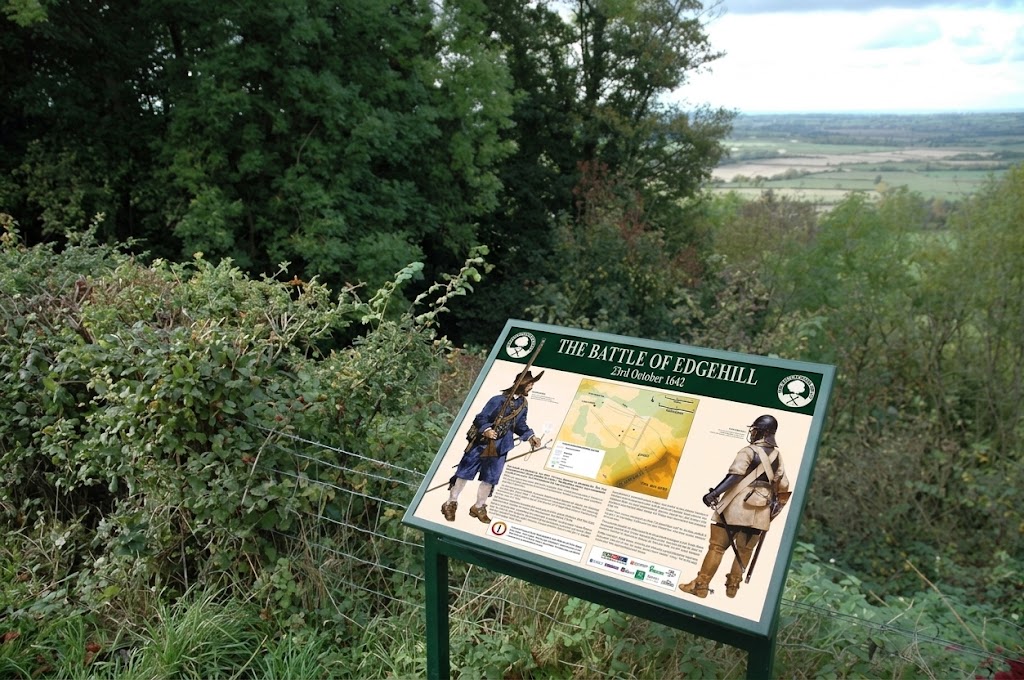
Unlike many historic battlefields that have been preserved as open, walkable sites, the core of the Edgehill battlefield remains largely inaccessible today. It was closed off in the 1940s by an active Ministry of Defence ammunition depot, whose construction also removed the public footpaths that once crossed the historic ground, and much of the battlefield, which stretches some two and a half miles from the escarpment toward Kineton, now lies inside it. The B4086, the only public route across the battlefield, is considered unsafe for pedestrians, so visitors cannot simply walk the terrain where the fighting took place, a significant limitation for a battlefield of this historical importance. Instead, the natural starting point is the Castle Inn, an atmospheric eighteenth-century Gothic-style folly pub near the top of the ridge, close to where the battle’s opening moves unfolded. There, in the beer garden on the edge of the escarpment, a Battlefields Trust interpretation panel installed in 2006 as part of the Trust’s long-distance trail linking the Edgcote, Cropredy and Edgehill battlefields maps the armies’ positions between illustrations of soldiers of the period. It looks out over the same broad vale the Royalist army surveyed on the morning of 23 October 1642 before descending to fight. Between the scarp and the depot, extensive stretches of ridge and furrow survive from the open-field system still being farmed at the time of the battle.
Footpaths run from the top of Edgehill down to and around Radway, and while access is good, the paths are steep in places; the lanes around the village are quiet. In Radway, St Peter’s Church houses a free, permanent exhibition on the battle and its impact on the local community, opened in 2015 with Heritage Lottery funding and Battlefields Trust support. It displays period artifacts alongside reenactor video testimony and costumed figures, including a life-size likeness of Captain Henry Kingsmill, giving visitors a more tangible connection to the battle than the restricted battlefield alone can provide. A second Trust panel stands in Kineton churchyard and a small roadside monument near Kineton marks the wider area, while Civil War soldiers’ memorials at the churches in Radway and Warmington offer further points of quiet remembrance. Because so much of the battlefield is off-limits, a visit to Edgehill depends more on these surrounding sites than on standing where the armies clashed: visitors should expect a driving tour of several linked sites, combined with short walks, rather than a single walkable battlefield park. The surrounding Warwickshire countryside remains largely agricultural and quiet, and the contrast between that peaceful modern landscape and the violence of October 1642 can make the restricted core battlefield feel all the more poignant to those who make the effort to visit.
Remembrance of Edgehill
The Battlefields Trust has worked to preserve public understanding of Edgehill despite the restricted access to the core battlefield. Its interpretation panels at the Castle Inn and Kineton, its battlefield survey and its long-distance trail keep the battle’s story accessible even where the ground itself is not, and the community-led exhibition at Radway earned the Trust’s President’s Award for its contribution to battlefield interpretation. Edgehill’s dead are remembered less by a single grand monument than by quiet memorials in the villages that buried them. In Radway church, Captain Henry Kingsmill, a Royalist captain of foot killed in the early fighting, lies beneath a reclining stone effigy and a slate tablet raised by his mother, Lady Bridget, in 1670, nearly thirty years after his death. In the churchyard at Warmington, a rare surviving headstone marks Captain Alexander Gourdin, buried on 25 October 1642, and the parish register records that several more of the fallen were laid to rest there, most of them unnamed, while many others were buried in pits on the field itself. Contemporary accounts of the fighting, including Prince Rupert’s charge and his subsequent loss of control over his cavalry, remain central to how historians understand the tactical lessons of the war’s opening battle. The story of Sir Edmund Verney’s death, his clenched grip on the Royal Standard, and his son’s service for Parliament is still cited as one of the most poignant individual episodes of a war that divided English families as completely as it divided the nation. Historians studying the Verney family’s papers, among the most extensively preserved private archives from the period, have found in their correspondence a broader window into how ordinary gentry families navigated, and were torn apart by, a conflict that offered no comfortable middle ground once the fighting began. That the Verneys’ story survives in such vivid detail, while so much of the ground where Edmund Verney died remains inaccessible behind military fencing, captures the strange asymmetry between how well Edgehill is remembered in written history and how little of its actual ground can still be visited today.
Further Exploration: Book titled “Edgehill: The Battle Reinterpreted” by Christopher L. Scott, Alan Turton and Eric Gruber von Arni (Pen & Sword, 2004)
Location: Castle at Edgehill, Edge Hill, Banbury, Oxfordshire, OX15 6DJ, England (battlefield core spans Kineton, Radway, and Tysoe parishes in Warwickshire; largely Ministry of Defence land, see Visitation Notes)
Site Status: Access Restricted or Unsafe
Visitation Notes: The original battlefield core is largely off-limits, closed off in the 1940s by an active Ministry of Defence ammunition depot that also removed the public footpaths once crossing the site; the B4086, the only public route across the battlefield, is considered unsafe for pedestrians, so visits are best made as a driving tour combined with short walks. Visitors can instead see Battlefields Trust interpretation panels, both installed in 2006, in the beer garden of the Castle Inn (an 18th-century Gothic folly pub on the escarpment overlooking the battlefield) and in Kineton churchyard, and steep footpaths run from Edgehill down to Radway past surviving ridge and furrow from the 1642 field system. St Peter’s Church in Radway houses a free, permanent exhibition (opened 2015) with period artifacts and reenactor video testimony, alongside the memorial to Royalist Captain Henry Kingsmill. A small roadside monument stands near Kineton, and Civil War soldiers’ memorials survive at Radway and Warmington churches, including the 1642 headstone of Captain Alexander Gourdin in Warmington churchyard.
Google Map
Visitor Comments
A visitor named Jeanne C described the roadside battle monument near Kineton as a sad, modest marker, noting it’s a replica placed there because the actual battlefield site is Ministry of Defence property and inaccessible to the public, and mentioned reports of mass graves in the surrounding area.
— from TripAdvisor