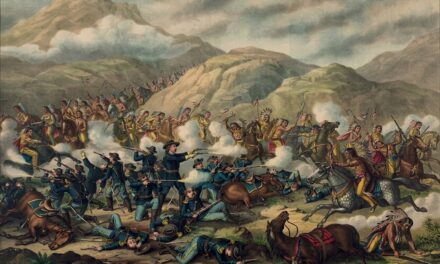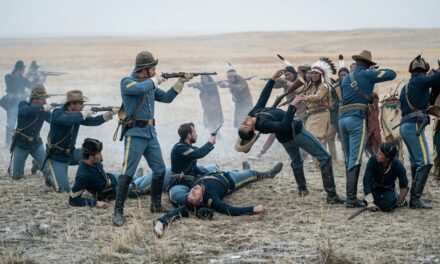
Colonel John Gibbon’s soldiers crept into position under cover of darkness and struck a sleeping Nez Perce village at dawn, confident that a surprise attack on an encampment of families would break the resistance of a people who had already marched hundreds of miles trying to avoid exactly this kind of confrontation. Instead, Nez Perce warriors, many of them fighting hand-to-hand in their own camp before their families could even flee the tipis, rallied within minutes, drove the soldiers back, and pinned Gibbon’s entire command into a desperate defensive siege that lasted through the following day. What was meant to be a decisive strike became one of the costliest engagements of the Nez Perce War for the Army that started it, and a searing loss for a Nez Perce band that had hoped simply to be left alone.
Big Hole: The Road to Battle
By the summer of 1877, several bands of the Nez Perce, led by Chief Joseph and other leaders, were fleeing the U.S. Army rather than accept forced relocation onto a reduced reservation in Idaho, embarking on a fighting retreat that would eventually cover more than 1,000 miles toward the Canadian border. Having already fought the Army to a standstill at the Battle of White Bird Canyon and endured further clashes at the Clearwater River, the Nez Perce bands crossed over the Bitterroot Mountains into Montana, believing they had outdistanced their pursuers and could travel more safely once beyond Idaho’s borders. Believing themselves safe, the roughly 800 Nez Perce men, women, and children, along with their large horse herd, made camp in the Big Hole Valley to rest, resupply, and allow their exhausted horses to recover, taking few of the defensive precautions they had maintained during the more dangerous early stages of their flight.
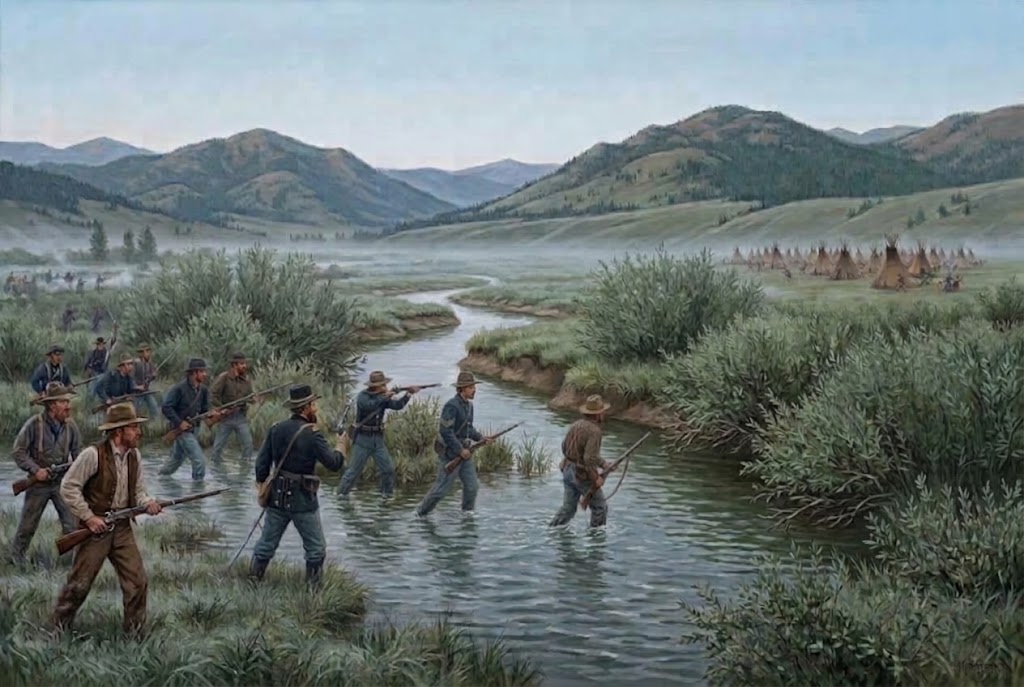
Colonel John Gibbon, however, had been dispatched with a force of roughly 200 soldiers and civilian volunteers specifically to intercept the fleeing bands, and having tracked their route into Montana, positioned his men on a forested hillside overlooking the unsuspecting village under cover of darkness on the night of August 8. Gibbon’s plan called for a surprise dawn assault directly into the sleeping camp, a tactic that had proven devastating against Native villages elsewhere during the era’s frontier conflicts, and his soldiers moved into their final attack positions in the predawn darkness while the Nez Perce camp below remained entirely unaware of the danger closing in around it. The Nez Perce bands fleeing that summer represented several distinct groups united by their shared refusal to accept confinement on the reduced Idaho reservation, and their column included not only warriors but a large number of elders, women, and children, along with a horse herd numbering in the thousands that sustained their mobility but made rapid, undetected movement increasingly difficult. A mistaken sense of having outrun their pursuers once they crossed into Montana left the camp at Big Hole with fewer sentries posted than the bands had maintained during earlier, more immediately threatening stretches of the journey.
The Battle of the Big Hole
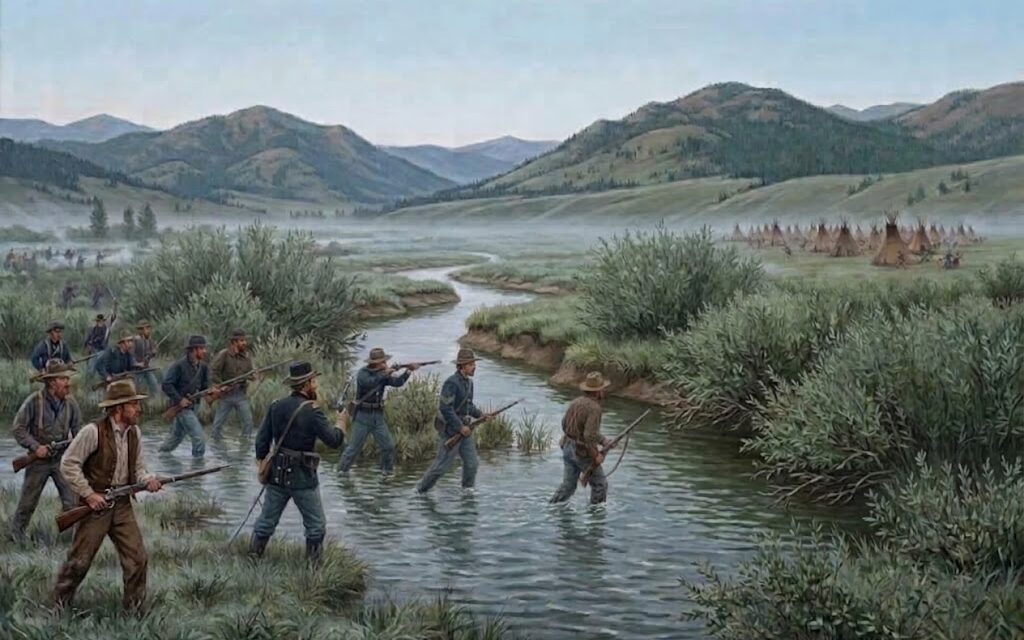
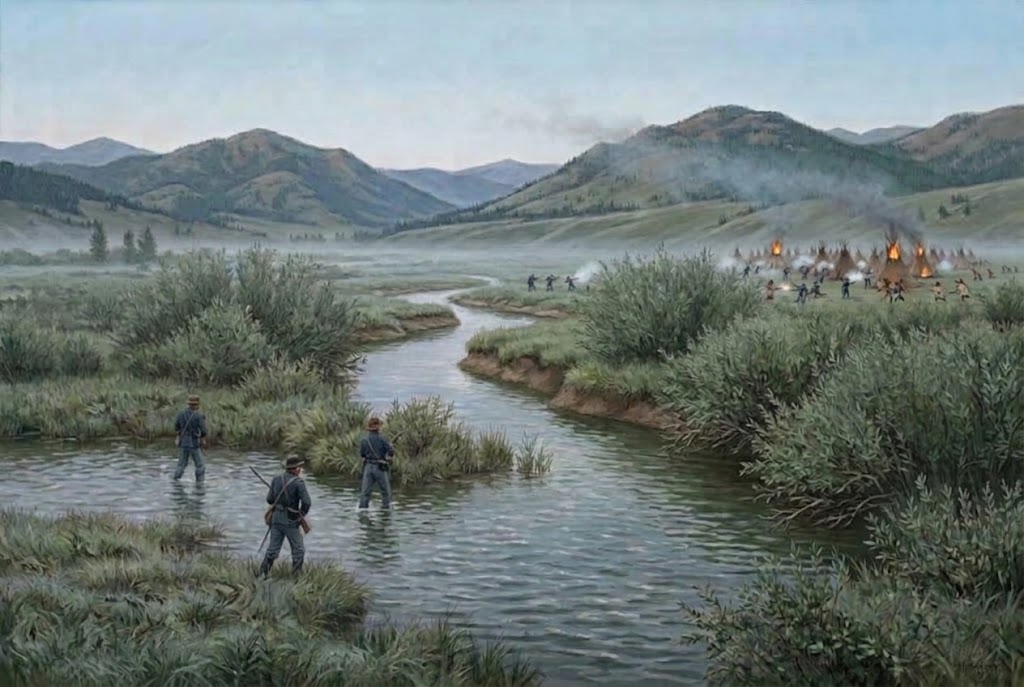
Gibbon’s soldiers opened the attack at first light on August 9, 1877, wading across the shallow Big Hole River and charging directly into the sleeping village, killing a number of Nez Perce, including women and children, in the initial chaotic minutes before organized resistance could form among the stunned camp. Some soldiers set fire to tipis as they advanced, adding smoke and confusion to the panic already spreading through the camp as families scrambled to find cover or flee toward the surrounding brush and riverbank. Nez Perce warriors, including a young fighter named Yellow Wolf, nephew of Chief Joseph, rallied with remarkable speed despite the surprise, engaging the attacking soldiers in brutal hand-to-hand combat within the camp itself and beginning to push the assault back before it could fully overrun the village. As the counterattack gained momentum, Nez Perce fighters succeeded in capturing one of Gibbon’s howitzer artillery pieces after a running fight for control of the gun, a significant tactical setback for the Army that deprived the attacking force of its heaviest weapon at a critical moment in the fighting and denied Gibbon the firepower he had counted on to break any organized resistance.
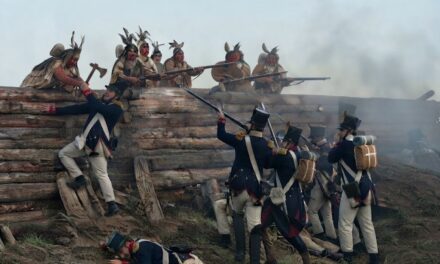
With his initial assault broken and his forces increasingly exposed to accurate rifle fire from Nez Perce marksmen using the terrain to their advantage, Gibbon ordered a withdrawal to a nearby wooded hillside, where his men dug hasty rifle pits with knives, bayonets, and whatever tools were at hand, settling in for what became a grueling day-long siege as Nez Perce warriors surrounded the position and fired down on the beleaguered soldiers from higher ground. Gibbon himself was wounded during the fighting, one of numerous officer casualties the Army suffered in the engagement, and his forces remained pinned in their defensive position for the better part of a day, short on water and ammunition, while other Nez Perce warriors worked to cover the retreat of their families, moving the wounded, the elderly, and the children away from the battle site to relative safety farther down the valley.
Nez Perce losses were severe, with a significant number of the dead being women, children, and elderly noncombatants killed in the initial surprise assault before any organized defense could form around them, a toll that fell disproportionately on those least able to fight back and that Nez Perce survivors carried as a lasting grief throughout the remainder of their long flight. Army casualties were also substantial for an engagement of this size, with dozens killed and many more wounded among Gibbon’s roughly 200-man force, reflecting how thoroughly the Nez Perce counterattack had reversed the battle’s early momentum and turned what was meant to be a swift, decisive strike into one of the costliest fights of the entire campaign for the soldiers involved. By the time the Nez Perce bands resumed their retreat, having successfully disengaged from the siege and moved their families to safety under cover of the ongoing standoff, they had inflicted a costly and humiliating reversal on the force sent to stop them, even as their own losses at the village site left a lasting wound within the fleeing bands that no subsequent victory could fully offset.
The Legacy of the Big Hole
The Battle of the Big Hole demonstrated that the fleeing Nez Perce bands remained a formidable military force capable of inflicting serious damage on pursuing Army units even while burdened with protecting noncombatant families, prolonging a campaign that would not end until the bands’ eventual surrender near the Canadian border roughly six weeks later. The heavy toll among Nez Perce women, children, and elderly at the village site made the battle a particularly painful chapter within the broader flight, remembered by Nez Perce descendants as a moment when the war’s violence fell hardest on those who had no part in the fighting itself.
Visiting Big Hole Today
Big Hole National Battlefield operates today as a National Park Service site within the larger Nez Perce National Historical Park, featuring a year-round visitor center with an interpretive film and exhibits covering both the surprise attack and the siege that followed it. A National Recreation Trail links the siege area where Gibbon’s men were pinned down to the village site itself, which is marked today with tipi-pole frames outlining the footprint of the 1877 camp, alongside an overlook offering sweeping views of the surrounding valley. The site operates on seasonal hours with free or low-cost entry, and visitors are advised to check current hours at the National Park Service website before planning a trip given the seasonal schedule.
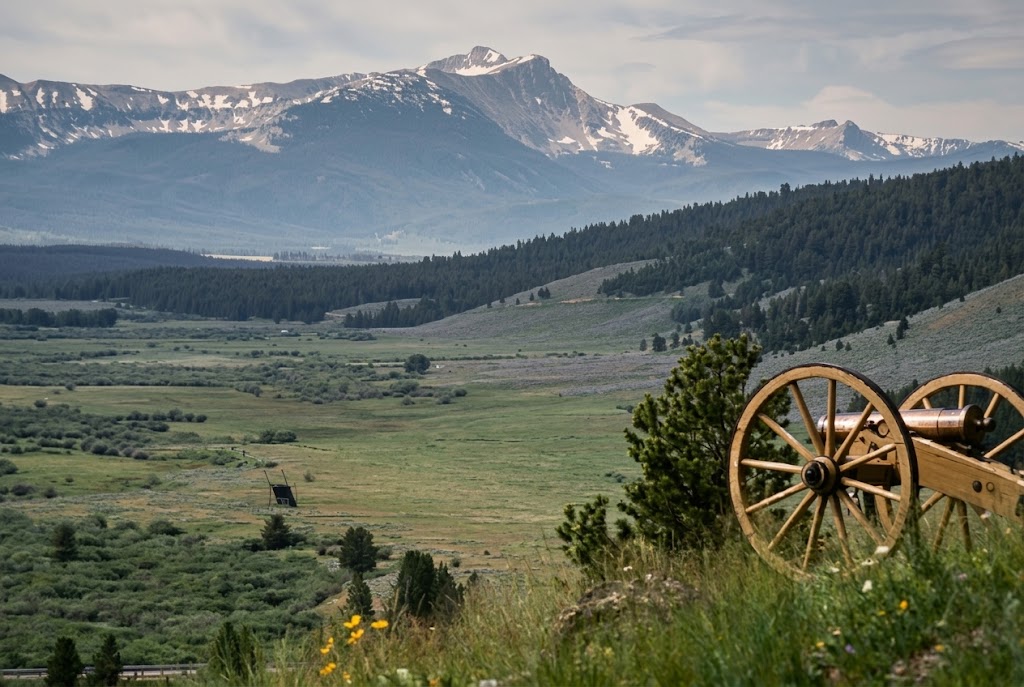
The battlefield sits in a remote high-mountain valley roughly 10 miles from the small town of Wisdom, Montana, with limited lodging and services nearby, meaning Dillon or Missoula generally serve as the closest larger towns for overnight stays, and travelers should plan fuel and supply stops accordingly before heading into the valley. A typical visit to the visitor center and a short walk through the grounds runs roughly an hour and a half to three hours, while visitors wishing to walk the full trail system connecting the siege area and village site should plan for considerably longer to take in both locations at an unhurried pace. The overlook near the village site in particular offers visitors a chance to stand above the valley floor and take in the same sweeping mountain terrain that framed both the surprise dawn assault and the desperate defense that followed it.
Remembrance of the Big Hole
Colonel John Gibbon, the U.S. commanding officer who was wounded during the fighting, later wrote both an official after-action report and a more reflective retrospective account of the battle, records that have since been cross-referenced with soldier letters and diaries in the National Park Service’s detailed archeological history of the site. Yellow Wolf, known also as Hemene Moxmox, a young Nez Perce warrior and nephew of Chief Joseph, described fighting hand-to-hand during the battle and helping capture one of Gibbon’s howitzer pieces in an account he gave decades later to a sympathetic chronicler of the Nez Perce experience. Taken together, these two accounts, a wounded army colonel’s official and personal record of a battle that nearly overwhelmed his command, and a young warrior’s firsthand memory of defending his family’s camp and turning back that same assault, preserve the Big Hole from both sides of a fight that reshaped the course of the Nez Perce bands’ desperate flight toward Canada. Modern archeological survey work at the site, cataloguing spent cartridges and other battle debris across the valley floor and surrounding hillsides, has since helped historians reconstruct the movements of both the initial dawn assault and the day-long siege that followed it with a level of physical detail that written testimony alone could not fully provide.
Visitor Info: Official website of Big Hole National Battlefield (National Park Service)
Location: Big Hole National Battlefield, State Highway 43, about 10 miles west of Wisdom, Montana
Site Status: National Park/Managed Historic Site
Visitation Notes: Big Hole National Battlefield is a National Park Service site within the larger Nez Perce National Historical Park, with a year-round visitor center featuring an interpretive film and exhibits, a National Recreation Trail linking the siege area, the village site marked with tipi-pole frames showing the 1877 camp’s footprint, and an overlook of the valley. The site operates on seasonal hours with free or low-cost entry; current hours should be checked at nps.gov/biho before visiting. The battlefield sits in a remote high-mountain valley about 10 miles from Wisdom, Montana, with limited nearby lodging and services — Dillon and Missoula are the closest larger towns. A typical visit runs 1.5 to 3 hours for the visitor center and a short walk, longer for the full trail system.
Google Map
Visitor Comments
A visitor from Minneapolis named David H. described the site as deeply emotional, recommending that visitors watch the visitor center’s short film before walking out to the observation deck overlooking the valley.
— from TripAdvisor
Barry and Nicola G., visiting from Reading in the UK, wrote about the historical injustice done to the Nez Perce in a review titled ‘Slaughter of the Nez Perce,’ noting that the sadness of the event still feels palpable when looking out over the valley from the overlook.
— from TripAdvisor