A garrison with full granaries, its own freshwater well, and a fortress carved into the top of an extinct volcano had every material reason to keep fighting. Instead, after three months of failing to force its way in, an attacking army watched the gates open anyway. The Siege of Edinburgh Castle in 1650 is less a story of walls breached than of a defender’s will breaking first, and more than three and a half centuries later historians still debate whether that collapse was military exhaustion, political calculation, or something closer to a change of heart. What is certain is that the castle’s surrender had almost nothing to do with the strength of Oliver Cromwell’s guns and almost everything to do with the man commanding the garrison inside, a governor whose motives remain contested to this day.
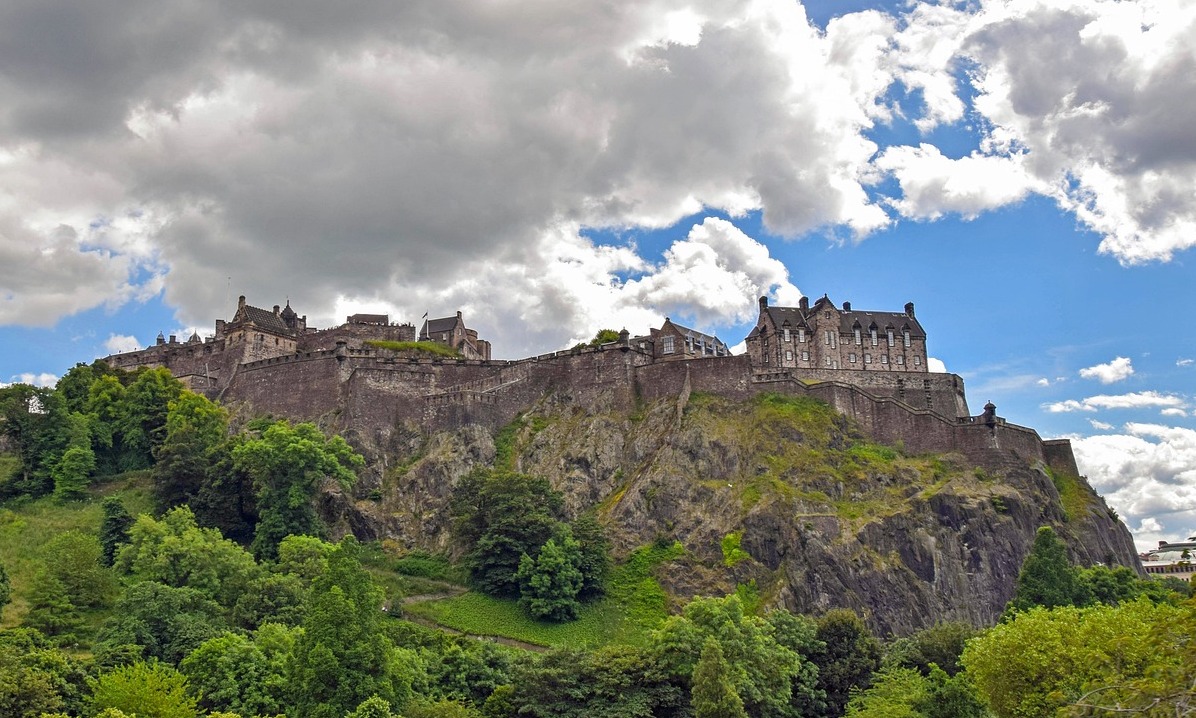
Edinburgh Castle: The Road to Siege
By the summer of 1650, Scotland had entangled itself in the aftermath of the English Civil War in a way that put Edinburgh Castle directly in Oliver Cromwell’s path. The execution of Charles I in January 1649 had outraged Scotland’s Covenanter government, which promptly proclaimed his exiled son Charles II king on the condition that he accept Presbyterian terms, a move that turned Scotland into a direct military threat to England’s new Commonwealth almost overnight. Cromwell led the New Model Army north that summer to neutralize that threat before it could mature into a full royalist invasion of England, and in September 1650 he won a crushing and largely unexpected victory at the Battle of Dunbar over a much larger Scottish army, shattering the field forces that might otherwise have marched to Edinburgh’s relief.
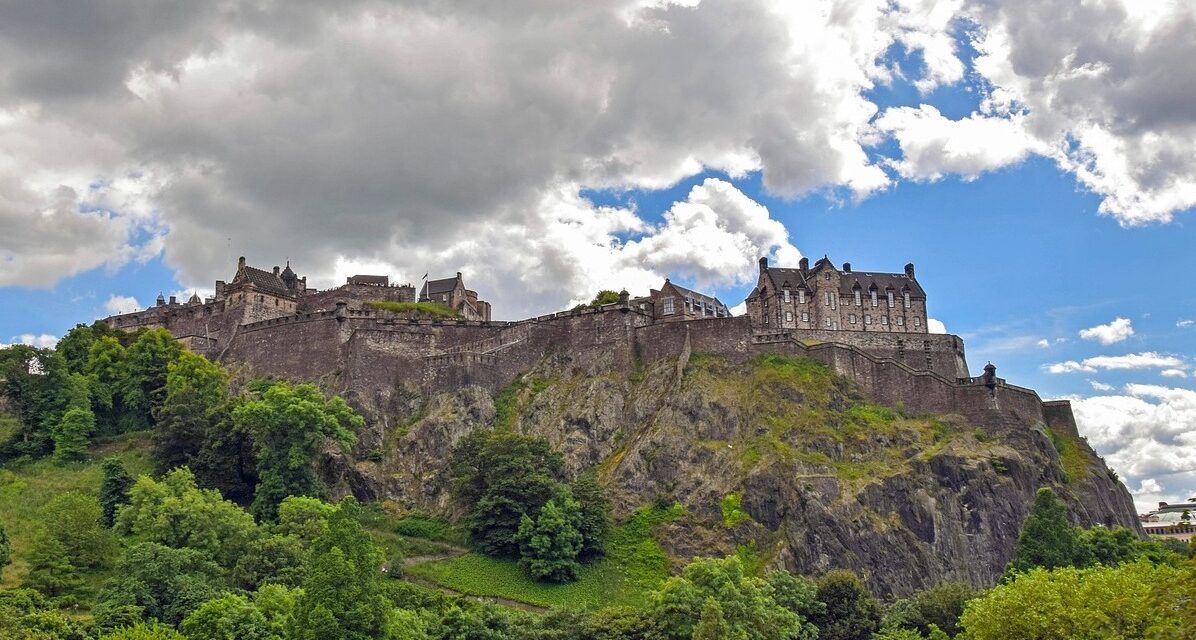
With the Scottish field army broken, Cromwell’s forces occupied the city of Edinburgh itself within days of Dunbar, but the castle, perched on a sheer volcanic crag overlooking the city below, remained defiantly out of reach, held by a garrison under Governor Colonel Walter Dundas who showed no intention of following the shattered field army into surrender. The fortress Dundas commanded was widely regarded as one of the most naturally defensible strongholds in Britain, its approach limited to a single narrow ridge along the esplanade and its rock faces on every other side effectively unscalable, meaning any siege would have to rely on prolonged bombardment, blockade, mining, or negotiation rather than a quick direct assault. Cromwell, fresh off his victory in the field, now faced the far slower and more uncertain problem of how to take a fortress that could not simply be overrun.
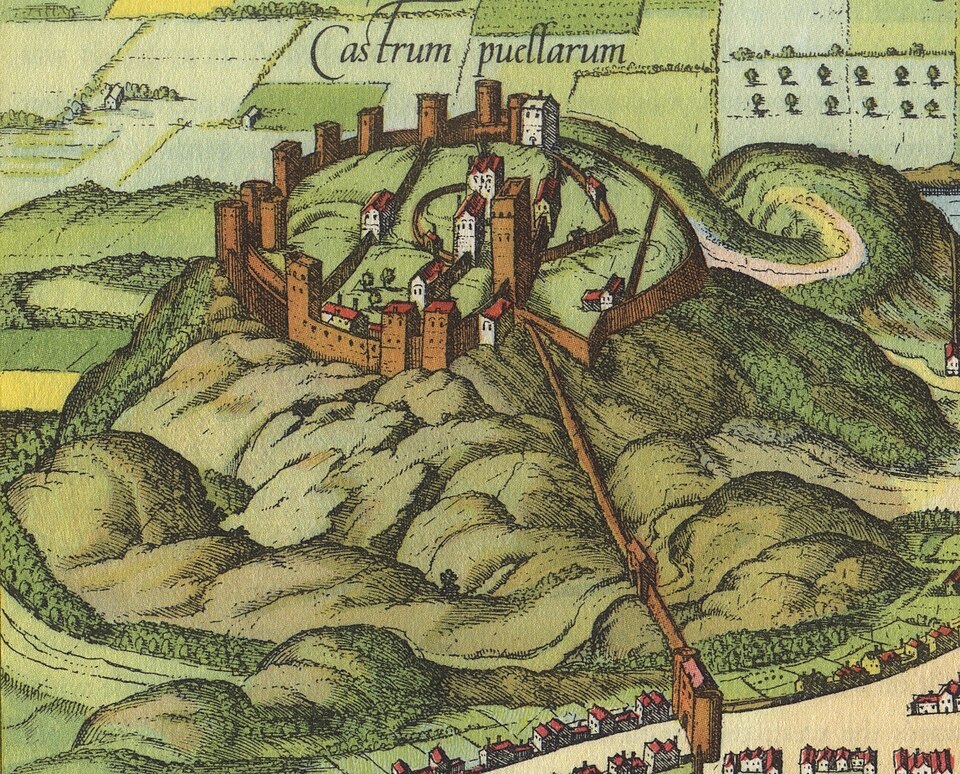
The Siege of Edinburgh Castle
Cromwell settled in for a siege rather than an assault, positioning artillery batteries on Castlehill and the surrounding high ground to bombard the fortress walls and the buildings within, while his engineers explored mining approaches aimed at undermining sections of the castle’s defenses from below. Week after week through the autumn of 1650, the guns fired on Edinburgh Castle from positions that offered clear lines of sight down onto the fortress but no easy path to actually breaching its rock-founded walls, and the bombardment inflicted visible damage on structures inside the castle without ever opening the kind of gap that would let Parliamentarian infantry storm the position outright. Cromwell’s own campaign correspondence from this period documents the mining attempts and battery placements in detail, showing a commander methodically working through every conventional siege technique available to him even as the castle’s natural defenses blunted their effect.
Governor Dundas’s garrison, meanwhile, held a defensible position with adequate food stores and its own water supply, facing none of the starvation or thirst that typically forced early modern garrisons to the negotiating table, and by every material measure the defenders could have continued holding out for a considerable time longer than they ultimately did. Life inside occupied Edinburgh during these months is documented in unusual detail thanks to the diary of John Nicoll, a local notary public whose day-by-day account of public events in the city has survived as a primary eyewitness record of the period, offering historians a rare street-level view of a capital living under bombardment and occupation simultaneously.
Yet as the weeks of bombardment wore on into December, negotiations between Cromwell’s forces and the castle began in earnest, and on December 19, 1650, Dundas signed terms of surrender despite commanding a garrison that had never been broken by force and never faced meaningful deprivation. The castle was formally handed over four days later, on December 24, 1650, bringing an end to a siege that had lasted roughly three months without Cromwell’s artillery ever accomplishing the breach it had been trying to create. Terms of surrender in sieges of this era typically allowed a defeated garrison to march out under arms with some measure of honor intact, and the negotiated nature of Dundas’s capitulation, rather than a collapse forced by starvation or a breach stormed under fire, is itself part of what has made the episode so difficult for historians to characterize cleanly as either a military defeat or a political decision dressed up as one. The gap between the castle’s unbroken physical condition and its governor’s decision to surrender fueled suspicion among contemporaries almost immediately, with some observers attributing Dundas’s capitulation not to any military necessity but to a personal shift in political loyalty away from the Royalist and Covenanter cause he had ostensibly been defending, a reading that has never been fully resolved by surviving evidence but that has shaped how the episode is remembered ever since.
The Legacy of Edinburgh Castle
The castle’s fall completed Cromwell’s effective conquest of Lowland Scotland and removed the last major obstacle to Commonwealth control of Edinburgh, folding the fortress into a military occupation that would last until the Restoration returned Charles II to the throne a decade later. Because the garrison surrendered rather than fell to force, the episode became less a story about artillery superiority than about the fragility of political loyalty under sustained pressure, an ambiguity that historians studying the siege have continued to weigh against Cromwell’s own correspondence and contemporary Edinburgh accounts, without ever reaching full consensus on Dundas’s true motives. The castle itself absorbed the damage of three months of bombardment and continued functioning as a working fortress for centuries afterward, its survival intact standing as a quieter legacy than the more dramatic sieges elsewhere in Cromwell’s Scottish campaign.
Visiting Edinburgh Castle Today
Edinburgh Castle remains one of Scotland’s most visited historic sites, managed by Historic Environment Scotland and reached by the same Castlehill approach and esplanade off the Royal Mile that Cromwell’s forces once besieged in 1650. Visitors exploring the castle complex today can see the Great Hall, the Scottish National War Memorial, and St Margaret’s Chapel, believed to be Edinburgh’s oldest surviving building, along with the Honours of Scotland, the country’s crown jewels, displayed alongside the Stone of Destiny used for centuries in the coronation of Scottish and British monarchs. The grounds also let visitors walk the same Castlehill high ground where Cromwell’s siege batteries were positioned in 1650, a rare case where the attacking side’s own vantage point is as accessible to modern visitors as the fortress it once bombarded, and the castle’s structural resilience against that three-month bombardment remains part of the story told on site today.
The One O’Clock Gun, a long-running Edinburgh tradition, fires daily except Sundays and draws visitors who plan their arrival around its report echoing across the city. Because Edinburgh Castle draws heavy year-round visitor numbers as one of the country’s top attractions, advance timed-entry tickets are strongly recommended rather than arriving without a plan, and visitors should expect a site that can feel busy even outside peak season. The castle’s dramatic position atop its volcanic crag, visible across much of central Edinburgh from miles away, makes it as much a defining feature of the city’s skyline as a historic monument in its own right, and the walk up from the esplanade offers changing views back over the city with every step toward the gatehouse.
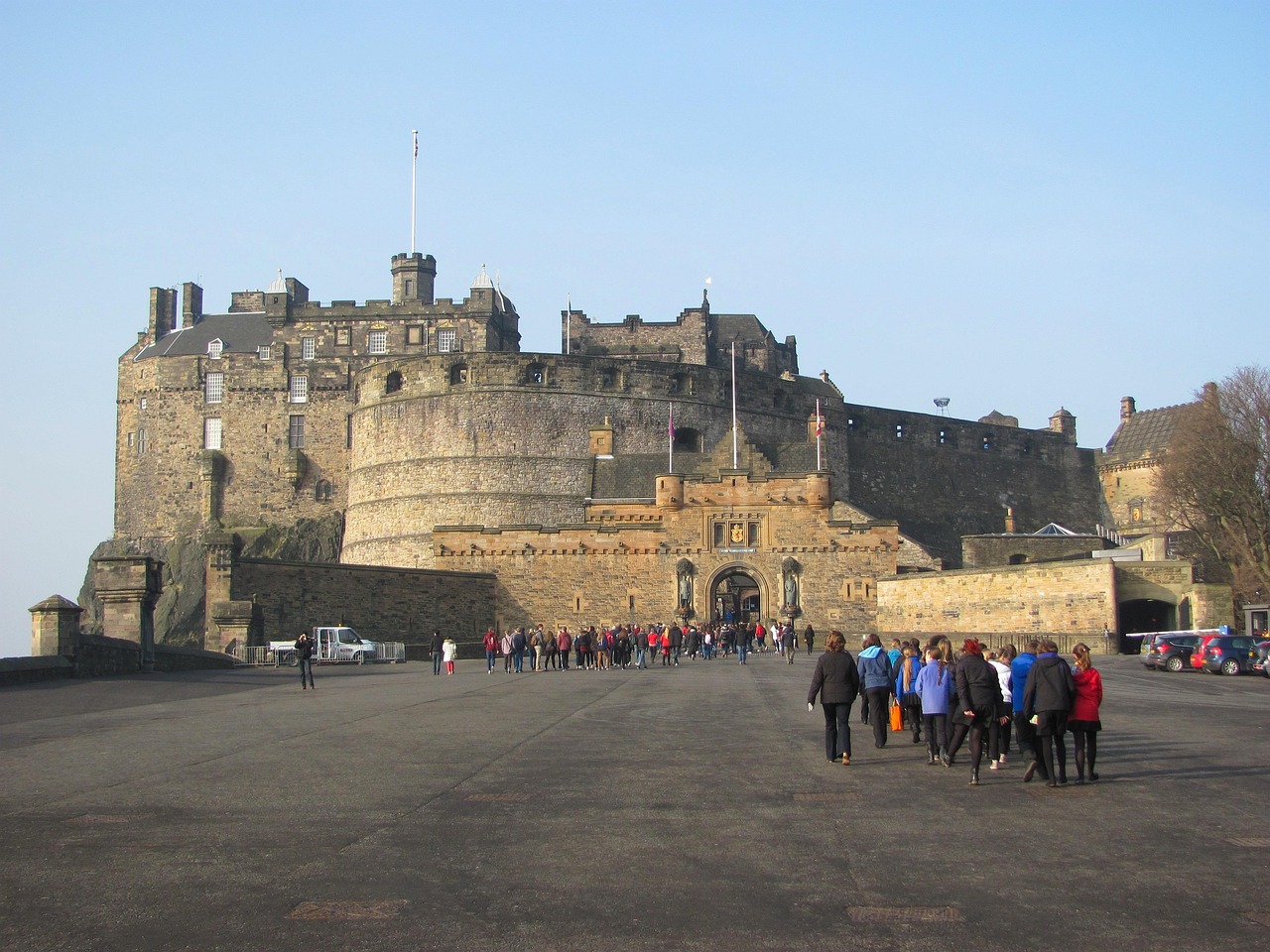
Remembrance of Edinburgh Castle
Edinburgh Castle’s 1650 siege occupies an unusual place in the fortress’s long military history precisely because it ended without the drama of a breached wall or a final storming assault, leaving behind a question about human judgment rather than a clear-cut demonstration of military force. That ambiguity has kept the episode alive among historians of the period, who continue to draw on Cromwell’s own campaign correspondence and contemporary Edinburgh accounts, including a local notary’s diary of the occupation, to weigh the competing explanations for Dundas’s decision to surrender an unbroken fortress. Today the castle’s role as one of Scotland’s most-visited landmarks sits atop centuries of layered military history, of which the Cromwellian siege is only one chapter among many stretching back nearly a thousand years, but it remains a vivid illustration of how a fortress can survive every bombardment aimed at it and still change hands, a reminder that sieges are as often won in the minds of defenders as they are on their walls.
Visitor Info: Edinburgh Castle (Historic Environment Scotland)
Location: Edinburgh Castle, Castlehill, Edinburgh EH1 2NG, Scotland, United Kingdom
Site Status: National Park/Managed Historic Site
Visitation Notes: Visitors enter via the esplanade off the Royal Mile and explore centuries of history within the castle complex, including the Great Hall, the Scottish National War Memorial, St Margaret’s Chapel (Edinburgh’s oldest building), and the Honours of Scotland (Crown Jewels) alongside the Stone of Destiny. Visitors can walk the same Castlehill and battery positions where Cromwell’s 1650 siege guns were placed; the castle was never breached in that siege, and its structural integrity remains part of the story on display. The One O’Clock Gun fires daily except Sundays. Advance timed-entry tickets are strongly recommended, as the site is often very crowded.
Google Map
Visitor Comments
A visitor named Russell F stressed the importance of booking tickets in advance rather than arriving without a plan, noted the steep climb up to the entrance, and recommended timing the visit around 1pm to catch the daily One O’Clock Gun firing.
— from TripAdvisor
A visitor named Clara Mae called it the highlight of her trip to Scotland, praising the views and well-maintained grounds, and felt the admission price was worth it despite being on the pricier side.
— from TripAdvisor
A visitor named Robert M had a mixed experience on a very crowded day: liked some exhibits, including the prison displays and the memorial chapel, but found long waits everywhere and skipped the Crown Jewels due to queue length.
— from TripAdvisor
A visitor named MargaretPowell was more critical, feeling the site was overcrowded and underwhelmed by the Crown Jewels viewing, describing it as a brief walk-past, and thought several buildings felt like empty shells overrun with tourists relative to the cost.
— from TripAdvisor