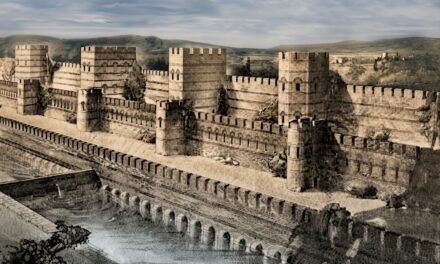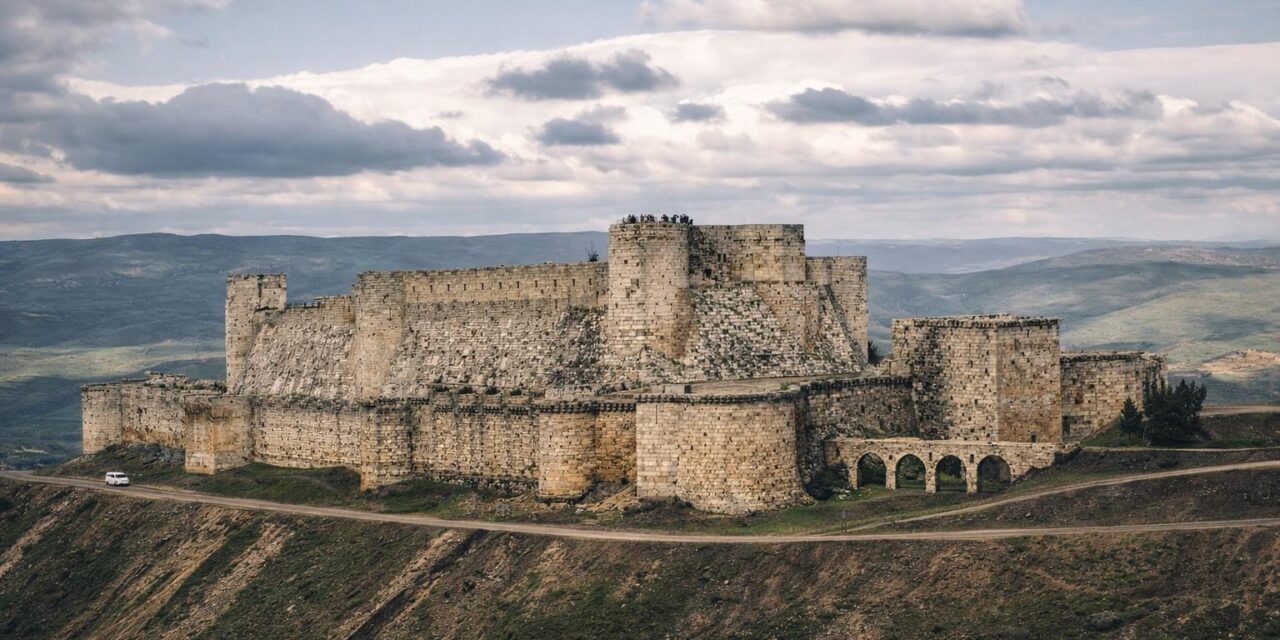
A castle can be built to withstand any army and still fall to a single forged letter. Krak des Chevaliers, the fortress T.E. Lawrence once called perhaps the best preserved and most wholly admirable castle in the world, held against Muslim armies for nearly 130 years of near-continuous conflict, only to surrender in 1271 not because its walls were finally breached, but because its garrison believed an order that was never actually written.
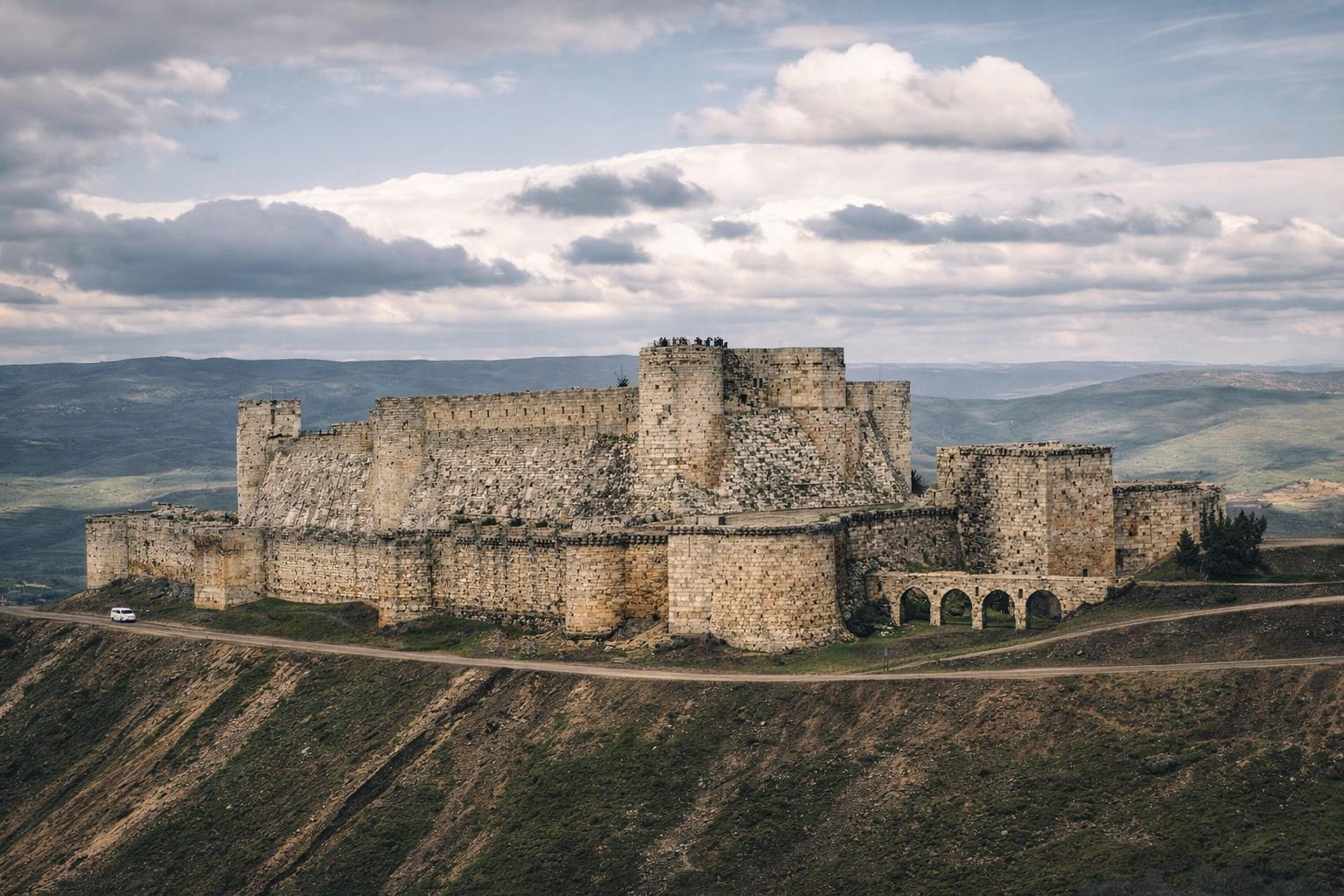
Krak des Chevaliers: The Road to Battle
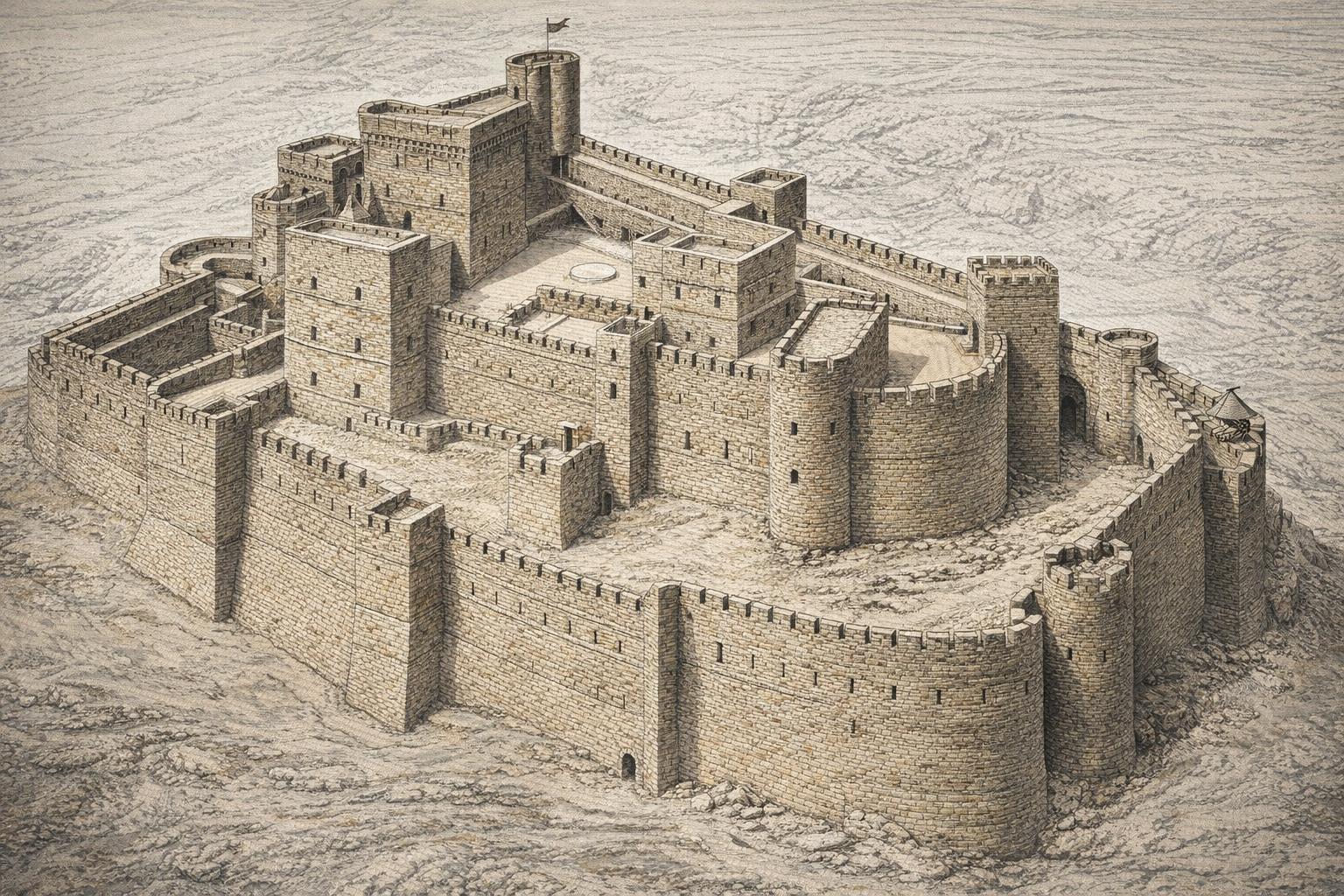
The Knights Hospitaller took control of Krak des Chevaliers in 1142, inheriting and then dramatically expanding an existing fortification in the hills of what is now western Syria, and over the following century they transformed it into one of the most formidable concentric castles ever built, with an outer wall protecting an even stronger inner fortress and a garrison that could remain self-sufficient through long sieges. The castle’s design incorporated massive sloped glacis walls that deflected siege engines and made mining nearly impossible along much of its perimeter, deep storage vaults capable of holding years’ worth of grain and supplies, and a commanding hilltop position overlooking the strategically vital route between the coastal ports and the interior of Syria, making it as much a tool of regional control as a defensive stronghold. The castle’s reputation for near-impregnability was tested directly in July 1188, when Saladin, fresh from his crushing victory over the Crusader states at the Battle of Hattin the year before, brought his army against Krak’s walls. Rather than commit to what he judged would be a long and costly siege against defenses that gave him genuine pause, Saladin withdrew his forces entirely, choosing instead to await the Third Crusade’s arrival rather than risk his army against a fortress that would not fall to a Muslim army for another 83 years.
By the mid-13th century, the balance of power in the region had shifted decisively against the Crusader states, weakened by internal rivalries, the loss of Jerusalem decades earlier, and a steady decline in reinforcements arriving from Europe, while the rising Mamluk Sultanate under Baybars had begun systematically reducing the remaining Crusader fortresses one by one, each conquest further isolating the strongholds that remained. Nicolas Lorgne, a French Hospitaller knight who became lord and castellan of Krak around 1255, spent years further strengthening the castle’s defenses, including reinforcing the outer barbican, work that would later be tested against the very siege it was designed to withstand. Lorgne would go on to rise to Marshal of the Hospitallers and eventually Grand Master of the order, but the fortifications he had overseen at Krak would ultimately face their final test without him personally present when Baybars turned his attention to the castle in 1271.
The Siege of Krak des Chevaliers
Sultan Baybars laid siege to Krak des Chevaliers in March 1271, bringing siege engines and experienced miners who set about undermining the castle’s towers, and by late March his forces had succeeded in breaching the outer ward, a serious blow but not yet a decisive one against a castle built with a second, stronger line of defense specifically to survive exactly this kind of setback. The inner fortress, the true heart of Krak’s defenses, held firm even as the outer walls fell, and the garrison, though worn down by weeks of continuous bombardment and now fighting from a considerably reduced perimeter, showed no sign of the kind of collapse that would normally follow an outer breach of this scale.
Rather than continue grinding through what could have become an extended and costly assault on the inner walls, and mindful of how much time and how many men a full reduction of the concentric fortress could still cost him even after the outer breach, Baybars had a letter forged in the name of the Hospitallers’ own Grand Master, ordering the garrison to surrender the castle. The defenders, exhausted after weeks under siege and evidently unable to verify the letter’s authenticity in the chaos of the ongoing assault, believed the forged order and requested terms on April 8, 1271, bringing nearly 130 years of Crusader control over the fortress to an end without the inner citadel itself ever actually being broken by force. It remains one of history’s more striking examples of a fortification defeated by deception rather than by the failure of its own design, a distinction that historians and military engineers studying the castle have continued to emphasize in the centuries since, since the episode illustrates a vulnerability no wall thickness or clever engineering could ever fully close off: a garrison’s trust in its own chain of command. Baybars, for his part, treated the captured castle with relative restraint compared to some of his other conquests, allowing the surviving garrison safe passage rather than a massacre, a calculated mercy that likely encouraged other besieged Crusader garrisons elsewhere in the region to consider negotiated surrender over prolonged, costly resistance.
The Legacy of Krak des Chevaliers
In 1909, a young Oxford undergraduate named T.E. Lawrence, who would later become known to the world as Lawrence of Arabia, walked more than 1,000 miles across Ottoman Syria researching Crusader castles for his university thesis, spending five days examining Krak des Chevaliers in painstaking detail. His verdict, that it was perhaps the best preserved and most wholly admirable castle in the world, has been echoed by architectural historians studying the site ever since, and Krak remains widely regarded as one of the finest surviving examples of medieval military architecture anywhere, Crusader or otherwise. Its fall in 1271 stands as an enduring lesson in the limits of even the most sophisticated fortifications: no wall, however formidable, can withstand a defender’s own belief in a forged command, a vulnerability no amount of stone and engineering could ever fully guard against. Scarred now by a far more recent conflict, Krak des Chevaliers still stands as one of the most complete and closely studied fortresses to survive from the age of the Crusades — proof that some vulnerabilities really can’t be closed off with more stone.
Visiting Krak des Chevaliers Today
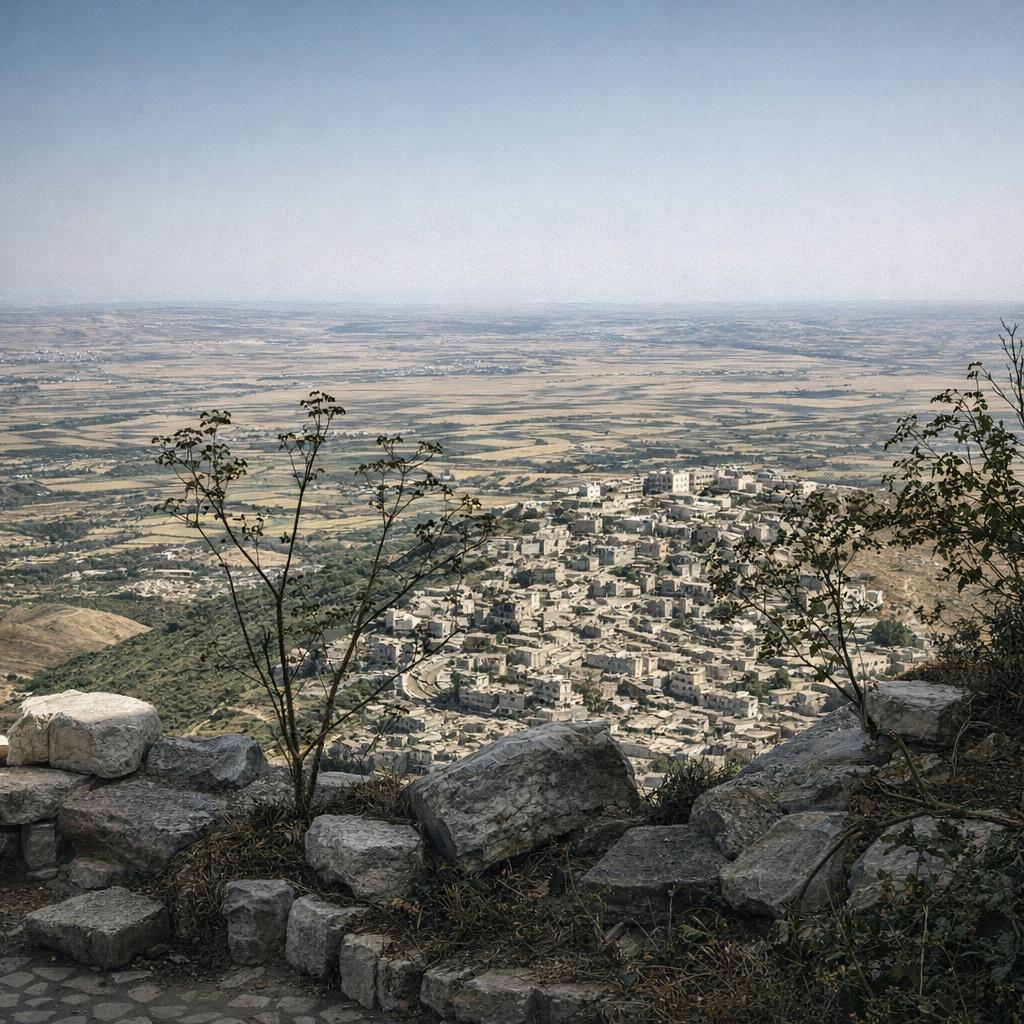
Krak des Chevaliers sits above the village of Al-Husn in Syria’s Homs Governorate, roughly 40 to 60 kilometers west of Homs city depending on the route taken, in the Wadi al-Nasara, or Valley of the Christians. The castle was designated a UNESCO World Heritage Site in 2006 and reopened to foreign visitors after being recaptured from opposition forces in 2014, though it sustained shelling and airstrike damage during the Syrian Civil War, including to its Crusader-era chapel, and restoration work has continued in the years since. The castle keeps standard daytime hours with a modest entrance fee, and most visitors find two to three hours sufficient to see the full fortress, including its concentric double walls, great hall, and chapel.
Given Syria’s ongoing political transition following the fall of the Assad government in December 2024, Krak des Chevaliers is not currently a casual independent-travel destination, and conditions on the ground can shift with little notice. As of this writing, travelers generally need to arrange visas through an organized tour operator working with a local guide rather than independently, and anyone planning a trip should check current government travel advisories directly rather than relying on any single source, including this one, given how quickly the situation can change.
Remembrance at Krak des Chevaliers
Visitors who have reached the castle in recent years consistently describe it as one of the most magnificent fortifications they have ever seen, remarkably intact for structures dating to the 12th and 13th centuries, with Hungarian-led restoration efforts helping preserve what stands today. Several who visited after the site’s 2014 recapture noted having the sprawling fortress almost entirely to themselves, an unusual quiet for a site of such historical significance, and a stark reminder that much of the local population had left the surrounding area amid the wider conflict. Others have been candid that the castle bears visible scars from the fighting, alongside a clear and ongoing need for continued restoration funding, even as they still described the visit as unmistakably worthwhile and, in the words of more than one traveler, almost cinematic in scale and preservation.
Visitor Info: archeologie.culture.gouv.fr
Location: Krak des Chevaliers, Al-Husn, Homs Governorate, Syria
Site Status: National Park / Managed Historic Site
Visitation Notes: Krak des Chevaliers sits above the village of Al-Husn in Syria’s Homs Governorate, roughly 40-60 km west of Homs city depending on the route, in the Wadi al-Nasara (Valley of the Christians). The castle is a UNESCO World Heritage Site (2006) and reopened to foreign visitors after being recaptured from opposition forces in 2014, though it took shelling and airstrike damage during the Syrian Civil War, including to its Crusader-era chapel, and restoration work is ongoing. The castle keeps standard daytime hours with a modest entrance fee, and 2-3 hours is enough to see the full fortress, including the concentric double walls, great hall, and chapel. Given Syria’s political transition since the Assad government’s fall in December 2024, this is not a casual independent-travel destination: as of this writing, visas generally require booking through an organized tour operator with a local guide, and travelers should check current government travel advisories before planning a trip rather than relying on any single source, including this one.
Google Map
Visitor Comments
One of the most magnificent castles in the world writes Jan L from Prague, Czech Republic. The 12th and 13th century construction is remarkably intact, and recent Hungarian-led restoration work has helped preserve the structure further. Genuinely worth the trip out to see it.
— from TripAdvisor
Michael S from Kronberg im Taunus, Germany visited recently and can confirm the fortress remains intact after restoration work. We had the place almost entirely to ourselves, which felt strange given how significant a site it is. You can see war damage in the surrounding area, and a large share of the local population has left since the fighting.
— from TripAdvisor
One of the highlights of his trip to Syria according to Michael Mack. Situated 650 meters above sea level, the reviewer called it one of the most well-preserved Crusader castles and fortresses in the world, noting it was also visited by Lawrence of Arabia back in 1909.
— from Google Reviews
shaggyd0g1 from Glencoe, United Kingdom says its stunning and awe-inspiring, honestly straight out of Game of Thrones. The scale of the place and how well preserved it is really caught me off guard. One of the best castles I’ve ever visited anywhere in the world.
— from TripAdvisor