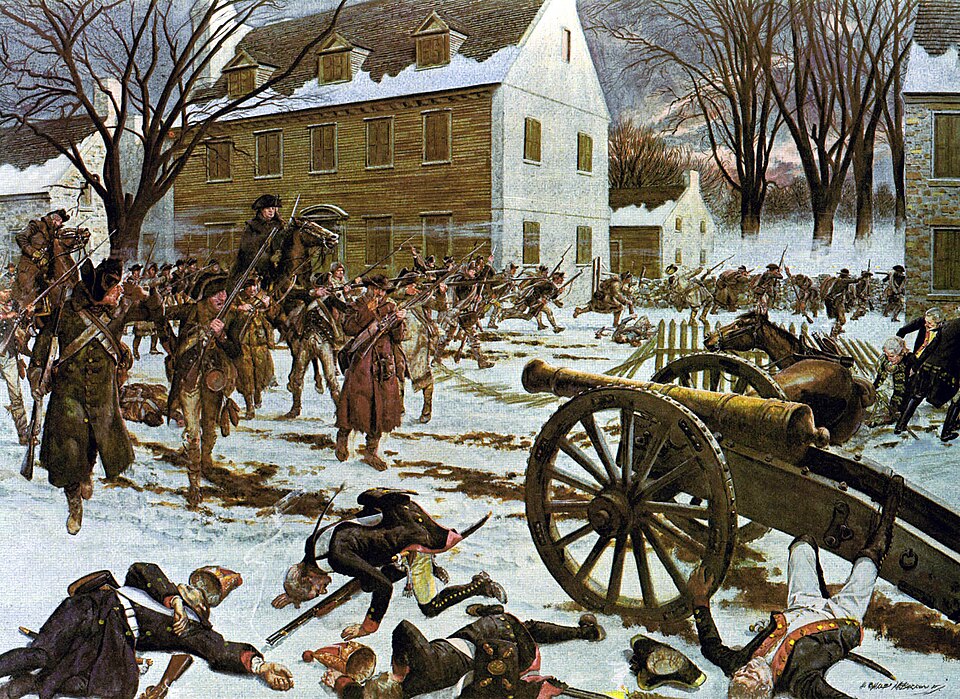
An eighteen-year-old lieutenant named James Monroe helped drag a captured Hessian cannon down a snow-covered street in Trenton, New Jersey, when a musket ball tore through his shoulder and severed an artery, nearly ending the life of a man who would one day become the fifth President of the United States. Monroe survived only because a regimental surgeon, Dr. John Riker, managed to clamp the severed vessel before he bled out in the winter cold, one small and nearly fatal moment inside a battle whose outcome would decide whether the American Revolution itself survived the winter of 1776. George Washington’s Continental Army had spent the preceding months in headlong retreat, its enlistments about to expire and its commander privately admitting in a letter that “I think the game is pretty near up.” What happened at Trenton on the morning after Christmas would reverse that verdict entirely, turning a near-collapse into the improbable turning point historians still credit with keeping the Revolution alive.
Trenton: The Road to Battle
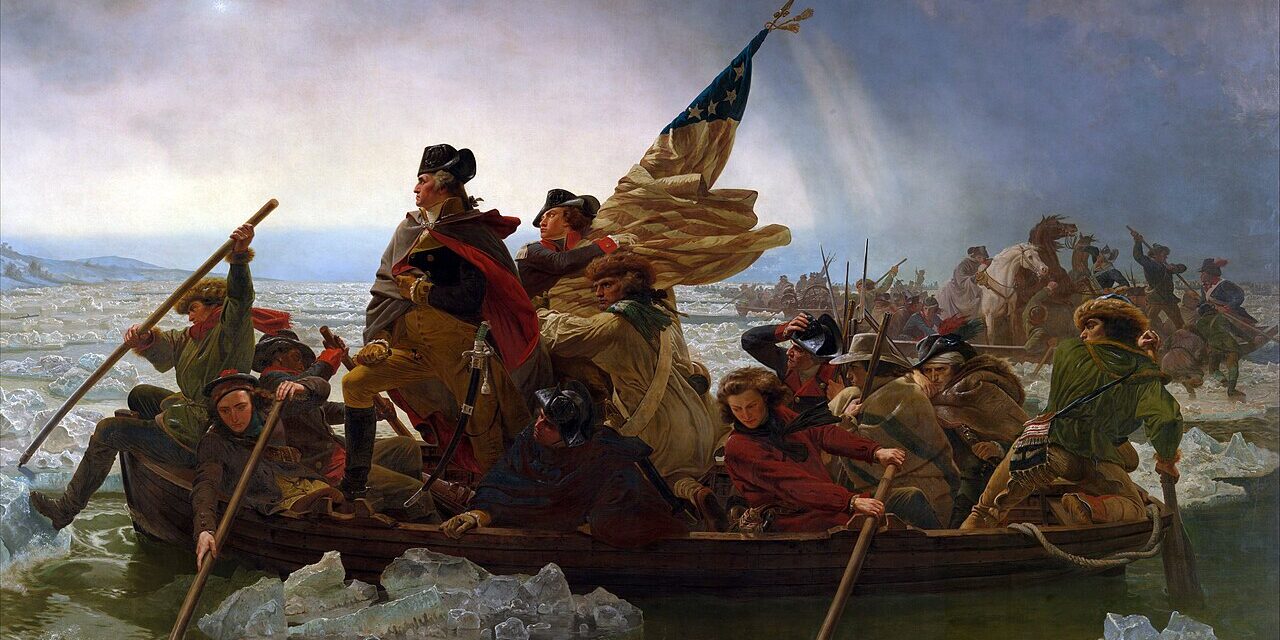
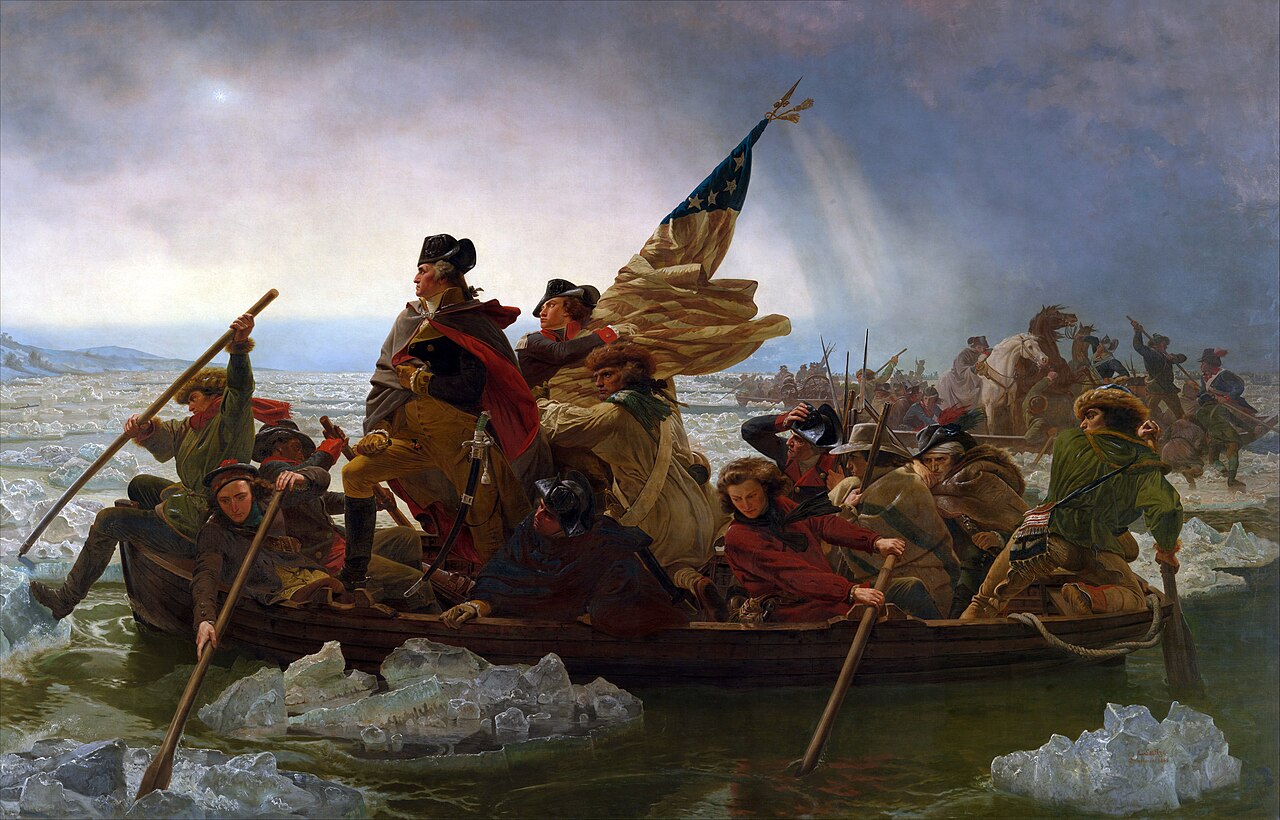
By December 1776, the American cause looked close to collapse: Washington’s army had been driven out of New York, chased across New Jersey, and reduced to a shivering, poorly supplied force whose enlistments were set to expire at the end of the year, threatening to dissolve the Continental Army altogether just as the war seemed lost. Washington, recognizing that inaction guaranteed defeat while a bold stroke might still salvage the campaign, planned a daring night crossing of the ice-choked Delaware River on Christmas night, aiming to surprise the Hessian garrison stationed at Trenton before dawn broke on December 26. The crossing force, roughly 2,400 men ferried across the treacherous, ice-clogged river in the darkness and cold, faced brutal conditions that delayed the operation by hours and forced Washington to abandon plans for a coordinated three-pronged assault involving other American detachments that failed to cross in time. Washington personally chose the password “Victory or Death” for the operation, a phrase that captured both the desperation of the American position and the all-or-nothing character of the gamble he was about to take with what remained of his army.
Colonel Johann Rall, commanding the roughly 1,500-strong Hessian garrison at Trenton, had received repeated warnings to fortify the town against a potential American attack but dismissed the threat, convinced that Washington’s battered forces posed no serious danger in the depths of a harsh winter. That overconfidence would leave Rall’s garrison almost entirely unprepared for what emerged from the snow and darkness on the morning of December 26, as Washington’s exhausted but determined troops completed their crossing and began the march toward Trenton in freezing, sleet-driven conditions. The nine-mile march from the crossing point to Trenton tested the endurance of men who were already cold, hungry, and short on proper winter clothing, with several soldiers reportedly leaving bloody footprints in the snow from shoes worn through by months of hard campaigning. Washington divided his force into two columns for the approach, intending to seal off Trenton’s main escape routes before the Hessians could organize any coordinated retreat, a plan whose success depended entirely on both columns reaching their positions at roughly the same time despite the atrocious weather and difficult terrain separating them.
The Battle of Trenton
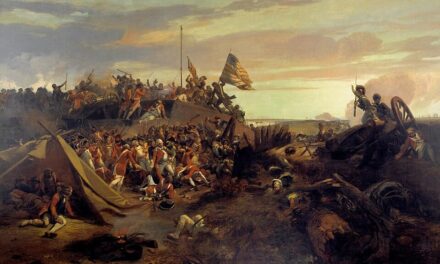
Washington’s forces struck Trenton in a coordinated two-pronged assault at dawn on December 26, 1776, catching Rall’s Hessian garrison almost completely by surprise despite the earlier warnings the colonel had chosen to ignore. American artillery, positioned to sweep the town’s main streets, opened fire as Continental infantry pushed into Trenton from multiple directions, throwing the Hessian defenders into confusion as they scrambled to organize a response in the chaos of the surprise attack. Fighting in the streets proved brief but intense: Lieutenant James Monroe, then just eighteen years old, was severely wounded helping seize a Hessian cannon on King Street, shot through the shoulder in an injury so serious that only Dr. John Riker’s quick action in clamping the severed artery saved his life and preserved the future president for a political career still decades away. Colonel Rall himself was mortally wounded in the final counterattack, struck down while attempting to rally his disintegrating forces, and died at his headquarters that same night, one of all four Hessian colonels present at Trenton who were killed or mortally wounded in the engagement.
Within roughly forty-five minutes of fighting, the battle was effectively decided, with the surrounded and demoralized Hessian garrison surrendering en masse rather than continuing a hopeless defense against Washington’s determined assault. American losses were remarkably light given the scale of the victory, while the Hessians suffered significant casualties and saw the bulk of their garrison taken prisoner, a stunning reversal for a force that had entered the war with a formidable reputation for discipline and battlefield effectiveness. In the battle’s aftermath, a persistent myth arose claiming the Hessian garrison had been caught drunk from Christmas celebrations, an account contradicted by contemporary participants including John Greenwood, a young Continental Army fifer who left a written memoir insisting he was certain “not a drop of liquor was drunk during the whole night” among the American ranks, and whose testimony historians have used to push back against oversimplified explanations for the garrison’s defeat.
The real explanation lay less in Hessian drunkenness than in Rall’s dismissive underestimation of an army he believed incapable of mounting any serious winter offensive, compounded by his refusal to construct the defensive works his own officers had repeatedly urged in the days before the attack. Historian David Hackett Fischer, whose study “Washington’s Crossing” remains the definitive modern account of the campaign, has argued that Rall’s overconfidence, rather than any single tactical failure, best explains how a well-trained professional garrison collapsed so completely within less than an hour of fighting. The speed of the American victory also owed much to the coordinated timing of Washington’s assault, which struck from two directions simultaneously before Rall’s men could organize any unified defense of the town, denying the Hessians the chance to consolidate their considerable numerical strength into an effective response.
The Legacy of Trenton
Washington’s victory at Trenton, followed within days by a further success at Princeton, transformed the psychological trajectory of the Revolution at its lowest ebb, convincing wavering soldiers, congressmen, and foreign observers alike that the American cause retained real fighting capacity after months of demoralizing defeats. The battle’s outcome likely preserved the Continental Army itself, since Washington used the momentum and morale it generated to persuade many soldiers to reenlist despite their expiring terms, a decision that kept his fragile force intact through the difficult winter that followed. Foreign observers, particularly in France, took note of the American army’s sudden resilience, a shift in perception that would matter considerably as the Continental Congress sought international recognition and support for the broader war effort in the years ahead.
Visiting Trenton Today
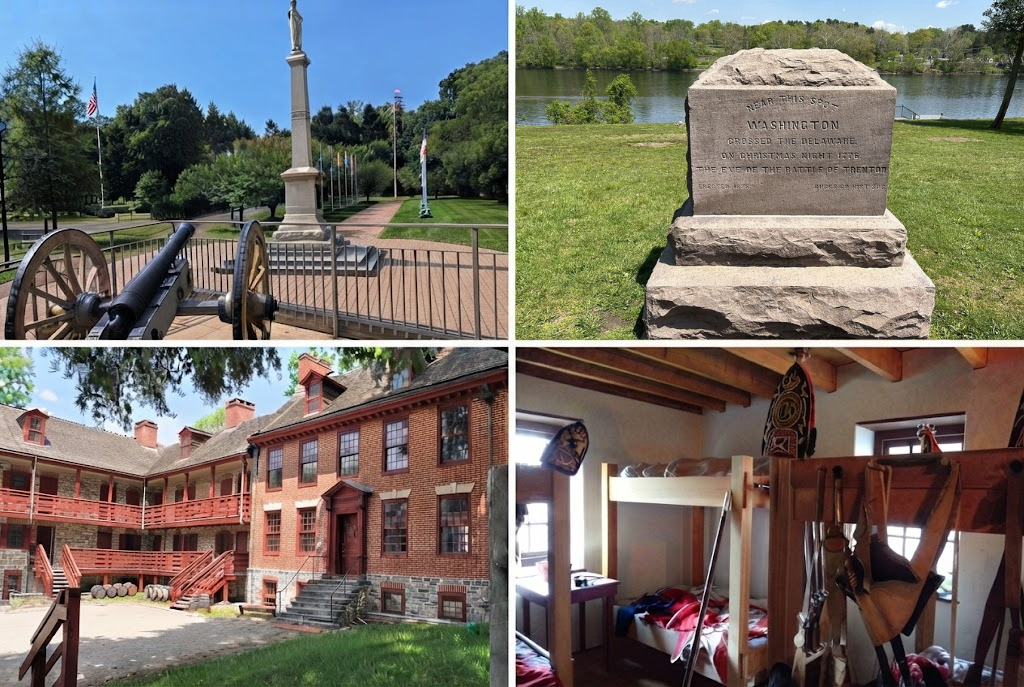
Most of the actual 1776 battlefield now lies beneath the streets of downtown Trenton, but the original 1758 Old Barracks building survives on its historical site, the very structure where Rall’s Hessian garrison had been quartered before the battle. Visitors can tour the museum’s restored soldier and officer quarters and Revolutionary War artifact collections, including exhibits on Dr. Bodo Otto’s smallpox inoculation program conducted during the war, often guided by costumed interpreters who bring the barracks’ eighteenth-century military life to visitors, with annual battle reenactments staged each December around the anniversary. A short distance from the barracks, the 150-foot Trenton Battle Monument marks the approximate location of the opening American artillery position that helped decide the engagement, though its interior observation elevator is currently out of service, and visitors should note that the surrounding neighborhood has drawn some caution in recent visitor accounts, making a brief daytime visit the most practical approach.
About eight miles upriver, Washington Crossing Historic Park preserves the actual site of Washington’s Delaware crossing, spanning both the New Jersey and Pennsylvania banks of the river with visitor centers on each side offering orientation exhibits that recreate the full ten-day campaign from the crossing through the battles of Trenton and Princeton. Together, the barracks, the monument, and the crossing site allow visitors to trace the full arc of Washington’s gamble, from the icy riverbank where his army first stepped into history to the Trenton streets where that gamble paid off. Visitors interested in the full ten-day campaign, rather than the Trenton engagement alone, often find it worthwhile to combine a stop at the barracks with the crossing park upriver, since the two sites together tell a more complete story than either location manages on its own.
Remembrance of Trenton
George Washington’s own wartime letters, including his stark admission that “I think the game is pretty near up” in the weeks before the crossing, are preserved through institutions including the Mount Vernon Digital Encyclopedia and remain essential primary sources for understanding the desperation that drove his decision to attack. Colonel Johann Rall’s fatal underestimation of the American threat, and the deaths of all four Hessian colonels present at Trenton, are documented across multiple historical sources examining the garrison’s collapse under surprise attack. James Monroe’s severe wounding while helping seize a Hessian cannon, an episode that nearly cost the future president his life eighteen years before he ever held national office, is preserved through institutions including the American Battlefield Trust and organizations dedicated to the Revolutionary War era. John Greenwood’s firsthand memoir, cited by historian David Hackett Fischer in his acclaimed study “Washington’s Crossing,” continues to serve as a corrective to popular myths about the battle, preserving instead an eyewitness account of a disciplined, sober American force whose victory reshaped the course of the Revolution.
Visitor Info: Old Barracks Museum (Old Barracks Association)
Location: Old Barracks Museum, 101 Barrack Street, Trenton, NJ 08608 (surviving 1758 barracks on the actual battle site); Washington Crossing Historic Park, 1112 River Road, Washington Crossing, PA 18977 (the crossing’s launch site)
Site Status: National Park/Managed Historic Site
Visitation Notes: Most of the actual 1776 battlefield is now occupied by downtown Trenton’s streets, but the original 1758 Old Barracks building survives on-site, where the Hessian garrison was quartered; visitors can tour restored soldier and officer quarters, Revolutionary War artifacts, and exhibits on Dr. Bodo Otto’s smallpox inoculation program, often guided by costumed interpreters, with annual battle reenactments each December. A short distance away, the 150-foot Trenton Battle Monument marks the approximate site of the opening American artillery position, though its interior observation elevator is currently out of service and several recent visitor reviews caution the surrounding neighborhood feels unsafe, so a brief daytime visit is recommended. About eight miles upriver, Washington Crossing Historic Park (spanning both the New Jersey and Pennsylvania banks) preserves the actual crossing site, with visitor centers and an orientation film recreating the full campaign.
Google Map
Visitor Comments
A visitor named Joy H called the Old Barracks Museum super interesting and packed with history, praising knowledgeable guides dressed as Revolutionary-era soldiers and the artifact collection covering Washington and the Battle of Trenton.
— from TripAdvisor
A visitor named Robin B noted that Washington Crossing Historic Park has separate Pennsylvania and New Jersey visitor centers about a mile apart, and recommended the New Jersey side’s orientation film as the more compelling of the two, covering the full ten-day campaign from the crossing through Trenton and Princeton.
— from TripAdvisor
A visitor named duck8to praised the Trenton Battle Monument’s design, the bronze Washington statue, and the bronze battle bas-reliefs, but expressed real frustration that the interior observation elevator is no longer operating due to lack of funding, recommending a daytime visit given the surrounding area’s rougher reputation.
— from TripAdvisor
A brief visitor note on the Old Barracks Museum described it as a great place to spend a couple of hours, consistent with its substantial exhibits on British colonial military life and Dr. Bodo Otto’s Revolutionary War-era smallpox inoculation program.
— from Atlas Obscura