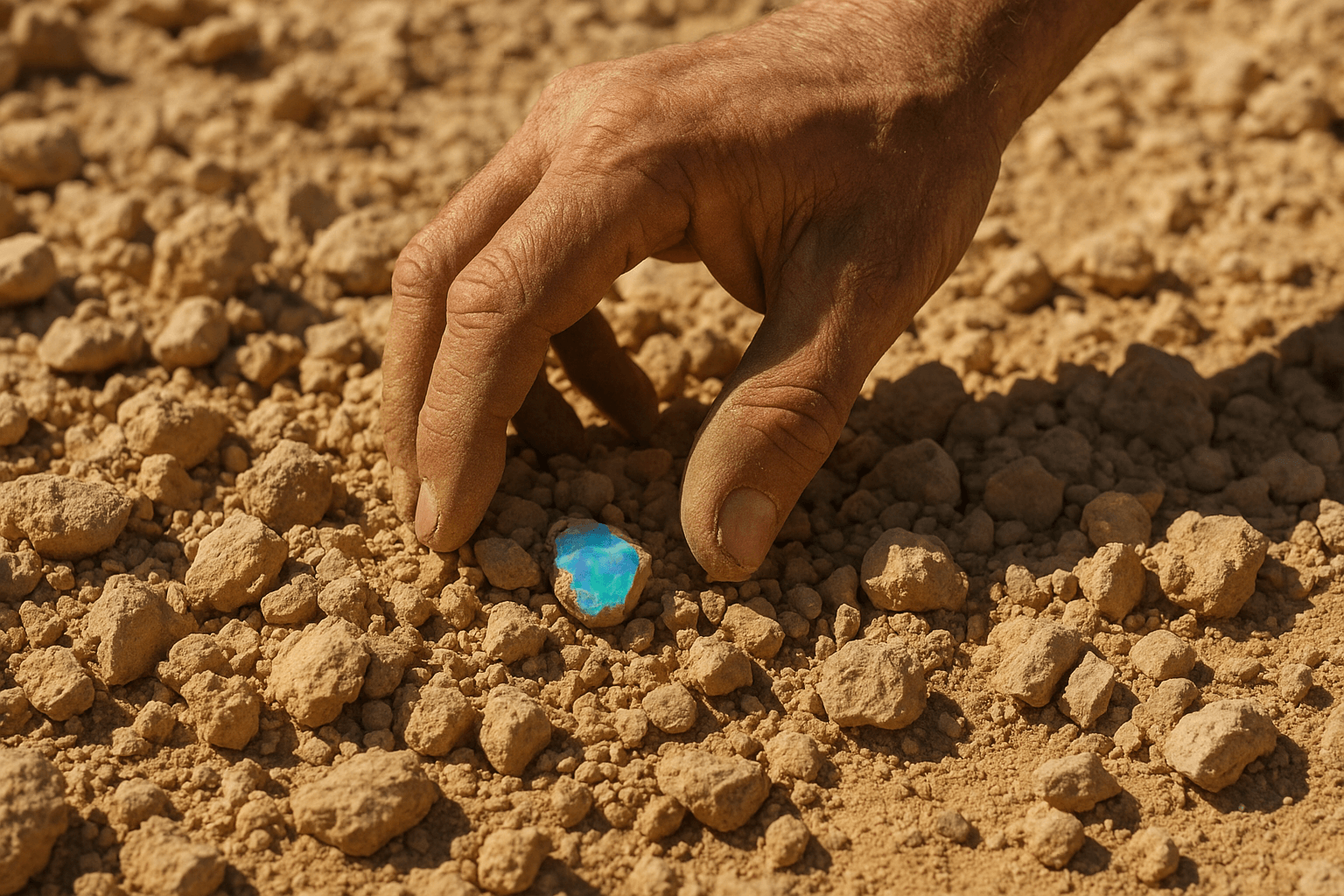
The dirt here isn’t dirt at all, not really — it’s mullock, mounded waste rock hauled up from below and left in low, pale heaps that stretch to the horizon in every direction. Kneel down at the base of one of those heaps, run a hand through the loose surface material, and turn a fragment over in the light. For half a second it does nothing. Then a flash of blue-green fire catches the sun, gone as quickly as it appeared, and every noodler out here knows exactly what that flash means: somewhere in this pile, there’s more where that came from, missed by whoever hauled this heap up from the dark in the first place.

Coober Pedy: Australia’s Opal Capital
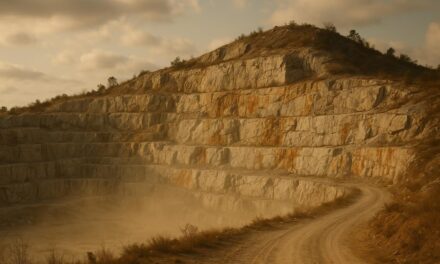
Coober Pedy sits deep in the South Australian outback, one of the most remote inhabited places in the country, a town built almost entirely around one thing: opal. The ground here has been worked for opal for more than a century, and the evidence of that work is everywhere, most visibly in the mullock heaps — mounds of tailings and waste rock pulled up from underground workings and left on the surface, piled around the countless shafts that dot the landscape. Those heaps are also where “noodling” happens: the practice of hand-searching through already-excavated material for opal that miners missed the first time through.
The Jewel Box is one of the noodling areas within Coober Pedy where that search plays out today, open ground where anyone — local or visitor, experienced or first-timer — can sift through surface mullock without needing to hold a mining claim of their own. That’s a significant thing in a region otherwise defined by tightly regulated claims and proclaimed opal fields, where most of the ground that actually produces opal is spoken for long before an ordinary visitor ever arrives. Coober Pedy is one of four such proclaimed fields in South Australia, alongside Mintabie, Stuart Creek, and Andamooka, each governed by state mining law that draws a clear line between casual surface searching and active claim-based extraction.
What makes Coober Pedy significant to treasure hunters isn’t just the opal still sitting in its mullock heaps — it’s the origin story that built the town in the first place, and the fact that the same basic activity that put Coober Pedy on the map, sifting through surface material by hand, remains legal and accessible today, more than a century after it started.
The 1915 Discovery That Built a Town
Coober Pedy’s opal story traces back to 1915, when a 14-year-old boy made a discovery that put the outback town on the map. That find is the reason Coober Pedy exists in its current form at all — a settlement built up around opal mining in one of the most remote, inhospitable stretches of the Australian outback, precisely because what came out of the ground there was worth building a town for. More than a century of mining since that discovery has left behind the physical record that defines Coober Pedy today: mile after mile of mullock heaps, shafts, and workings, layered one on top of another as generations of miners worked and reworked the same opal-bearing ground.
That century of layered mining history is also what makes noodling possible in the first place. Every mullock heap represents material that’s already been brought to the surface and picked over once, but opal is easy to miss in a hurried search, especially in poor light or when a piece is small. That’s the opening noodlers work: material that’s already legally accessible, sitting in the open, that still has a real chance of holding opal the original miners overlooked. It isn’t a guaranteed find, but it’s a real one, made possible specifically because Coober Pedy has been worked continuously since 1915 rather than exhausted in a single rush and abandoned. Continuous work means continuous mullock, and continuous mullock means continuous opportunity for the next person willing to sift through it.
South Australia’s Opal Mining Act 1995 is what formalizes that arrangement today. Noodling — hand-searching surface mullock without a pick, shovel, or other digging device, and without working a pegged claim — requires no permit anywhere in the state’s proclaimed opal fields. The moment tools or digging enter the picture, or a search moves onto a pegged claim, the law requires a Precious Stones Prospecting Permit from South Australia’s Department for Energy and Mining, available to applicants 16 or older who are Australian residents or hold a valid visa — a real, if modest, bar that keeps unpermitted digging out of the four proclaimed fields entirely. That legal line is precise, and it’s what separates casual noodling — open to anyone, any time, at no cost — from active claim work, which is regulated far more tightly and reserved for permitted operators.
Visiting Coober Pedy Today
Noodling remains open to the public today, free of charge and without a permit, as long as it stays within the legal definition: hand-searching surface mullock heaps, no digging tools, and no working of a pegged claim. Areas like The Jewel Box exist specifically to give visitors and locals alike a legitimate place to search. Step outside those bounds — start digging, or work ground that’s actively claimed — and a Precious Stones Prospecting Permit becomes required under the Opal Mining Act 1995, the same law that governs all four of South Australia’s proclaimed opal fields: Coober Pedy, Mintabie, Stuart Creek, and Andamooka.
Coober Pedy’s landscape carries real hazards alongside that opportunity, and none of them are minor. The opal fields contain thousands of unmarked, abandoned mine shafts, a well-documented danger for anyone who wanders off marked paths and areas. The region is also extremely remote, far from services, and summer heat in this part of the outback is severe. None of that makes noodling inaccessible, but it does mean visitors should stay on recognized noodling ground like The Jewel Box, watch their footing closely around every mound and depression, and take the desert heat seriously, especially outside the cooler months.
The Legacy of Coober Pedy’s Noodling Fields
Coober Pedy matters to treasure hunters because it offers something rare: a direct, legal connection to the exact activity that built a town, still open more than a century after a 14-year-old’s discovery started it all. Noodling isn’t a watered-down version of the real thing — it’s hand-searching the same mullock heaps left behind by generations of working miners, with a genuine chance of finding opal they missed. For anyone serious about the hobby, that’s a meaningful draw: no claim, no permit, no equipment beyond a pair of hands and sharp eyes, just a real shot at color flashing up out of the dirt in one of the most storied opal towns on earth, in mullock left behind by every miner who worked this ground before.
Story Source: www.cooberpedy.com
Location: The Jewel Box noodling area, Coober Pedy, SA, Australia
Site Status: Open to public collecting
Legal Conditions: Under South Australia’s Opal Mining Act 1995, noodling (hand-searching surface mullock/tailings heaps without a pick, shovel, or other digging device, and not on a pegged claim) requires no permit. Using tools, digging, or working a claim anywhere in SA’s four proclaimed opal fields (Coober Pedy, Mintabie, Stuart Creek, Andamooka) requires a Precious Stones Prospecting Permit from the SA Department for Energy and Mining (applicants must be 16+ and an Australian resident or valid visa holder). Source: Opal Mining Act 1995 (SA); sa.gov.au opal mining permit page. Confidence: Verified. Note: this is a statewide South Australia finding, distinct from the existing Australia entry in legal-international.md, which is scoped only to Sovereign Hill/Victoria.
Hazards: Difficult terrain/altitude/remote access (extremely remote outback location, far from services); Mine shaft or collapse (Coober Pedy’s opal fields contain thousands of unmarked abandoned mine shafts, a well-documented hazard for anyone walking off marked paths); Extreme heat/cold/exposure (harsh desert climate with extreme summer heat).
Google Map
Firsthand Accounts
Fourteen-year-old Willie Hutchison discovered the first opal specimen near Carryingallama Creek on February 1, 1915, while prospecting for gold with his father James Hutchison’s New Colorado Prospecting Syndicate (which also included P.J. Winch and M. McKenzie); the first opal claim was pegged eight days later, and the field was originally named Stuarts Range before becoming Coober Pedy. Source: Coober Pedy Historical Society archive; Monument Australia commemorative plaque (dedicated 2008) citing Hutchison family records.
Historian Arch Burnett recounts hauling paying passengers cross-country to the opal fields in his Model T Ford, which prospectors nicknamed “Wilful Murder” for the harrowing ride — the same nickname his book takes as its title, documenting the rough overland journeys prospectors made to reach the remote Stuarts Range field in the years after Hutchison’s 1915 discovery. Source: Arch Burnett, “Wilful Murder in the Outback.”
Researcher Michael Albert Harding’s thesis on Aboriginal engagement in the northern South Australian opal industry draws on named miners’ recollections from the Coober Pedy field between the 1940s and 1980s, documenting Aboriginal opal miners’ long but under-recorded presence in the district’s fossicking and mining workforce. Source: Michael Albert Harding, “Plenty of Opal Back Then: Opal Pulkah” (academic thesis).