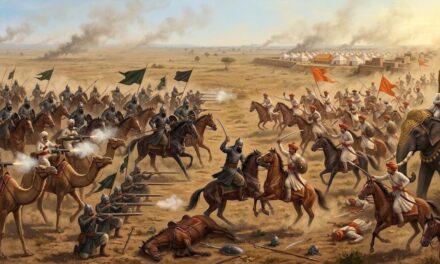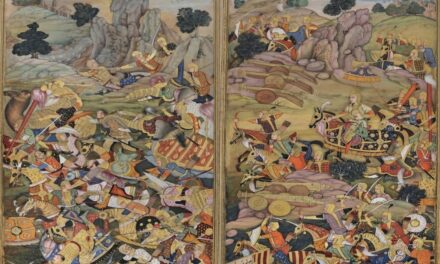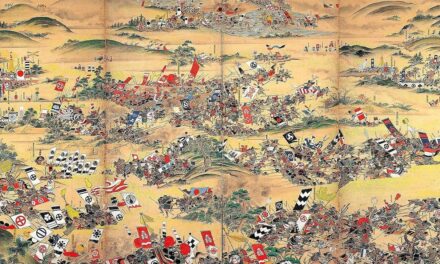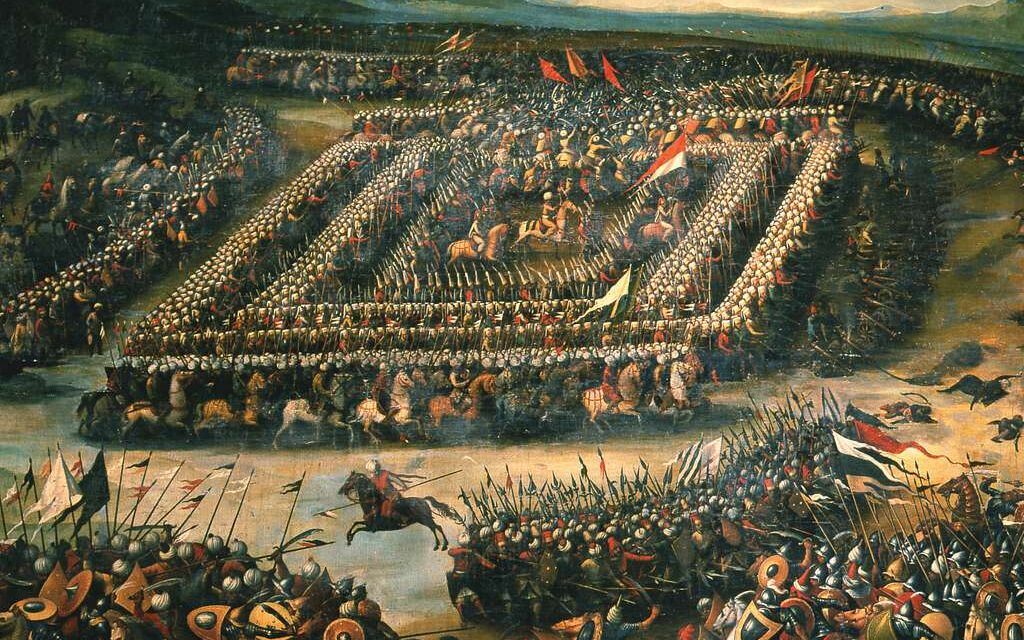
Shah Ismail I of Persia, the young mystic-warrior king whose Safavid cavalry had never lost a major battle, personally led a charge into the Ottoman gun line at Chaldiran on August 23, 1514, only to be unhorsed, wounded, and nearly captured as his camp was overrun and one of his wives taken by the pursuing Ottomans. The rival monarch he faced that day, Sultan Selim I, had gambled that disciplined firepower could defeat the fabled Qizilbash horsemen who had built the Safavid Empire through raw cavalry shock, and by nightfall on the dusty Anatolian-Iranian frontier, gunpowder had answered horseback with a verdict that would define the Ottoman-Safavid rivalry for the next century.
Chaldiran: The Road to Battle
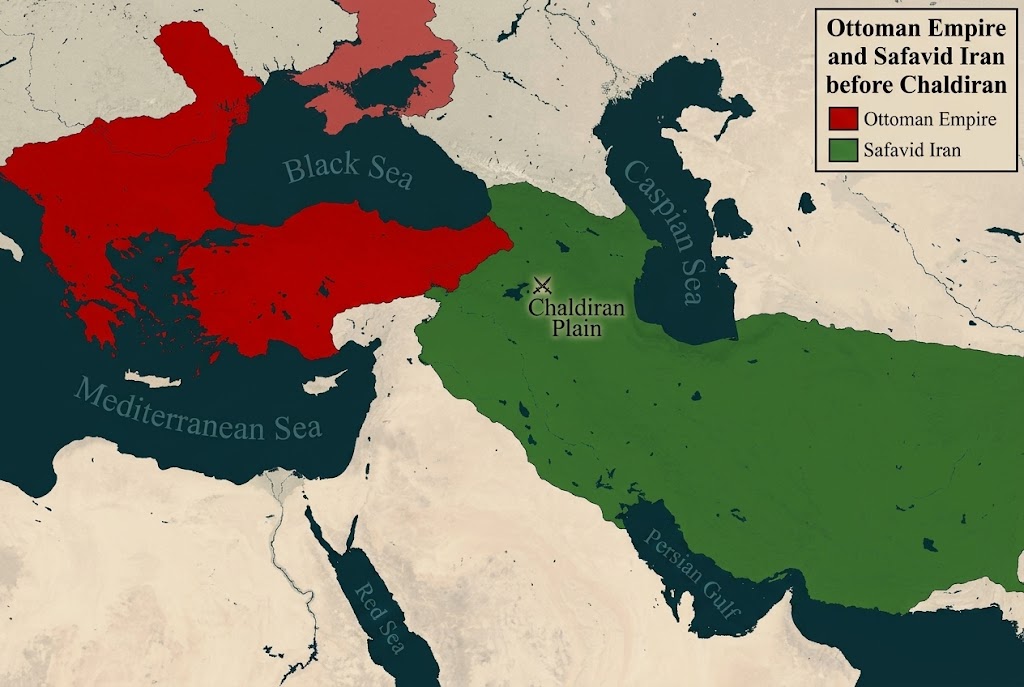
By 1514, the Ottoman Empire under Sultan Selim I and the Safavid Empire under Shah Ismail I had become bitter rivals for control of eastern Anatolia and the broader Islamic world, a conflict sharpened by religious division as Ismail’s aggressive promotion of Shia Islam threatened to destabilize Selim’s own Sunni-majority Ottoman territories through cross-border proselytizing and unrest among sympathetic populations. Selim, newly secure on the Ottoman throne after a contested succession, viewed the Safavid religious and political challenge as an existential threat serious enough to justify a major eastern campaign, and he marched his army deep into Safavid territory over the summer of 1514, pushing his forces through difficult terrain to force a decisive confrontation before the campaigning season ended.
Ismail, confident in the cavalry tactics that had carried the Safavids to a string of victories across Persia and the Caucasus, initially avoided a pitched battle and employed a scorched-earth strategy to strain the Ottoman supply lines, but as Selim’s army pressed forward, the Safavid shah ultimately chose to meet the Ottomans in open battle on the plain of Chaldiran rather than continue retreating deeper into his own territory. The two armies that met at Chaldiran embodied strikingly different approaches to warfare: Selim’s Ottoman force incorporated janissary infantry equipped with matchlock muskets and field artillery chained together into a defensive gun line, a relatively novel tactical arrangement for the era, while Ismail’s Safavid army relied on the traditional strength of Qizilbash heavy cavalry, superbly trained horsemen whose charges had proven devastating against less disciplined opponents but who had comparatively little experience contending with concentrated gunpowder firepower deployed in a fixed defensive formation.
The Battle of Chaldiran
When battle was joined on the plain of Chaldiran, Shah Ismail’s Qizilbash cavalry launched repeated charges against the Ottoman lines with the same aggressive tactics that had won them victory after victory across the Persian and Caucasian campaigns, and in the battle’s opening phases the Safavid cavalry achieved genuine successes against the Ottoman flanks, briefly threatening to unravel Selim’s formation before the full weight of Ottoman firepower could be brought to bear. Sultan Selim I directed the battle in person from behind his fortified gun line, where janissary infantry armed with matchlock muskets poured volley fire into the advancing Safavid horsemen while artillery pieces chained together into a defensive barrier tore gaps in the Qizilbash formations that traditional cavalry tactics had no effective answer for. Shah Ismail, refusing to remain a distant spectator to his army’s fate, personally led charges into the thick of the fighting, exposing himself directly to Ottoman fire in a display of battlefield leadership that matched the legendary reputation he had built as a young conqueror, but the gunpowder weapons arrayed against him inflicted casualties on his cavalry at a rate no amount of individual courage could overcome.
As the battle turned decisively against the Safavids, Ismail himself was wounded and unhorsed in the fighting, coming perilously close to capture before loyal retainers managed to extract him from the collapsing battle line, while Ottoman forces pressed their advantage and overran the Safavid camp in the aftermath, capturing supplies, treasure, and one of Ismail’s own wives in the chaos of the Safavid retreat. Ottoman losses were significant given the ferocity of the Qizilbash charges, but the battle proved decisively one-sided in its strategic outcome, since the destruction of so much of Ismail’s elite cavalry force left the Safavid heartland dangerously exposed to further Ottoman advances in the campaign’s immediate aftermath. In the fighting’s wake, Idris Bitlisi, a Kurdish-Ottoman statesman traveling with Selim’s forces, led Kurdish contingents that capitalized on the Safavid collapse to capture the strategically vital city of Diyarbakir, extending Ottoman control deep into territory the Safavids had only recently secured, an operation Bitlisi later chronicled in his epic account of Selim’s reign, the “Selim Sahname.” Selim’s victory at Chaldiran allowed Ottoman forces to briefly occupy the Safavid capital of Tabriz later that year, though the harsh approach of winter and the strain of extended supply lines ultimately forced an Ottoman withdrawal before the campaign could permanently reshape the region’s political boundaries.
Modern historians examining the battle have often pointed to the janissaries’ chained-together artillery as the single most decisive tactical element of the engagement, since the barrier not only shielded Ottoman infantry from the initial shock of the Qizilbash charge but also created a killing ground where massed musket and cannon fire could be concentrated with devastating effect against cavalry formations that had no comparable countermeasure. The contrast between the two military systems on display at Chaldiran, an emerging gunpowder infantry doctrine on one side and a mounted warrior tradition stretching back centuries on the other, would recur across Eurasian battlefields for the remainder of the sixteenth century as other cavalry-based powers confronted the same hard lesson about the changing character of warfare. Some contemporary Ottoman accounts also noted that Ismail’s own tactical impatience, choosing to abandon his initially successful scorched-earth strategy in favor of a pitched battle on ground that favored the Ottoman defensive arrangement, may have cost him an opportunity to wear down Selim’s army through attrition rather than risking everything on a single confrontation.
The Legacy of Chaldiran
The Battle of Chaldiran permanently altered the strategic balance between the Ottoman and Safavid empires, halting the westward momentum of Safavid expansion and establishing a contested frontier in eastern Anatolia that would remain a flashpoint between the two powers for generations. Shah Ismail’s defeat effectively ended his personal reputation for battlefield invincibility, a psychological blow that historians have argued transformed him from an aggressive military conqueror into a more withdrawn ruler for the remainder of his reign, while Selim’s victory cemented Ottoman confidence in gunpowder weaponry as a decisive tool against even the most feared cavalry forces of the era. The battle also reinforced the sectarian dimension of the Ottoman-Safavid rivalry, hardening the Sunni-Shia divide along a frontier that would shape regional politics, wars, and diplomacy well into the modern era, long after the immediate territorial gains and losses of 1514 had faded from active memory.
Visiting Chaldiran Today
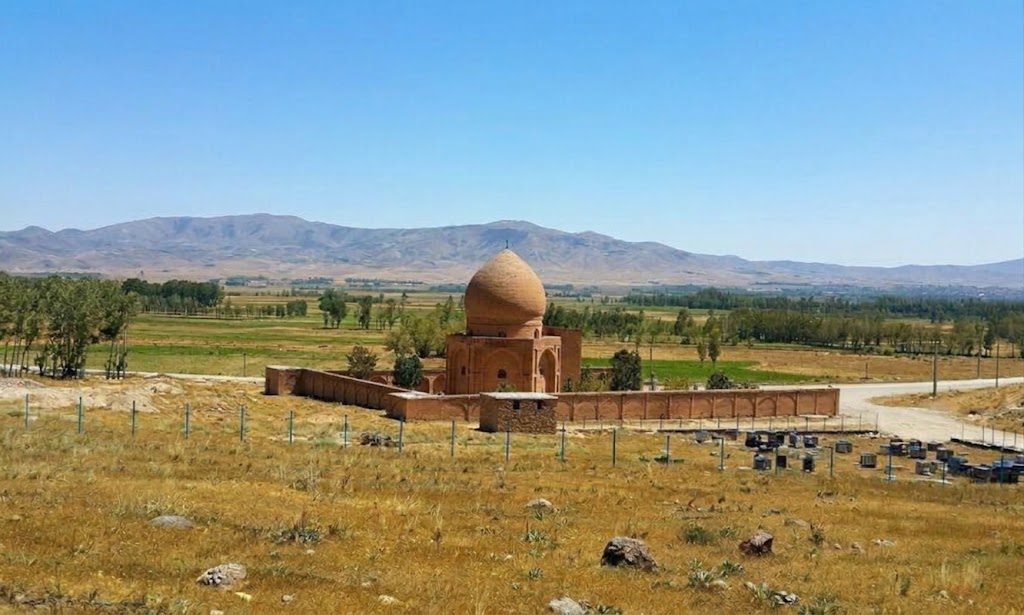
The Chaldiran battlefield today remains a largely open, unmarked agricultural plain in Iran’s West Azerbaijan Province, ringed by rugged mountains and dotted with small rural villages, a landscape that visitors will find has changed remarkably little in its basic character since the two armies clashed there five centuries ago. Unlike many of the world’s preserved battlefields, Chaldiran offers no visitor center, museum, paid admission, or English-language signage to guide travelers through the events of 1514, and the site functions as working countryside rather than a developed historical attraction. The principal point of interest for visitors is a modest brick-domed memorial constructed in 2003 to honor the Safavid dead, which includes a statue commemorating a Safavid commander who fell in the battle, offering a quiet, understated tribute in place of the interpretive infrastructure found at many Western battlefield sites.
Reaching Chaldiran requires genuine effort given its remote location near the Turkish border, and travelers should understand that this is a destination realistically suited to dedicated history enthusiasts willing to explore open countryside with minimal guidance rather than casual tourists expecting a curated museum experience. What the site lacks in formal interpretation, it partially compensates for in the rare authenticity of standing on genuinely unaltered ground where one of the sixteenth century’s most consequential clashes between gunpowder infantry and traditional cavalry took place, largely undisturbed by the modern development that has reshaped so many other historic battlefields. Travelers planning a visit should arrange local transportation and, ideally, a guide familiar with the region’s history, since the absence of English-language materials or marked trails means the battlefield’s significance is not self-evident to visitors without prior background on the events of 1514. The nearby villages retain little formal memory of the battle beyond the 2003 memorial itself, though the broader region’s identity remains shaped by its position on the historic frontier between Ottoman and Safavid, and by extension Sunni and Shia, spheres of influence that Chaldiran helped establish five centuries ago.
Remembrance of Chaldiran
Sultan Selim I’s campaign and his decisive victory at Chaldiran form the central episode of his reign’s eastern policy, documented in detail by historian Caroline Finkel in her acclaimed study “Osman’s Dream: The Story of the Ottoman Empire, 1300-1923,” which remains a standard modern reference for understanding Ottoman military and political history of the period. Shah Ismail’s near-capture, his wounding in battle, and the loss of his camp are recorded in the Safavid chronicles Alam Araye Safavi and Habib ol-Seyr, primary sources that historians continue to draw on for understanding how the defeat was perceived within the Safavid court itself. Idris Bitlisi’s own chronicle, the “Selim Sahname,” preserves a firsthand Ottoman perspective on the campaign’s aftermath, including his own role leading Kurdish forces to capture Diyarbakir in the wake of the Safavid collapse, offering historians a valuable window into how the victors themselves understood the battle’s strategic significance for the decades of Ottoman-Safavid rivalry that followed.
Further Exploration: Book titled “Osman’s Dream: The Story of the Ottoman Empire, 1300-1923” by Caroline Finkel (Basic Books, 2005)
Location: Chaldiran plain, Chaldoran County, West Azerbaijan Province, Iran, near the Turkey border
Site Status: Marker or Monument Only
Visitation Notes: A visitor today would find an open, largely unmarked rural agricultural plain ringed by mountains, essentially open countryside near a small local village rather than a developed tourist attraction. The main point of interest is a modest brick-domed memorial built in 2003 honoring the Safavid dead, including a statue commemorating a Safavid commander, but there is no visitor center, museum, paid admission, or English-language signage. This is a genuinely remote site with minimal tourism infrastructure, realistically for dedicated history travelers rather than casual tourists.
Google Map
Visitor Comments
No visitor comments on record for this location.