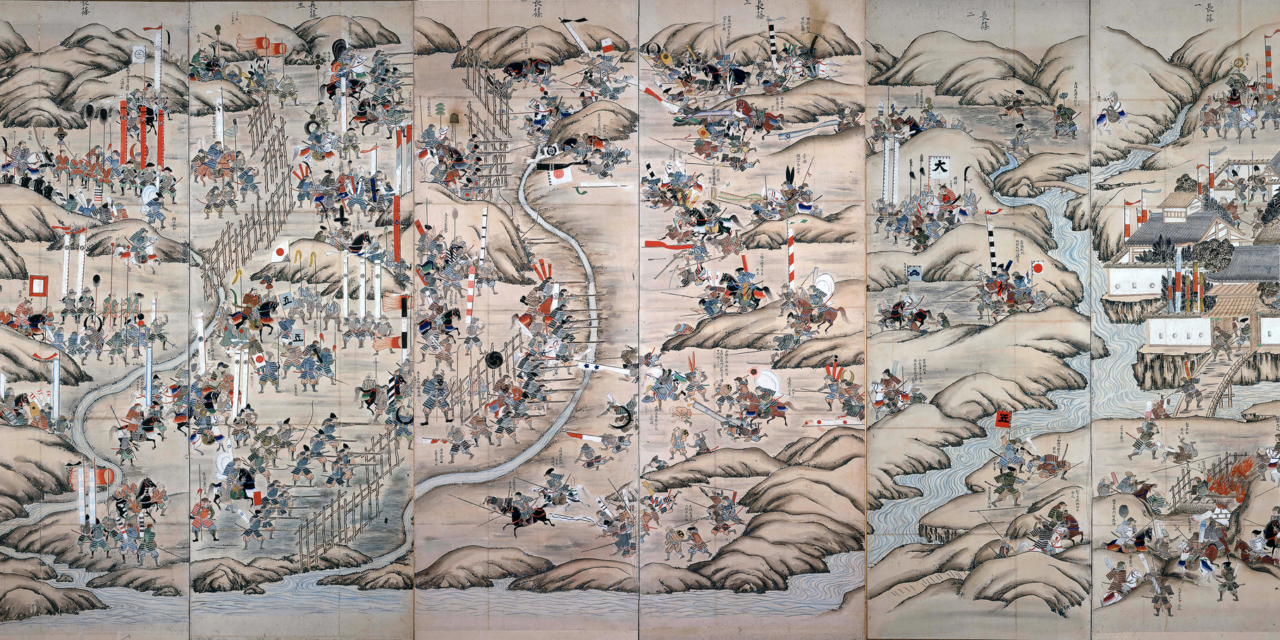
Yamagata Masakage, one of the legendary “Twenty-Four Generals of Takeda Shingen” and a veteran of decades of cavalry warfare across Japan, died at Nagashino not by the sword of a rival samurai but by a matchlock ball fired by an anonymous conscript gunner crouched behind a wooden stake. His death on June 29, 1575, distilled the entire battle into a single brutal image: a warrior culture built on generations of individual martial prestige cut down in an instant by common infantry wielding weapons that required no lineage, no years of training, and no personal honor to operate. What happened at Nagashino that day would break not only the Takeda clan’s finest cavalry but also, symbolically, an entire way of waging war in Japan.
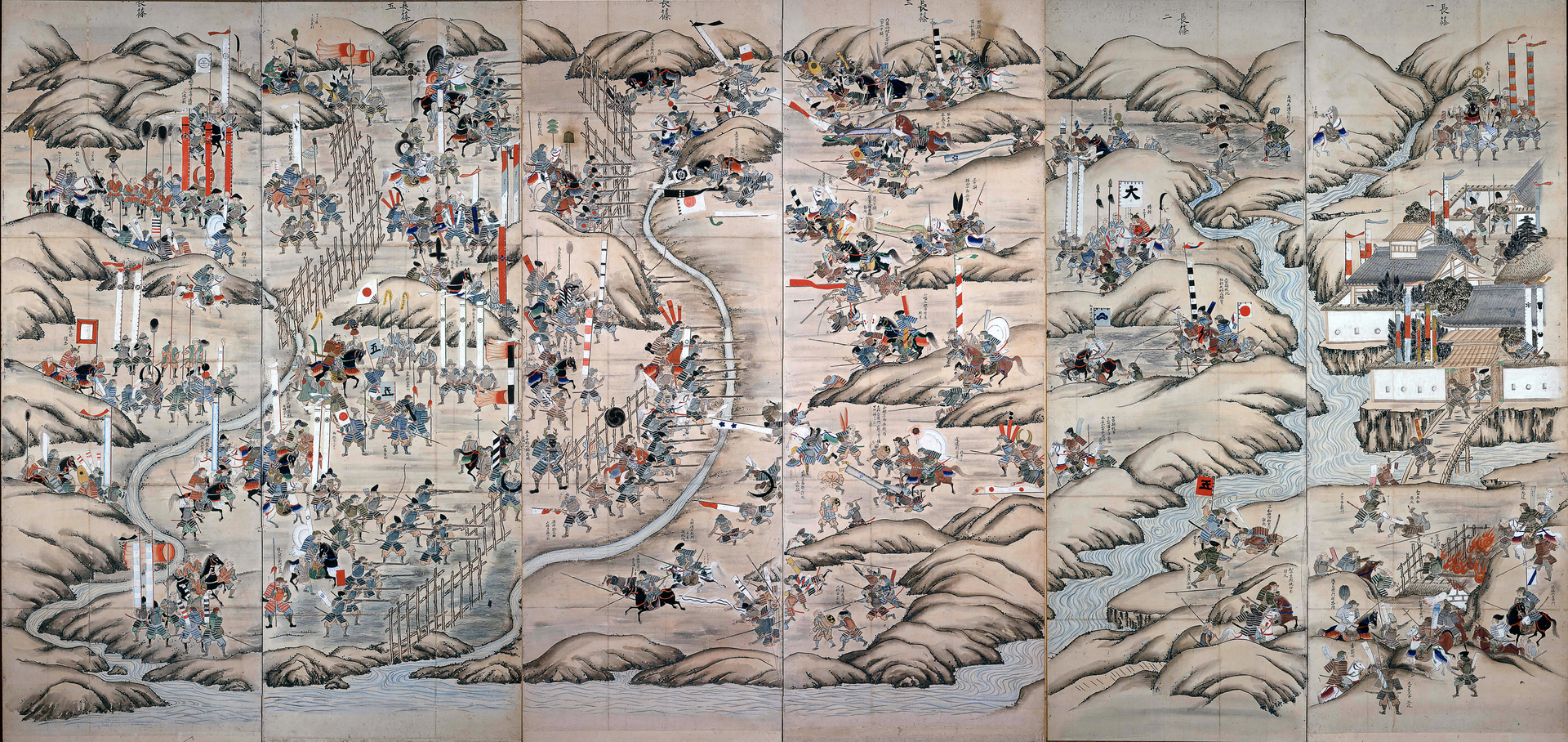
Nagashino: The Road to Battle
By the spring of 1575, Takeda Katsuyori, having inherited command of one of Japan’s most feared cavalry-based clans from his father Takeda Shingen, laid siege to Nagashino Castle, a strategically vital fortress held by a Tokugawa garrison under Okudaira Sadamasa whose stubborn defense bought crucial time for allied relief forces to assemble. Oda Nobunaga and Tokugawa Ieyasu, recognizing that a Takeda victory at Nagashino would open the road to further conquests in central Japan, combined their armies into a substantial relief force and marched to confront Katsuyori before the castle could fall, arriving in the area near a stream-crossed plain known as Shitaragahara with numbers and firepower considerably exceeding what the Takeda commander could muster.
Nobunaga, drawing on his growing reputation for tactical innovation, ordered his engineers to construct extensive wooden anti-cavalry palisades along the stream that ran through the chosen battlefield, a defensive barrier designed specifically to blunt the shock value of the mounted charges that had made Takeda cavalry so devastating on open ground for a generation. Behind these palisades, the allied Oda-Tokugawa force deployed several thousand arquebusiers armed with matchlock guns, a weapon still relatively novel to large-scale Japanese warfare but one Nobunaga had come to appreciate for its ability to inflict casualties on massed formations regardless of the individual skill or courage of the men firing it. Katsuyori, facing a fortified position defended by superior numbers and unfamiliar firepower, received urgent warnings from senior retainers, including veteran generals who had served his father for decades, that attacking the entrenched Oda-Tokugawa line invited catastrophe, counsel that the young and less experienced commander ultimately chose to disregard in favor of the aggressive cavalry tactics that had served the Takeda clan so well in previous campaigns.
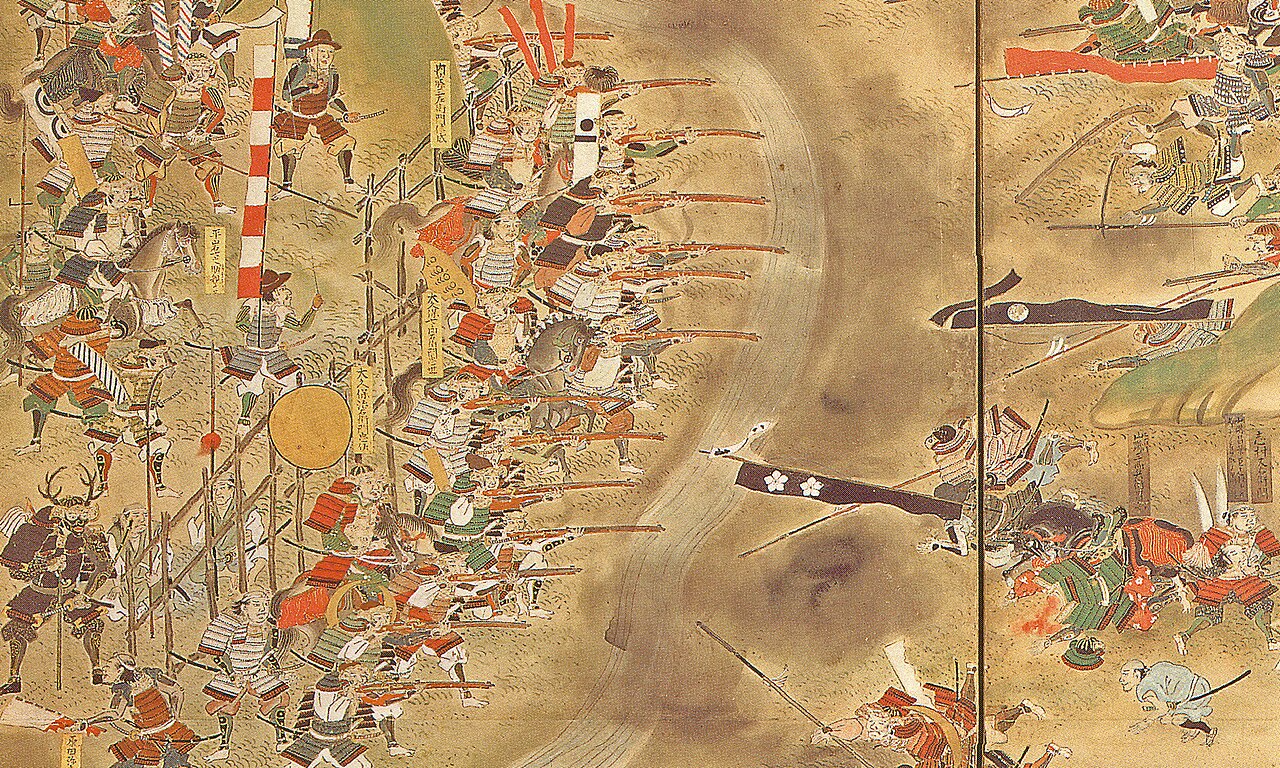
Battle of Nagashino and Shitaragahara
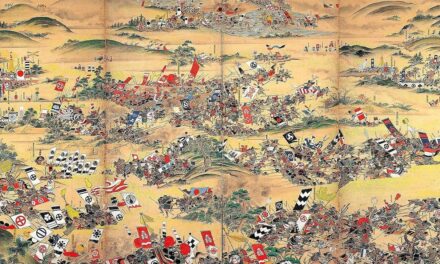
On the morning of June 29, 1575, Takeda Katsuyori ordered his renowned cavalry forward against the fortified Oda-Tokugawa position, launching a series of determined charges that repeatedly broke against the wooden palisades and the sustained matchlock fire pouring from behind them, a tactical mismatch that turned what Takeda commanders had planned as a decisive cavalry assault into a grinding slaughter. Popular retellings of Nagashino often describe Nobunaga’s gunners executing an elaborate three-rank rotating volley technique, with each row of arquebusiers firing and then stepping back to reload while the next rank stepped forward, but this specific tactical detail does not appear in the Shincho Koki, the retainer-chronicle written by Ota Gyuichi that remains the most reliable contemporary account of the battle, and most modern historians now regard the rotating-volley story as a later embellishment rather than a documented historical fact. What the primary sources do support is more straightforward but no less decisive: the combination of well-prepared palisades, difficult terrain that funneled and slowed the Takeda cavalry’s approach, and the sheer numerical and logistical advantages Nobunaga and Ieyasu brought to the field proved sufficient on their own to grind down repeated waves of mounted attackers without requiring any particularly sophisticated volley-fire choreography. Wave after wave of Takeda horsemen, some of the most feared cavalry in Japan, charged into a killing zone where speed and shock could not overcome fixed obstacles and massed gunfire, and the casualties among Takeda’s officer corps were catastrophic, claiming the lives of veteran generals who had built their reputations across decades of successful campaigning under Takeda Shingen.
Yamagata Masakage’s death during one of these charges exemplified the battle’s brutal arithmetic, a legendary cavalry commander felled not in personal combat but by anonymous gunfire from a fortified line he had likely warned Katsuyori not to attack in the first place. As the Takeda assault disintegrated under continued pressure, Oda Nobunaga’s forces executed a flanking maneuver that cut off the routes Katsuyori’s shattered army might have used for an orderly withdrawal, transforming a costly repulse into a rout that claimed roughly two-thirds of the engaged Takeda force, an almost unimaginable casualty rate for a premodern battle and one that permanently crippled the clan’s military capacity. Katsuyori himself survived the battle and retreated with the remnants of his army, but the destruction of so much of the Takeda clan’s veteran leadership and fighting strength at Nagashino marked the unmistakable beginning of the clan’s decline, a decline that would culminate in Takeda Katsuyori’s eventual defeat and death within a decade of this catastrophic afternoon.
The scale of the officer losses proved especially damaging, since the Takeda clan’s military effectiveness had long depended on a core of experienced, battle-hardened generals whose accumulated tactical knowledge could not be quickly replaced, and their deaths at Nagashino left Katsuyori to rebuild his army’s leadership from a far shallower pool of talent in the years that followed. Contemporary observers on the Oda-Tokugawa side reportedly expressed surprise at how completely the celebrated Takeda cavalry had been neutralized, since the clan’s mounted forces had for years been regarded as nearly unstoppable in open-field engagements against rival domains, a reputation that Nagashino permanently and publicly shattered in front of allied commanders whose own future campaigns would be shaped by the lessons learned that day. The battle’s outcome also carried a broader message for Japan’s other regional warlords watching from a distance: fixed fortifications combined with disciplined firearm deployment could now neutralize even the most storied cavalry traditions, a realization that would accelerate the spread of similar defensive tactics across the country’s ongoing power struggles in the years immediately following Nagashino.
The Legacy of Nagashino
Nagashino accelerated the broader adoption of gunpowder weapons and fortified defensive tactics across Japan’s warring states, demonstrating decisively that disciplined infantry firepower behind field fortifications could defeat even the most celebrated cavalry forces of the age. The battle significantly strengthened Oda Nobunaga’s position among Japan’s competing warlords, removing one of his most formidable rivals from serious contention and clearing the way for his continued consolidation of power in the years that followed, a process his successors would eventually complete in unifying Japan. Historians studying the Sengoku period have long treated Nagashino as a watershed moment illustrating how quickly firearms technology could overturn centuries of established military doctrine once a commander like Nobunaga was willing to invest in the infrastructure, training, and logistics needed to deploy massed gunfire effectively rather than treating it as a supplementary battlefield novelty.
Visiting Nagashino and Shitaragahara Today
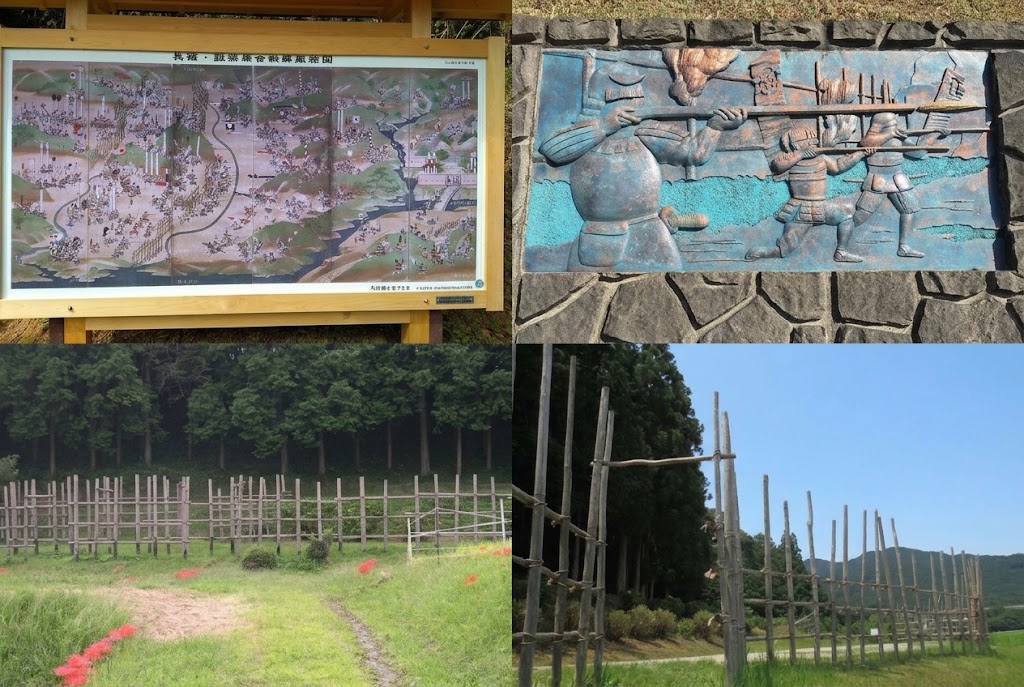
Visitors to the Shitaragahara battlefield today walk a quiet rural park where sections of the original wooden anti-cavalry palisade have been faithfully reconstructed, giving a tangible sense of the barrier that broke the Takeda cavalry’s momentum nearly four and a half centuries ago. Monuments and grave markers scattered across the grounds commemorate the Takeda generals who fell during the battle, offering a somber counterpoint to the pastoral farmland that now covers most of the historic battlefield. The small Shitaragahara Historical Museum nearby displays period matchlock guns, armor, helmets, and battle scrolls relevant to the engagement, and its rooftop observation deck provides visitors with sweeping views over the valley where the fighting once raged, helping to orient the battle’s geography for those unfamiliar with the site.
The battlefield park is reachable via a short walk from JR Mikawa-Togo Station, and an annual reenactment festival brings the site to life with matchlock musket demonstrations that recreate the firepower tactics that proved so decisive here. Because the surrounding landscape today consists mostly of ordinary farmland with few visible traces of the historic conflict, the on-site information boards and museum exhibits play an essential role in helping visitors picture the battle that unfolded across this now-peaceful countryside, and some visitors choose to combine their trip with a separate visit to the nearby ruins of Nagashino Castle, the fortress whose siege set the entire campaign in motion. The two sites together offer a fuller picture of the 1575 campaign than either location manages alone, tracing the story from the desperate defense that bought time for Nobunaga and Ieyasu’s relief force to the open plain where that force’s palisades and gunfire ultimately decided the fate of the Takeda clan’s cavalry tradition.
Remembrance of Nagashino
The Shincho Koki, the detailed retainer-chronicle compiled by Ota Gyuichi, remains the primary historical source for understanding Oda Nobunaga’s tactical planning at Nagashino, including his construction of the anti-cavalry palisades and the flanking maneuver that sealed the Takeda army’s fate, and modern historians rely on it specifically to correct the popularized but unsubstantiated legend of a coordinated three-rank rotating volley technique. The catastrophic losses suffered by Takeda Katsuyori’s cavalry, including the deaths of veteran generals who had served the clan for decades, are documented across historical accounts of the battle that consistently identify Nagashino as the turning point in the Takeda clan’s decline. Yamagata Masakage’s death during the fighting, recorded among the battle’s notable casualties, stands as a frequently cited symbol of how gunpowder weapons upended traditional expectations about individual martial prowess and battlefield hierarchy in sixteenth-century Japan, a symbolism later generations of historians and storytellers have returned to repeatedly when explaining why Nagashino marks such a distinct turning point in the history of Japanese warfare.
Further Exploration: Film titled “Kagemusha” (dir. Akira Kurosawa, 1980)
Location: Shitaragahara Historical Museum, 552 Shingenhara, Takehiro, Shinshiro-shi, Aichi 441-1305, Japan
Site Status: Marker or Monument Only
Visitation Notes: Visitors to Shitaragahara today walk a quiet rural battlefield park where sections of the wooden anti-cavalry palisade have been reconstructed, along with monuments and grave markers commemorating fallen Takeda generals. The small Shitaragahara Historical Museum displays matchlock guns, armor, helmets, and battle scrolls, with a rooftop observation deck overlooking the historic valley. The site is reachable via a short walk from JR Mikawa-Togo Station, and an annual reenactment festival features matchlock demonstrations. The surrounding landscape is mostly ordinary farmland, so the on-site information boards and museum are important for bringing the history to life; some visitors combine this with a separate visit to the nearby Nagashino Castle ruins.
Google Map
Visitor Comments
A visitor named sahaooon appreciated the immersive historical experience, saying that standing in the actual battlefield environment alongside the recreated fortifications helped them more realistically imagine the battle and empathize with the losing Takeda side.
— from TripAdvisor
A visitor named Stu-Oyaji found the visit emotionally striking, describing it as surreal to stand on farmland where so many died, and felt the site effectively conveyed the historical weight of the Takeda clan’s decisive defeat.
— from TripAdvisor
A more critical reviewer named TTukomi noted that without the information boards, the site is just ordinary rural scenery, a useful honest caveat that the battlefield itself lacks atmosphere without the supplementary museum interpretation.
— from 4travel.jp