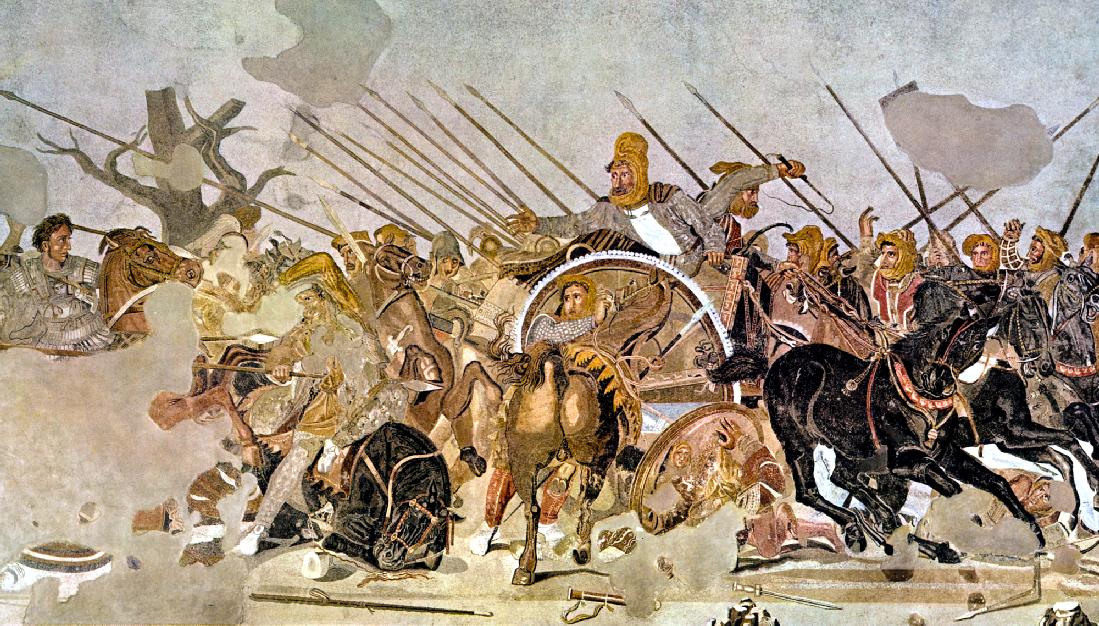
Alexander the Great had Darius III’s entire empire within his grasp, close enough to end the war and the Persian king’s life in a single afternoon of pursuit, when word reached him that his own left flank was collapsing under a Persian cavalry assault that threatened to encircle it. He made the choice that would define his generalship as much as any charge he ever led: he turned his cavalry around, abandoned the chase that could have ended the war outright, and rode back across the battlefield to save his general Parmenion. Darius escaped that day, but the empire he ruled did not survive the choice Alexander made instead of finishing him.
Gaugamela: The Road to Battle
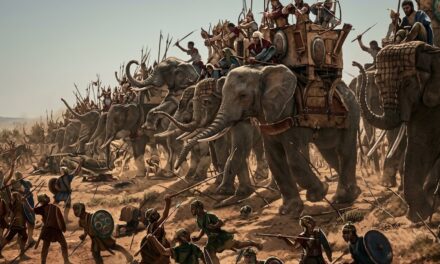
By 331 BC, Alexander the Great had already spent three years campaigning across the Persian Empire, having decisively defeated Darius III once before at Issus and pushed deep into Persian territory, but Darius had used the intervening time to assemble a far larger and more carefully prepared army, drawing troops, war elephants, and scythed chariots from across the vast reaches of his empire for a final confrontation. Darius chose the flat, open plain near the village of Gaugamela, in what is now Iraqi Kurdistan, specifically because its level ground favored his numerically superior cavalry and his scythed chariots, whose long blades could carve through massed infantry formations if given a clear, unbroken run at the enemy line. Alexander, arriving with a Macedonian army significantly outnumbered by conventional estimates, spent the days before the battle carefully reconnoitering the terrain, aware that Darius’s chosen ground gave the Persians a considerable structural advantage that would need to be neutralized through tactics rather than overcome through numbers.
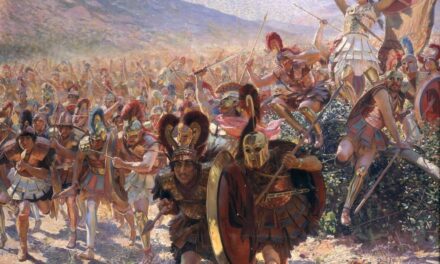
Rather than meeting the Persian line head-on across its full width, Alexander arranged his forces in an unusual oblique formation, with a refused flank and reserve lines positioned to absorb any Persian units that broke through or attempted to encircle his smaller army, a plan that depended on discipline and coordination rather than sheer mass. Darius, meanwhile, commanded his own center personally, surrounded by his most elite infantry and cavalry units, positioning himself where he could direct the battle but also, as events would prove, where he could act quickly if the fighting turned against him. As dawn broke on the day of battle, both commanders understood that the coming fight would likely decide not just a battle but the fate of the entire Persian Empire, a stake matched by few other engagements in the ancient world.
The Battle of Gaugamela
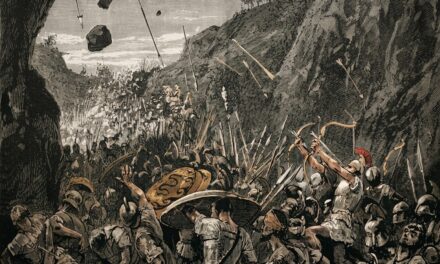
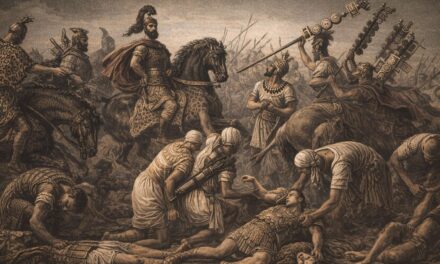
The battle opened with Darius’s scythed chariots charging toward the Macedonian line, only for Alexander’s light infantry and skirmishers to blunt the attack by opening lanes in their formation and cutting down the chariot horses and drivers as they passed, neutralizing what Darius had likely hoped would be a devastating opening blow. As the Persian cavalry began extending along the flanks in an attempt to envelop the smaller Macedonian army, Alexander recognized a gap opening in the Persian center as troops shifted to reinforce the flanking maneuvers, and he seized the moment personally, leading his elite Companion cavalry in a wedge-shaped charge directly at the gap near Darius’s own position. The charge drove deep into the Persian center, threatening Darius directly, and according to ancient sources the Persian king, watching the wedge close in on his position, turned and fled the field, a decision that would cost him not just the battle but ultimately his throne and his life.
With Darius in flight, the Persian center began to collapse, and total victory for Alexander seemed within reach, but at that exact moment, urgent word arrived that Parmenion, commanding the Macedonian left flank, was under severe pressure from Persian cavalry under the general Mazaeus and in danger of being encircled and overwhelmed. Alexander faced an agonizing choice: continue the pursuit of Darius, which might end the war in a single stroke by capturing or killing the Persian king outright, or abandon that pursuit to ride back and rescue his own hard-pressed general and the soldiers under his command. He chose to turn back, riding his Companion cavalry away from the fleeing Darius and across the battlefield to relieve Parmenion’s embattled flank, a decision that likely allowed Darius to escape but that also reflected Alexander’s consistent unwillingness to gamble his own army’s survival for the sake of a single decisive kill. By the time Alexander’s cavalry reached the left flank, Parmenion’s forces had managed to stabilize the line on their own, and the arrival of Alexander’s returning cavalry helped complete the rout of the remaining Persian forces, turning what had briefly been a crisis into a comprehensive Macedonian victory.
Darius, having fled the field early, would never again field an army capable of seriously challenging Alexander, and the flight itself became one of the most consequential single decisions of his reign, effectively surrendering the military initiative for the remainder of the war even though the fighting at Gaugamela had not been fully resolved at the moment he chose to run. The battle’s casualties fell overwhelmingly on the Persian side, whose retreating forces were pursued and cut down across the surrounding plain in the battle’s aftermath, while Macedonian losses, though real, remained comparatively light given the scale and stakes of the engagement. Ancient sources differ considerably on exact casualty figures for both sides, a common problem with battles of this era and scale, but there is broad agreement among modern historians that the disparity in losses was severe enough to cripple the Persian military’s capacity to field another army of comparable size in the time that remained before Alexander’s forces occupied the empire’s core territories. The war elephants Darius had brought to the field, an exotic addition intended to unsettle Macedonian troops and horses unfamiliar with the animals, played only a marginal role in the fighting once the battle’s center of gravity shifted to the cavalry engagement near Darius’s own position, illustrating how quickly a carefully assembled tactical plan could be overtaken by the fast-moving realities of a fluid ancient battlefield.
The Legacy of Gaugamela
Gaugamela effectively ended the Achaemenid Persian Empire as a unified fighting power, opening the path for Alexander to claim the Persian throne and march into the empire’s great cities, including Babylon and Persepolis, within the following months. Darius’s flight from the field, followed by his eventual death at the hands of his own subordinates rather than in battle against Alexander, marked a humiliating end to a dynasty that had ruled the largest empire the ancient world had yet seen. The battle remains a case study for military historians in the value of tactical flexibility and calculated restraint, since Alexander’s decision to abandon a potentially war-ending pursuit in order to save his own flank is often cited as evidence of the strategic discipline that separated him from commanders who might have gambled everything on personally capturing or killing an enemy king.
Visiting Gaugamela Today
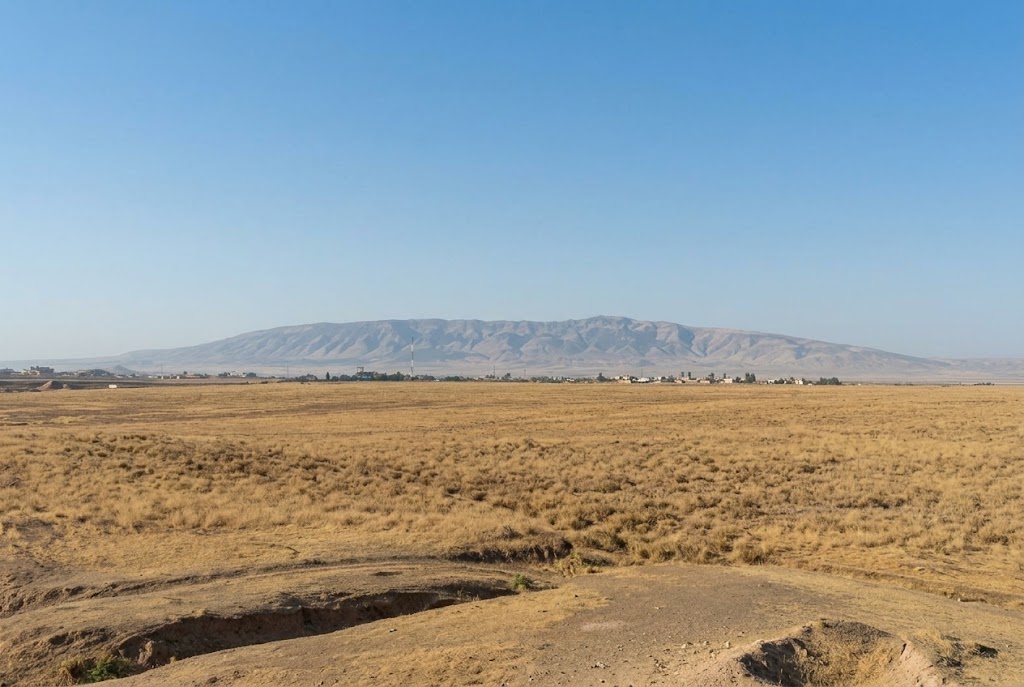
Unlike many ancient battlefields that have developed into managed historic sites, the likely location of Gaugamela on Iraq’s Navkur Plain near Tell Gomel remains essentially unmarked farmland, identified through academic archaeological survey work conducted between 2016 and 2022 rather than through any tourism development or visitor infrastructure. There is no monument, museum, or interpretive signage on site, and visitors traveling independently to the region would find little beyond open agricultural fields stretching toward low distant hills, much as the landscape likely appeared in antiquity aside from modern farming activity. Compounding the site’s inaccessibility, the U.S. State Department has maintained a Level 4 “Do Not Travel” advisory for Iraq, including the Kurdistan region, citing ongoing terrorism and kidnapping risk, meaning current travel guidance does not support visiting this location regardless of its immense historical significance.
For most people interested in Gaugamela, engaging with the battle’s history will mean relying on scholarly accounts, museum collections elsewhere, and popular depictions such as Oliver Stone’s 2004 film “Alexander” rather than a physical visit to the battlefield itself. This gap between historical importance and practical accessibility is not unique to Gaugamela among ancient battlefields, but the scale of what happened here, the collapse of the Persian Empire in a single afternoon, makes the absence of any formal commemoration on the ground particularly striking to those who study the period. Even the precise identification of the battlefield itself remained a matter of scholarly debate for generations, with earlier researchers proposing several candidate locations across the wider Navkur Plain before the more recent archaeological survey work helped narrow the likely site to the area around Tell Gomel, underscoring how much about even a battle of this historical magnitude can remain uncertain nearly twenty-four centuries later. Travelers drawn to the broader region’s ancient history are far more likely, under current conditions, to explore accessible archaeological sites and museum collections elsewhere in the Middle East and Europe that preserve artifacts and scholarship related to Alexander’s campaigns, rather than attempting to reach this remote and currently inadvisable stretch of Iraqi farmland.
Remembrance of Gaugamela
Ancient historians including Arrian, Plutarch, and Diodorus Siculus preserved detailed if occasionally conflicting accounts of the battle, particularly around Darius’s flight and the exact sequence of Alexander’s cavalry charge and subsequent withdrawal to relieve Parmenion, giving modern historians a rich but not always fully consistent record to work from. The recent archaeological survey work that helped identify the probable battlefield location on the Navkur Plain represents one of the more significant modern contributions to understanding Gaugamela, even though that scholarship has not translated into any on-the-ground commemoration accessible to visitors. Alexander’s decision to abandon his pursuit of Darius in order to save Parmenion continues to be cited by military historians and strategists as an example of disciplined battlefield judgment, a decision whose consequences, allowing an already-defeated Darius to escape while preserving the cohesion of the Macedonian army, arguably shaped the remainder of the campaign as much as anything that happened during the battle itself.
Further Exploration: Film titled “Alexander” (dir. Oliver Stone, 2004)
Location: Near Tell Gomel (Tel Gomel), Navkur Plain, Duhok Governorate, Iraqi Kurdistan, Iraq (no formal address; precise ancient battlefield location remains debated among scholars)
Site Status: Access Restricted or Unsafe
Visitation Notes: There is no managed visitor site, marker, or signage here — the likely battlefield lies within open farmland on Iraq’s Navkur Plain, identified through a 2016-2022 academic archaeological survey rather than any tourism development. As of 2026 the U.S. State Department maintains a Level 4 ‘Do Not Travel’ advisory for Iraq, including the Kurdistan region, citing terrorism and kidnapping risk, so this is not a site current guidance supports visiting.
Google Map
Visitor Comments
Calvin Sun recalls reaching the fabled battle site while driving from Mar Mattai toward Mosul, describing an impending thunderstorm rolling in as they took in the plain before driving north to Lalish.
— from The Monsoon Diaries (travel blog)