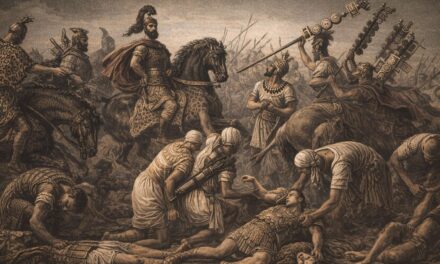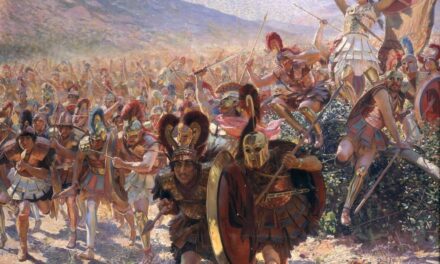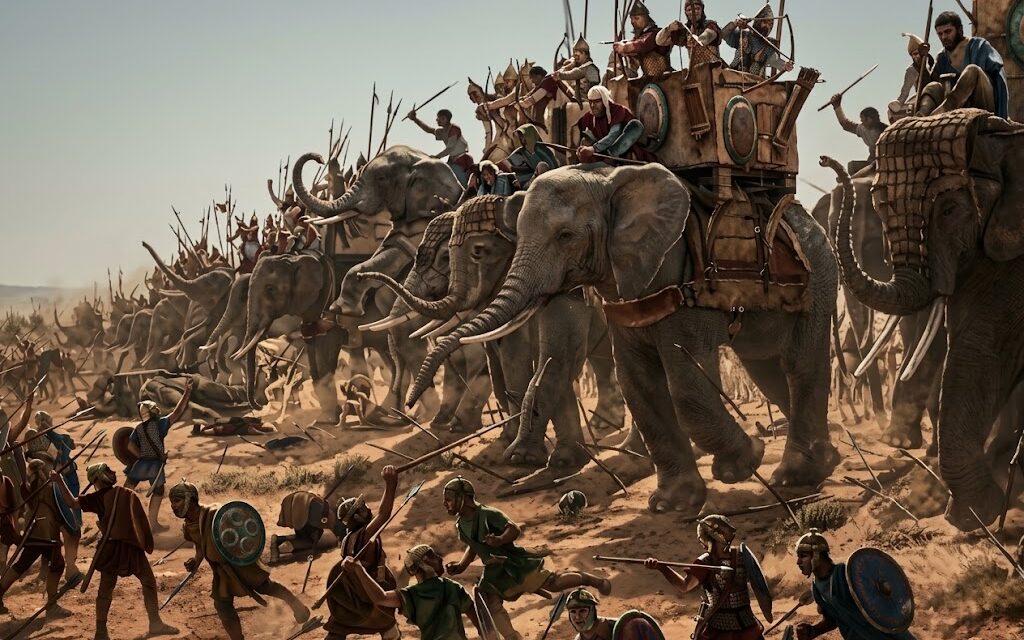
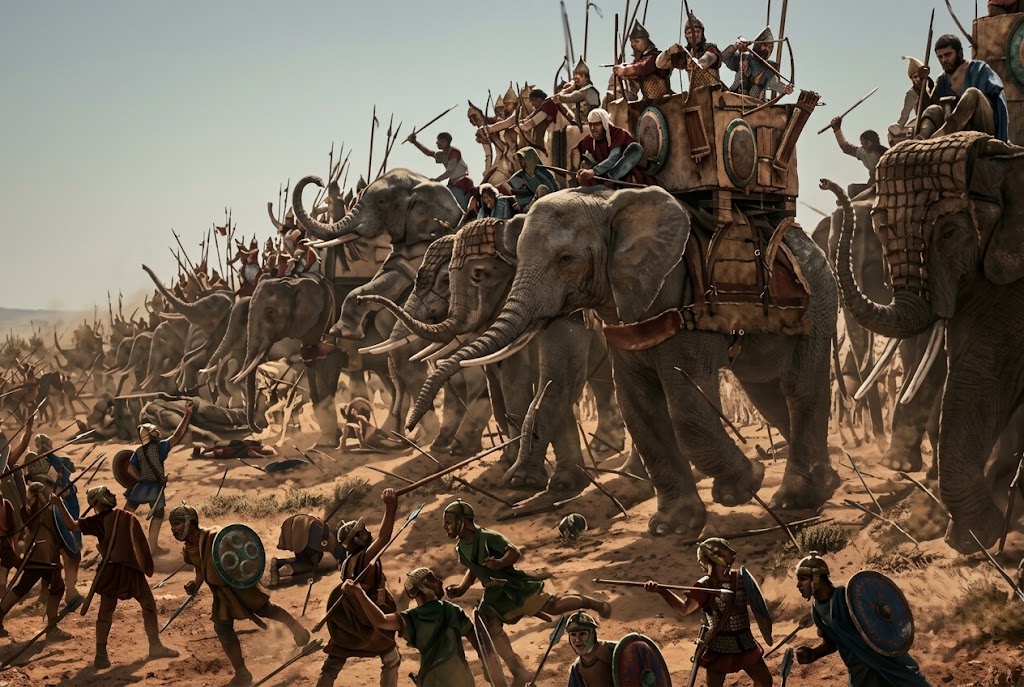
Scipio Africanus faced eighty war elephants bearing down on his legions and did something that seemed to invite disaster: instead of forming one solid wall of men, he arranged his maniples in columns with wide open lanes running straight through the Roman line, and stationed light skirmishers with instructions to simply step aside and let the beasts pass. Hannibal’s elephants, trained to smash through packed infantry, thundered forward into gaps that funneled them harmlessly between the Roman ranks and out the back of the formation, their charge spent on empty ground instead of Roman shields. It was a tactical gamble that inverted the very weapon meant to break the Roman line into a force that barely touched it, and it set the stage for a battle that ended not just a war but the career of the most feared general Rome had ever faced.
Zama: The Road to Battle
By 202 BC, the Second Punic War had ground on for sixteen years, and Hannibal Barca, who had spent over a decade campaigning across Italy and inflicting catastrophic defeats on Roman armies at Trebia, Lake Trasimene, and Cannae, had never managed to force Rome itself to surrender. The war’s momentum shifted when the young Roman general Publius Cornelius Scipio, later given the honorific Africanus, carried the fighting to North Africa itself, landing an invasion force near Carthage and threatening the city directly rather than continuing to contest Hannibal in Italy. The Carthaginian senate, alarmed at the threat to their own capital, recalled Hannibal from Italy after fifteen years there, forcing him to abandon the campaign he had waged since his famous crossing of the Alps and return home to defend Carthage itself.
Scipio, meanwhile, had secured a crucial alliance with Masinissa, a Numidian king whose superior cavalry had previously fought for Carthage but now rode alongside the Romans, giving Scipio a cavalry advantage he had lacked in earlier campaigns. Hannibal, upon landing in Africa, found his own veteran Italian infantry, some of the most experienced soldiers in the ancient world, but was forced to rely on newly raised Carthaginian levies and a large contingent of war elephants to round out his army rather than the seasoned force that had terrorized Italy for over a decade. The two generals reportedly met face to face before the battle to discuss terms, a rare meeting between commanders who had never previously faced each other directly despite years of fighting the same war, but the negotiations failed to produce peace, and both armies prepared for what each side understood would be a decisive engagement.
The Battle of Zama
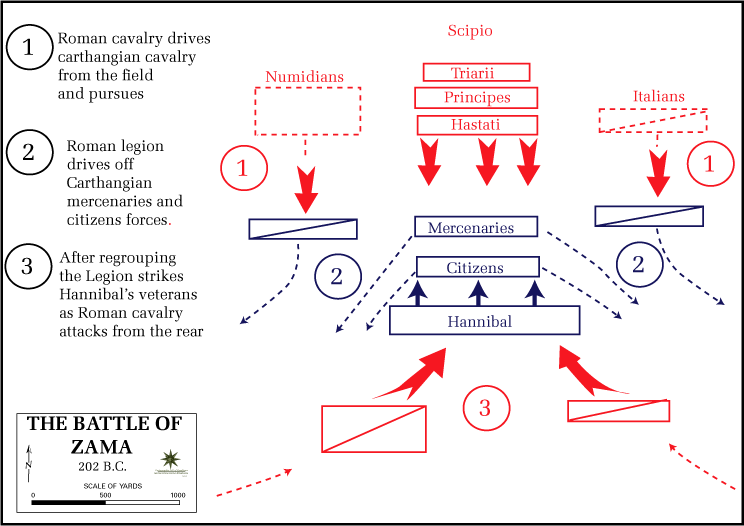
Hannibal opened the battle by sending his eighty war elephants charging at the Roman line, a tactic that had devastated enemy formations in previous battles, but Scipio had specifically arranged his maniples into columns with open lanes between them, and Roman skirmishers used horns and trumpets to further panic the animals, driving many of them to veer sideways into Hannibal’s own Numidian cavalry on the flanks rather than through the Roman ranks as intended. Some elephants did career down the open lanes exactly as Scipio had planned, passing harmlessly through the Roman formation and out the rear without inflicting the casualties Hannibal had counted on to break Roman morale before the infantry lines even met. With the elephant charge neutralized and Carthaginian cavalry thrown into disorder by the panicked animals crashing through their own ranks, Masinissa’s Numidian horsemen fighting for Rome and the Roman cavalry under Gaius Laelius drove the opposing cavalry from the field entirely, pursuing them well beyond the battle’s main action and removing them from the fight for its critical later stages.
Hannibal had arranged his infantry in three successive lines, placing his least reliable Carthaginian and mercenary levies in front to absorb the first shock of the Roman advance while holding his seasoned Italian veterans in reserve at the rear, a formation meant to wear down the Romans before his best troops ever engaged. The first two Carthaginian lines fought bitterly but eventually broke under sustained Roman pressure, and in the battle’s most dangerous moment for Scipio, some of Hannibal’s own retreating soldiers were cut down by their own veteran third line rather than allowed to pass through and disorder its ranks, a brutal demonstration of the discipline Hannibal still commanded even in a losing battle. The infantry lines then clashed directly, and Hannibal’s veteran Italian troops in that third line fought with the same discipline that had won him victories throughout Italy, grinding down the Roman infantry in a brutal, evenly matched struggle that hung in the balance for an extended period as neither side could break the other through frontal pressure alone.
The battle’s outcome was decided when Masinissa and Laelius, having chased the Carthaginian cavalry from the field, turned their forces around and returned to strike Hannibal’s infantry from the rear at the precise moment the Roman and Carthaginian lines were most evenly engaged and least able to reposition against a new threat. Caught between Scipio’s infantry pressing from the front and the returning cavalry crashing into their rear, Hannibal’s veteran troops, who had never broken in battle throughout the general’s long Italian campaign, were finally overwhelmed and destroyed as a fighting force in the encirclement that followed. Carthaginian losses were catastrophic, with ancient sources reporting as many as 20,000 dead and a similar number captured, while Roman losses, though not trivial, were far lighter by comparison, a lopsided outcome that reflected how completely the late cavalry charge had trapped Hannibal’s remaining infantry. Hannibal himself escaped the field with a small group of survivors, one of the few times in his career he had personally fled a lost battle, and made his way back to Carthage to report that the war was lost and peace with Rome was now the city’s only remaining option.
The Legacy of Zama
Zama ended the Second Punic War decisively, forcing Carthage to accept harsh peace terms that stripped it of its overseas territories, its war fleet, and its ability to wage war without Roman permission, reducing it from a rival empire to a subordinate state. The battle established Scipio Africanus as Rome’s preeminent general and cemented the Roman Republic’s dominance over the western Mediterranean for the following century, a dominance that eventually led to Carthage’s total destruction in the Third Punic War fifty years later. For Hannibal, Zama marked the only major battlefield defeat of his career, an outcome made more remarkable by how thoroughly Scipio had studied and countered the very tactics that had made Hannibal legendary, effectively defeating the master tactician using a version of his own patience and battlefield discipline turned back against him. Rome’s victory at Zama is widely regarded by historians as the moment the Mediterranean’s balance of power tipped decisively and permanently in Rome’s favor.
Zama Today
Unlike better-documented ancient battlefields, the exact site of Zama has never been definitively located, with modern historians divided between a leading candidate near the village of Jama in Tunisia’s Siliana Governorate, believed to preserve the name of ancient Zama Regia, and an alternative site farther west near Naraggara favored by other scholars. None of the candidate locations has a marked battlefield, visitor center, or interpretive signage, and all sit in rural, lightly touristed areas of inland Tunisia far from the country’s established tourist circuit. Visitors drawn to this chapter of the Punic Wars are generally better served in Tunis and at the Carthage archaeological site roughly 100 kilometers away, where the Punic Ports and Museum preserves the remains of Carthage’s ancient military harbors and the Bardo National Museum holds Punic religious and decorative artifacts alongside its broader Roman collection. Tunisia as a whole carries only a general Level 2, Exercise Increased Caution travel advisory as of 2026, well short of any formal restriction, so the absence of a marked Zama site reflects the battlefield’s undetermined location rather than any safety concern for travelers.
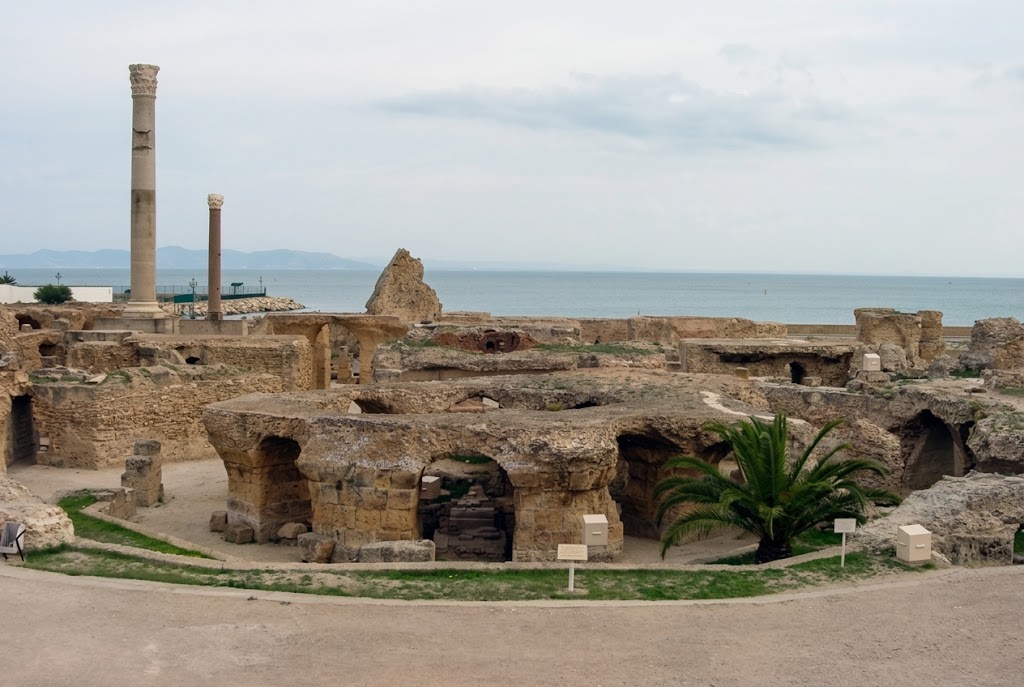
The uncertainty over Zama’s location is not unusual for battles of this age fought before durable monuments or written land records existed, and it stands in sharp contrast to the well-mapped medieval and modern battlefields elsewhere in this directory, where fortifications, monuments, or contemporary maps have preserved the ground itself alongside the historical record. For now, anyone wanting to stand where the Second Punic War actually ended must be content with an educated guess at the surrounding Tunisian landscape rather than a confirmed and marked historical site, making Carthage itself, with its excavated ports and preserved artifacts, the more rewarding and accessible way to engage with the war that Zama brought to a close.
Remembrance at Zama
Polybius, a Greek historian writing roughly two generations after the battle in his “Histories,” is considered the most reliable ancient source on Zama, having had documented access to the Scipio family circle and to participants’ own accounts of the fighting. His narrative of the elephant charge, the gapped Roman formation designed to neutralize it, and Masinissa’s decisive cavalry maneuver forms the backbone of nearly every modern reconstruction of the battle. Livy, the Roman historian, gave a more detailed narrative of the battle in his “Ab Urbe Condita,” written roughly two centuries after the events, drawing heavily on Polybius but adding dramatic embellishments of his own, including invented pre-battle speeches attributed to both Hannibal and Scipio. Classicists generally regard Livy as the less reliable of the two sources specifically where his account diverges from Polybius, though his fuller narrative remains a valuable and widely cited secondary record of the battle. Taken together, these two accounts, a near-contemporary historian with insider access and a later Roman chronicler working from that same source while adding his own literary flourishes, preserve Zama as one of the best-documented battles of the ancient world despite the physical uncertainty over exactly where it was fought.
Visitor Info: Book titled “The Punic Wars” by Adrian Goldsworthy (Cassell, 2000); Documentary titled “Barbarians Rising” (History Channel, 2016)
Location: Exact battlefield site disputed; leading candidate near Jama, Siliana Governorate, Tunisia (ancient Zama Regia), though some historians place the actual fighting farther west near Naraggara
Site Status: Site No Longer Exists
Visitation Notes: Unlike better-documented ancient battlefields, the exact site of Zama has never been pinned down. Multiple ancient towns shared variants of the name, and modern historians place the leading candidate for ancient Zama Regia near the village of Jama in Tunisia’s Siliana Governorate, while some argue the actual fighting occurred farther west near Naraggara. None of the candidate sites has a marked battlefield, visitor center, or interpretive signage, and they sit in rural, lightly touristed areas. Visitors interested in this war and era are better served in Tunis and at the Carthage archaeological site roughly 100 km away, where the Punic Ports and Museum at Carthage preserves the remains of Carthage’s ancient military harbors, and the Bardo National Museum holds Punic religious and decorative artifacts alongside its larger Roman collection. Tunisia carries a general Level 2, Exercise Increased Caution advisory as of 2026, well short of any travel restriction, so this recommendation is a matter of the battlefield’s location being unmarked and undetermined rather than a safety concern.
Google Map
Visitor Comments
CarloWinther said the Punic Ports and Museum at Carthage rewards anyone with background knowledge of Punic history, calling the layout of the original harbors amazing despite centuries of deterioration and noting the small building housing a military harbor model.
— from TripAdvisor
Faouzi S called their three hours at the Carthage National Museum the best part of their Tunisia trip, praising a guide who brought the ancient history to life.
— from Google Reviews (via Wanderlog)
W. L. described the Carthage National Museum as compact but fascinating, praising the Punic artifacts and mosaics on display along with the peaceful hilltop setting overlooking the sea.
— from Google Reviews (via Wanderlog)
Dana H appreciated that a single ticket covers nine archaeological locations across the Carthage site, though noted the cathedral was closed for renovation during their visit.
— from Google Reviews (via Wanderlog)