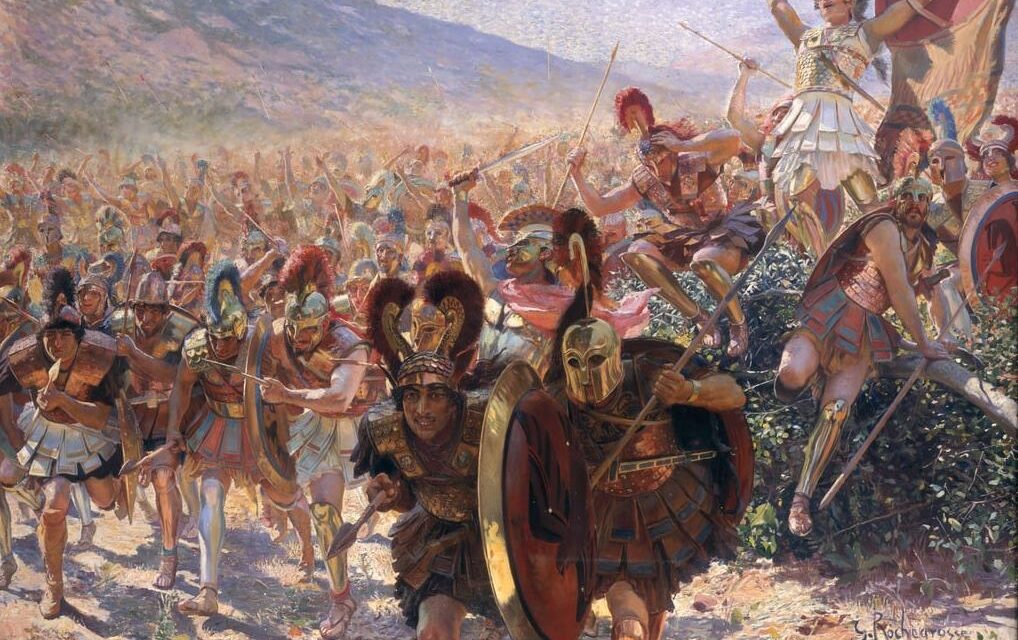
Millions of people run 26.2 miles every year in tribute to a story that, as most ancient historians tell it, never actually happened. The popular legend holds that a Greek messenger ran from the battlefield at Marathon to Athens, gasped out news of victory, and dropped dead on the spot. The earliest and most reliable ancient account of the battle, written by Herodotus within living memory of the event, contains no such run at all. What it does contain is something almost as remarkable: a heavily outnumbered force of Athenian citizen-soldiers, fighting without the allies they had asked for, that broke a Persian invasion on a dusty coastal plain and changed the direction of Greek history.
Marathon: The Road to Battle
In 490 BC, the Persian Empire under King Darius I sent a punitive expedition across the Aegean Sea to punish Athens and Eretria for supporting an earlier revolt by Greek cities in Ionia against Persian rule, a revolt that had briefly threatened Persian control over its wealthy western provinces before being crushed. Commanded by the generals Datis and Artaphernes, the Persian fleet burned Eretria, enslaving much of its population, and then landed on the plain of Marathon, roughly twenty-six miles northeast of Athens, a stretch of open coastal ground well suited to the cavalry the Persian army relied on heavily and chosen deliberately for that reason. Athens, facing an invasion force considerably larger than any army it could field alone, sent a professional long-distance runner named Pheidippides to Sparta to request military assistance, a journey of some one hundred forty miles across rugged terrain that he is said to have completed in roughly two days, an extraordinary feat of endurance even by the standards of professional Greek runners.
Sparta agreed to help but explained that religious law forbade it from marching before the upcoming full moon, part of an ongoing festival known as the Carneia, delaying any Spartan relief force until after the battle would already be decided one way or another. Left to face the Persian landing largely alone, Athens marched out with its available hoplite army, joined by a smaller allied contingent from the nearby city of Plataea, the only Greek city to answer Athens’s call for help, and took up a position blocking the roads leading from Marathon toward Athens. Command of the Athenian force was shared among ten generals on a rotating basis, among them Miltiades, who had previously served under Persian rule in Thrace and understood Persian tactics better than any other Athenian commander available, along with the polemarch Callimachus, whose vote proved decisive in the council’s divided choice to give battle rather than wait behind the walls of Athens for a siege that might have gone very differently.
The Battle of Marathon
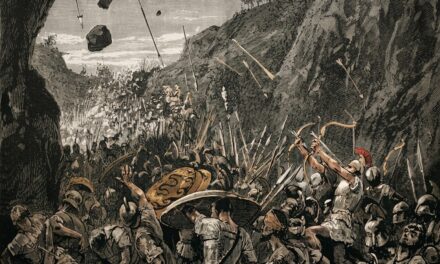
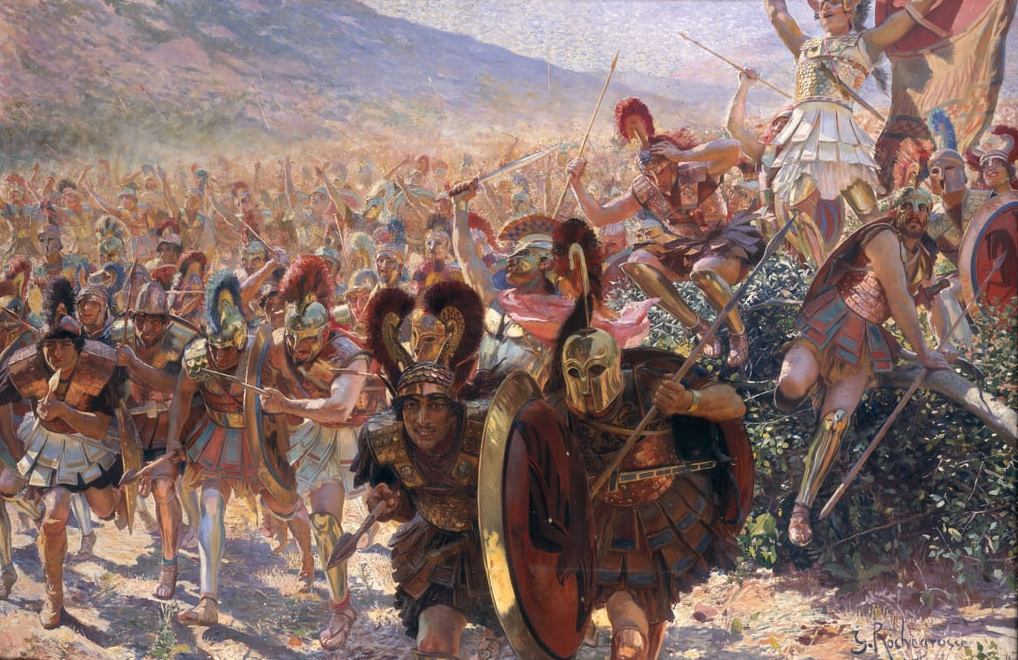
For several days the two armies faced off without engaging, the Athenians unwilling to abandon their blocking position and the Persians apparently reluctant to commit to open battle against hoplites on ground that limited their cavalry’s usefulness. Some ancient traditions suggest the Persian cavalry may have been absent or otherwise occupied when the Athenians finally chose to advance, a circumstance modern historians debate but that would have removed the single greatest threat to the more lightly armed Greek flanks. When the Athenians finally advanced, Miltiades made a deliberate tactical choice that shaped the outcome: he thinned the center of the Athenian line to extend and strengthen both wings, a formation that would prove decisive once fighting began, gambling that the flanks could win their fights before the weakened center collapsed under the weight of the larger Persian force facing it. As the Athenian line closed the final stretch of open ground, roughly a mile by some ancient accounts, the hoplites broke into a run in full armor, a tactic meant to minimize the time spent exposed to Persian archery rather than any attempt at intimidation, an exhausting sprint that nonetheless left the heavily armored Greeks with enough strength to fight effectively on contact.
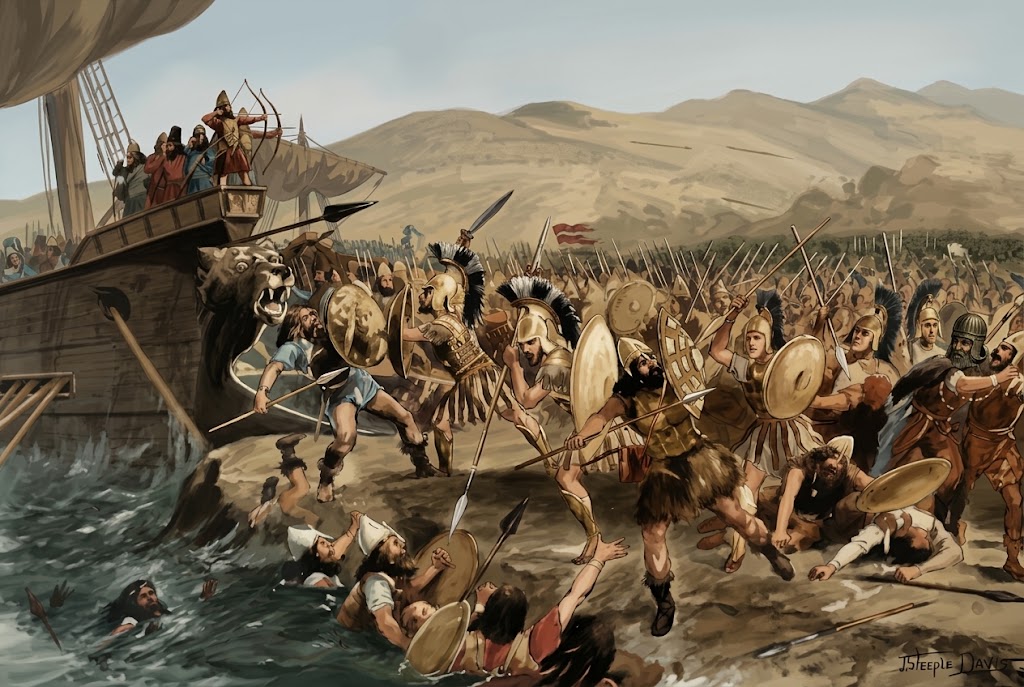
The fighting unfolded largely as Miltiades had gambled it would. On both wings, the strengthened Athenian and Plataean formations pushed back the Persian and allied troops facing them, driving their opponents back toward the shoreline where the Persian ships lay beached, while in the center, where the Athenian line had been deliberately weakened, Persian forces broke through and began to advance deeper into the Greek position than anywhere else on the field. Rather than continuing forward into a breakthrough that might have scattered them across open ground, the victorious Athenian wings held their discipline, wheeled inward, and struck the advancing Persian center from both flanks simultaneously, catching those troops between three fronts at once in a maneuver that required considerable coordination between formations that had just fought their own separate engagements. The Persian formation collapsed under the pressure, and the retreat quickly became a rout as Persian and allied soldiers fled back toward their beached ships pursued by the Athenian army, with fierce fighting breaking out along the shoreline itself as the Athenians attempted to set fire to the fleet before it could escape.
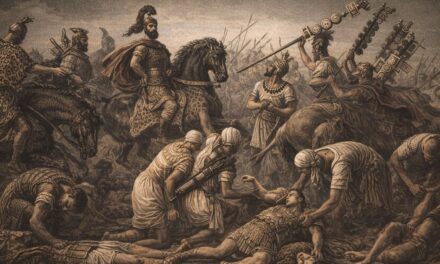
Herodotus reports that the fighting cost the Persians roughly 6,400 dead against only 192 Athenian losses, a lopsided outcome, though modern historians treat the Persian figure with some skepticism given the difficulty of counting casualties in a chaotic rout and the tendency of ancient sources to inflate enemy losses relative to their own. The 192 Athenian dead were cremated and buried together on the battlefield itself beneath a large earthen mound, a monument that survives to this day and remains one of the few physical traces connecting a visitor directly to the fighting nearly twenty-five centuries later. Following the defeat on land, the Persian fleet did not withdraw immediately but instead sailed around Cape Sounion toward Athens itself, apparently hoping to seize the undefended city before its army could return from the battlefield, forcing the Athenian hoplites into a rapid forced march back to the city, covering the same roughly twenty-six miles in a single exhausted day, that arrived in time to deter any Persian landing and left the invasion force with no choice but to sail home.
The Legacy of Marathon
Marathon halted the first major Persian invasion of mainland Greece and gave Athens enormous confidence and prestige at a moment when Persian power seemed close to unstoppable, confidence that shaped Athenian politics and military strategy for the following decade and fed directly into the naval buildup that would prove decisive a decade later. The victory did not end the Persian threat, which returned in far greater force a decade later under Xerxes, but Marathon demonstrated that a disciplined hoplite army fighting on favorable ground could defeat Persian forces that vastly outnumbered available Greek troops in earlier engagements, a lesson that influenced Greek strategic thinking through the rest of the Persian Wars and helped cement the reputation of the hoplite phalanx as a genuine match for the Persian army on suitable ground.
Visiting Marathon Today
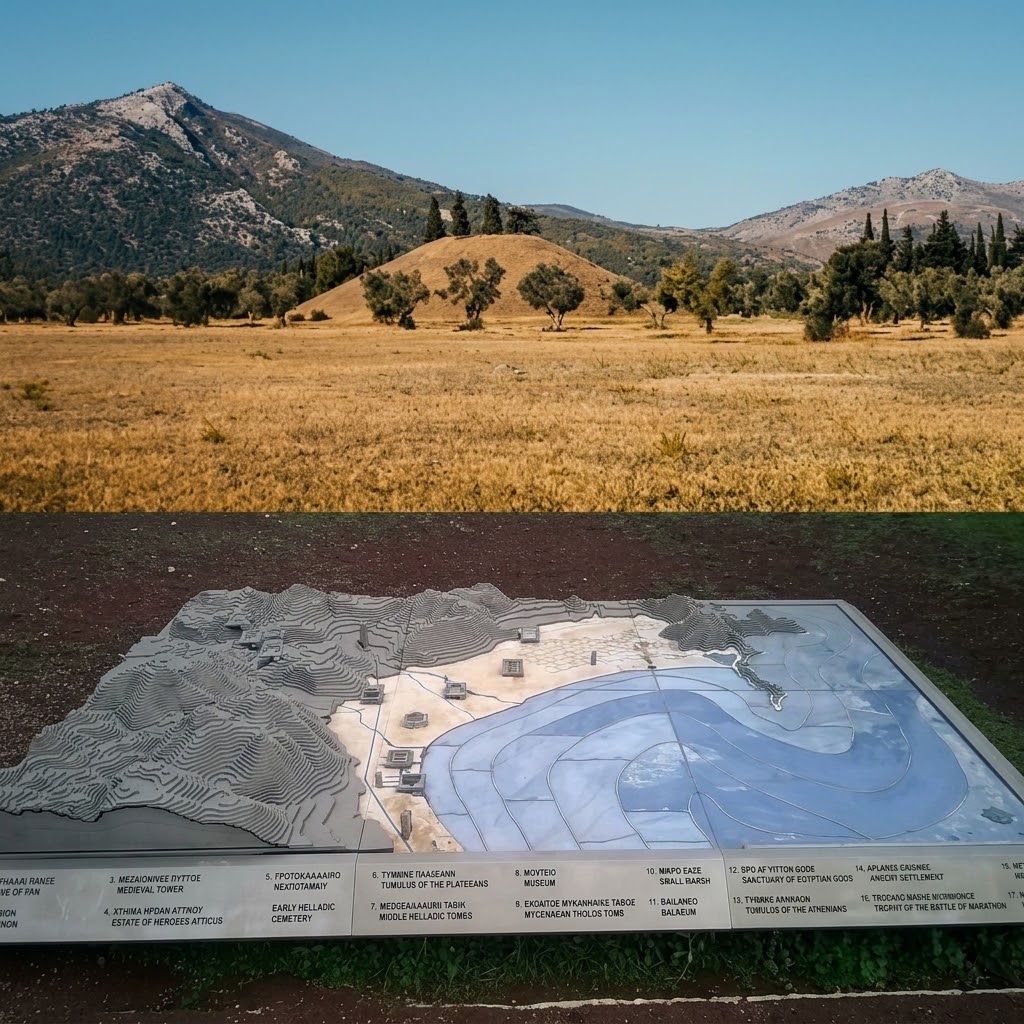
The battlefield sits on the plain near the modern town of Marathon, roughly an hour’s drive northeast of central Athens, and its centerpiece is the Tumulus of Marathon, known in Greek as the Soros, the burial mound raised over the cremated remains of the 192 Athenian dead. A quiet path circles the mound beneath a stand of pine trees, though climbing to the summit, once permitted, is no longer allowed, a change intended to protect the ancient monument from erosion after decades of accumulated visitor traffic. Admission to the site carries a modest fee and requires no advance booking, and the mound pairs naturally with the nearby Archaeological Museum of Marathon in the village of Vranas, which holds artifacts recovered from the battlefield and surrounding burial sites and provides fuller historical context than the open field alone can offer.
Spring and fall are the most comfortable seasons to visit, since the open plain offers little shade and can be intensely hot during the Greek summer months, with little relief available across the largely open agricultural landscape surrounding the mound itself. The site’s most visible modern legacy runs directly through the same ground each November, when the Athens Classic Marathon starts near the battlefield and finishes at the Panathenaic Stadium in central Athens, drawing thousands of runners from around the world along a course that traces, in reverse, the route the ancient legend describes, a deliberate, literal echo of the distance the battle’s legend claims a runner once covered, even though that particular run appears nowhere in the earliest surviving historical account of the battle itself.
Remembrance at Marathon
The battle’s afterlife is inseparable from a legend that outgrew its own historical sourcing. Herodotus, writing decades after the battle and drawing on oral tradition rather than firsthand memory, describes Pheidippides running to Sparta before the fighting to request help, not from the battlefield to Athens afterward to announce victory, a distinction most casual retellings of the story overlook entirely. The now-famous story of a runner collapsing after delivering news of the win comes instead from Plutarch, writing roughly five to six centuries later, who attributes the run to a messenger named either Thersippus or Eucles rather than to Pheidippides at all. That later, more dramatic version was reshaped again a century afterward by the writer Lucian, and it was this compounded, largely legendary tradition, not Herodotus’s more sober original account, that inspired the modern marathon race when the event was revived for the first modern Olympic Games in 1896. The 26.2-mile distance itself was not settled until the 1908 London Olympics, when organizers extended the course to reach the royal viewing box, a quirk of scheduling logistics that became the standard distance run in Marathon’s name worldwide today.
Visitor Info: Book titled “The Battle of Marathon” (Peter Krentz, 2010)
Location: Tumulus of Marathon (Soros), Marathon-Rafina Road area, Marathon, Attica, Greece
Site Status: National Park / Managed Historic Site
Visitation Notes: The site is near Marathon town, about an hour’s drive northeast of central Athens, and pairs with the nearby Archaeological Museum of Marathon in Vranas. Spring and fall are the best seasons, since the open plain offers little shade in summer. A path circles the burial mound under trees; climbing to the summit is no longer permitted. Admission is a modest fee, and no advance booking is required. The Athens Classic Marathon is run each November, starting near this site and finishing at the Panathenaic Stadium — a direct, modern echo of the battle’s legend.
Google Map
Visitor Comments
Jelena_PS called it a very important landmark in ancient Greek history not to be missed if you’re in the area, noting the admission fee included museum access and praising friendly staff.
— from TripAdvisor
A more skeptical visitor, Dmfn62100, noted you can see the tumulus and its powerful history by staying behind the fence, questioning whether the entrance fee was really necessary.
— from TripAdvisor
browncondo2102 noted the tomb’s proximity to the actual battlefield and its role honoring the Athenian soldiers cremated and buried there after the fight.
— from TripAdvisor
W. Ruth Kozak, a travel writer, described visiting the tumulus across two trips decades apart — once when it was covered in red poppies and open to climb, and later when a path had been added and climbing prohibited — writing evocatively of hearing the voices of the dead lingering in the shadows of the pine trees.
— from Europe Up Close (travel blog)