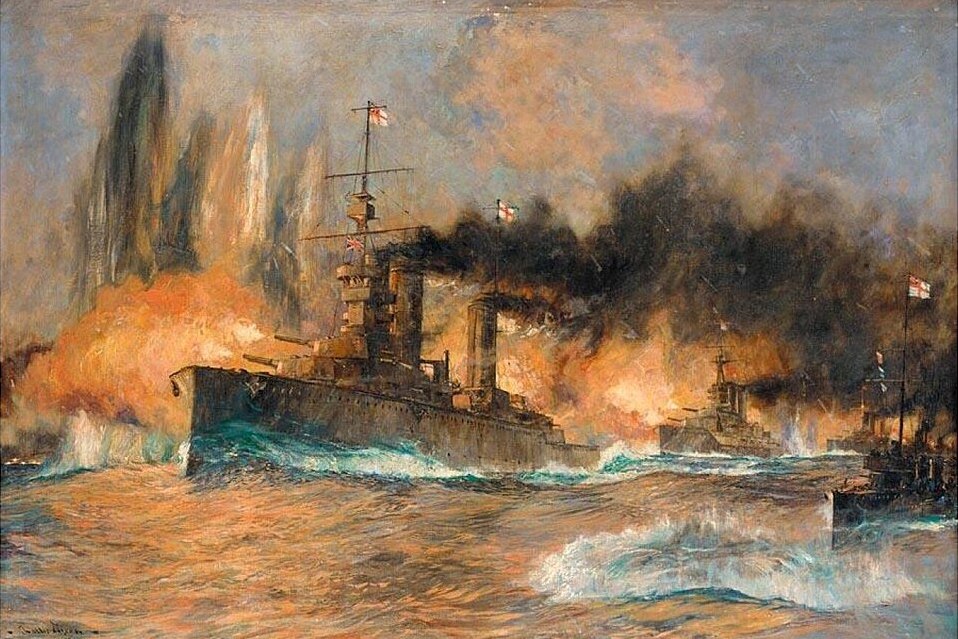
Within the first hour of the largest naval battle of the First World War, two of Britain’s mightiest battlecruisers vanished in single, catastrophic explosions, taking more than a thousand men each to the bottom of the North Sea in seconds. Vice-Admiral David Beatty, watching HMS Indefatigable and then HMS Queen Mary erupt into fireballs and disappear beneath the waves, turned to his flag captain with a line that would become infamous: “There seems to be something wrong with our bloody ships today.” He was right, though the exact cause—German gunnery, inadequate armor, or reckless cordite-handling practices—remains disputed by historians a century later. By nightfall on May 31, 1916, the two greatest battle fleets ever assembled—more than 250 warships between them—had fought to an outcome so ambiguous that Britain and Germany still argue over who actually won.
Jutland: The Road to Battle
For two decades before 1916, Britain and Germany had raced to build ever larger, more heavily armed dreadnought battleships, each nation certain that naval supremacy would decide any future war between them. When war finally came in August 1914, the German High Seas Fleet found itself outnumbered and largely confined to port by the British Grand Fleet’s distant blockade of the North Sea, a strategy that strangled German trade and war production without requiring the Royal Navy to risk a full fleet engagement.
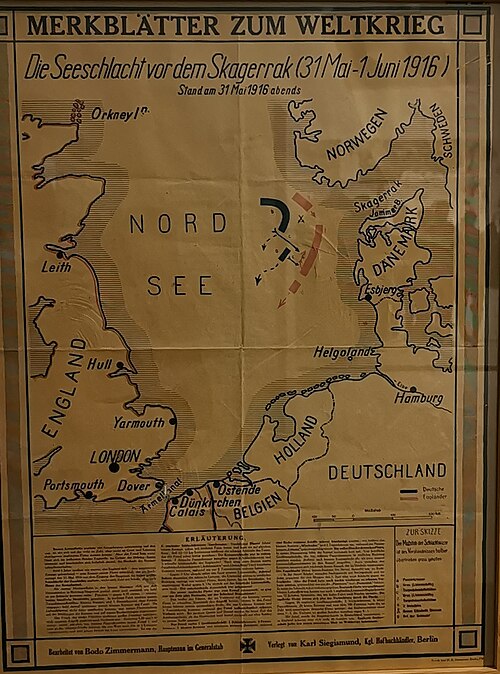
By the spring of 1916, Germany’s newly appointed fleet commander, Vice-Admiral Reinhard Scheer, had grown impatient with this stalemate and the slow economic damage it was inflicting on his country. The Grand Fleet still substantially outnumbered his own High Seas Fleet in capital ships, so a head-on clash of the full battle lines remained too risky to contemplate. Instead, Scheer’s plan was to lure a detachable portion of the British fleet—Vice-Admiral David Beatty’s fast, powerful battlecruiser squadron—into a trap at sea, using Vice-Admiral Franz Hipper’s own battlecruisers as bait to draw Beatty south into range of the full German High Seas Fleet waiting beyond, out of sight over the horizon, where superior numbers could finally be turned to Germany’s advantage.
What Scheer did not know was that British Naval Intelligence’s Room 40 codebreaking unit had already decrypted enough German radio traffic to warn the Admiralty that a major fleet operation was underway, even before German ships had left their North Sea anchorages. Admiral John Jellicoe’s entire Grand Fleet put to sea from its base at Scapa Flow hours ahead of Scheer’s own departure, meaning the trap Scheer had carefully designed for Beatty’s squadron alone was, without his knowledge, sailing directly into the path of the whole of Britain’s naval power. On the afternoon of May 31, 1916, the two opposing battlecruiser forces sighted each other in the North Sea, and the largest clash of dreadnought battleships in history began to unfold.
The Battle of Jutland
The battle opened with what became known as the “Run to the South,” as Beatty’s battlecruisers engaged Hipper’s squadron in a running gun duel fought at extreme range and high speed. British gunnery and ship design proved fatally vulnerable in these opening exchanges: within little more than an hour, German shells penetrated the armor of HMS Indefatigable and then HMS Queen Mary, igniting their ammunition magazines in explosions that broke both ships apart and killed all but a handful of their combined crews of well over 2,000 men. It was in the stunned aftermath of these losses that Beatty made his now-famous remark to his flag captain, Ernle Chatfield, about something being badly wrong with British ships—a grim acknowledgment of design flaws in turret armor and cordite-handling that would haunt the Royal Navy’s postwar inquiries for years afterward.
Beatty then reversed course to the north, deliberately drawing Hipper’s battlecruisers—and, unknown to the Germans, the entire High Seas Fleet trailing some way behind them—toward Jellicoe’s approaching Grand Fleet. As the two main battle fleets converged in the early evening, Jellicoe executed a maneuver of near-textbook precision, deploying his battle line to “cross the T” of the German formation. This positioned his ships so that nearly the whole of the Grand Fleet’s guns could fire broadside at the Germans, while only the leading German ships could bring their own guns to bear in return.
Caught in a position that threatened the destruction of his entire fleet, Scheer ordered the Gefechtskehrtwendung, an extraordinarily difficult simultaneous 180-degree turn executed by the whole German line under heavy fire, and pulled his ships out of the trap. When a second, unexpected encounter with the British line forced him to repeat the maneuver under even greater pressure only a short time later, German battlecruisers and torpedo boats mounted a costly close-range charge to screen the retreat, buying time for the main fleet to escape at heavy cost to themselves.
As darkness fell, Jellicoe made the fateful decision not to pursue the German fleet directly into the night, wary of torpedo attacks and unswept minefields in unfamiliar waters. What followed was one of the most chaotic episodes of the entire battle: Scheer’s fleet, attempting to cross behind the British formation to reach home, blundered directly into the rear of Jellicoe’s fleet in the darkness. A confused series of close-range night actions erupted between destroyers and cruisers on both sides, often at ranges of only a few hundred yards, lit by searchlights and gunfire flashes rather than daylight. British light forces failed to alert Jellicoe to what they were witnessing, and by dawn on June 1 the German fleet had slipped past and reached the safety of its home ports. When the smoke finally cleared, the raw numbers favored Germany: the Royal Navy had lost more ships and more than twice as many sailors, including the battlecruisers Indefatigable, Queen Mary, and Invincible, all destroyed in the same catastrophic manner. But the strategic picture told a very different story, one that would only become clear with time.
The Legacy of Jutland
Jutland’s ambiguous outcome shaped naval thinking for a generation afterward. Germany’s High Seas Fleet, its surface strategy effectively discredited by the battle, never again sortied in force for the remainder of the war, and Scheer instead pushed for unrestricted submarine warfare as an alternative—a shift in strategy that would help draw the United States into the war in 1917 and ultimately hasten Germany’s defeat. For Britain, the battle exposed serious flaws in battlecruiser armor and ammunition-handling procedures that postwar inquiries worked to correct, even as the Royal Navy’s overall control of the seas was never seriously threatened again for the rest of the conflict. Winston Churchill later observed that Jellicoe was “the only man on either side who could have lost the war in an afternoon,” a verdict that captures how much rode on a battle whose tactical result both nations still dispute to this day, but whose strategic consequence—continued British naval dominance and an unbroken blockade—was never really in question.
Visiting Jutland Today
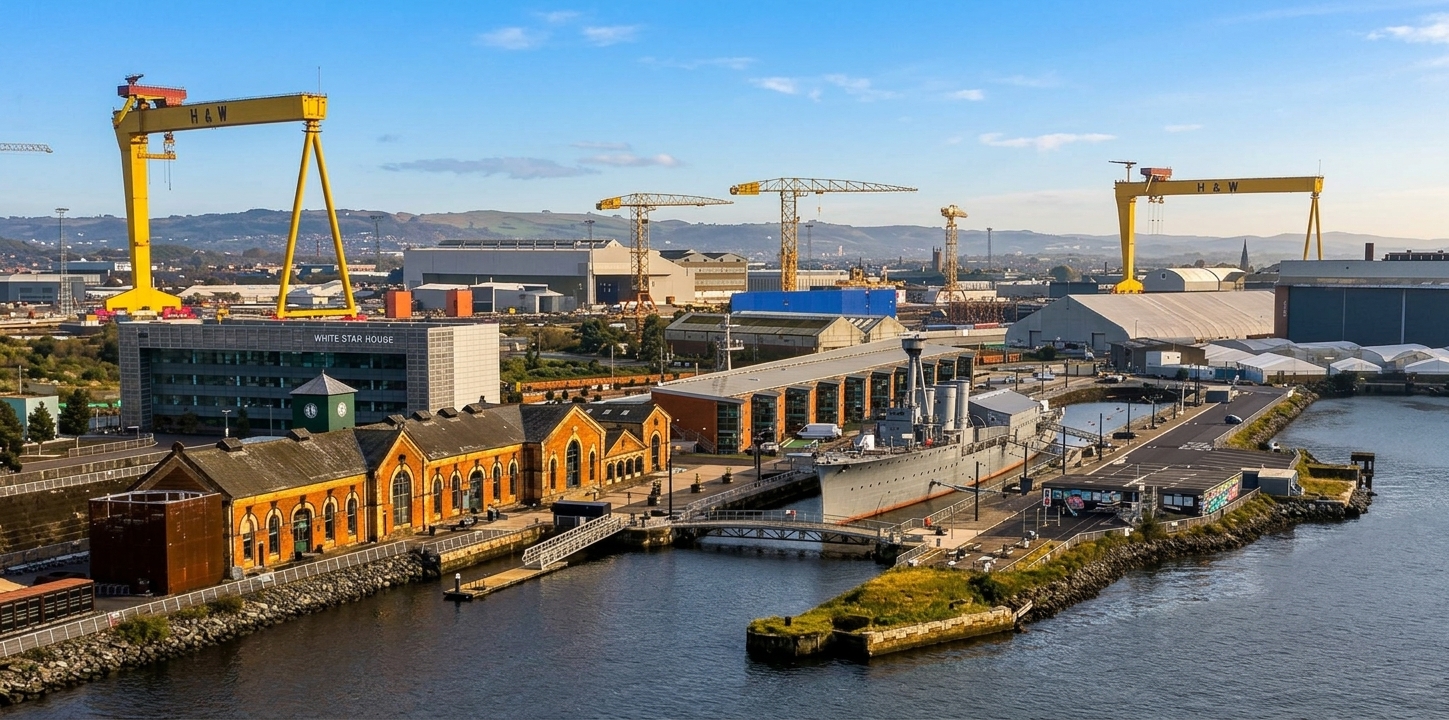
Because Jutland was fought entirely at sea, there is no battlefield to walk in the way a landlocked visitor might expect, and the stretch of North Sea where the fleets clashed offers nothing to see today. The closest thing to a physical connection to the battle is HMS Caroline, an Arethusa-class light cruiser that fought at Jutland and is now preserved as a museum ship in Belfast, Northern Ireland. Of the roughly 250 ships present at the battle, Caroline is the last still afloat.
Restored with her original Parsons steam turbines intact, Caroline reopened to visitors in 2017 after a period of closure between 2020 and 2023 related to funding difficulties; the National Museum of the Royal Navy has since secured funding to keep her berthed and open in Belfast until at least 2038. Visitors touring the ship can walk through her engine room, preserved crew mess decks, and the Captain’s Cabin, and explore the Drill Hall’s dedicated Battle of Jutland exhibits, which include an eleven-minute dramatized film of the battle presented from the ship’s own perspective. Lift access is available below deck for visitors who cannot use the ship’s original stairways.
HMS Caroline is open for guided tours Friday through Sunday, with additional free-flow visiting hours during Northern Ireland’s school holidays, and discounted admission is available for veterans and Blue Light card holders. The ship is berthed at the Alexandra Dock in Belfast’s historic Titanic Quarter, making it an easy addition to a visit that also takes in the city’s other maritime heritage sites. For anyone hoping to stand on a vessel that actually took part in the battle, rather than simply look out over the empty water where it happened, Caroline is as close as it gets.
Remembrance of Jutland
The centenary of the battle in 2016 brought renewed international attention to Jutland’s dead: commemorative services were held simultaneously in Britain and Germany, and warships from both former combatant navies took part in joint ceremonies over the wreck sites in the North Sea for the first time. Ashore, Lyness Royal Naval Cemetery on the Orkney island of Hoy holds the graves of sailors whose bodies were recovered and brought back to the fleet’s wartime anchorage at Scapa Flow, while the names of thousands more lost at sea with no known grave are recorded on memorials at Portsmouth, Chatham, and Plymouth. Germany’s own Jutland dead are remembered at naval memorials at Laboe and Kiel. Each year on May 31, the Royal Navy marks the anniversary of a battle whose true victor is still argued over, but whose cost—more than 8,600 sailors killed in a single day and night at sea—was never in question.
Visitor Info: HMS Caroline (National Museum of the Royal Navy)
Location: HMS Caroline, Alexandra Dock, Queen’s Road, Belfast, BT3 9DT, Northern Ireland, UK (the last surviving ship from the battle, now a museum; Jutland itself was fought at sea, roughly 60 miles off the Jutland peninsula, Denmark)
Site Status: National Park / Managed Historic Site
Visitation Notes: Jutland was fought entirely at sea, so there is no land battlefield to visit; HMS Caroline in Belfast, a WWI Arethusa-class light cruiser that served in the battle, is the closest thing to a visitable site and the last of roughly 250 ships present at Jutland still afloat. Restored with her original Parsons steam turbines, she opened as a museum in 2017 after closing 2020-2023 for funding reasons; the National Museum of the Royal Navy has secured funding to keep her in Belfast until at least 2038. Visitors can tour the engine room, the Drill Hall’s Battle of Jutland exhibits (including an 11-minute dramatized battle film shown from the ship’s perspective), preserved crew mess decks, and the Captain’s Cabin, with lift access below deck. Open Friday-Sunday for guided tours, plus free-flow visits during Northern Ireland school holidays; discounts available for veterans and Blue Light card holders.
Google Map
Visitor Comments
DannyMcC_13 called HMS Caroline “a perfectly preserved WW1 Light Cruiser,” praising the restored cabins and mess halls with set tables and the functional engine rooms with sound effects, and recommended allocating at least a couple of hours to visit.
— from TripAdvisor
marcusjclifford called it “about the best museum experience I’ve come across,” praising the atmospheric background sounds, the informative audio guide, and the 11-minute dramatized Battle of Jutland video shown as if viewed from the ship’s deck, and called it “an absolute hidden gem.”
— from TripAdvisor
Alastair Burn-murdoch called it a great historic ship and amazing value, noting it is a must-see as the only surviving ship from the Battle of Jutland.
— from Google Reviews
James Dale said the tour was seamless, with a volunteer guide’s personal insight into the ship and its associated wars standing out as the highlight of the visit.
— from Google Reviews