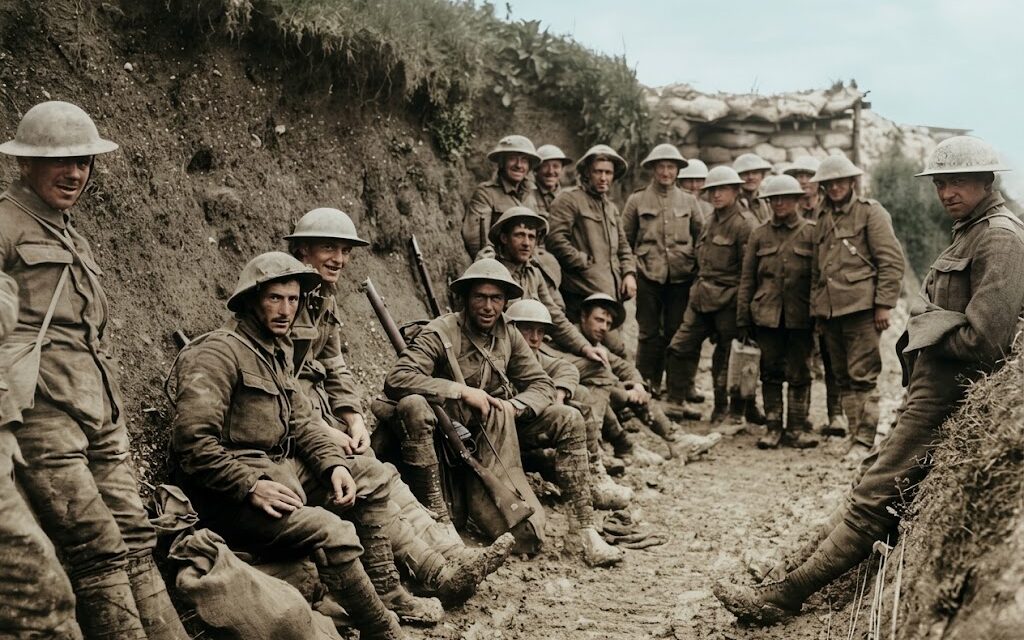
Captain Wilfred Nevill had promised his men a match before the whistle blew, and he meant it literally. As the barrage lifted on the morning of July 1, 1916, he kicked two footballs out ahead of his company and went over the top after them, encouraging his men to keep the balls moving forward through no man’s land like it was any ordinary game. He was killed by machine-gun fire before the advance reached the German wire.
The Somme: The Road to Battle
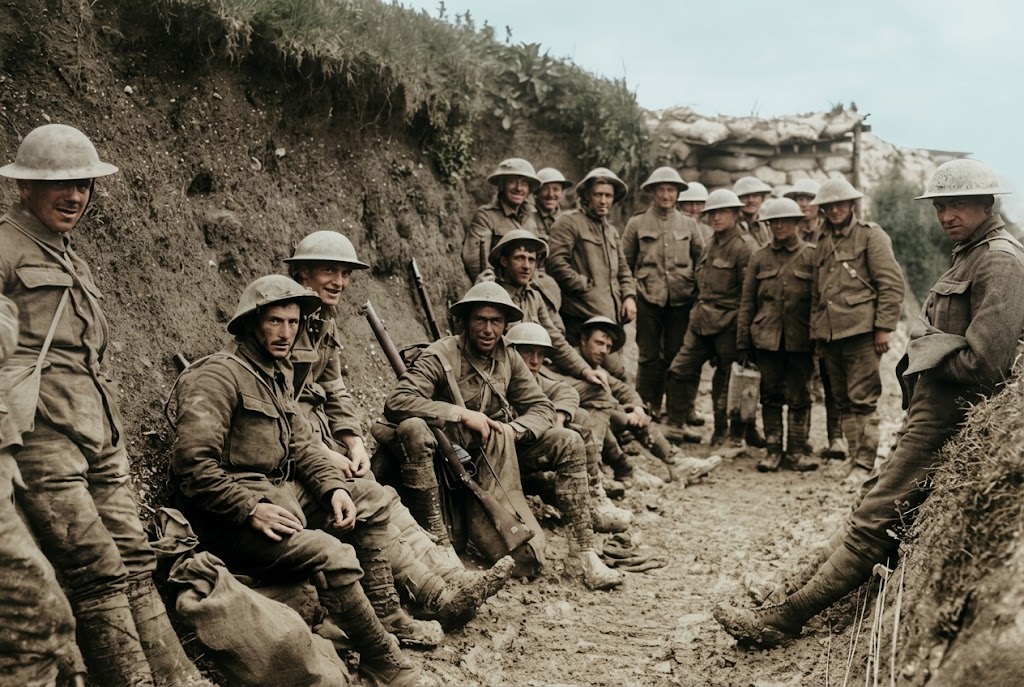
By the spring of 1916, Britain and France had spent a year and a half searching for a way to break the deadlock on the Western Front, and the offensive that would become the Somme was conceived as a joint Anglo-French effort meant to finally force that breakthrough, launched along a river valley chosen partly because it marked the seam where the British and French sectors of the front met. German pressure on the French at Verdun, which had begun in February and showed no sign of easing, changed the shape of the plan considerably: as French reserves were consumed defending Verdun, the burden of the Somme offensive shifted increasingly onto the British army, which was still built substantially around wartime volunteers rather than career soldiers, including many so-called “Pals battalions” of men who had enlisted together from the same towns, workplaces, and social clubs.
The British commander, General Douglas Haig, planned a week-long preliminary bombardment intended to destroy the German trenches and wire ahead of the infantry assault so thoroughly that his men could simply walk across no man’s land in orderly lines and occupy the German positions without serious resistance. The barrage fired more than a million and a half shells over roughly a week, an amount of ordnance that convinced many British soldiers waiting to attack that nothing could have survived it, and officers reportedly told their men they would find little more than a walkover on the other side. That confidence would prove badly misplaced once the infantry actually advanced, since a significant share of the shells fired were shrapnel rounds poorly suited to cutting the German army’s dense belts of barbed wire, and much of the German defensive line had been dug deep enough to shelter its garrison through the bombardment largely intact.
The Battle of the Somme
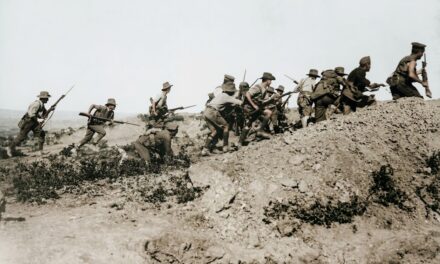
When the whistles blew on the morning of July 1, 1916, the British Army suffered roughly 57,000 casualties in a single day, nearly 20,000 of them killed outright, the worst one-day loss in its history, as German machine gun crews who had sheltered through the bombardment in deep dugouts emerged largely intact to cut down advancing waves of infantry crossing open ground toward wire that the week-long barrage had failed to clear in many sectors. Captain Wilfred “Billie” Nevill of the 8th Battalion, East Surrey Regiment, was among those killed that morning, cut down near the German wire only moments after kicking off the football charge he had organized to steady his men’s nerves before the advance, a small, human gesture that became one of the day’s most enduring images precisely because of how badly it collided with what followed.
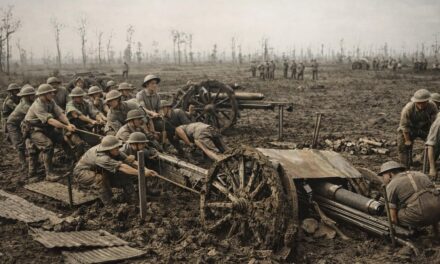
The fighting that followed ran for more than four months rather than the swift breakthrough Haig had planned, grinding forward village by village and wood by wood through the summer and into the autumn rain. Sir Philip Gibbs, an official British war correspondent who covered the offensive from the front, visited captured German positions at Fricourt, Mametz, and Montauban and interviewed German prisoners for dispatches later published as The Battles of the Somme, giving British readers at home some of their clearest sense of what the fighting actually looked like on the ground. Canadian troops fought through their own especially costly chapter of the battle that autumn around Regina Trench, where Lieutenant Raymond Penniman went missing in action on October 8; fellow soldiers Private J.A. Dawson and Private J. Stevenson later gave eyewitness testimony of his fate, while sniper Stanley Rutledge, who witnessed the heavy Canadian losses in the same fighting, corresponded afterward with Penniman’s family about how difficult it was to confirm what had happened to men lost in that ground.
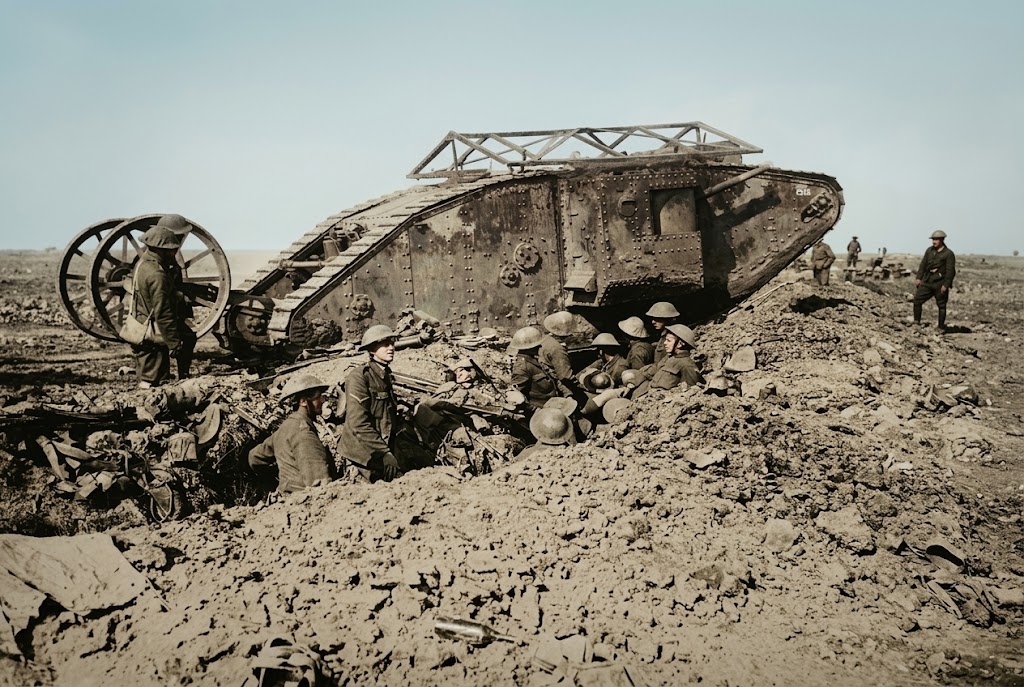
The offensive did produce a genuine innovation that September, when Britain committed tanks to battle for the first time at Flers-Courcelette, a small number of mechanically unreliable machines that nonetheless demonstrated the concept’s potential even as most broke down or became stuck before reaching their objectives. By the time the offensive was finally called off in mid-November 1916, having advanced the Allied line only a few miles at the cost of well over a million combined casualties across both sides, the Somme had shown both the terrible cost of frontal assault against prepared machine-gun positions and a first, crude glimpse of the mechanized warfare that would eventually replace it.
The Legacy of the Somme
The Somme became, for Britain especially, the defining symbol of the First World War’s cost, a single battle whose opening-day casualty count alone still exceeds what many countries lost across entire wars, and whose four-and-a-half-month grind produced no breakthrough proportionate to what it cost either side. It also marked, with the tank’s debut, the first faint sign of how the next war would eventually be fought, a technological hinge point buried inside a battle otherwise remembered almost entirely for the scale of what it took away, and one that changed how Britain itself understood war, since the volunteer Pals battalions that suffered so heavily that first morning meant entire streets and workplaces back home absorbed their losses all at once, in a way conscription-era units never would again.
The Somme Battlefields Today
The Somme battlefield sites cluster around the town of Albert in France’s Somme department, including the Thiepval Memorial to the Missing, the Lochnagar Crater, Newfoundland Memorial Park at Beaumont-Hamel, and the Historial de la Grande Guerre museum in nearby Péronne. The outdoor memorial sites are free to visit during daylight hours and do not require advance booking, while the Historial museum charges a modest admission fee and keeps seasonal hours, closing for part of the winter.
Beaumont-Hamel’s preserved trench lines sit on uneven, grassy ground that can be difficult for wheelchair users, though the Historial museum holds French accessibility certification for visitors who need it. The trenches at Newfoundland Memorial Park remain among the best-preserved on the entire Western Front, close enough together in places that the distance separating opposing lines on July 1 is immediately visible on the ground rather than left to the imagination. Between the open-air memorial sites spread across the wider battlefield and the indoor exhibits at Péronne, the Somme offers one of the more complete pictures available anywhere on the Western Front of both the physical terrain soldiers fought over and the broader strategic context of the war they fought in.
Remembrance at the Somme
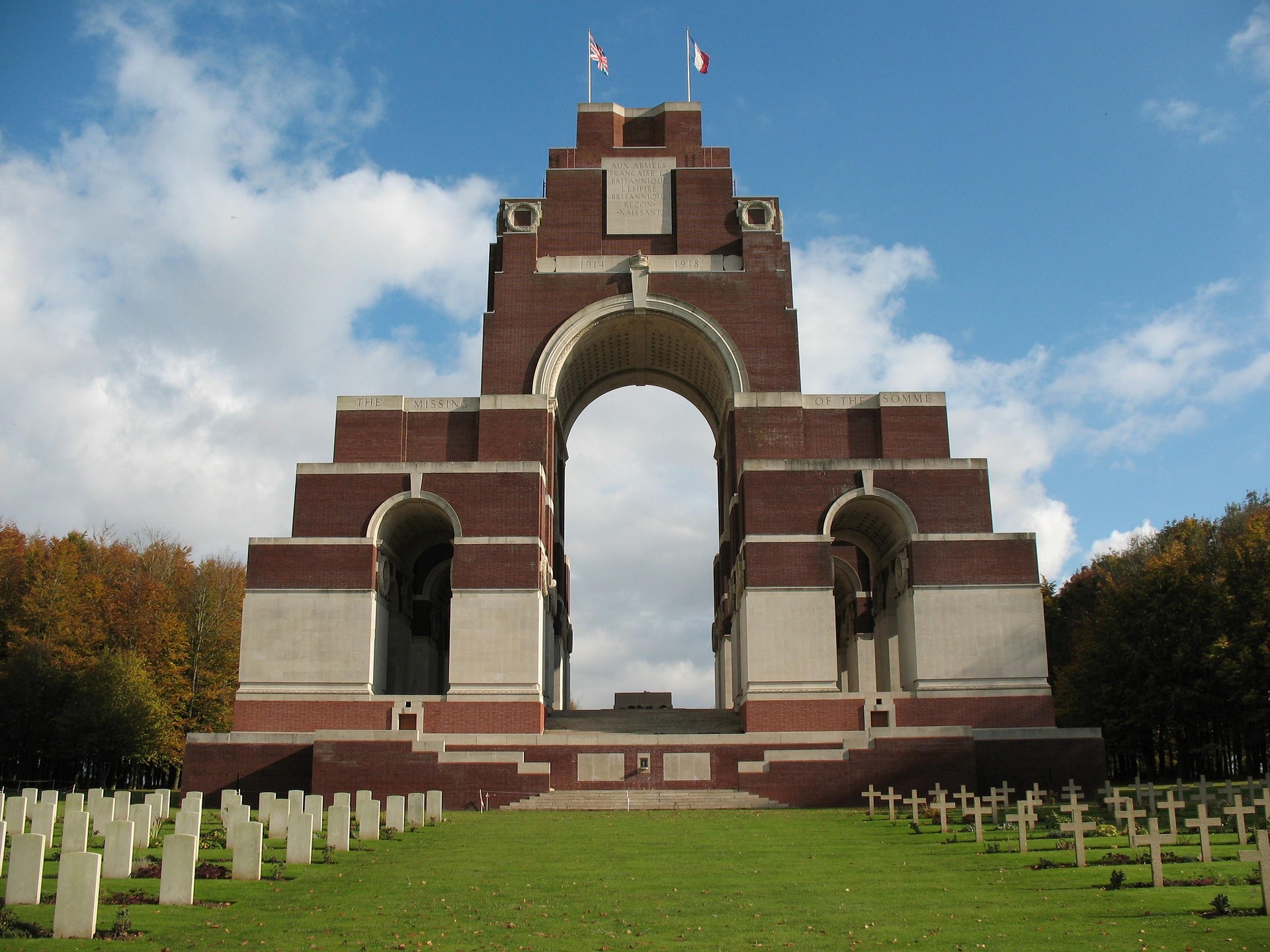
Remembrance ceremonies are held across the Somme’s battlefield sites every July 1, marking the anniversary of the offensive’s catastrophic opening day, a date that carries a particular weight in British military memory unmatched by almost any other single day of the war. The Thiepval Memorial, inscribed with the names of more than 72,000 missing British and South African soldiers who have no known grave, stands as the largest British war memorial in the world and remains the emotional center of how the battle is remembered today, its scale alone communicating something about the losses that no single statistic quite manages on its own. Canadian, Newfoundland, and other Commonwealth memorials scattered across the wider battlefield carry out similar, smaller-scale versions of the same purpose, each anchored to the specific ground where a particular unit suffered its own defining loss.
Visitor Info: Documentary titled “The Battle of the Somme” (British Topical Committee for War Films, 1916; restored by Imperial War Museums, 2014)
Location: Albert, Somme, Hauts-de-France, France (Thiepval Memorial, Lochnagar Crater, and Newfoundland Memorial Park battlefield area)
Site Status: National Park / Managed Historic Site
Visitation Notes: The Somme battlefield sites cluster around the town of Albert in France’s Somme department, including the Thiepval Memorial to the Missing, the Lochnagar Crater, Newfoundland Memorial Park at Beaumont-Hamel, and the Historial de la Grande Guerre museum in nearby Péronne. The outdoor memorial sites are free to visit during daylight hours and do not require advance booking, while the Historial museum charges a modest admission fee and keeps seasonal hours, closing for part of the winter. Beaumont-Hamel’s preserved trench lines sit on uneven, grassy ground that is difficult for wheelchair users, though the Historial museum holds French accessibility certification. Remembrance ceremonies are held across the battlefield sites each July 1, marking the offensive’s opening day.
Google Map
Visitor Comments
lindarZ9586GH called the Lochnagar Crater a must-see, noting it’s freely accessible with no admission charge, and that despite no on-site toilets, the crater powerfully conveys what Allied forces confronted in 1916.
— from TripAdvisor
TravellingSolo_11 described the Newfoundland Memorial Park’s preserved British and German trench lines, memorial, cemetery, and visitor centre as well worth the visit, while cautioning that the grassy, uneven ground makes it difficult terrain for wheelchair users.
— from TripAdvisor
The reviewer found the Thiepval Memorial profoundly moving when reflecting on the scale of loss it records, praised the on-site volunteer guides who help visitors locate specific names, and highlighted a backlit mural in the museum as an especially affecting exhibit.
— from Wandering Wounded travel blog
Val C described the visit to Thiepval as deeply moving, noting that the surrounding peacefulness of the site offers a comforting contrast to the history of violence it commemorates.
— from Google Reviews