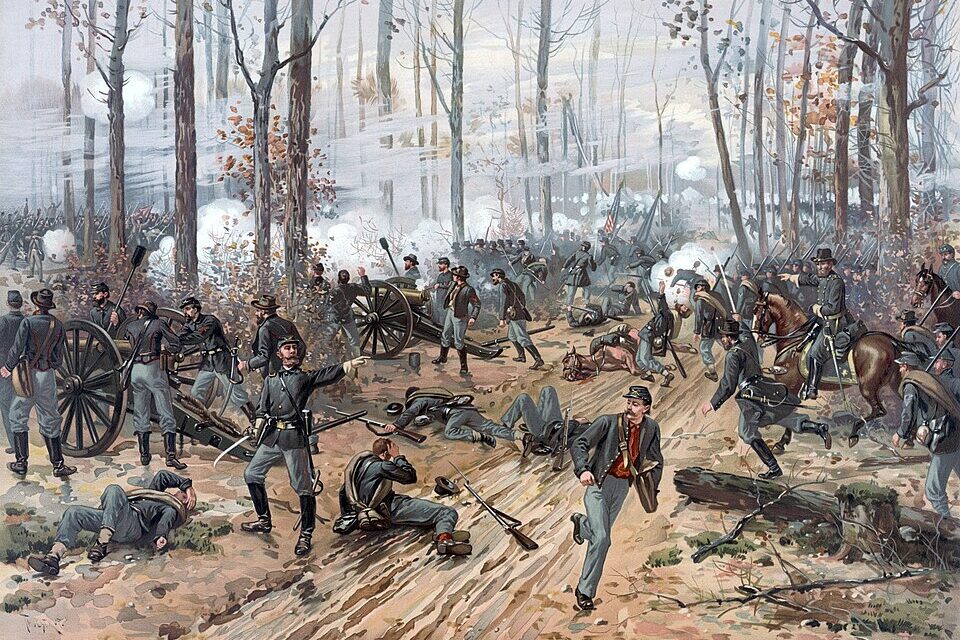
Ulysses S. Grant commanded the winning side at Shiloh, yet he later wrote that the battle changed his entire understanding of the war he was fighting. Watching the staggering casualties pile up over two days of fighting in the Tennessee woods in April 1862, Grant reflected that he “gave up all idea of saving the Union except by complete conquest,” abandoning any lingering hope that a single decisive victory might bring the Confederacy back into the fold quickly or painlessly. Shiloh was, at the time, the bloodiest battle ever fought on American soil, producing more casualties in two days than the United States had suffered in all its previous wars combined, and it convinced commanders on both sides that the conflict ahead would be longer, larger, and far more costly than almost anyone had imagined when the fighting began the year before.
Shiloh: The Road to Battle
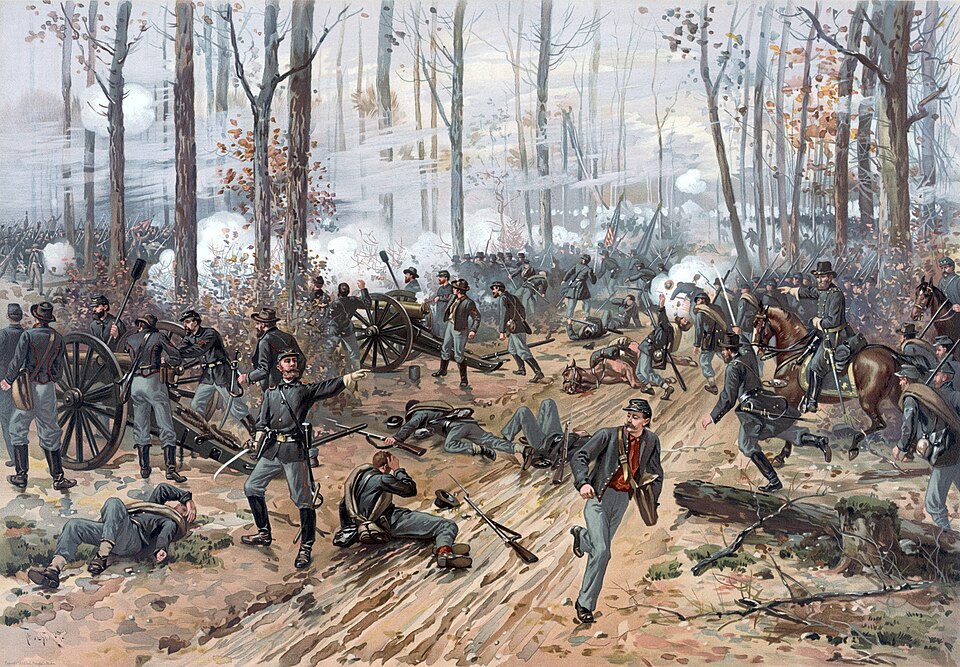
By the spring of 1862, Union forces under Grant had pushed south into Tennessee following earlier victories at Forts Henry and Donelson, establishing a large encampment near Pittsburg Landing on the Tennessee River while awaiting reinforcement by a second Union army before advancing further into Confederate territory. Confederate General Albert Sidney Johnston, recognizing the danger of allowing Union forces to combine and grow stronger, gathered a large Confederate army at Corinth, Mississippi, roughly twenty miles to the south, and resolved to strike Grant’s encamped forces before the expected reinforcements could arrive. Poor roads and inexperienced troops delayed the Confederate march north by nearly two days, and several Confederate officers, alarmed that scattered gunfire and noise from their own inexperienced soldiers had likely alerted Union pickets, urged Johnston to call off the attack entirely, but he refused, reportedly declaring that he would fight the enemy even if there were a Union soldier behind every tree. Union commanders in the field, including Grant himself, remained largely unconcerned about the possibility of a major Confederate attack, and many Union soldiers were encamped without significant defensive fortifications, a lapse that later drew sharp criticism, particularly toward division commander William Tecumseh Sherman, whose troops bore the brunt of the initial Confederate assault. Confederate forces completed their approach undetected on the night of April 5, massing within striking distance of the unsuspecting Union camps and preparing to attack at first light the following morning. Grant himself was headquartered several miles downriver at Savannah, Tennessee that night, and had to travel upriver by steamboat the following morning once the sound of heavy fighting made clear that a full-scale attack, not a minor skirmish, was underway. The Union army awaiting reinforcement at Pittsburg Landing numbered roughly 40,000 men against a Confederate force of similar size marching north to meet them, meaning the two armies converging on the sleepy river landing were, for the first time in the war’s western theater, evenly matched in scale.
The Battle of Shiloh
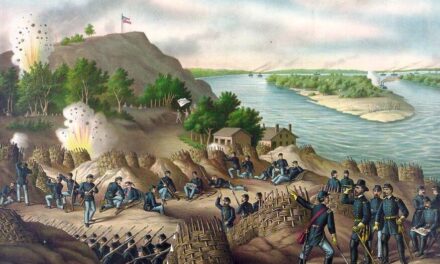
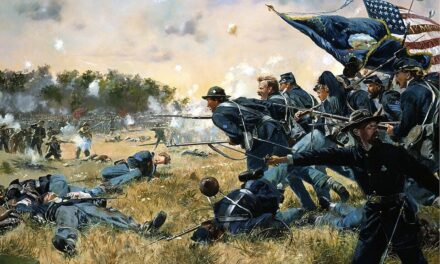
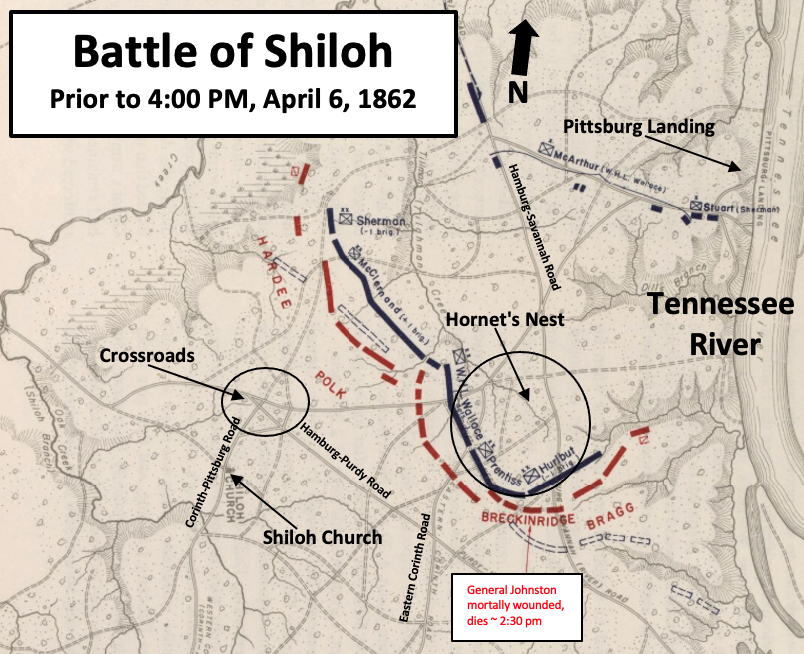
The Confederate assault struck the Union camps near Shiloh Church at dawn on April 6, 1862, catching many Union soldiers still eating breakfast or just emerging from their tents, and the surprise was severe enough that some units were overrun before they could form a coherent defensive line. Sherman, wounded twice in the day’s fighting and with a horse shot from beneath him, worked to rally his shattered division even as Union forces were pushed back steadily toward the river throughout the morning and early afternoon. At a sunken farm road that Confederate soldiers came to call the “Hornets’ Nest” for the intensity of the gunfire there, a Union defensive line held for several hours against repeated Confederate assaults, buying critical time for the rest of Grant’s army to reorganize closer to Pittsburg Landing even as the position was eventually surrounded and its defenders forced to surrender. General Albert Sidney Johnston, the senior Confederate commander, was struck in the leg by a stray bullet during the afternoon fighting near a peach orchard and bled to death before the wound was recognized as fatal, becoming the highest-ranking officer killed in action on either side during the entire war and forcing Confederate command to pass to General P.G.T. Beauregard at a critical moment in the battle. By nightfall, Union forces had been pushed back nearly to the river itself, but reinforcements from a second Union army under General Don Carlos Buell arrived overnight and crossed the river to reinforce Grant’s battered lines, dramatically shifting the balance of forces for the following day. On April 7, the reinforced Union army counterattacked and gradually pushed the exhausted Confederate forces back over ground they had captured the previous day, and Beauregard, recognizing his army could not sustain the fight against fresh Union troops, ordered a withdrawal back toward Corinth that evening, ending the battle. The two days of fighting produced roughly 24,000 combined casualties, a toll that stunned military and civilian observers on both sides and remained the bloodiest battle in American history up to that point in the war, exceeding the combined American losses of the Revolutionary War, the War of 1812, and the Mexican-American War. Grant faced sharp public criticism in the days after the battle over the initial surprise and the scale of Union losses, with some newspapers calling for his removal from command, but President Abraham Lincoln reportedly refused, saying of Grant, “I can’t spare this man; he fights,” a decision that kept in place the general who would go on to lead the Union to eventual victory. The Union dead and wounded at Pittsburg Landing were tended in field hospitals hastily established near the river, while Confederate wounded were transported south by rail to Corinth, where local resources were quickly overwhelmed by the sheer number of casualties requiring care.
The Legacy of Shiloh
Shiloh shattered any remaining illusions on either side that the Civil War would be settled quickly through a handful of decisive engagements, and its staggering casualty count forced both governments to begin planning for a far longer and more destructive conflict than either had initially anticipated. The battle also established Grant’s reputation as a commander willing to absorb devastating losses and still press forward, a trait that would define his approach to the war’s remaining battles and eventually earn him command of all Union armies. For the Confederacy, the death of General Albert Sidney Johnston, widely regarded before the battle as one of the South’s most capable commanders, was mourned as a blow from which the western theater of the war never fully recovered.
Visiting Shiloh Today
Shiloh National Military Park, established in 1894 as one of the first five Civil War battlefield parks designated by Congress, is administered by the National Park Service today and remains one of the best-preserved and most heavily monumented battlefields in the country, with over 150 monuments and markers placed over the decades by veterans’ groups and individual states. The visitor center features exhibits, an electric battle map program, and a bookstore, and a roughly 9.5-mile self-guided auto tour road with numbered stops leads past the Shiloh Church site, the Hornets’ Nest and Sunken Road, the Peach Orchard, Bloody Pond, the site where General Johnston was mortally wounded, and Pittsburg Landing itself. Shiloh National Cemetery, overlooking the Tennessee River, holds more than 3,500 burials, over half of them unidentified, offering a quiet and somber counterpoint to the battlefield’s more actively interpreted stops. The park also offers ranger-led talks, artillery-firing demonstrations, and Junior Ranger programs for younger visitors, and a separate National Park Service interpretive center in nearby Corinth, Mississippi covers the subsequent Siege of Corinth that followed the battle. Visitors touring the park in large recreational vehicles should take particular care, since low-hanging tree limbs along parts of the tour road have been known to cause vehicle damage, and most visitors should plan to budget at least ninety minutes to see the visitor center and bookstore properly before exploring the auto tour road itself, and arriving well before the visitor center’s late-afternoon closing time is advisable for anyone hoping to combine both stops in a single visit. The park’s rural setting along the Tennessee River preserves sightlines across the fields and woodlots much as they would have appeared to soldiers on both sides in April 1862, with the Shiloh National Cemetery’s riverside overlook offering one of the site’s most striking views.
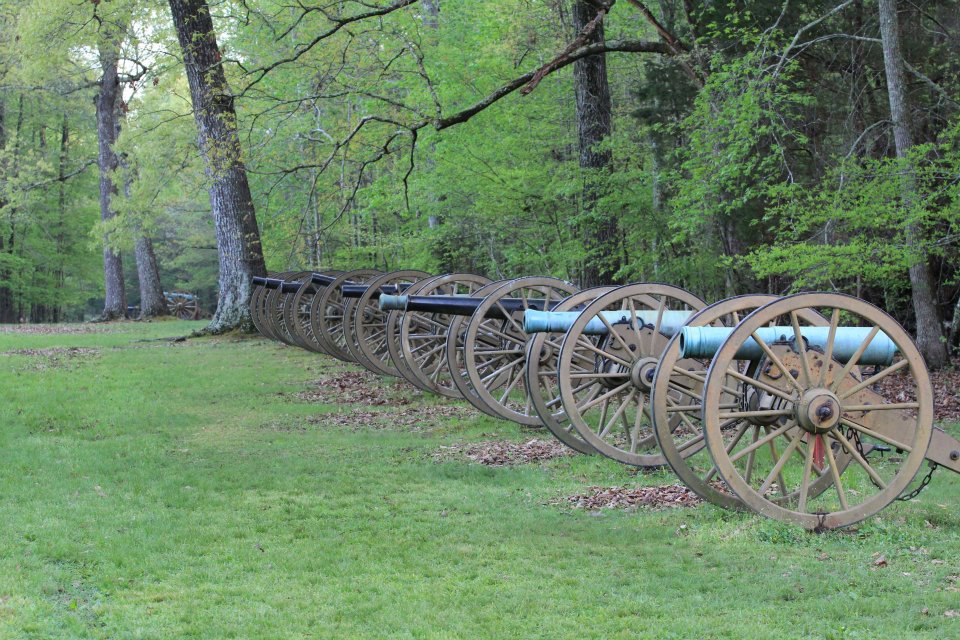
Remembrance at Shiloh
Ulysses S. Grant’s own 1885-86 memoirs offer the Union commander’s detailed firsthand account of the battle, including his stark reflection that Shiloh convinced him the war could only end through the Confederacy’s complete conquest rather than any negotiated settlement. William Tecumseh Sherman, whose division absorbed the initial shock of the Confederate attack, left extensive letters and memoir passages defending his conduct against later criticism that his troops had been caught unprepared, offering some of the most detailed Union descriptions of the battle’s chaotic opening hours. Ambrose Bierce, then a young sergeant in the 9th Indiana Infantry who later became a noted author, published a vivid eyewitness account titled “What I Saw of Shiloh,” memorably describing the forest seeming to “flame up and disappear with a crash like that of a great wave upon the beach” amid the battle’s chaos. Confederate volunteer nurse Kate Cumming arrived in nearby Corinth in the battle’s immediate aftermath to help tend the overwhelming number of wounded in makeshift hospitals, and her published wartime journal, later reissued as “Kate: The Journal of a Confederate Nurse,” preserves a civilian’s firsthand account of the battle’s human cost even though she did not witness the combat itself. Taken together, these four accounts, a commanding general’s sobering realization, a wounded division commander’s defense of his own conduct, a future novelist’s literary eyewitness prose, and a nurse’s record of the wounded she treated, capture Shiloh from angles spanning the full experience of the battle and its brutal aftermath.
Visitor Info: Book titled “Shiloh: Bloody April” by Wiley Sword (William Morrow, 1974); Documentary titled “The Civil War” (PBS, 1990)
Location: 1055 Pittsburg Landing Road, Shiloh, TN 38376
Site Status: National Park / Managed Historic Site
Visitation Notes: Shiloh National Military Park, established in 1894 as one of the first five Civil War battlefield parks designated by Congress, is administered by the National Park Service and remains one of the best-preserved and most heavily monumented battlefields in the country, with over 150 monuments and markers placed by veterans’ groups and states. The visitor center features exhibits, an electric battle map program, and a bookstore. A roughly 9.5-mile self-guided auto tour road with numbered stops leads past the Shiloh Church site, the Hornets’ Nest/Sunken Road, the Peach Orchard, Bloody Pond, the site where General Johnston was mortally wounded, and Pittsburg Landing. Shiloh National Cemetery, overlooking the Tennessee River, holds over 3,500 burials, more than half unidentified. The park offers ranger-led talks, artillery-firing demonstrations, and Junior Ranger programs, and a separate NPS interpretive center in nearby Corinth, Mississippi covers the subsequent Siege of Corinth. Visitors touring in large RVs should note that low-hanging tree limbs along parts of the tour road have caused vehicle damage.
Google Map
Visitor Comments
mkirbys from Chicago called the park a really interesting site, praising the river view and the national cemetery, and noted the grounds were very well kept up with everything accurately marked. They recommended budgeting about 90 minutes and arriving before 5pm to catch the visitor center and bookstore.
— from TripAdvisor
Dixie3152 from Memphis warned that touring the park in a large RV can be risky, describing how low-hanging tree limbs along parts of the tour road scraped their vehicle’s roof and damaged a satellite dish cover, forcing them to cut the visit short. They still recommended the visitor center’s introductory film to anyone visiting by car.
— from TripAdvisor
miket980 from Idaho called the detour from a Memphis-to-Nashville road trip well worth it, praising the introductory video and self-guided driving tour, and reflected on the sobering scale of the battle, noting that over 25,000 people became casualties there.
— from TripAdvisor
A visitor from North Carolina, 187airborne, strongly recommended hiring a professional guide to get the most out of the park, praising how their guide organized the visit chronologically using maps alongside the park film, and noted the battlefield’s rural setting is refreshingly free of commercial development compared to some other Civil War sites.
— from TripAdvisor