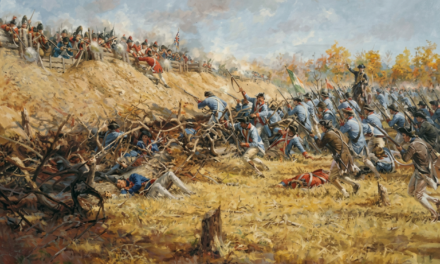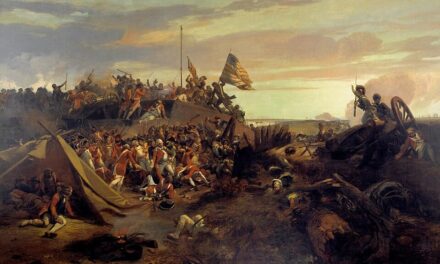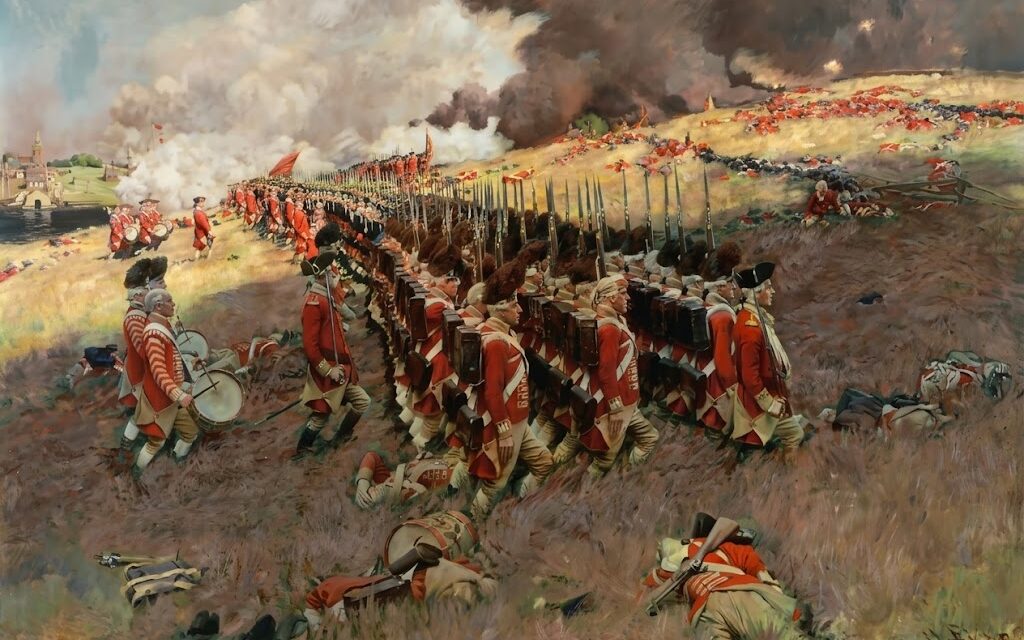
Colonel William Prescott gave his amateur militia an order that ran against every instinct of a raw recruit facing a professional army: hold your fire until the British regulars closed to within thirty yards, close enough to see the white of their crossbelts and count the buttons on their coats. Untrained farmers, clerks, and tradesmen who had never stood in a battle line before somehow held their discipline as scarlet-coated infantry marched steadily up the hill toward them, and when the order to fire finally came, the volleys that followed tore entire front ranks of British soldiers to the ground in seconds. The result was the costliest single battle the British army would fight in the entire war for American independence, a battle fought not on the hill it was named for but on the one beside it, and one that convinced doubters on both sides of the Atlantic that American militia, given the right ground and the right discipline, could stand toe to toe with the finest infantry in the world.
Bunker Hill: The Road to Battle
In the weeks following the outbreak of fighting at Lexington and Concord in April 1775, thousands of colonial militiamen had gathered around Boston, effectively besieging the British garrison occupying the city under General Thomas Gage. Learning that British commanders intended to seize the unoccupied high ground on the Charlestown peninsula overlooking Boston, American colonial leaders resolved to fortify the peninsula first, ordering troops under Colonel William Prescott to occupy and fortify Bunker Hill on the night of June 16, 1775. For reasons that remain debated among historians to this day, Prescott’s men instead constructed their main fortification, a earthen redoubt roughly forty feet square, on the lower and more exposed Breed’s Hill, closer to Boston and more visible to British ships in the harbor, a decision that placed the battle’s actual fighting on a hill different from the one whose name it would carry into history. Working through the night with picks and shovels, American militia and their few artillery pieces raised earthen walls and a connecting breastwork extending down toward the Mystic River, racing to complete defensible positions before dawn revealed their presence to the British forces across the water. British commanders, spotting the new fortifications at first light on June 17, initially bombarded the position from ships in the harbor and shore batteries before General William Howe assembled a substantial force of British regulars to storm the hill directly, confident that disciplined professional infantry would easily scatter an entrenched force of amateur farmers and tradesmen. American forces defending the peninsula numbered somewhere between 1,200 and 1,500 men by the time fighting began, drawn from Massachusetts, Connecticut, and New Hampshire militia units that had converged on Boston in the weeks after Lexington and Concord, while the British committed roughly 2,200 regulars to the assault, a force considerably larger than the number required to storm a position most British officers assumed would fall within minutes of contact.
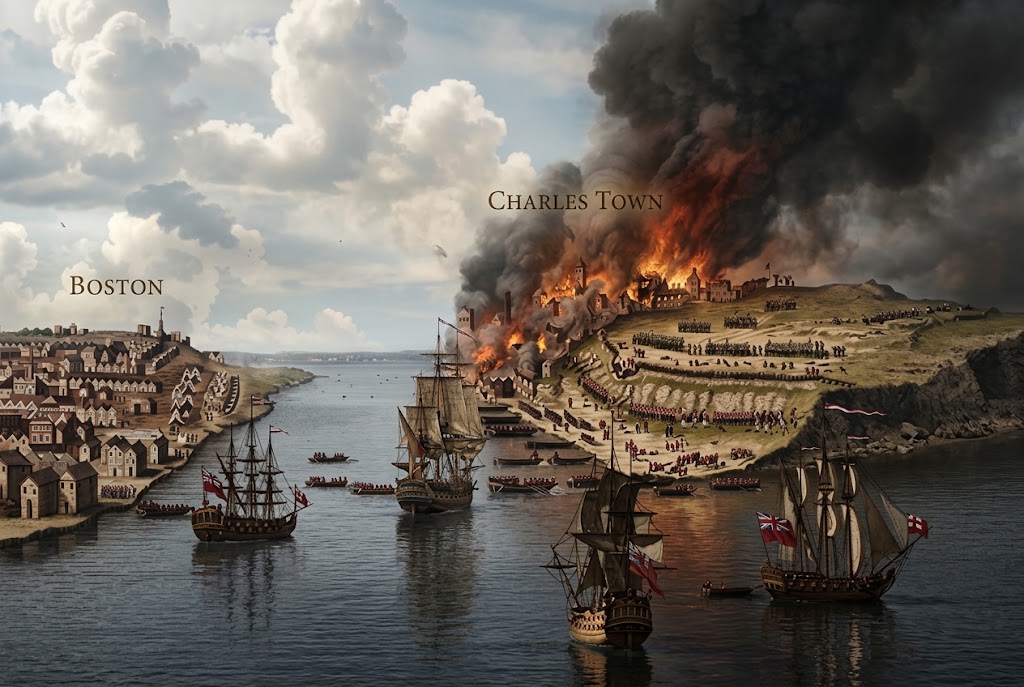
The Battle of Bunker Hill
British forces under General Howe landed on the Charlestown peninsula in the early afternoon of June 17 and began advancing up the slope toward the American positions in tight, parade-ground formation, their approach slowed by thick summer grass, fences, and the weight of their equipment under the June heat. Prescott, determined to conserve his limited supply of gunpowder and maximize the impact of his inexperienced militia’s fire, reportedly ordered his men to hold their fire until the advancing British came within roughly thirty yards, a discipline that colonial officers up and down the line worked hard to enforce among troops eager to fire early out of nerves. When the Americans finally opened fire at close range, the volleys devastated the tightly packed British ranks, forcing Howe’s first assault to break and retreat back down the hill with heavy losses among both enlisted men and officers. A second British assault, launched shortly afterward along much the same lines, met an equally punishing volley of aimed fire from the redoubt and breastwork and likewise collapsed under the weight of American musket fire before it could reach the American lines. By the time British commanders organized a third assault, American defenders inside the redoubt had nearly exhausted their ammunition, and when the British finally reached the fortification’s walls, the fighting collapsed into brutal hand-to-hand combat with bayonets, musket butts, and whatever else defenders could use once their powder ran out. Prescott’s men, unable to sustain the close-quarters fighting without ammunition, were eventually forced to abandon the redoubt and retreat across the peninsula under fire, though the retreat itself was more orderly than the rout British commanders had expected from militia forces, with American units falling back across the narrow neck of the peninsula in reasonably good order rather than scattering in panic as many British officers had confidently predicted they would once seriously pressed. British forces ultimately captured the hill, but at a staggering cost, suffering roughly 1,000 casualties out of some 2,200 men engaged, including a disproportionate number of officers, among them Major John Pitcairn, who was killed in the fighting near the redoubt’s walls. American losses numbered around 400, including the death of Dr. Joseph Warren, a prominent Massachusetts political leader who had chosen to fight in the ranks as a volunteer rather than accept a command position, and whose death made him one of the war’s earliest and most mourned martyrs. The scale of British losses at Bunker Hill, more than a third of the entire assault force killed or wounded in a single afternoon, represented one of the costliest days the British army would suffer during the entire eight-year war, a toll that surprised officers who had expected the fighting to end in a swift and largely bloodless rout of the colonial defenders.
The Legacy of Bunker Hill
Although the British technically won the battle by taking the hill, the staggering casualties they suffered in doing so shocked commanders on both sides and demonstrated that American militia, properly entrenched and disciplined enough to hold their fire, could inflict devastating losses on professional European infantry. The battle’s outcome bolstered colonial morale and confidence even in defeat, while British commanders grew considerably more cautious about launching further frontal assaults against fortified American positions for the remainder of the siege of Boston. News of the battle’s cost reached London and the other colonies within weeks, hardening positions on both sides of the growing conflict and helping convince the Continental Congress of the seriousness of the fight it now faced.
Visiting Bunker Hill Today
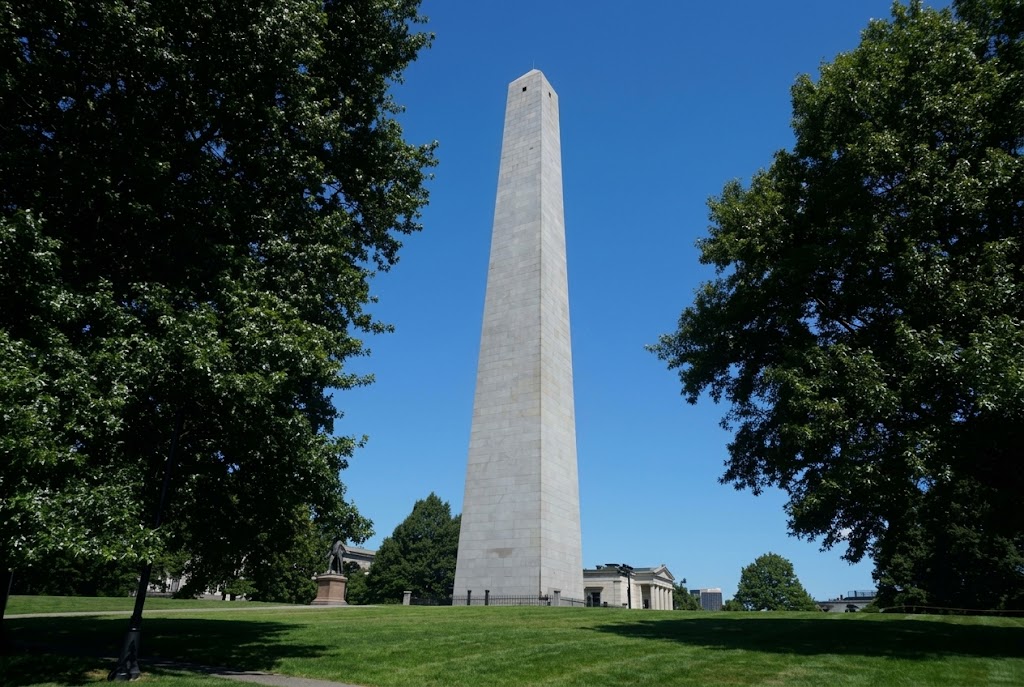
The Bunker Hill Monument, a 221-foot granite obelisk completed in 1843 on the actual site of Prescott’s redoubt on Breed’s Hill, is administered today by the National Park Service as part of Boston National Historical Park and serves as a stop on the city’s Freedom Trail walking route. Visitors willing to climb the monument’s interior spiral staircase, roughly 294 to 297 steps with no elevator available, are rewarded with an observation level offering sweeping views of the surrounding city and harbor. The Bunker Hill Museum sits directly across the street from the monument, also operated free of charge by the National Park Service, and its exhibits, artifacts, and battlefield diorama presentation are generally recommended as a first stop for historical context before attempting the monument climb itself. Because the original battlefield terrain beyond the immediate monument grounds has long since become dense residential Charlestown, only the monument square itself preserves any open historic ground, meaning visitors should not expect the sweeping undeveloped battlefield landscape found at some other Revolutionary War sites. National Park Service rangers offer on-site interpretation throughout the day, though visitors driving to the site should be aware that street parking in the surrounding Charlestown neighborhood is limited and can require some searching, particularly during peak tourist season. Because the monument and museum sit within easy walking distance of each other along the Freedom Trail’s marked route, most visitors can comfortably combine both stops with several of the Trail’s other Revolutionary War sites in a single day of sightseeing across the city, making Bunker Hill a natural stop for anyone already exploring Boston’s colonial history rather than a standalone destination requiring a dedicated trip.
Remembrance at Bunker Hill
Peter Brown, a company clerk in Prescott’s regiment from Westford, Massachusetts, wrote a detailed letter to his mother just over a week after the battle describing the overnight construction of the redoubt and his unit’s losses, a letter preserved today at the Massachusetts Historical Society. Fellow militiaman Amos Farnsworth, a corporal in the same regiment, kept a personal diary recounting the night march to fortify the hill, the intensity of British naval and musket fire, and his own wounding during the retreat, offering a soldier’s-eye view of the battle’s chaos and cost. Colonel William Prescott himself later wrote a detailed after-action letter to John Adams describing his troop deployment, his famous order to hold fire until the enemy closed to close range, and how his men were ultimately forced to retreat only after their ammunition was exhausted. A rare view from the opposing side survives in a letter written by Lieutenant John Waller, adjutant of the British 1st Battalion of Marines, who described the difficult uphill terrain of the assault, the brutal hand-to-hand fighting inside the redoubt, and the deaths of Major John Pitcairn and other British officers in the battle’s final phase. Taken together, these four accounts, an American clerk’s letter home, a wounded corporal’s diary, a commanding colonel’s official report, and a British officer’s firsthand description of the fighting he survived, preserve Bunker Hill from both sides of a battle line that changed how each side saw the other.
Visitor Info: Book titled “Bunker Hill: A City, A Siege, A Revolution” by Nathaniel Philbrick (Viking, 2013); Book titled “Decisive Day: The Battle for Bunker Hill” by Richard M. Ketchum (Doubleday, 1962)
Location: Monument Square, Charlestown, Boston, MA 02129
Site Status: National Park / Managed Historic Site
Visitation Notes: The Bunker Hill Monument, a 221-foot granite obelisk completed in 1843 on the actual site of the redoubt on Breed’s Hill, is administered by the National Park Service as part of Boston National Historical Park and is a stop on the Freedom Trail. Visitors can climb the interior spiral staircase (roughly 294-297 steps, no elevator) to an observation level with city and harbor views. The Bunker Hill Museum sits across the street, also NPS-run and free to enter, with exhibits, artifacts, and a battlefield diorama presentation recommended as a first stop for context before climbing the monument. Note that the original battlefield terrain beyond the immediate monument grounds is now dense residential Charlestown, so only the monument square itself preserves open historic ground. NPS rangers offer on-site interpretation, and street parking in the neighborhood is limited.
Google Map
Visitor Comments
marieevej2014 from Sherbrooke, Canada called the monument a must-see stop in Boston, noting the free admission, the great city views from the top, and how full of history the site felt.
— from TripAdvisor
Go2theZoo from Layton, Utah praised the Bunker Hill Museum for adding context beyond the monument itself, highlighting the battlefield diorama and artifacts on display, and recommended visiting the museum before climbing the monument.
— from TripAdvisor
Matt D praised the museum’s two-floor presentation covering both the battle and the surrounding Charlestown neighborhood’s history, finding it a well-organized complement to the monument visit.
— from Google Reviews (via Wanderlog)
A reviewer noted the climb to the top involves roughly 297 steps with no elevator, but called the amazing city and harbor views from the observation level well worth the effort. — Tim P, Google Reviews (via Wanderlog)