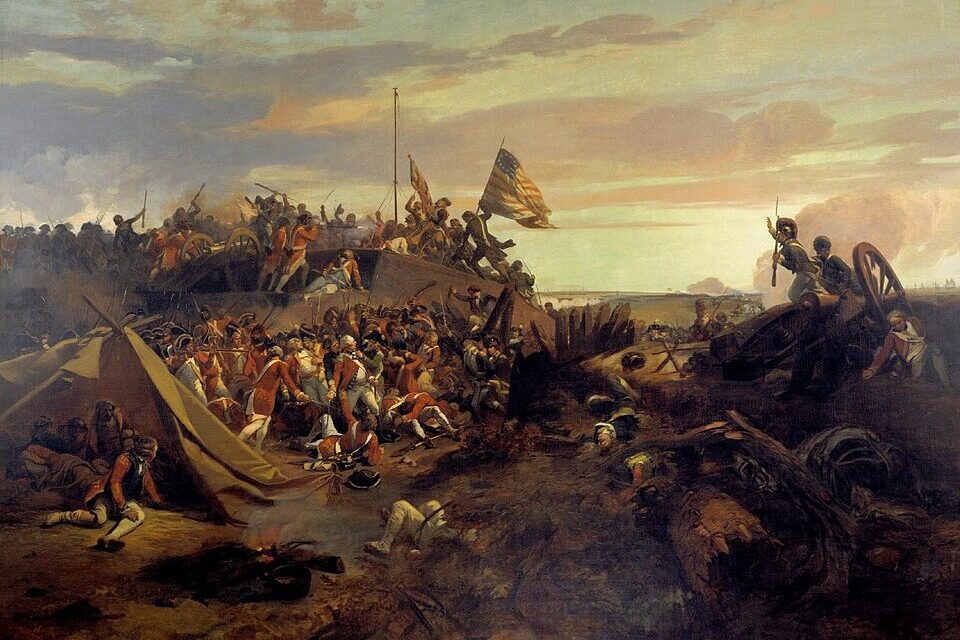
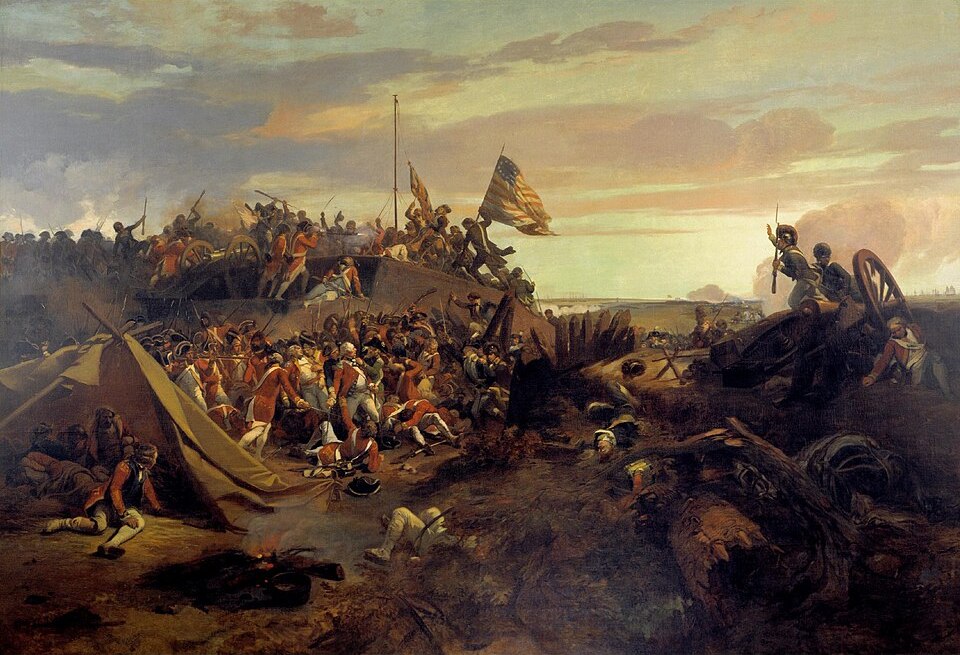
Alexander Hamilton had been passed over. When Washington initially assigned the assault on Redoubt 10 to a French officer, Hamilton petitioned directly for the command instead, and got it. On the night of October 14, 1781, he led the attack himself — and afterward insisted, over his own men’s fury, that the defeated garrison be given quarter rather than the bayonet.
Yorktown: The Road to Battle
By the autumn of 1781, the American Revolution had ground on for more than six years, and British General Charles Cornwallis, after a grinding campaign through the Carolinas and Virginia, withdrew his army to the small tobacco port of Yorktown to await resupply and reinforcement by the Royal Navy. It was a decision that would prove disastrous: General George Washington, commanding a combined American and French army, recognized the opportunity and force-marched his troops more than four hundred miles south from New York, while a French fleet under Admiral de Grasse sailed north from the Caribbean to defeat the British navy at the Battle of the Chesapeake and seal off Cornwallis’s escape by sea.
With reinforcement and evacuation both cut off, Cornwallis found his roughly 8,000 men trapped against the York River, facing a combined American and French force of nearly 19,000 that steadily closed in around the town through late September, digging siege trenches ever closer to the British lines in the methodical, textbook style of eighteenth-century siege warfare.
The scale of the French contribution is easy to underestimate in retrospect: nearly half of the besieging army was French, and the naval victory at the Chesapeake that sealed Cornwallis’s fate was won entirely by de Grasse’s fleet without a single American ship involved. Without that combination of a French navy controlling the sea approach and a French army roughly matching the American force on land, the siege that followed would likely have been impossible to force to a conclusion at all.
The Battle of Yorktown
The siege proper opened in early October as American and French artillery began a sustained bombardment of the British works, and by October 9 the guns had advanced close enough to fire directly into the town itself, destroying buildings and forcing the British garrison into an increasingly desperate defensive posture. Two British outer redoubts, numbered 9 and 10, stood in the way of completing the second parallel trench line the allies needed to press their advantage, and on the night of October 14 both were stormed in coordinated night assaults: French troops under Guillaume, vicomte de Deux-Ponts, took Redoubt 9 fighting through British and Hessian defenders massed behind barrels, while American troops under Alexander Hamilton stormed Redoubt 10.
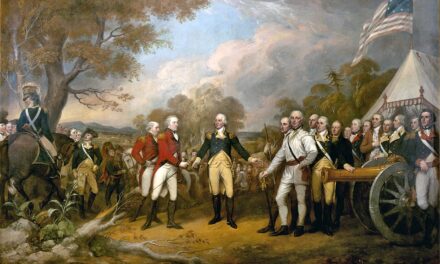
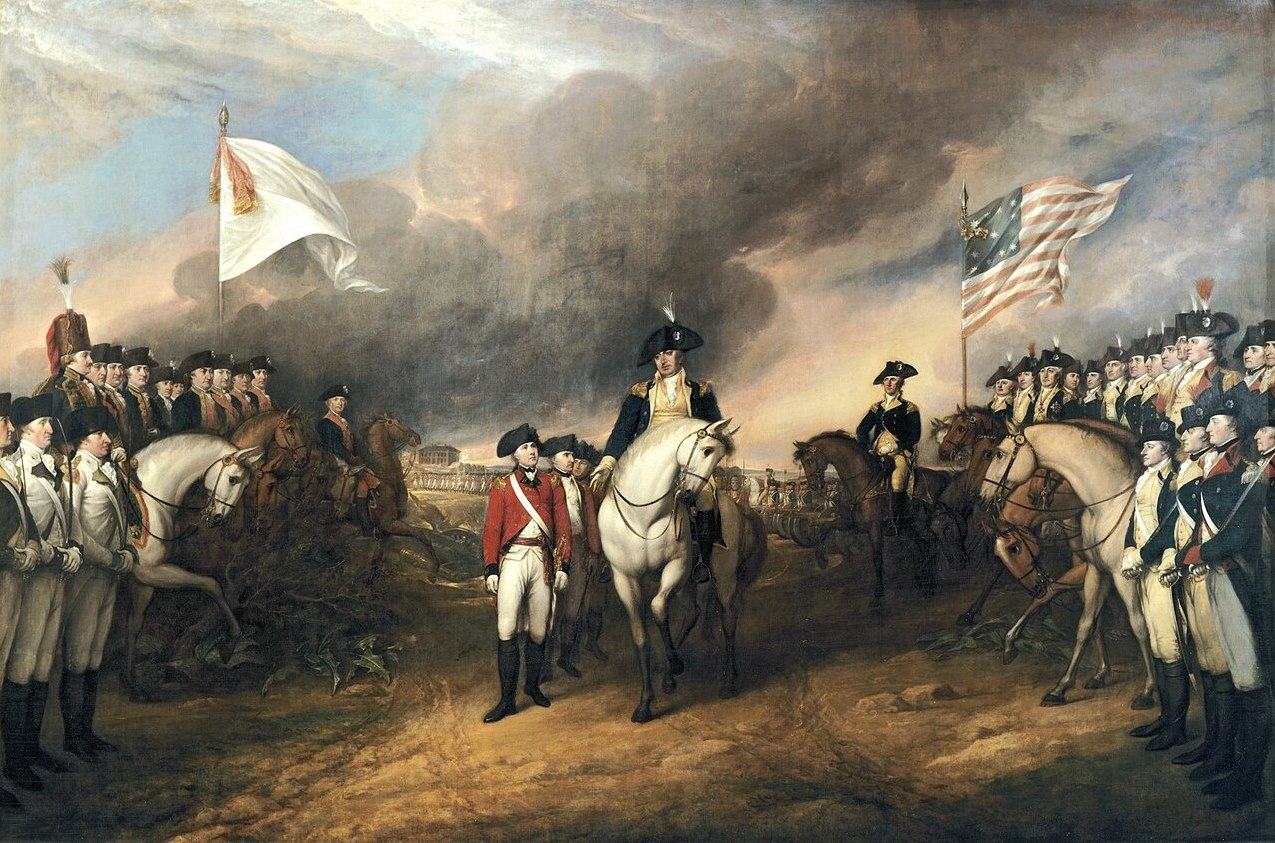
Connecticut light infantryman Joseph Plumb Martin, who took part in the Redoubt 10 assault, later described pushing through the abatis, the tangle of sharpened branches meant to slow attackers, under direct fire, and watching a soldier beside him shot through the head in the same charge, an account that survives as one of the war’s most widely read soldier memoirs. On the defending side, Hessian jager officer Johann von Ewald kept his own diary of the siege from inside the British lines, describing conditions in the final days as grim enough that the wounded and sick, in his words, died like flies. With both redoubts lost and his position no longer defensible, Cornwallis attempted a last-ditch nighttime evacuation across the York River on October 16, which a sudden storm scattered and forced him to abandon; he asked for terms the following morning, and on October 19, 1781, more than 7,000 British and Hessian troops formally surrendered, marching out between the American and French lines while their band reportedly played a tune fitting the occasion. Cornwallis himself did not attend the ceremony, citing illness, and sent his second-in-command to surrender his sword in his place, a slight that was not lost on the American and French officers present.
The terms of that surrender had been hammered out two days earlier at the Moore House, a modest farmhouse just outside the British lines, where American, French, and British representatives spent hours negotiating the specific conditions under which Cornwallis’s army would lay down its arms. The building’s ordinary, domestic appearance stood in stark contrast to the significance of what was decided inside it, a contrast the National Park Service preserves by keeping the house furnished much as it would have appeared in 1781.
The Legacy of Yorktown
Yorktown did not end the Revolutionary War outright, since fighting continued in scattered theaters for nearly two more years before the Treaty of Paris was signed in 1783, but the loss of an entire field army broke Parliament’s political will to continue funding the war, leading directly to Britain’s decision to negotiate. It stands today as the war’s last major battle and the moment the American bid for independence, after six years of uncertain fighting, effectively became a foregone conclusion rather than an open question.
Visiting Yorktown Today
Yorktown Battlefield is preserved as part of Colonial National Historical Park and is open to visitors year-round, typically for a modest entrance fee that is worth confirming with the National Park Service before a visit. The Visitor Center offers museum exhibits and an orientation film that lay out the siege’s context, and a self-guided auto tour leads past the preserved earthworks, Redoubt 9, and Surrender Field, where Cornwallis’s army laid down its arms.
The Moore House, where American, French, and British officers negotiated the actual terms of surrender, is generally open on a seasonal schedule, and ranger-led tours and occasional artillery demonstrations are offered when staffing allows, though it’s worth checking the park’s current hours before planning a visit. The park’s driving tour covers the ground both armies occupied during the eighteen-day siege, from the American and French approach trenches to the British defensive perimeter around the town itself.
Remembrance at Yorktown
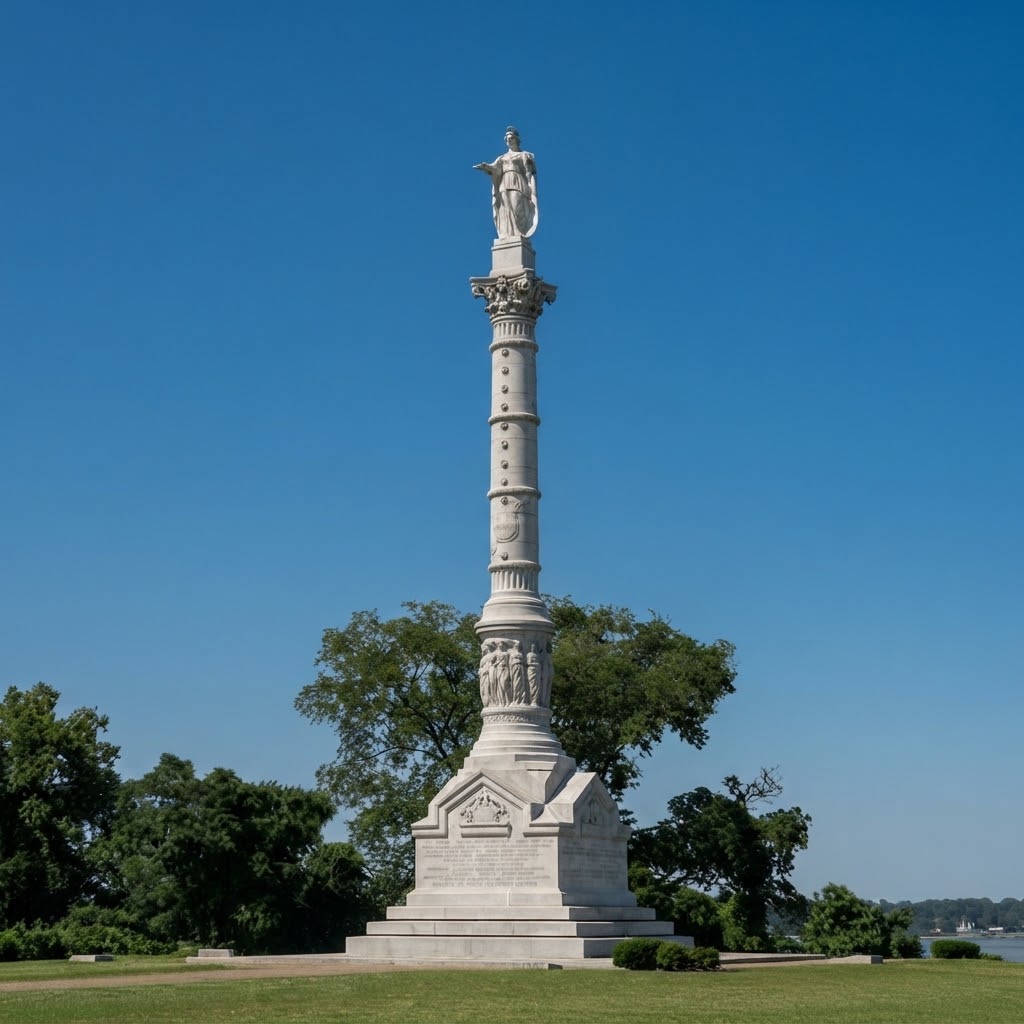
Yorktown holds a particular place in American memory as the battle that effectively ended major fighting in the Revolutionary War, and the National Park Service maintains the battlefield’s earthworks and monuments as one of the best-preserved Revolutionary War sites in the country. The Yorktown Victory Monument, authorized by the Continental Congress within days of the surrender but not completed until a century later, stands near the town as a lasting marker of the moment, while the annual anniversary of the surrender continues to draw visitors and living history programs to the park each October.
Visitor Info: Official park page (National Park Service, Colonial National Historical Park); supplementary guided-tour video (American Battlefield Trust)
Location: Yorktown Battlefield, Colonial National Historical Park, Yorktown, Virginia (Redoubt 9, Surrender Field, and the Moore House)
Site Status: National Park / Managed Historic Site
Visitation Notes: Yorktown Battlefield, part of Colonial National Historical Park, is open to visitors year-round and typically charges a modest entrance fee, which is best confirmed directly with the National Park Service before a visit. The Visitor Center offers museum exhibits and an orientation film, and a self-guided auto tour leads past preserved earthworks, Redoubt 9, and Surrender Field. The Moore House, where the terms of Cornwallis’s surrender were negotiated, is generally open on a seasonal schedule. Ranger-led tours and occasional artillery demonstrations are typically offered, though program schedules change, so check the park’s current hours before visiting.
Google Map
Visitor Comments
ITRT described downloading the free Yorktown tour guide app for narration during a self-guided drive past fortifications, cannons, Surrender Field, and Redoubts 9 and 10, noting the site offers both a siege-line route and a troop-encampment route.
— from TripAdvisor
HappyExplorer7752014 praised the Visitor Center’s museum and film for explaining the battle’s origins, and reflected that driving to the redoubts and studying the maps of British forces trapped against the river helped convey the courage it took to be a colonial soldier.
— from TripAdvisor
A visitor took a ranger-led tour they found very informative, then drove the auto-tour route to additional points of interest and walked sections of the battlefield on their own.
— from AllTrails