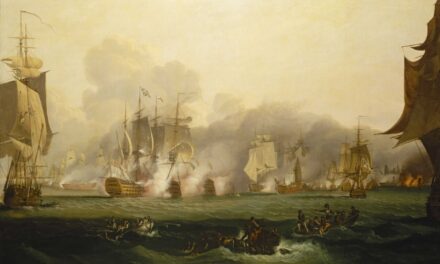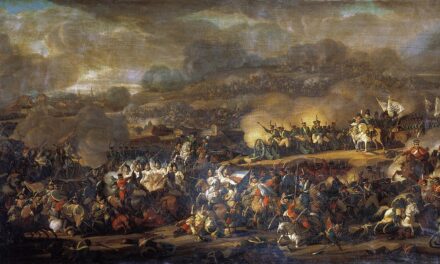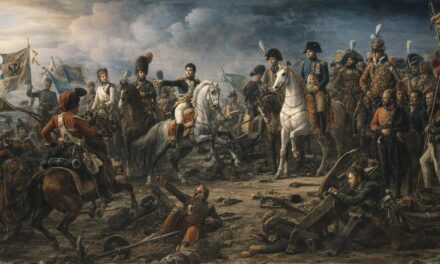
Napoleon Bonaparte looked at the sodden ground and gave an order that would cost him the battle before it even began: wait. Overnight rain had turned the fields south of a small crossroads village into thick mud, and the emperor wanted the earth to firm up before he committed his artillery, certain the delay would cost him nothing he couldn’t make up with sheer weight of numbers. It was closer to noon than dawn when the first French guns finally opened fire, and every hour spent waiting for the mud to dry was an hour closer to the sound Napoleon’s army most needed not to hear that day: the tramp of a second army arriving from the east, one that was never supposed to reach the field before nightfall at the earliest.
Battle of Waterloo: The Road to Battle
Napoleon’s return to power in March 1815, after less than a year in exile on Elba, ended less than a hundred days later on the fields south of Brussels — but the coalition arrayed against him had been forming from the moment he landed back in France. Britain, Prussia, Austria, and Russia, along with a collection of smaller German and Dutch states, mobilized armies across Europe rather than accept his restoration, determined to finish what more than twenty years of on-and-off war against revolutionary and Napoleonic France had failed to settle permanently. Two of those coalition forces, an Anglo-allied army under the Duke of Wellington drawing on British, Dutch, Belgian, and German troops, and a Prussian army under Field Marshal Gebhard von Blucher, assembled in modern-day Belgium directly in Napoleon’s path north, close enough to each other that their ability to combine quickly would decide the campaign.
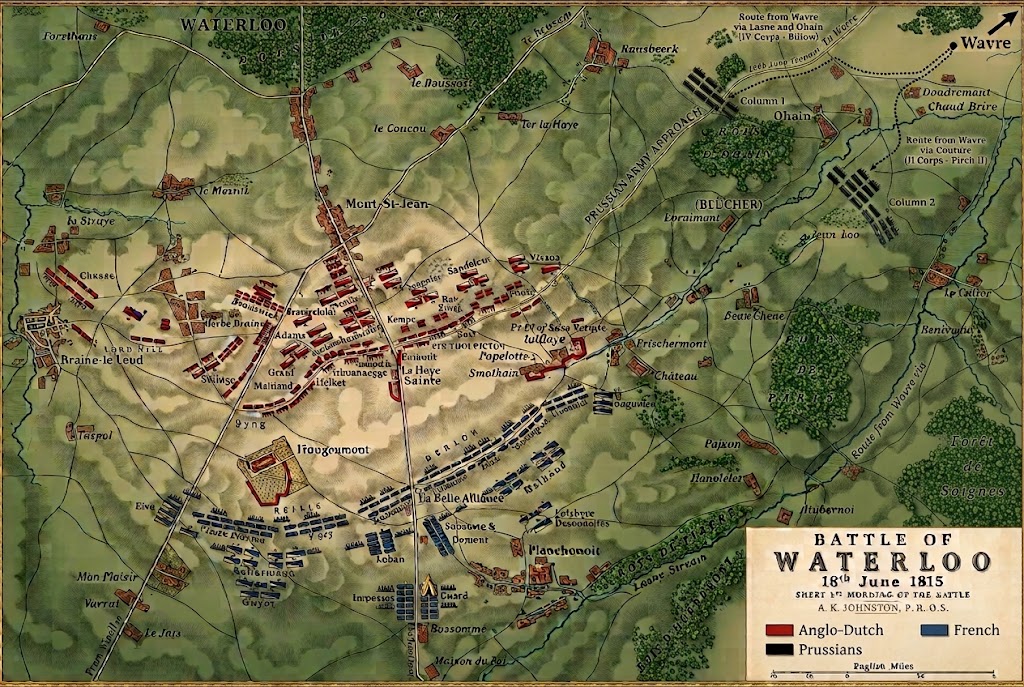
Napoleon struck first, hoping to defeat Wellington and Blucher separately before they could combine into a single overwhelming force he had no realistic chance of beating outright once the two coalition armies were fighting side by side rather than apart. Two days before Waterloo, he fought the Prussians to a costly win at Ligny while a separate French corps clashed with Wellington’s army at Quatre Bras without a clear result, and in the aftermath he dispatched a substantial portion of his own army under Marshal Grouchy to pursue Blucher’s retreating Prussians and keep them away from the coming battle entirely. Wellington, meanwhile, withdrew north to a low ridge near the village of Mont-Saint-Jean, a position he had scouted and favored the year before and judged strong enough to hold — provided Blucher’s Prussians, bruised but still an organized fighting force after Ligny, could reach him before the French army broke through his line first.
The Battle of Waterloo
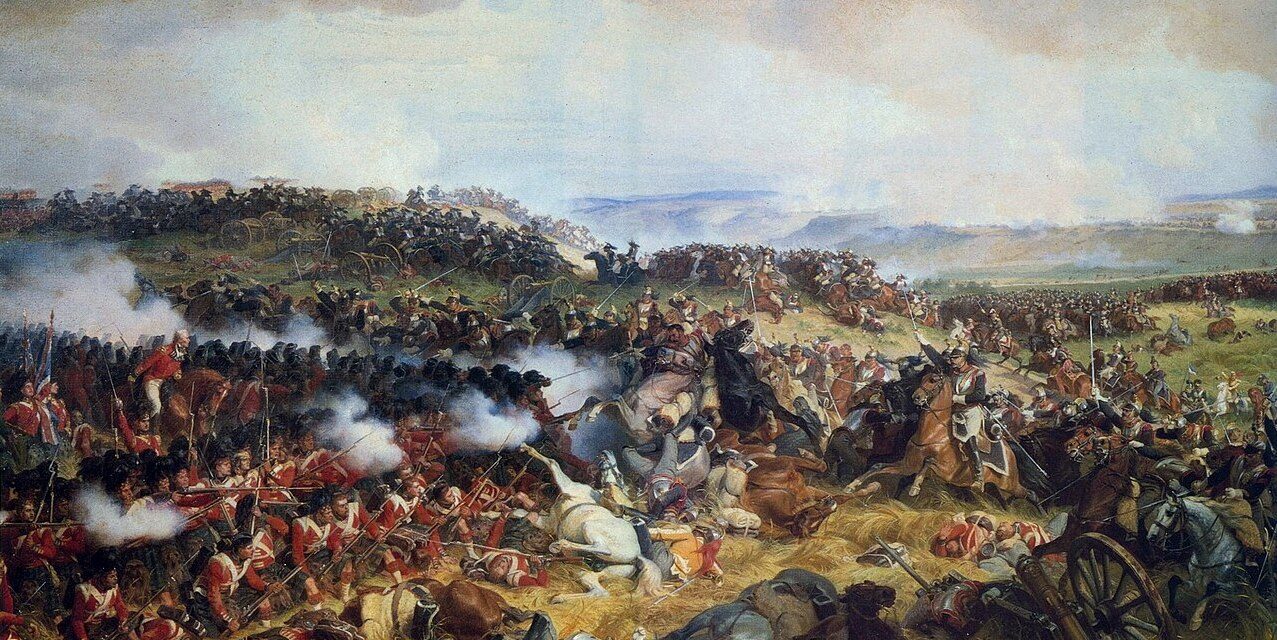
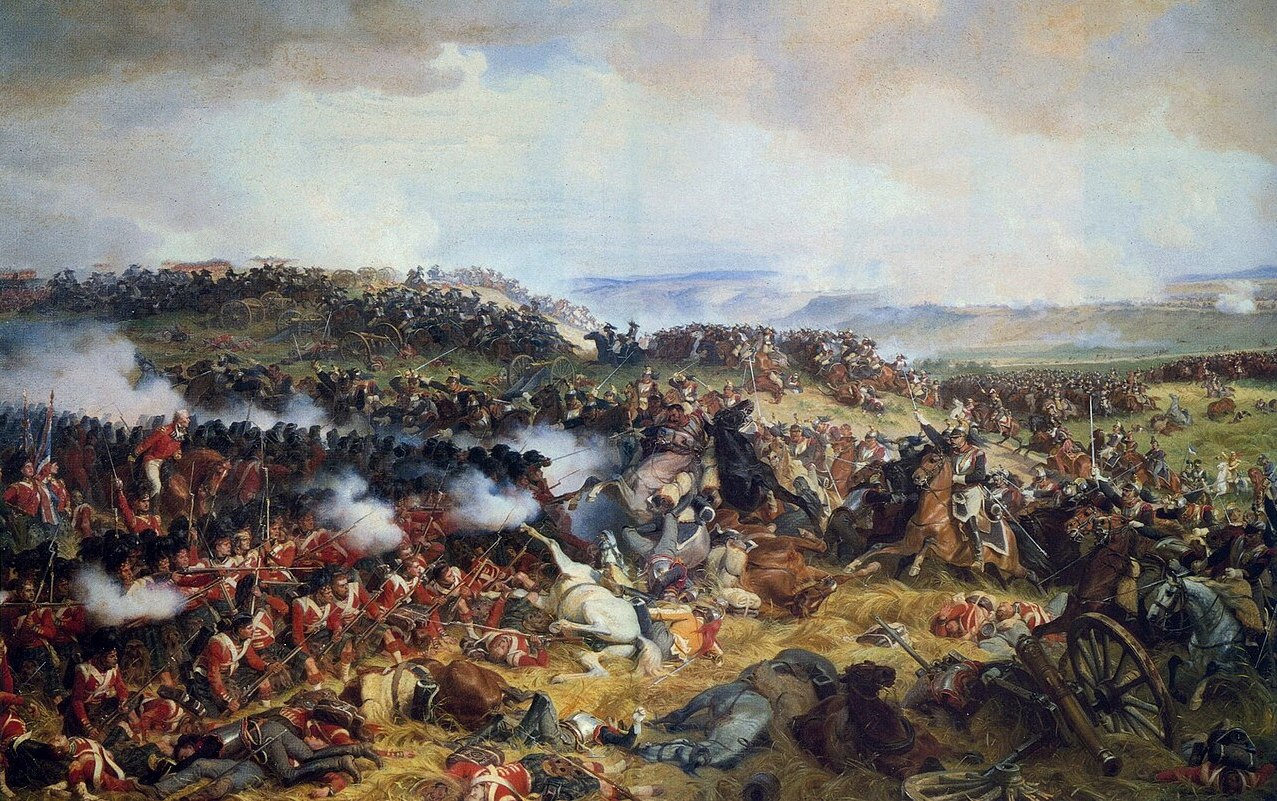
Once the ground firmed up enough to satisfy Napoleon, the French assault opened against Hougoumont, a walled farmhouse compound anchoring the right of Wellington’s line, where a garrison of British and allied troops held out under repeated attack for most of the day, tying down far more French troops than Napoleon had intended to spend on what he treated as a diversion from his main effort against the allied center. Through the afternoon, wave after wave of French cavalry charged that center, only to break against infantry formed into defensive squares, unable to break formations that simply had nowhere to retreat and every reason to hold. Captain Cavalie Mercer, commanding a British horse artillery troop stationed near the center-right of the line, later described in his journal how his gun crews kept firing on the packed French horsemen until the very last moment before each charge closed on their position, then sheltered inside the surrounding infantry squares to reload before wheeling their guns back out to fire again as the next wave approached.
The fighting cost Wellington dearly in senior officers — General Thomas Picton was killed leading a counterattack earlier in the day, and Wellington’s own military secretary, Colonel William De Lancey, was mortally wounded by a cannonball that struck him while riding at the duke’s side. Sergeant-Major Edward Cotton of the 7th Hussars, who fought through the day and later settled near the battlefield as a guide, spent years afterward gathering fellow veterans’ recollections alongside his own into one of the earliest detailed accounts of how the fighting actually unfolded on the ground, rather than how it looked from headquarters — a perspective that filled in gaps the official dispatches, written in the days immediately after the battle, never had time to capture. By early evening, French infantry finally seized the farmhouse of La Haye Sainte in the center of the field, opening a gap in Wellington’s line at the moment it was most vulnerable — but it was also the moment Blucher’s Prussians, delayed for hours by poor roads and the pursuit Napoleon had sent Grouchy to maintain, began arriving in force on the French right flank. Wellington’s own dispatch to Earl Bathurst, written the day after the battle, credited General von Bulow’s Prussian corps with turning the engagement decisively in the coalition’s favor at the moment it mattered most.
Napoleon committed his last reserve, the Imperial Guard, in a final assault against Wellington’s center as the Prussians closed in from the east and threatened to cut off the French army’s line of retreat entirely. Captain Jean-Roch Coignet, a veteran of the Guard, recorded in his memoirs how the advance he had expected to break the allied line instead collapsed under concentrated fire from infantry Wellington had kept hidden along the ridge until the decisive moment, and the cry that spread through the French ranks in its aftermath — “the Guard is retreating” — turned an orderly withdrawal into a rout within minutes, since the Guard’s reputation for invincibility had held the rest of the army together far longer than its actual numbers could have on their own. Wellington’s dispatch reported the capture of roughly 150 guns and two French Imperial Eagles in the pursuit that followed, a scale of loss that left Napoleon’s army effectively destroyed as a fighting force by nightfall, streaming south in disorder with the Prussians, fresher than Wellington’s exhausted troops, doing most of the pursuing.
The Legacy of Waterloo
Waterloo ended the Hundred Days, Napoleon’s brief return to power, and with it the quarter-century of near-continuous warfare that had convulsed Europe since the French Revolution. Napoleon abdicated for a second time four days later and was exiled to the remote South Atlantic island of Saint Helena, where he would spend the rest of his life under British guard. The victorious coalition powers went on to settle the postwar order of Europe at the Congress of Vienna, ushering in a stretch of relative great-power peace that, by the standards of the century that preceded it, lasted remarkably long. The battle’s name passed into the English language almost immediately as shorthand for a final, crushing defeat — a linguistic afterlife few battlefields can claim, and a measure of how completely Waterloo was understood, even by contemporaries, as an ending rather than simply another engagement in a longer war.
Visiting Waterloo Today
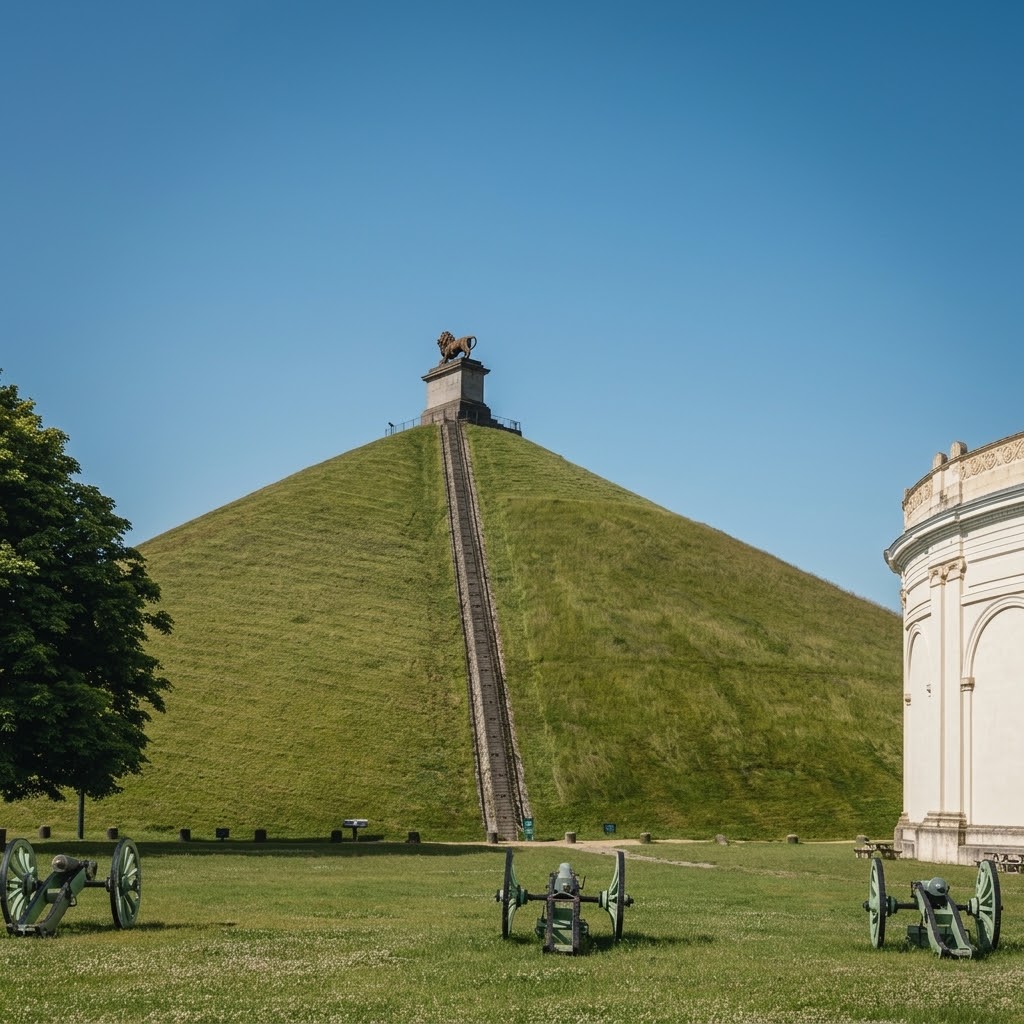
The battlefield survives today as the Domaine de la Bataille de Waterloo 1815, a preserved landscape south of Brussels anchored by the Lion’s Mound, a massive earthwork topped with a cast-iron lion overlooking the fields where the fighting took place. The site also includes the underground Memorial 1815 visitor center, the restored Hougoumont farm compound that anchored Wellington’s right flank and saw some of the day’s fiercest fighting, and the 1912 Waterloo Panorama, a large cylindrical painting displayed in the round that immerses visitors in a 360-degree recreation of the battle at its height. A combined ticket covers all four attractions, and free parking with a shuttle service connects the sites, making the whole complex an easy, self-contained day trip from Brussels without needing a car to move between locations.
Climbing the Lion’s Mound rewards visitors with a panoramic view of the battlefield below, though the more than two hundred steps to the summit are not wheelchair accessible, and visitors with mobility concerns should plan around the ground-level attractions instead, which cover the underground museum, the Panorama, and Hougoumont without requiring the climb. The site operates year-round with seasonally adjusted hours, and most visitors find a half-day sufficient to move through all four attractions at an unhurried pace, though history-minded travelers who want to walk the full length of the ridge and both flanking farms tend to plan for longer. Major reenactments are staged around milestone anniversaries of the battle rather than every year, so anyone hoping to catch one should check the site’s event calendar well in advance of a visit rather than assuming one will be running.
Remembrance at Waterloo
Major reenactments at Waterloo cluster around milestone anniversaries of the June 18 battle rather than recurring annually, drawing thousands of costumed participants and spectators to the fields for a concentrated, large-scale recreation of the fighting rather than a smaller yearly ceremony. Outside those anniversary years, remembrance at the site is a quieter, standing affair: the Lion’s Mound itself was raised as a monument in the years after the battle, reportedly using earth carried from the battlefield itself, and the Panorama painting was commissioned decades later specifically to keep the scale of the fighting visible to visitors who never saw a battlefield and never would. The restored walls of Hougoumont still bear the marks of the fighting that made the farm one of the day’s most contested pieces of ground, preserved rather than smoothed over, and the underground galleries of Memorial 1815 walk visitors through the battle hour by hour using the same primary accounts that historians still draw on today. Together, the monument, the museum, and the farmhouse keep Waterloo’s memory active well beyond the years when its veterans were still alive to tell the story themselves.
Visitor Info: Feature film titled “Waterloo” (dir. Sergei Bondarchuk, 1970)
Location: Domaine de la Bataille de Waterloo 1815, Route du Lion 1815, 1420 Braine-l’Alleud, Belgium
Site Status: National Park / Managed Historic Site
Visitation Notes: The battlefield is preserved as the Domaine de la Bataille de Waterloo 1815, anchored by the Lion’s Mound earthwork topped with its cast-iron lion, the underground Memorial 1815 visitor center, the restored Hougoumont farm, and the 1912 Waterloo Panorama painting, all reachable on an easy day trip from Brussels. A combined ticket covers all four attractions, with free parking and a shuttle between sites, though climbing the mound’s 200-plus steps to the summit is not wheelchair accessible. Major reenactments cluster around milestone anniversaries of the June 18 battle rather than happening every year, so check the site’s event calendar if timing a visit around one. The site is open year-round with seasonally adjusted hours.
Google Map
Visitor Comments
Matthew1000 who came on a busy August Saturday expected the site to be packed but found it pleasantly quiet, and said there was plenty to see and do across the full visit.
— from TripAdvisor
Lesley61 who purchased the combined pass covering all four attractions called Memorial 1815 an excellent museum, well worth the visit.
— from TripAdvisor
Matthys V praised the underground museum’s exhibits as some of the best displays they had seen, and recommended climbing all 234 steps of the Lion’s Mound for the splendid panoramic view from the top.
— from Google Reviews
Pauline van der Waal described the Lion’s Mound as an impressive sight, with its cast-iron lion rising high above the surrounding landscape to mark the site of the 1815 battle.
— from Komoot