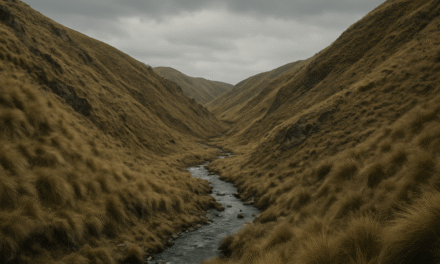
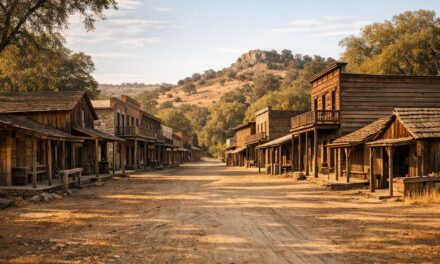
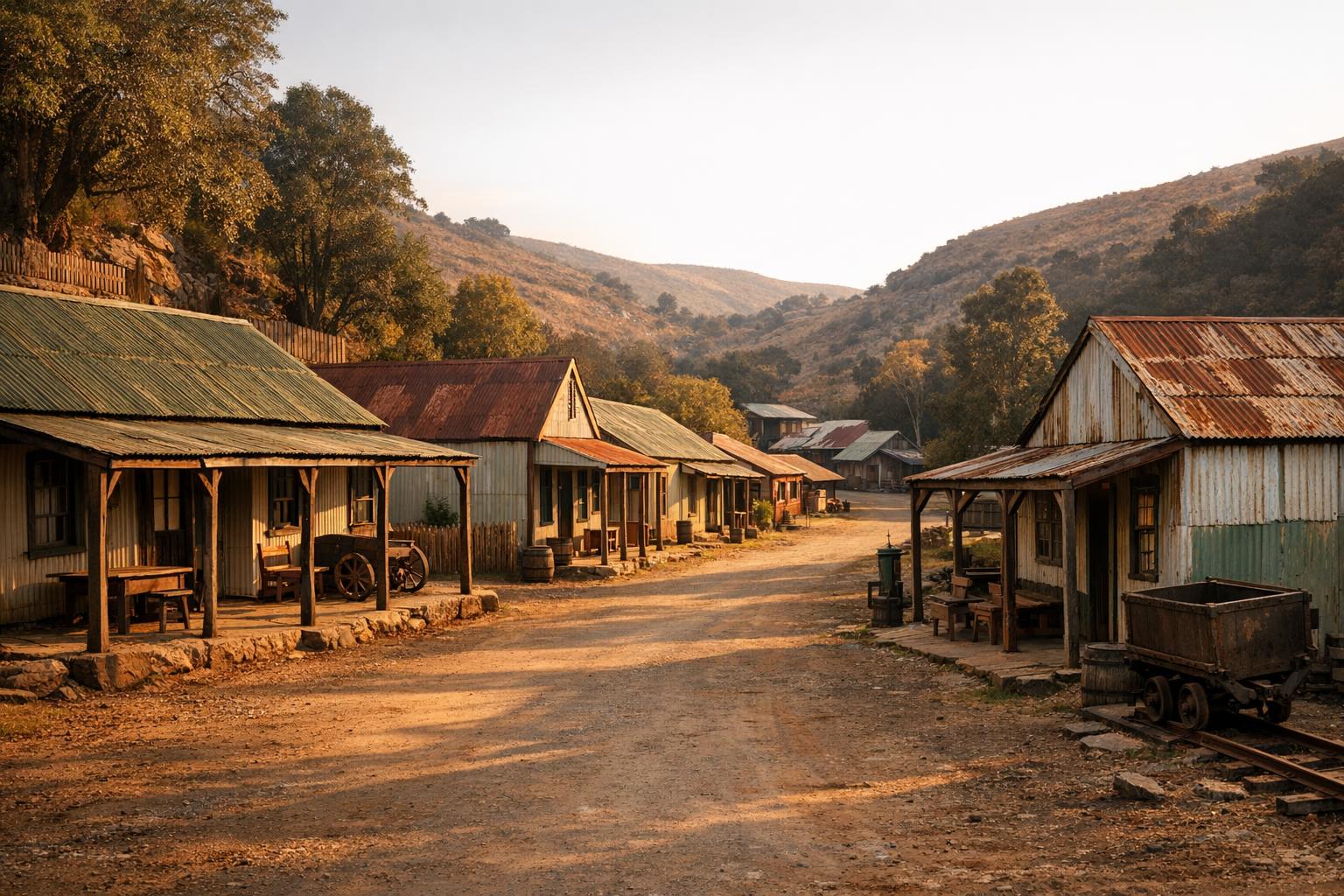
A guide hands over a shallow pan and nods toward the stream running behind a row of corrugated-iron buildings, their paint faded to the color of the surrounding hills. The water is cold even in the afternoon sun. Somewhere in the gravel at the bottom of that pan, if the guide’s instructions are followed closely enough, is a genuine trace of gold, small enough to fit on a fingertip and real enough to take home.
Pilgrim’s Rest: South Africa’s Preserved Gold Rush Camp
Pilgrim’s Rest sits in South Africa’s Mpumalanga province, a village that traces its identity directly back to an 1870s gold rush. Like so many mining camps born out of a sudden mineral discovery, Pilgrim’s Rest could easily have followed the familiar arc: a rush of arrivals, a period of frantic extraction, and then abandonment once the easily accessible gold ran out. Instead, the village has been preserved, its 1870s-era character maintained rather than left to decay, making it one of the more intact surviving gold rush settlements from that period anywhere in the world.
That preservation is worth understanding on its own terms, because it’s not simply a matter of old buildings surviving by accident. Pilgrim’s Rest today operates under provincial heritage management in Mpumalanga, a designation that reflects a deliberate choice to protect the settlement’s historic character rather than allow it to be redeveloped or left to fall apart. The village’s corrugated-iron architecture, its narrow streets laid out to the practical logic of a nineteenth-century mining camp rather than modern urban planning, and its overall layout all remain recognizable as what they originally were: the physical structure of a gold rush boomtown, not a modern recreation built to resemble one.
What makes Pilgrim’s Rest particularly notable within that broader category of preserved mining towns is that it offers visitors more than a walk past old buildings. At the Diggings Site Museum and Information Centre, visitors can take part in guided gold panning, a genuine hands-on connection to the exact activity that drew people to this stretch of Mpumalanga in the first place. That’s a meaningful distinction. Plenty of historic mining towns preserve their buildings while leaving the actual mining experience entirely in the past, something read about on a placard rather than something a visitor can do. Pilgrim’s Rest keeps that thread alive, letting the panning itself remain part of what the site offers.
That’s a genuinely unusual thing for a historic site anywhere to manage, preserving not just the physical setting of a nineteenth-century gold rush but a working connection to the activity itself. Many gold rush towns around the world exist today purely as museums in the broadest sense, places where visitors observe rather than participate. Pilgrim’s Rest sits in a smaller category of sites that have found a way to keep the original activity alive as part of the visitor experience, rather than retiring it entirely to history.

Gold Panning Under South African Mineral Law
Understanding how gold panning works at Pilgrim’s Rest today requires understanding the legal framework that governs mineral rights across South Africa generally, because that framework shapes everything about how a site like this can operate. Under the Mineral and Petroleum Resources Development Act 28 of 2002, all minerals in South Africa are treated as the common heritage of the South African people, with the state acting as custodian on their behalf. That’s a foundational legal principle, not a minor technicality: no person may prospect for or remove any mineral anywhere in the country without an approved reconnaissance permission, prospecting right, or similar authorization. Landowner consultation is a separate requirement on top of that, meaning even holding the right permit doesn’t automatically grant access to a specific piece of land, the landowner has to be part of the conversation as well.
That legal backdrop explains why gold panning at Pilgrim’s Rest looks the way it does. Rather than operating as an open prospecting site where visitors might search freely across the landscape, panning here is offered specifically as a guided heritage-tourism activity, run through the Diggings Site Museum and Information Centre under Mpumalanga’s provincial heritage management structure. That’s a very different model from unregulated recreational prospecting. It’s a curated experience, led by a guide, situated within a museum and heritage-tourism context rather than functioning as genuine mineral prospecting in the legal sense the Act defines. It’s worth being precise about what that distinction means in practice. A recreational prospector accustomed to panning under a more permissive regime, walking a stream on public land with a pan and no paperwork, would find South Africa’s system considerably more restrictive by comparison. The state’s custodianship of minerals isn’t a formality here, it’s the operating principle behind why a site like Pilgrim’s Rest structures its panning activity as a guided museum program rather than as open access to the surrounding landscape.
Within that guided structure, visitors are able to keep the small amounts of gold they pan as a souvenir of the experience. That detail matters to anyone thinking about visiting specifically to try panning: this isn’t a site where a visitor stakes any kind of claim or walks away with a meaningful quantity of gold, it’s a modest, hands-on taste of the historical activity, framed and scaled as a heritage experience rather than an economic one. That framing is consistent with how the site operates more broadly, prioritizing historical education and preservation over anything resembling commercial mineral extraction. That’s worth sitting with for a moment, because it reframes what a visit here is actually for. A prospector coming to Pilgrim’s Rest expecting a shot at a meaningful find, in the way one might approach an open BLM claim elsewhere, is approaching the site with the wrong expectations entirely. This is history experienced through a small, symbolic gesture, not prospecting in the working sense of the word.
Accessing Pilgrim’s Rest Today
Pilgrim’s Rest remains an active heritage destination, and gold panning continues as part of the guided experience offered through the Diggings Site Museum and Information Centre. A visitor interested in panning should expect a structured activity led by a guide rather than independent access to the surrounding land, consistent with both the site’s heritage-tourism framing and the broader South African legal requirement that mineral prospecting anywhere in the country requires proper authorization.
Beyond the panning activity itself, Pilgrim’s Rest doesn’t carry any elevated hazard beyond what any visitor would expect from ordinary outdoor, tourist-town activity, making it an approachable stop for a family or a first-time visitor to South Africa’s gold rush history rather than a site requiring specialized preparation. That approachability is itself part of the site’s value: a visitor doesn’t need any prior experience with prospecting or mining history to take part, the guide provides everything necessary for the activity itself, leaving the visitor free to focus on the historical setting rather than any technical aspect of panning.
The Legacy of Pilgrim’s Rest
For anyone serious about the history of gold prospecting, Pilgrim’s Rest offers a rare combination: a genuinely preserved 1870s mining village, still standing largely intact, paired with a guided opportunity to actually pan for gold on the same ground where the original rush took place. That combination is worth appreciating specifically because of how thoroughly South African law regulates mineral access generally, a reminder that the ability to pan for gold, even in a small, souvenir-sized way, is itself the product of a deliberate heritage program rather than something visitors could simply do on their own. Pilgrim’s Rest stands as a model for how a historic mining site can stay meaningfully connected to the activity that built it, within a legal and heritage framework built specifically to protect it. For a hobbyist whose experience of prospecting has mostly involved permissive public land elsewhere, Pilgrim’s Rest offers something different to reflect on: a place where the right to pan for gold, even in the smallest, most symbolic amount, exists only because a provincial heritage authority has deliberately built and maintained a structure to allow it, inside one of the most tightly regulated mineral-rights systems most visitors will ever encounter.
Story Source: www.pilgrims-rest.co.za
Location: Pilgrim’s Rest, Mpumalanga, South Africa
Site Status: Permission or permit required
Legal Conditions: First entry for South Africa, serving as both Tier 1 and Tier 2. Under the Mineral and Petroleum Resources Development Act 28 of 2002, all minerals are the common heritage of the South African people with the state as custodian; no person may prospect for or remove any mineral without an approved reconnaissance permission, prospecting right, or similar authorization, and landowner consultation is separately required (Verified — citable statute). At Pilgrim’s Rest specifically, gold panning is offered only as a guided heritage-tourism activity through the Diggings Site Museum / Information Centre, run under provincial (Mpumalanga) heritage management rather than as open prospecting; visitors may keep the small amounts of gold they pan as a souvenir (Reported, per tourism-site sources, not a primary legal text).
Hazards: No elevated hazard beyond normal outdoor/tourist-town activity
Google Map
Firsthand Accounts
Prospector Alec “Wheelbarrow” Patterson — nicknamed for pushing a wheelbarrow with all his belongings some 1,600 km from the Cape — left the crowded MacMac diggings, struck gold in a small stream later named Pilgrim’s Creek, and quietly kept panning alone without telling anyone of his find, according to the town’s own published history.
Fellow digger William Trafford independently found gold in the same stream and registered his claim with the Gold Commissioner at MacMac, and it was that registration — not Patterson’s silence — that touched off the rush; Pilgrim’s Rest was officially proclaimed a gold field on September 22, 1873.
In January 1874, Gold Commissioner Major MacDonald moved his office from MacMac to Pilgrim’s Rest as roughly 1,500 diggers worked about 4,000 claims (each 150 x 150 Cape feet) along Pilgrim’s Creek, per A.P. Cartwright’s history “Valley of Gold” and the town’s own archival account.
The largest recorded nugget from the district, the “Breda” nugget, weighed 214 ounces (more than 6 kg); campfire legends told of nuggets as large as 25 lbs (11 kg), though those larger finds were never verified, according to the site’s documented history.
The South African Gold Panning Association, founded in July 1997 in partnership with the Pilgrim’s Rest Museum, built the town into a competitive panning destination and secured the bid to host the 2005 World Gold Panning Championships there — a first for South Africa and for the African continent.