In the weeks after British forces stormed the forts guarding Canton in May 1841, the Qing Imperial Commissioner Yishan sent a formal report to the Daoguang Emperor in Beijing describing a Chinese victory: the foreign ships repelled, the crisis contained. It was a complete fabrication. The British had not been defeated at all; they had, in fact, extracted a six-million-dollar ransom from the city and inflicted a humiliating military defeat on the Qing garrison defending it. When the truth eventually reached the imperial court, Yishan was stripped of his rank and prosecuted, but by then the deception had already helped conceal, for a critical stretch of time, just how badly the war against Britain was going, and how little the Qing military had actually been able to do about it.
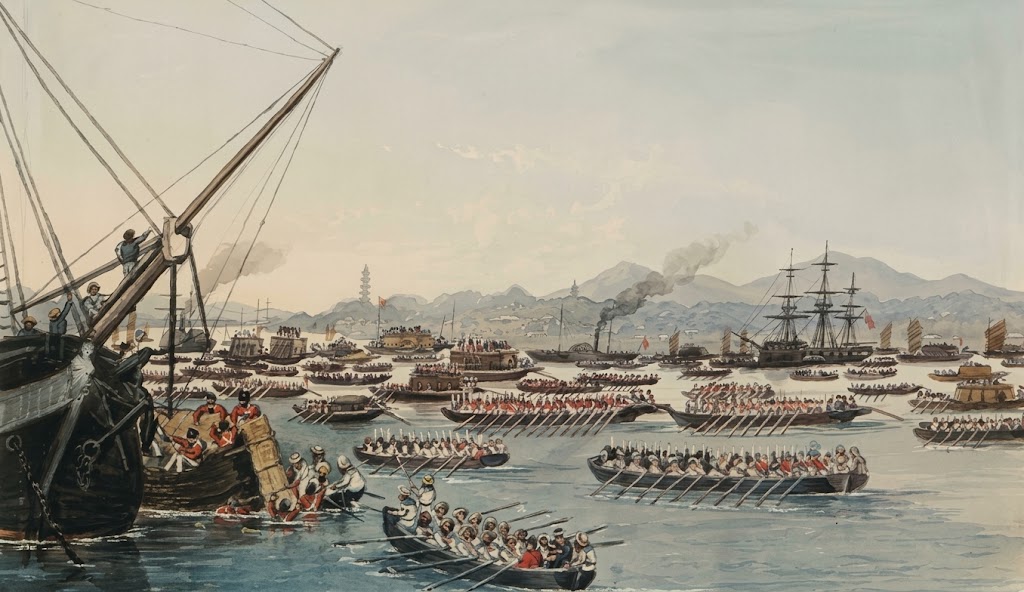
Canton: The Road to Battle
By 1841, Britain and Qing China had been at war for roughly a year in the conflict that later became known as the First Opium War, a struggle triggered by China’s efforts to suppress the illegal British opium trade, most dramatically through the destruction of British-held opium stocks at Canton in 1839, and Britain’s determination to force open Chinese markets and protect its commercial interests by military force if necessary. British naval and land forces had already seized a string of coastal positions along the Chinese coast in the war’s opening phases, including engagements further north and the capture of the Bogue forts guarding the Pearl River estuary, and attention then turned back to Canton itself, the major trading port on the Pearl River that had long served as the primary point of contact, and increasingly conflict, between Qing China and Western merchants operating under tightly restricted terms. On March 18, 1841, in an action sometimes called the First Battle of Canton, British forces captured the city’s foreign trading quarter, the Thirteen Factories, and raised the Union Jack over the British factory, after which trade was briefly reopened under terms negotiated with the Qing general Yang Fang. That arrangement did not hold. The Qing court, alarmed by the string of setbacks, dispatched Yishan, an imperial relative and experienced official, to Canton as Imperial Commissioner with orders to organize the city’s defense and repel the British threat decisively, and after his arrival in mid-April he set about fortifying the approaches to the city and rallying whatever military resources the region could muster on short notice. British forces, meanwhile, assembled a combined naval and land expedition that included the Nemesis, an early iron-hulled paddle steamer whose shallow draft and independence from wind and tide allowed it to operate on the Pearl River’s narrower waterways in ways traditional sailing warships could not, giving the British force a significant tactical and logistical advantage in the coming campaign that Qing defenders, still relying on traditional fortifications and gun positions built for an earlier era of warfare, had no comparable means of countering. By late May, after weeks of uneasy standoff and failed negotiation punctuated by sporadic skirmishing along the river approaches, the stage was set for a second and far larger confrontation at Canton, the fighting now generally known as the Second Battle of Canton, as British commanders prepared to advance on the network of forts that guarded the city’s northern and riverside approaches with both naval firepower and a coordinated landward force ready to strike from more than one direction at once.
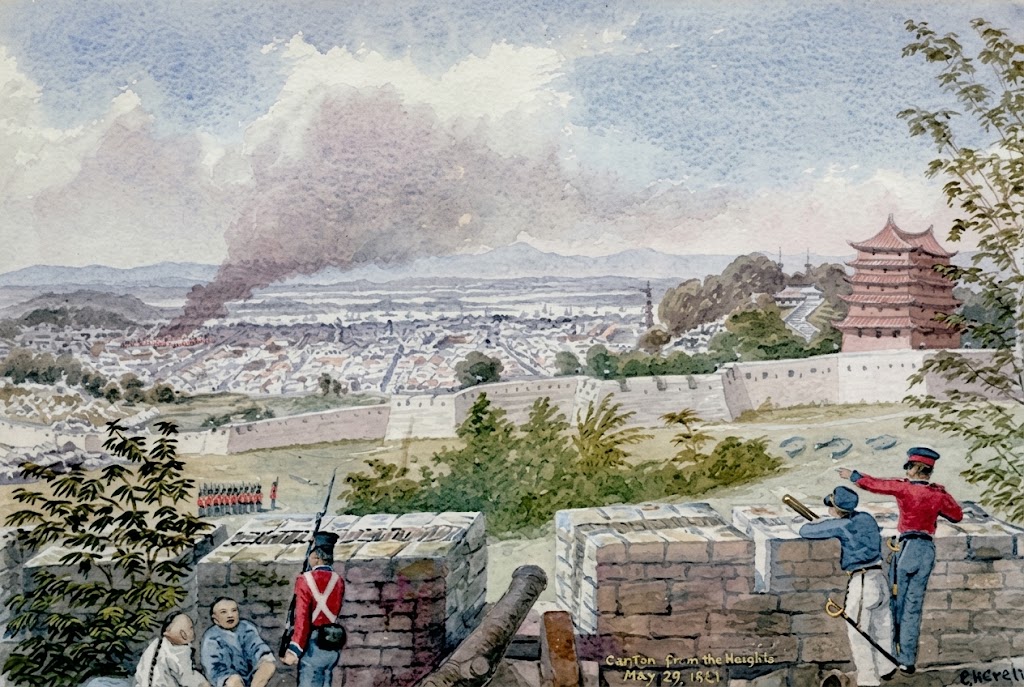
The Second Battle of Canton
The fighting began on the night of May 21, 1841, when Qing forces launched fire rafts and attacks against British ships and positions around Canton; the attempt failed, and in the British response the steamer Nemesis destroyed dozens of Qing war junks and fire rafts, clearing the way for the British counterstroke. A separate land column, towed upriver in part by the shallow-draft steamer Nemesis to a position near Tsing-Hae on May 24, prepared to attack the city’s northern defenses from an unexpected landward direction rather than confronting the river forts head-on, a maneuver that exploited the Nemesis’s unusual ability to operate independently of wind and tide on the Pearl River’s narrower channels. Qing forces, despite having fortified the approaches to Canton with a substantial network of forts and shore batteries in the preceding months under Yishan’s direction, proved unable to withstand the combined pressure of British naval bombardment and coordinated land assault, and several of the key defensive positions guarding the city, including forts along the northern heights, fell in relatively quick succession over the following days of fighting as British landing parties stormed each position in turn. British troops advanced steadily toward the city itself, overrunning fort after fort along the heights overlooking Canton and capturing or spiking Qing artillery pieces as they went, while Qing resistance, though determined and costly in places, particularly where garrison troops fought on despite being clearly outmatched, could not match the firepower, mobility, and coordination of the attacking force operating with naval gunfire support close at hand. By May 27, with British forces occupying commanding high ground directly overlooking Canton, their guns able to reach the city’s densely populated streets at will, and the outer defenses effectively broken beyond any realistic hope of reconstitution, Qing officials recognized that continued resistance risked the bombardment or outright occupation of the city itself and opened negotiations rather than allow the assault to continue to its likely conclusion. The resulting settlement required Qing authorities to pay a ransom of six million dollars to the British in exchange for their withdrawal from the immediate vicinity of the city, a substantial sum, paid over subsequent days, that effectively purchased Canton’s reprieve from further bombardment or occupation while leaving the broader war unresolved. In the immediate aftermath, tensions between the local population and the withdrawing British forces boiled over into the Sanyuanli incident, in which villagers and local militia in the countryside north of Canton, angered by reports of looting and other misconduct among the withdrawing troops, clashed with British troops in a confrontation that, while militarily minor and quickly contained, became a powerful symbol of popular Chinese resistance to foreign incursion, later celebrated in Chinese historical memory far beyond its immediate battlefield significance.
The Legacy of Canton
The fall of Canton’s defenses and the ransom that followed demonstrated the Qing military’s inability to counter British naval and technological advantages, a pattern that would repeat across the remainder of the First Opium War as British forces pushed further along the Chinese coast toward the war’s eventual conclusion, and contribute directly to China’s defeat and the harsh terms of the Treaty of Nanking in 1842, which ceded Hong Kong to Britain and opened additional treaty ports to foreign trade. The Sanyuanli incident, though a minor military affair by any conventional measure, became an enduring symbol in Chinese nationalist and later Communist historiography of popular resistance against foreign imperialism, its memory preserved, retold, and considerably amplified well beyond its actual scale and impact at the time. Yishan’s falsified victory report to the emperor, once exposed, became a lasting illustration of the gap between battlefield reality and what reached the Qing court during the war’s early years, a pattern of misinformation that historians argue delayed a fuller Qing reckoning with the scale of the military crisis it faced.
Canton Today
The battle site itself has vanished entirely beneath the modern city of Guangzhou, as the forts, riverside approaches, and northern heights fought over in May 1841 have long since been absorbed into one of China’s largest and most densely built urban centers, leaving no recognizable battlefield ground for visitors to walk today. The closest substitute for a dedicated historical site is the Sanyuanli People’s Anti-British Martyr Memorial Hall, a converted Qing-era temple directly connected to the confrontation that followed the battle, which remains free to visit and is reachable via Guangzhou’s metro network. The memorial hall’s exhibits include period cannons, weapons, and items captured from British forces during the era’s fighting, offering visitors a tangible connection to the conflict that the built-over battle site itself can no longer provide. English-language signage at the memorial is limited, so visitors without background on the period are generally advised to arrive with some prior context or arrange a local guide to get the fullest understanding of the exhibits on display. The memorial functions as a small, low-key institution rather than a major museum, appropriate to its converted-temple origins, and a visit typically takes considerably less time than a purpose-built history museum of comparable subject matter would require, though the artifacts on display reward the extra effort of arriving with some prior reading on the period. Spring and autumn offer more comfortable conditions for exploring Guangzhou than the city’s hot, humid summers, a practical consideration for visitors combining the memorial with a broader look at the modern metropolis that has grown over the battle’s original ground.
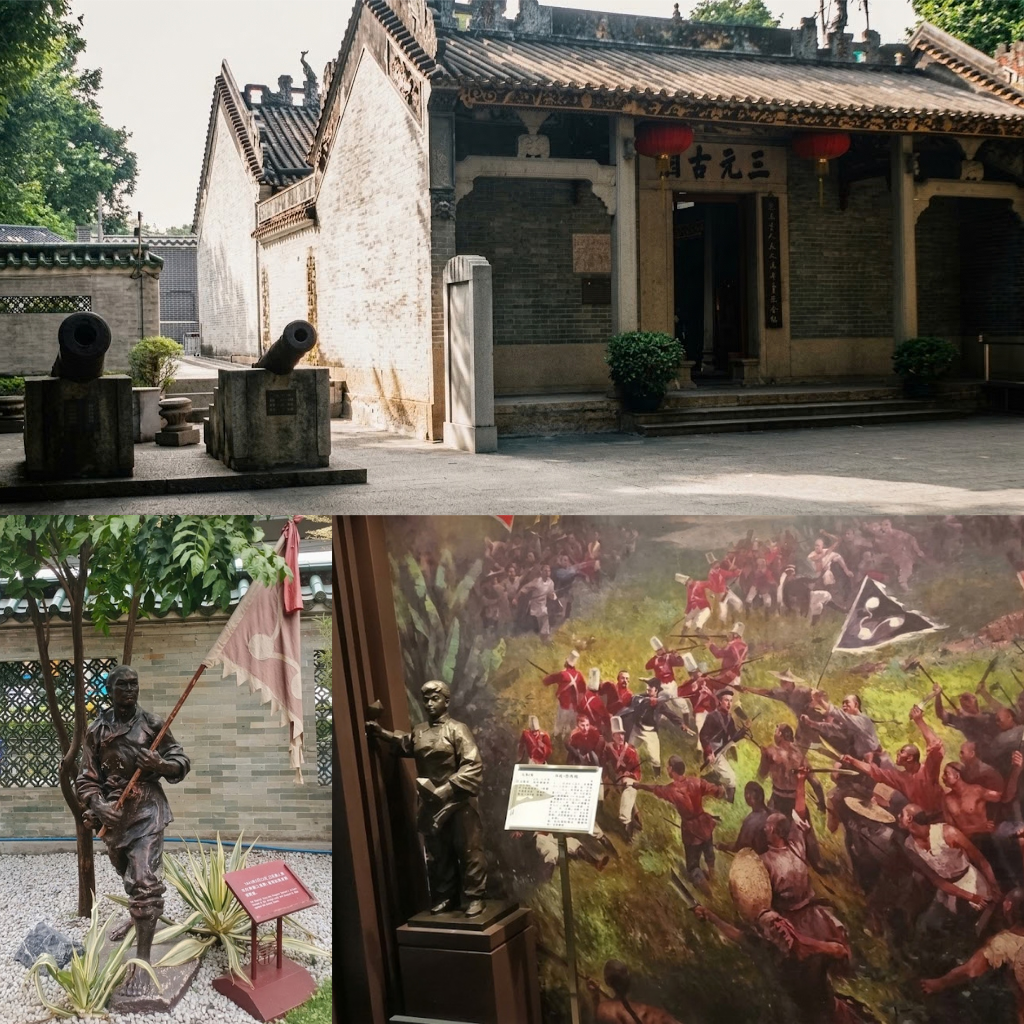
Remembrance at Canton
The most detailed contemporary British account of the battle survives in William Dallas Bernard’s Narrative of the Voyages and Services of the Nemesis, from 1840 to 1843, published in London in 1844, which compiled the firsthand journals and notes of Commander William Hutcheon Hall, the Nemesis’s actual commanding officer during the campaign. The Nemesis was verifiably present at the battle, towing the British left column upriver to Tsing-Hae on May 24, 1841, giving Hall’s account genuine on-the-scene, participant-sourced authority over the assault on Canton’s forts. A starkly different kind of source survives on the Qing side in Yishan’s own formal memorials to the Daoguang Emperor, a named and genuinely contemporaneous document that historians have since documented as substantially falsified, claiming a British defeat and submission that never occurred. Rather than offering a reliable factual narrative of the fighting, Yishan’s account stands today as a striking illustration of how badly the battle’s outcome was misrepresented to the Qing court at the time, a deception significant enough that Yishan himself was later stripped of rank and prosecuted once the truth became known. Read alongside Hall’s firsthand British narrative, Yishan’s memorial offers historians a rare, closely dated pairing of an accurate operational account and the falsified version of the same events that reached the opposing side’s own government in the weeks immediately following the fighting.
Visitor Info: Book titled “The Opium War: Drugs, Dreams, and the Making of Modern China” by Julia Lovell (Picador/Overlook Press, 2011)
Location: Site of the Second Battle of Canton (1841), near the former northern forts and old walled city of Canton (Guangzhou), Guangdong, China — the historic battle ground is now fully urbanized
Site Status: Built Over / Urbanized
Visitation Notes: The 1841 battle site itself is gone beneath modern Guangzhou, but the Sanyuanli People’s Anti-British Martyr Memorial Hall, a converted Qing-era temple tied directly to the uprising that followed this battle, is the closest substitute institution and is free to visit. It’s a small, low-key site reachable via Guangzhou’s metro network, with exhibits including period cannons, weapons, and captured British items; English signage is limited, so a local guide can help. Spring and autumn are more comfortable than Guangzhou’s hot, humid summers.
Google Map
Visitor Comments
The Sanyuanli memorial hall is a small, easy visit with friendly, English-speaking staff, though the older exhibits can be light on English translation so it helps to have some background going in. It’s a quick stop, but a genuinely worthwhile bit of historical context you won’t easily get elsewhere in the city.
— from TripAdvisor
Visitors rate the memorial highly for what it is — a modest, converted-temple museum with genuine period artifacts including old cannons and captured items — and recommend arriving early and, if possible, bringing or hiring a local guide to get the most out of the visit.
— from Google Reviews (via Wanderlog)