For five hours the desert north of Omdurman sounded like nothing either army had heard before: not the ragged rattle of rifle fire alone, but the steady mechanical chatter of machine guns that never seemed to need reloading, sweeping down charge after charge of men who kept coming anyway. By the time it stopped, the ground in front of the British and Egyptian line was reportedly littered for acres with Mahdist dead and wounded, while the force that had done the killing had lost only a small fraction of that number. It was less a battle, many who survived it agreed, than a demonstration of what a rifle-and-machine-gun army could do to a force still fighting largely with spears and older firearms — and it broke, in a single morning, a Sudanese state that had held off outside powers for more than a decade.
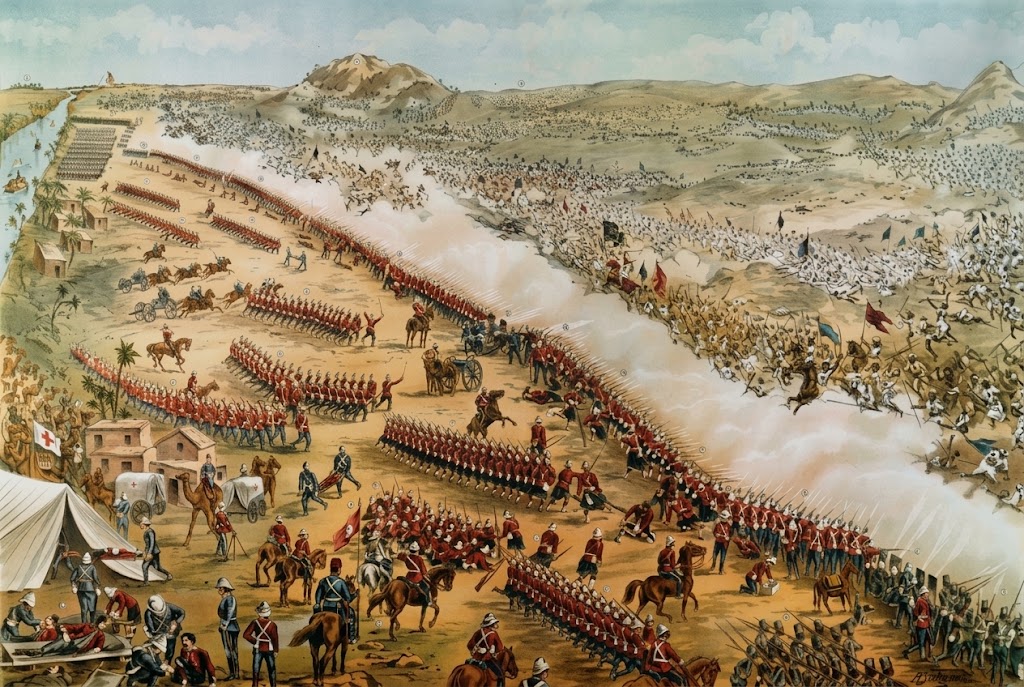
Battle of Omdurman: The Road to Battle
The state that fell at Omdurman had been born in rebellion seventeen years earlier, when a religious leader named Muhammad Ahmad declared himself the Mahdi and led an uprising against Egyptian and Ottoman rule in Sudan. His forces captured Khartoum in 1885, killing the British general Charles Gordon in the process, an event that shocked British public opinion and left a debt of national humiliation that would shape policy toward Sudan for over a decade afterward. The Mahdi himself died later that same year, and leadership of the Mahdist state passed to his successor, the Khalifa Abdullahi al-Taashi, who governed the new state from Omdurman for the next thirteen years. Egyptian rule in Sudan, already resented for heavy taxation and for Cairo’s attempts to suppress the region’s slave trade, had proved unable to contain the revolt once it began. An Egyptian relief force of roughly ten thousand men under the British officer William Hicks was annihilated by Mahdist forces in 1883, a defeat that convinced the Egyptian and British governments to abandon Sudan entirely rather than risk further losses, leaving Gordon’s small garrison at Khartoum isolated when the Mahdi’s army arrived there two years later.
Britain and Egypt did not move to reclaim Sudan until 1896, when Major-General Herbert Kitchener, serving as Sirdar of the Egyptian Army, began a slow, methodical reconquest up the Nile, building a military railway across the desert to keep his advancing army supplied rather than risk a rushed campaign. Kitchener’s force advanced along the Nile with a flotilla of armed gunboats for firepower and supply, and by early September had reached and entrenched along the river just north of Omdurman, within sight of the city and the Khalifa’s positions across the open plain. By late summer 1898, Kitchener’s Anglo-Egyptian force of roughly 25,000 men approached Omdurman, the Mahdist capital, where the Khalifa had gathered an army estimated at as many as 50,000 fighters, determined to defend the city in open battle rather than retreat further into the desert.
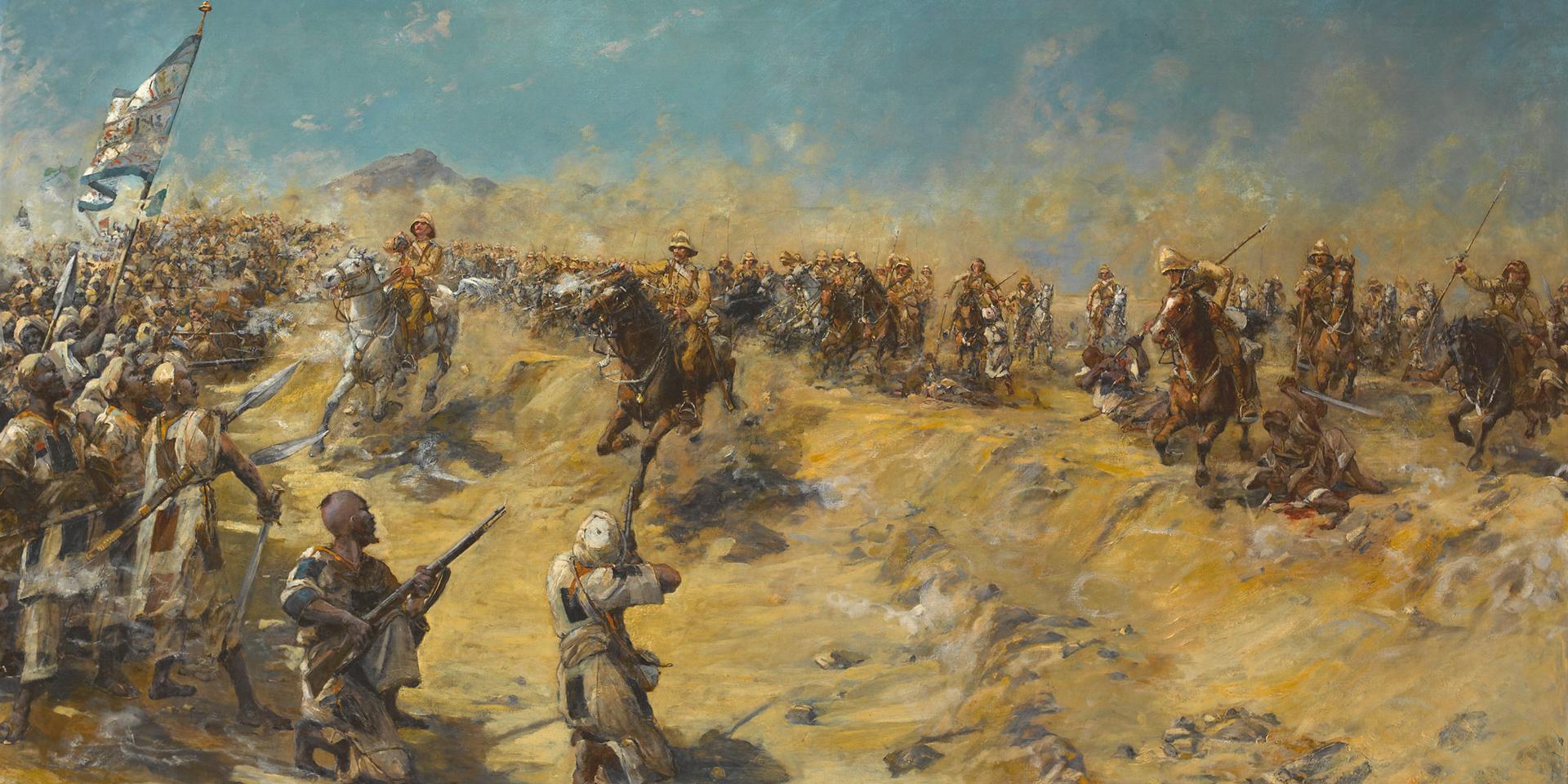
The Battle of Omdurman
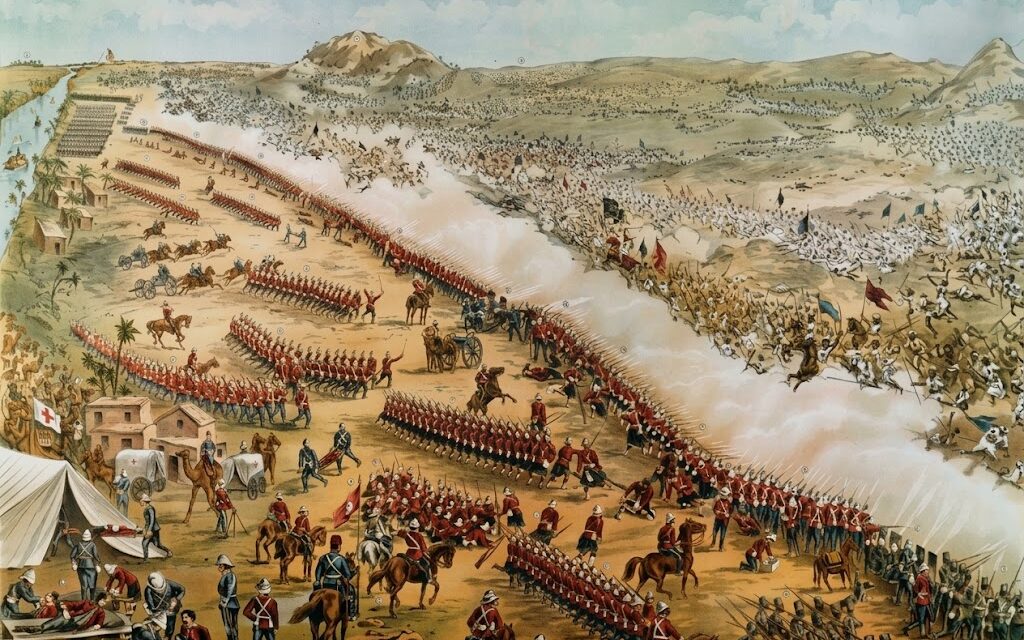
On the morning of September 2, 1898, the Khalifa’s army advanced in massed formation across the open plain north of the city near a ridge called Kerreri, marching directly into the concentrated rifle, artillery, and machine-gun fire of Kitchener’s prepared line. Wave after wave of Mahdist infantry pressed the attack despite catastrophic losses, and within a few hours the momentum of the assault had broken entirely against a firepower advantage the attacking force had no real way to answer. Kitchener’s line, anchored on the Nile and backed by the gunboats’ guns, faced units advancing in dense formations across more than a mile of open ground, some carrying banners associated with different sections of the Khalifa’s army and pressing forward under heavy fire with a discipline that impressed even the officers cutting them down. The heaviest fighting was over within about two hours of the first assault, though sporadic attacks continued through the morning as isolated units kept pressing forward long after the main assault had clearly failed. G.W. Steevens, a Daily Mail correspondent traveling with Kitchener’s expedition, described the scale of the one-sided carnage in dispatches that became one of the best-selling war books of the era, offering British readers a vivid, and to some critics uncomfortably triumphant, account of the fighting from a non-combatant’s vantage point.
Amid the broader battle, the 21st Lancers were ordered to charge what appeared to be a small covering force, only to find themselves plunging into a hidden ravine packed with several thousand Mahdist infantry lying in wait. The regiment numbered roughly four hundred troopers when it charged, and the ravine’s defenders, hidden below the lip of the ground until the last moment, very nearly encircled and destroyed the entire unit rather than the reverse; only the Lancers’ momentum and discipline carried them through to the far side. Lieutenant Winston Churchill, riding with the regiment on temporary attachment, later described those two minutes of close combat as among the most dangerous he ever expected to survive, fighting with his pistol rather than his sword after taking a wound to the shoulder. The charge, one of the last major actions of its kind by the British cavalry, cost the regiment a disproportionate share of the day’s British casualties in a matter of minutes even though it involved only a small fraction of the forces engaged across the wider field.
By early afternoon the Mahdist assault had collapsed entirely, and Anglo-Egyptian forces occupied Omdurman itself as the Khalifa’s surviving troops withdrew in disorder. The casualty totals reflected just how lopsided the fighting had been: British and Egyptian losses numbered only in the dozens killed, while Mahdist dead were counted in the thousands, among the most disproportionate outcomes of any major engagement of the colonial era. Precise counts vary between sources, but British and Egyptian losses are generally put at fewer than fifty killed and several hundred wounded, against Mahdist losses estimated at roughly ten to twelve thousand killed and thousands more wounded or taken prisoner. The Khalifa himself escaped the collapse and continued to lead a shrinking resistance from the countryside for another year, until Anglo-Egyptian forces finally cornered and killed him in a further engagement in November 1899.
The Legacy of Omdurman
The Mahdist state that had governed Sudan for thirteen years collapsed within days of the defeat, and Anglo-Egyptian rule was formally reestablished the following year as the Anglo-Egyptian Condominium, an arrangement that would govern Sudan until its independence in 1956. Kitchener’s order to destroy the Mahdi’s tomb in Omdurman after the battle drew sharp criticism at the time, including from Churchill himself, who condemned it in his own account of the campaign as needlessly vindictive. Weeks after the battle, the same campaign put British and French forces on a collision course far to the south at Fashoda, a diplomatic crisis that briefly threatened war between the two colonial powers before it was resolved. The battle’s overwhelming firepower advantage also made it one of the most cited examples of the technological gap that defined much of the era’s colonial warfare, a lopsidedness rarely repeated on that scale afterward.
Omdurman: A Site Off-Limits
Unlike most of the battlefields covered here, the ground north of Omdurman is not something travelers can currently plan to visit. Sudan has been in the grip of an active civil war in recent years, with Khartoum and Omdurman themselves among the areas directly affected by the fighting, and outside governments have discouraged travel to the country as a result. The Kerreri battlefield itself has never had any formal visitor infrastructure even in more stable times, and no museum elsewhere maintains a standing dedicated exhibit on the 1898 campaign specifically, leaving the written record as the most accessible way to engage with this battle for the foreseeable future.
That written record is unusually rich for a nineteenth-century colonial engagement, in part because two of its participants went on to become famous writers in their own right. For readers unable to visit the ground itself, the campaign survives most vividly on the page rather than at any physical site, a reversal of the usual relationship between a battlefield and its story that sets Omdurman apart from most of the other places in this collection. Even setting aside the current conflict, the site would present a limited experience for visitors under the best of circumstances: the battle was fought across open desert and low ridges rather than terrain with obvious natural boundaries, and nothing has ever marked the ground itself the way many other battlefields in this collection are marked. Anyone hoping to eventually visit the region should watch official government travel advisories for updates on when conditions there improve, since the situation in Sudan has shifted considerably in recent years and may continue to change.
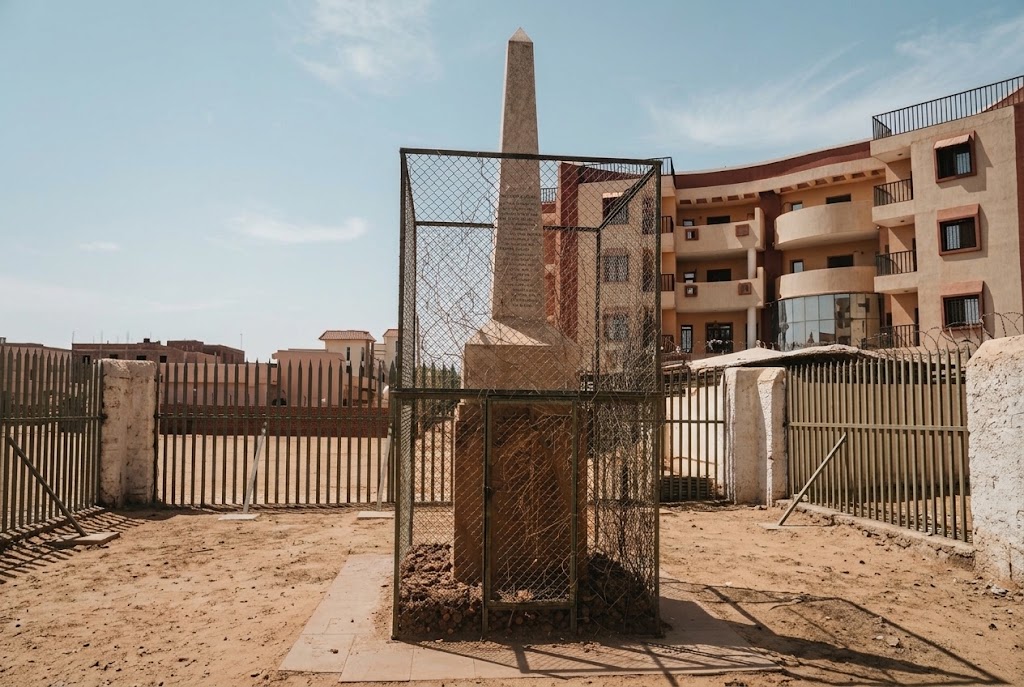
Remembrance at Omdurman
Omdurman is remembered today less through physical monuments than through the written accounts left by the men who fought there, chief among them Churchill’s own record of the campaign, which remains one of the most widely read firsthand narratives of any nineteenth-century colonial battle. Steevens’s dispatches, published as a book within months of the fighting, offered millions of British readers their first detailed sense of what the campaign had actually looked like on the ground, and both accounts continue to shape how the battle is studied and remembered more than a century later. With no accessible battlefield site and no standing museum exhibit dedicated to the campaign, that body of firsthand writing carries the weight that a monument or annual ceremony might otherwise hold at a more visitable site, keeping the battle’s memory alive primarily through the words of the people who were there rather than through stone or ceremony. Regimental histories of the units that fought there, particularly the 21st Lancers, also keep a narrower institutional memory of the battle alive independent of the broader popular accounts.
Visitor Info: Book titled “The River War” (Winston S. Churchill, 1899)
Location: Kerreri plain, north of Omdurman, Khartoum State, Sudan
Site Status: Access Restricted or Unsafe
Visitation Notes: Sudan has been in active civil war since April 2023, and Khartoum/Omdurman have been direct battlegrounds; the U.S. State Department maintains a Level 4 Do Not Travel advisory for the entire country. The Kerreri battlefield itself has no visitor infrastructure. No institution elsewhere maintains a genuinely dedicated gallery on the 1898 Sudan campaign specifically — related artifacts exist only in scattered regimental and national-museum collections without a standing dedicated exhibit, so no substitute site is named here.
Google Map
Visitor Comments
Eric Meulien called it a key destination for anyone interested in General Gordon, noting the museum displays his personal belongings alongside artifacts and information on the Sudanese Mahdist army.
— from Google Reviews
Paul Kroopkin described it as the museum of the Mahdist period of Sudanese history, housed in the residence of the ruler who took power after the Mahdi’s death, noting the Mahdi’s tomb sits nearby.
— from Google Reviews
Siddig Haidar explained it was the house of Abdallah al-Taaishy, the Khalifa of the Mahdi, and that visitors can see the weapons and dress of Mahdist-era soldiers along with a glimpse of the Khalifa’s daily life.
— from Google Reviews