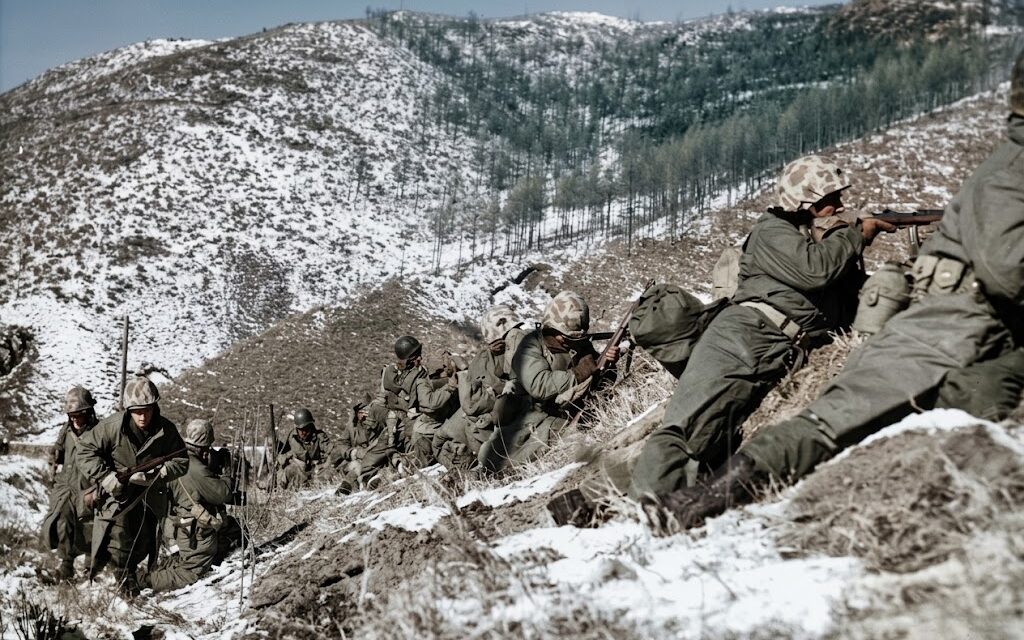
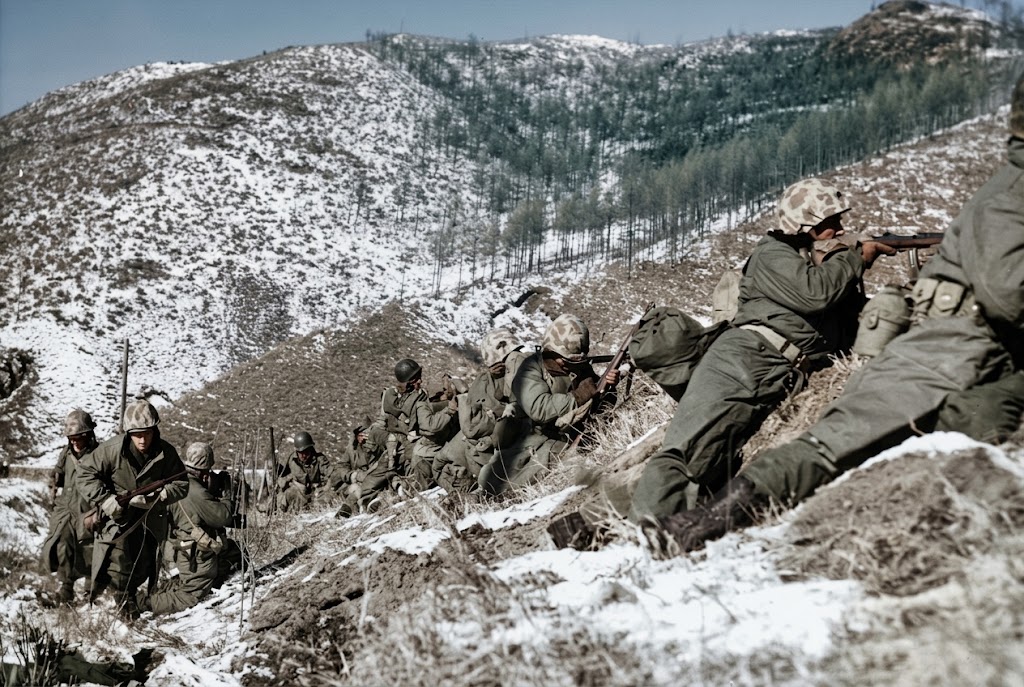
Some of the Marines who fought at the Chosin Reservoir in the winter of 1950 later said the cold killed almost as efficiently as the enemy did. Weapons froze solid and had to be thawed by hand before they would fire. Blood plasma froze in its bottles. Men who fell asleep in the open sometimes never woke, not from wounds but from temperatures that dropped past thirty degrees below zero at night. Into this cold, roughly 120,000 Chinese soldiers descended on a Marine division a fraction of that size, certain they had trapped and would destroy it entirely. Instead, over seventeen days of fighting across some of the most punishing terrain and weather American troops have ever faced, that division fought its way out intact, bringing its wounded, its equipment, and its dead along with it.
Battle of Chosin Reservoir: The Road to Battle
The battle grew out of the rapidly shifting fortunes of the Korean War’s first year. North Korea’s invasion of the South in June 1950 had been reversed by a United Nations counteroffensive that fall, capped by General Douglas MacArthur’s landing at Inchon in September, and by late autumn UN forces were advancing north toward the Yalu River and the Chinese border, many expecting the war to be over by Christmas. Among the forces pushing north was the 1st Marine Division, part of X Corps, advancing into the rugged mountains of northeastern Korea toward the Chosin Reservoir in bitter, deteriorating winter weather. MacArthur’s rapid advance northward, following the stunning success at Inchon, reflected a widespread confidence among UN commanders that Chinese intervention was unlikely despite repeated warnings, a miscalculation that would prove costly within weeks. X Corps, commanding the Marine and Army divisions advancing in northeastern Korea, operated largely independent of the main UN force further west, spreading its already limited troops across a wide and difficult stretch of mountainous terrain.
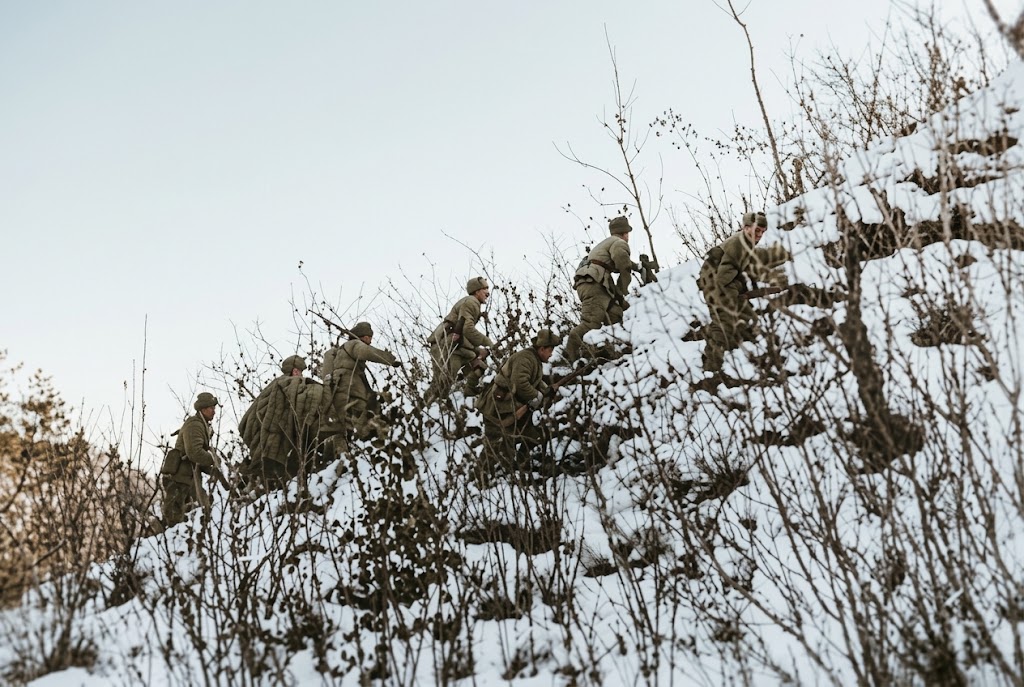
What the advancing UN forces did not fully grasp was that China had already begun secretly moving a massive force across the border in response to the approach toward its frontier. Chinese forces crossed the Yalu River at night and moved largely on foot to avoid detection from the air, a level of operational secrecy that left American commanders with little warning of the scale of the force massing against them. By late November, roughly twelve divisions of the Chinese People’s Volunteer Army, numbering close to 120,000 men, had positioned themselves in the mountains around the reservoir, undetected by American reconnaissance, waiting for an opportunity to encircle and destroy the scattered UN units advancing into the trap.
The Battle of Chosin Reservoir
The Chinese assault began on the night of November 27, 1950, striking Marine and Army positions spread out around the reservoir at Yudam-ni and along the single mountain road connecting them to their supply base at Hagaru-ri. Major General Oliver P. Smith, commanding the 1st Marine Division, had resisted pressure from X Corps to advance in scattered, thinly spread columns, insisting instead on consolidating supply dumps and building an airstrip at Hagaru-ri in advance of any crisis — caution that later proved decisive in making the division’s eventual breakout possible at all. When reporters later characterized the division’s fighting withdrawal as a retreat, Smith pushed back sharply, framing it instead as an attack in a new direction against an enemy that happened to be blocking every route out. The airstrip at Hagaru-ri, built before the Chinese assault began, ultimately allowed roughly 4,000 wounded Marines and soldiers to be evacuated by air during the battle, a capability that would not have existed had Smith yielded to pressure for a faster, less consolidated advance.
At Toktong Pass, a narrow mountain gap that carried the only road between Yudam-ni and Hagaru-ri, Captain William E. Barber’s Fox Company held the position for five days against repeated Chinese assaults, keeping the vital road open despite being cut off, outnumbered, and wounded himself; he was later awarded the Medal of Honor for the stand. Fox Company numbered barely 240 men when the siege began, and by the time relief finally reached Toktong Pass roughly a third of them had been killed or wounded, a casualty rate that underscores how costly holding the pass proved even as it kept the breakout route open for the rest of the division. Private First Class Hector A. Cafferata Jr., fighting alongside Barber’s company at the same pass, was caught outside his sleeping bag during a Chinese night assault and fought much of the battle in his socks, reportedly throwing back live enemy grenades and holding a section of the perimeter largely by himself even after being wounded; he too received the Medal of Honor. Elsewhere along the column, Lieutenant Colonel Lewis “Chesty” Puller, already one of the most decorated Marines in the Corps’ history, commanded the 1st Marine Regiment through the fighting, responding to word that his unit was surrounded with characteristic bluntness — noting that the division had finally found the enemy it had been searching for, and that being surrounded on every side at least simplified the tactical problem.
Over the following two weeks, the division fought its way south in stages, from Yudam-ni to Hagaru-ri, then on to Koto-ri and through the narrow Funchilin Pass, where engineers had to bridge a destroyed gorge crossing with airdropped bridge sections to keep the column moving. Those bridge sections, dropped by parachute to span the gap, were an improvised solution to a problem with no other answer: without them, the entire column, along with its vehicles and heavy equipment, would have been trapped on the wrong side of the gorge with Chinese forces closing in from the high ground on both sides. Temperatures fell as low as negative thirty-five degrees Fahrenheit at night, causing frostbite casualties that in places rivaled combat losses, while the Marines and their attached Army units inflicted devastating losses on the Chinese divisions pursuing them, leaving several of those divisions effectively destroyed as fighting forces by the time the column reached the coast.
The Legacy of Chosin Reservoir
The division’s escape from Chosin, bringing out its wounded, its equipment, and its dead across roughly seventy-eight miles of frozen mountain road, became one of the most celebrated feats in Marine Corps history, and veterans of the battle came to be known within the Corps simply as the Chosin Few. The breakout also cleared the way for the subsequent Hungnam evacuation, in which UN forces and roughly 100,000 North Korean refugees were evacuated by sea rather than left to Chinese and North Korean forces advancing from the north. The scale of Chinese losses inflicted during the withdrawal slowed the Chinese offensive for weeks afterward, buying UN forces time to stabilize a new defensive line further south. Historians still regard the fighting withdrawal as one of the most difficult sustained combat operations in American military history, given the numerical disadvantage, extreme cold, and mountainous terrain the division overcame simultaneously.
Chosin Reservoir: A Site Off-Limits
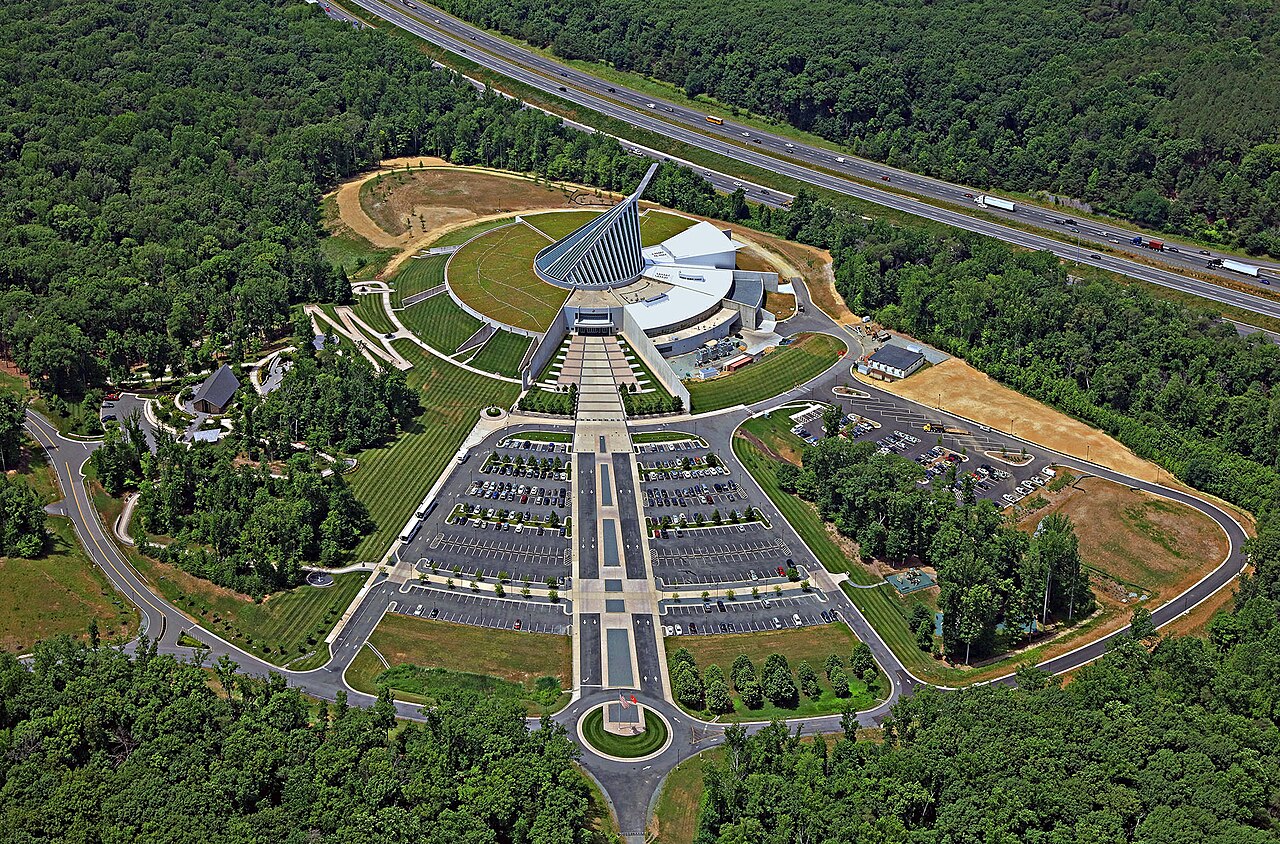
The reservoir itself sits inside North Korea, a country with no diplomatic relations with the United States, where American passports are geographically restricted from travel and the State Department maintains a standing Do Not Travel advisory. For readers unable to visit the actual ground, the most immersive way to engage with the battle’s history lies not in Korea at all but in Virginia, at the National Museum of the Marine Corps in Triangle, where a dedicated diorama recreates the Chosin fighting as part of the museum’s Korean War gallery, housed in a chilled room built to convey something of the freezing conditions Marines endured at the reservoir itself. Admission to the museum is free, and it is open daily except for Thanksgiving and Christmas. Because so few Americans will ever be able to see the reservoir firsthand, the museum experience carries a weight that most battlefield exhibits do not have to bear: for the vast majority of visitors, it will remain the only tangible encounter they ever have with the ground where the battle took place, rather than a supplement to an eventual visit to the site itself.
That substitution of a museum exhibit for the battlefield itself is unusual among the sites in this collection, but it reflects the particular position Chosin occupies in American memory: a battle fought on ground most Americans will never be able to visit, preserved instead through the institutions and communities that carried its memory home. The diorama’s chilled room is a deliberate attempt to close some of that distance, giving visitors a physical, bodily sense of the conditions described in survivors’ accounts rather than leaving the cold as an abstraction confined to the page.
Remembrance at Chosin Reservoir
Within the Marine Corps, the designation “Chosin Few” carries a weight that has outlasted the battle’s veterans themselves, passed down through the Corps’ institutional memory as shorthand for endurance under conditions few other units have faced. The Medal of Honor citations earned by Captain Barber and Private First Class Cafferata, along with those awarded to several other Marines and soldiers who fought at Chosin, keep individual acts of the battle documented in the official record even where no physical monument marks the ground where they occurred. That reputation extends well beyond the individual Medal of Honor recipients whose names survive in the official record, encompassing the wider body of Marines and soldiers who made the breakout possible but whose individual actions were never singled out for formal recognition. The National Museum of the Marine Corps’ Korean War gallery, anchored by its chilled Chosin diorama, now serves as the closest thing most Americans will ever have to a physical encounter with the battle, carrying its memory forward for visitors who will never be able to stand on the frozen ground where it was fought.
Visitor Info: Documentary titled “Chosin” (dir. Brian Iglesias, 2010)
Location: Chosin (Changjin) Reservoir, South Hamgyong Province, North Korea
Site Status: Access Restricted or Unsafe
Visitation Notes: The reservoir sits inside North Korea, which has no diplomatic relations with the U.S.; U.S. passports are geographically restricted from travel there, and the State Department maintains a Do Not Travel advisory for the whole country. Instead, the National Museum of the Marine Corps in Triangle, Virginia, houses a dedicated, immersive Chosin Reservoir diorama — a chilled room recreating the freezing conditions Marines fought in — as part of its Korean War gallery. Admission is free, open daily 9am-5pm except Thanksgiving and Christmas.
Google Map
Visitor Comments
blunoz described walking through a life-size diorama of the Chosin Reservoir in the Korean War gallery, with gunfire and mortars going off, tracers flying by, and the room’s temperature deliberately lowered so visitors feel like they’re freezing at the reservoir themselves.
— from personal travel blog
Kristin noted that in the Korean War exhibit, the thermostat is set low to help visitors experience in a small way what soldiers endured at the Battle of Chosin Reservoir.
— from The Touring Camper (travel blog)
kozmophotos reflected on how much the Marines endured in Korea, describing a small room made to feel very cold and set up to resemble the Chosin Reservoir, calling it hard to imagine what that must have been like to live through.
— from personal photo/travel blog