In the White House Situation Room in early 1968, aides wheeled in a large scale model of a remote plateau in South Vietnam that President Lyndon Johnson had never visited and most Americans had never heard of. He had it built so he could track, hill by hill, the fate of roughly 6,000 Marines surrounded at a combat base called Khe Sanh, and he reportedly had staff wake him through the night with updates, haunted by the fear that he was about to preside over an American Dien Bien Phu.
Khe Sanh: The Road to Battle
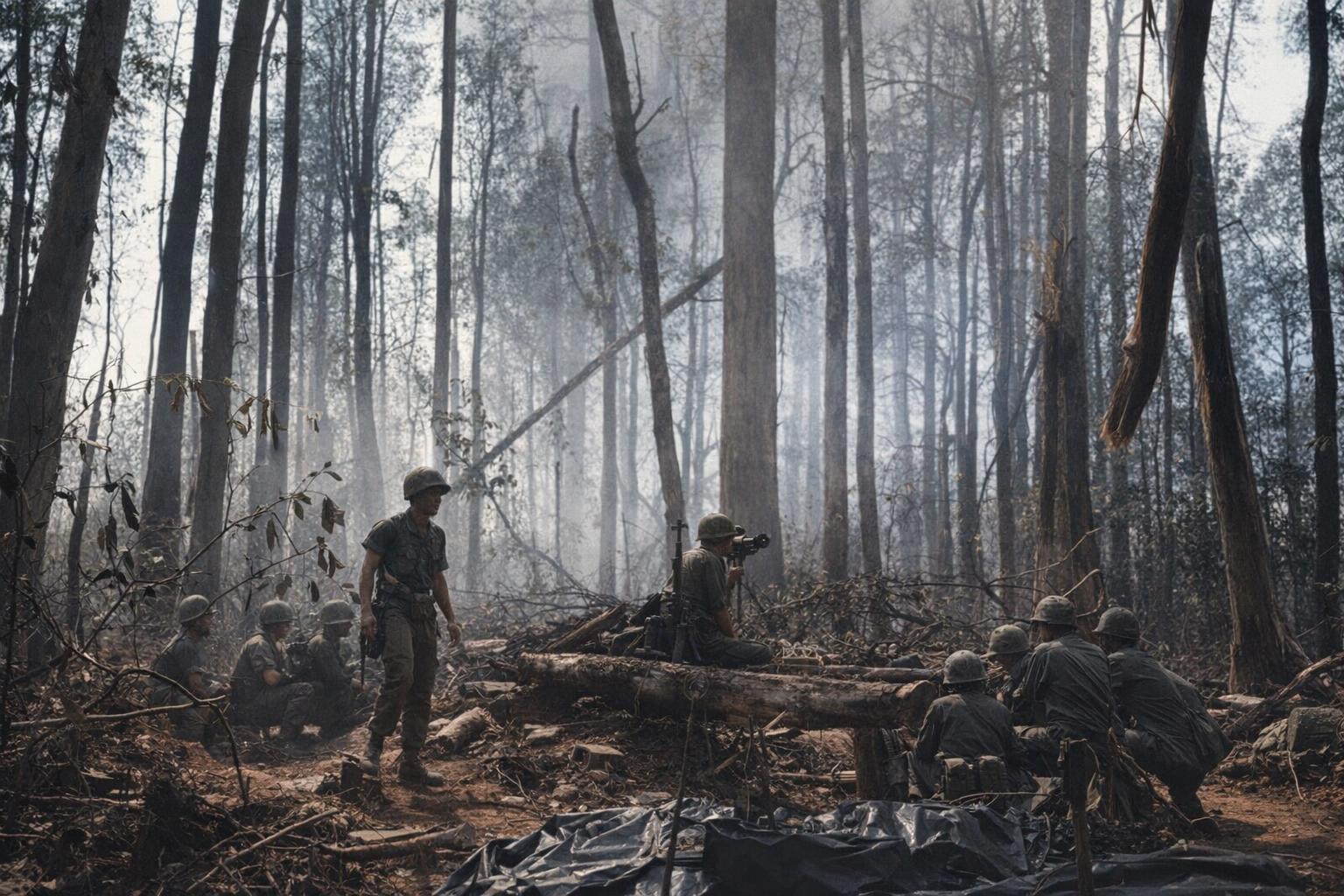
By late 1967, the United States had built a combat base at Khe Sanh in the hills of Quang Tri Province, near the Laotian border and just south of the demilitarized zone separating North and South Vietnam, intended to interdict North Vietnamese infiltration routes and serve as a potential staging point for future operations into Laos. General Vo Nguyen Giap, the North Vietnamese commander who had already destroyed a French army at Dien Bien Phu in 1954, began massing several divisions around the base in the final months of the year, and American commanders, watching the buildup, drew the comparison to that earlier siege themselves, a parallel Giap did nothing to discourage. General William Westmoreland, commanding US forces in Vietnam, ruled out abandoning the base and instead poured in reinforcements, convinced that overwhelming American air power and artillery would turn any siege into a slaughter of the besieging force rather than a repeat of the French defeat, and he saw the remote plateau as an opportunity to draw large North Vietnamese formations into the open where superior American firepower could inflict losses conventional infantry fighting in the jungle rarely allowed.
The comparison to Dien Bien Phu was not lost on the American press or the public either, and as North Vietnamese forces tightened their positions in the hills surrounding the base through December and January, reporters and politicians alike began openly asking whether Khe Sanh would become the site of the first major American defeat of the war, a question that shadowed the Johnson administration through the weeks before the shelling actually began.
The siege began in earnest on January 21, 1968, when North Vietnamese artillery and rockets opened up on the base, destroying much of its ammunition supply in an early strike and cutting Khe Sanh off from resupply by road. Colonel David Lownds commanded the roughly 6,000 Marines and South Vietnamese Rangers defending the base and its surrounding hilltop outposts, all of them now dependent on airlifted supplies and reinforcements flown in under near-constant fire, while below them, unknown to most of the defenders at the time, North Vietnamese sappers had begun digging trench lines toward the perimeter in the same siege-craft Giap’s forces had used at Dien Bien Phu.
The Battle of Khe Sanh
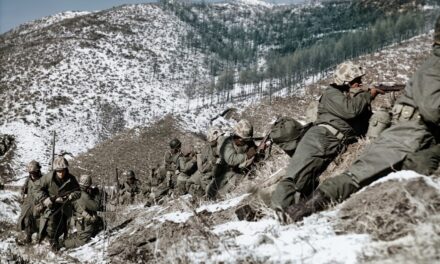
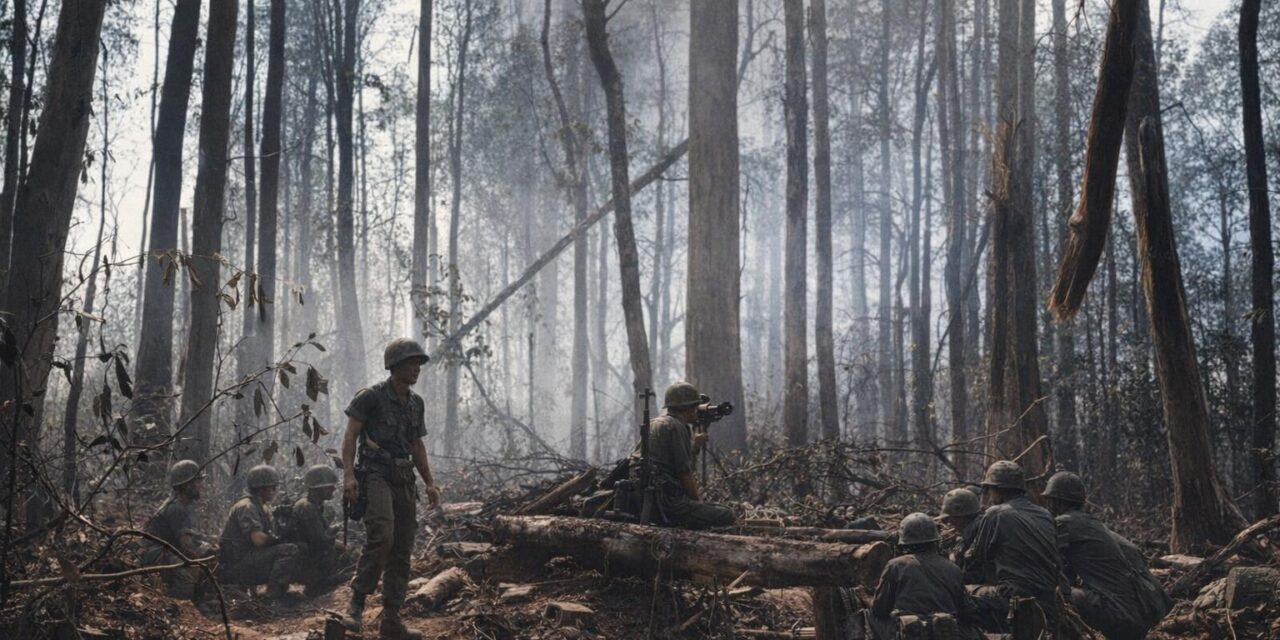
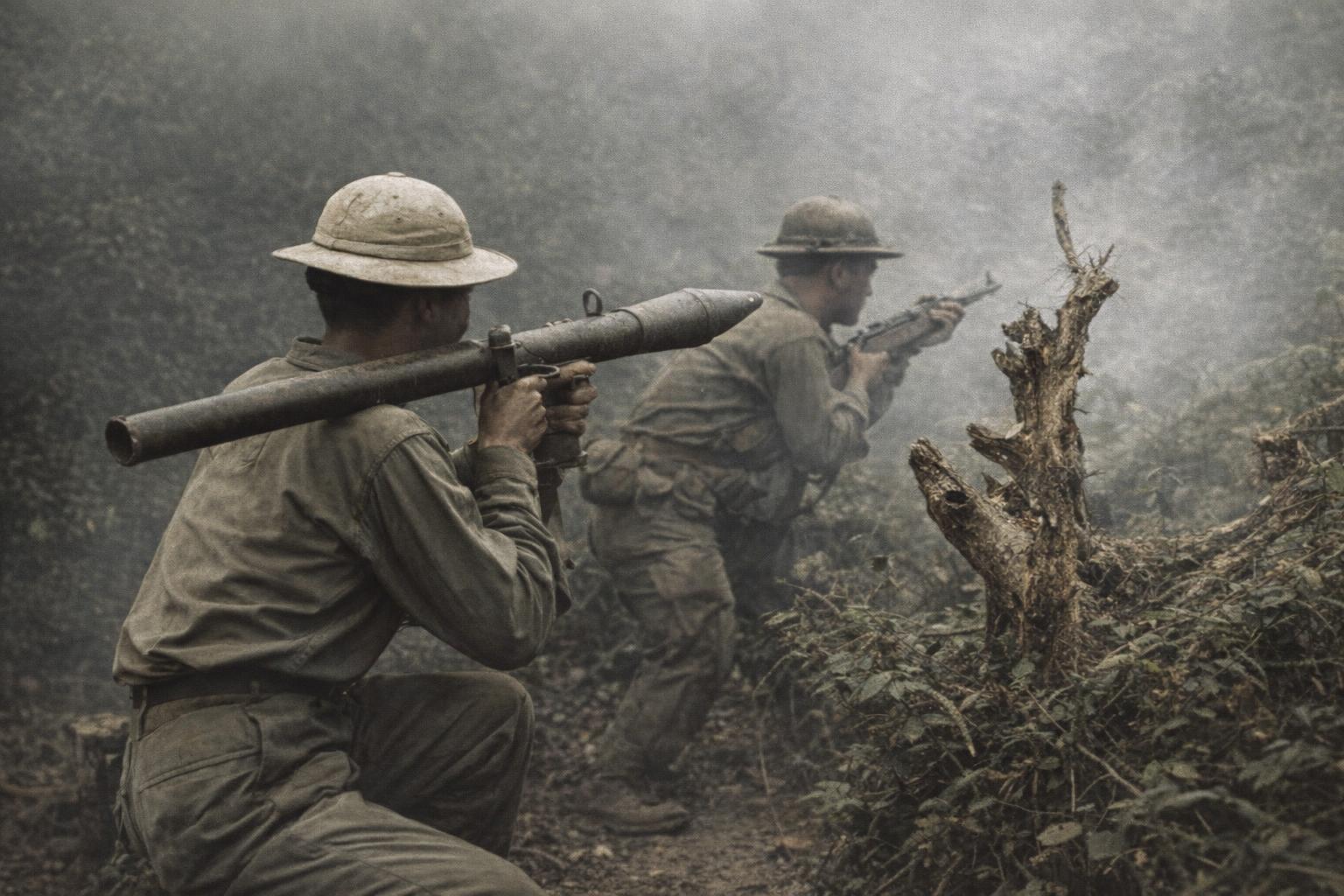
For 77 days, the base endured sustained artillery bombardment and probing attacks while American aircraft flew thousands of sorties overhead under a coordinated air campaign codenamed Operation Niagara, dropping more explosive tonnage on the hills around Khe Sanh than had fallen on Japan during all of the Second World War, in an effort to break the siege from the air rather than risk a large ground relief force fighting through contested terrain. Marines on the base spent the weeks living in bunkers and connecting trenches dug deep enough to survive direct artillery hits, rationing water and ammunition during the periods when fog and monsoon cloud cover grounded the resupply aircraft they depended on for nearly everything, and enduring a psychological strain that outlasted the physical danger for many who served there. The crisis peaked on February 6 and 7, when a nearby Special Forces camp at Lang Vei came under a night assault spearheaded by North Vietnamese tanks, the first armor the US had faced in the war; Lownds refused to send a night relief column from Khe Sanh, judging the risk to his own besieged garrison too great while his base remained under artillery fire and the threat of a broader ground assault, a decision his superiors later upheld even as Lang Vei fell with heavy losses.
Convinced in late January that the base’s survival hung in the balance, Westmoreland quietly requested that tactical nuclear weapons be moved into position nearby under a contingency plan codenamed Fracture Jaw, a request President Johnson shut down the moment he learned of it, wary of the political and strategic catastrophe any use of nuclear weapons in Vietnam would trigger. The anticipated massed ground assault against Khe Sanh itself never fully materialized, and by April, relief forces advancing overland in Operation Pegasus lifted the siege, having held the base through a combination of aerial bombardment, artillery, and the discipline of Marines who had spent nearly three months living in trenches and bunkers under nearly continuous fire, with several hundred Americans killed defending it.
The Legacy of Khe Sanh
Giap later revealed what American commanders had not known during the siege itself: that Khe Sanh was largely a diversion, designed to fix American attention and forces on a remote corner of the country while North Vietnamese and Viet Cong forces prepared the far larger, coordinated countrywide assault that erupted just days after the siege began, the Tet Offensive. Whether or not Khe Sanh actually succeeded in drawing American resources away from population centers has been debated by historians ever since, since Westmoreland had already reinforced the base heavily before Tet struck, but the siege undeniably dominated headlines and White House attention at precisely the moment the war’s broader narrative was shifting in American public opinion, with television coverage of the fighting there feeding a growing sense at home that a war officials had described as nearly won was instead grinding on without a clear end in sight. The United States abandoned and demolished the Khe Sanh combat base only months later, in the summer of 1968, having successfully held it through the siege only to conclude its remote location no longer justified the resources required to defend it, a decision that fed a growing perception among the American public that the base had been defended at great cost for little lasting strategic gain. Khe Sanh is remembered today less for the ground it ultimately controlled, abandoned within months of the siege being lifted, than for the anxious nights it produced in Washington and the reconciliation it now inspires on the same plateau where soldiers of both nations once fought.
Visiting Khe Sanh Combat Base Today
The Khe Sanh Combat Base Museum now occupies the old airstrip plateau where Marines once fought to keep supply planes landing under fire, with indoor exhibits displaying photographs and artifacts from both American and North Vietnamese forces alongside an outdoor collection that includes a reconstructed bunker, a Marine tank, and two American helicopters. Entrance costs a token, low-cost fee, and staff on site can walk visitors through the base’s original layout and the course of the 77-day siege, though the plateau itself remains bare and exposed, with little natural shade across the open ground where the fighting once raged.
A Peace Garden near the entrance, planted with trees by veterans from both the American and Vietnamese sides during later reconciliation visits, offers one of the site’s few quiet, shaded spots and stands as a deliberate counterpoint to the surrounding battlefield. Khe Sanh is most commonly visited as part of a broader tour of the demilitarized zone out of the nearby cities of Hue or Dong Ha, and vendors near the entrance sell wartime relics and reproduction dog tags to visitors, a detail that strikes some travelers as an unsettling echo of the desperation the site once witnessed.
Remembrance at Khe Sanh
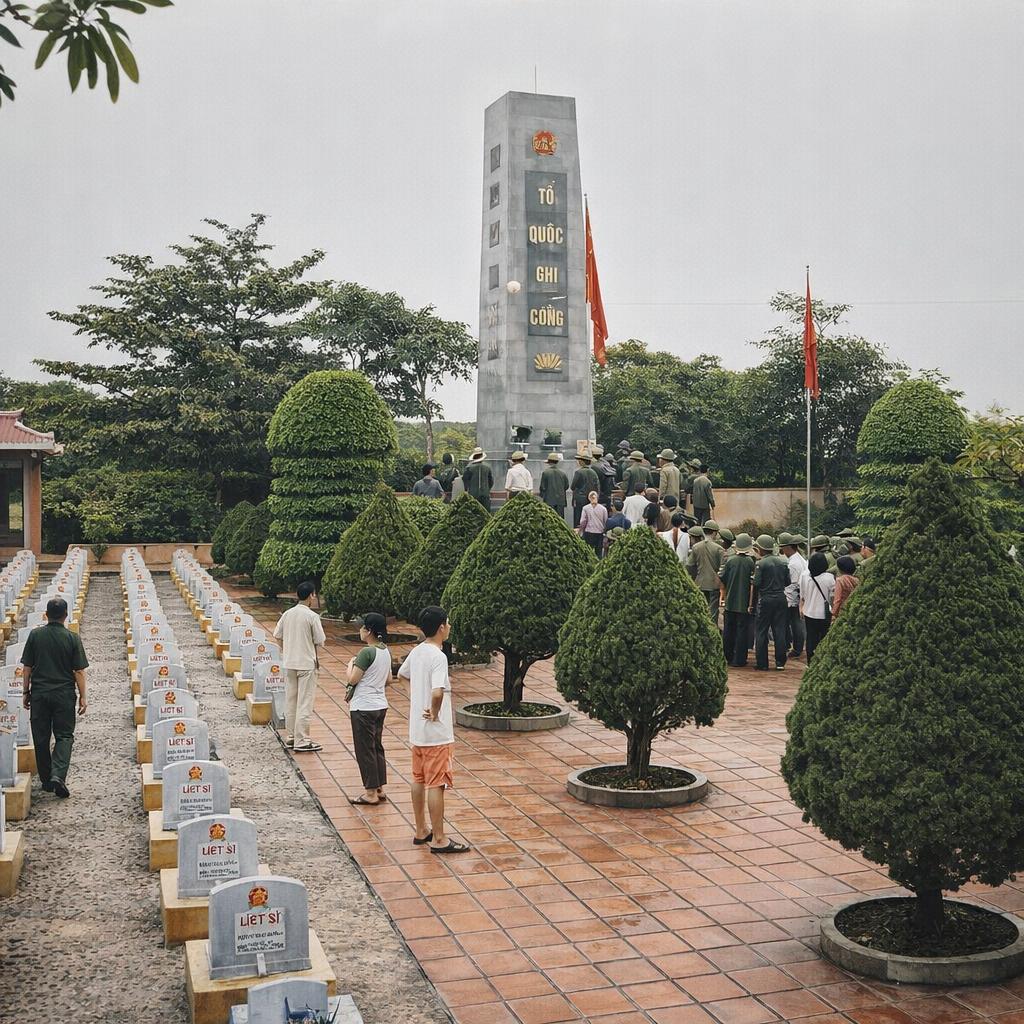
Khe Sanh occupies an outsized place in American memory of the Vietnam War relative to its ultimate strategic outcome, in large part because it was covered so intensively by the American press and monitored so closely by the White House itself that its name became shorthand for the war’s uncertainty at a pivotal moment. Visitors today often describe walking the plateau and its trench lines as a sobering experience, made more so by the presence of memorabilia vendors near a site where thousands of Vietnamese and American lives were lost, a juxtaposition that some find undercuts the solemnity the ground deserves even as most still come away moved by the visit. The Peace Garden, tended jointly by veterans who once fought on opposing sides, offers a rare physical symbol of reconciliation on a battlefield that consumed so many lives on both sides of the conflict.
Visitor Info: www.usmcu.edu
Location: Khe Sanh Combat Base Museum, Huong Hoa District, Quang Tri Province, Vietnam
Site Status: National Park / Managed Historic Site
Visitation Notes: The Khe Sanh Combat Base Museum occupies the old airstrip plateau and includes indoor exhibits with photos and artifacts from both American and North Vietnamese forces, plus an outdoor display of a reconstructed bunker, a Marine tank, and two US helicopters. Entrance costs a token, low-cost fee, and staff on site can walk visitors through the base’s layout and the course of the 77-day siege. A Peace Garden near the entrance was planted with trees by veterans from both sides in later reconciliation visits. The site is bare and exposed, with little shade, and is most commonly visited as part of a broader DMZ tour out of Hue or Dong Ha; vendors near the entrance sell wartime relics and reproduction dog tags to visitors.
Google Map
Visitor Comments
DaveH6742172, a combat veteran visiting from Mesquite, Nevada, praised the upgraded museum with its indoor exhibits and reconstructed structures. A staff member named Le Minh was especially knowledgeable, and he enjoyed the Peace Garden planted with trees by veterans from both sides, recommending visitors finish with local coffee while taking in the mountain views.
— from TripAdvisor
redstar999, visiting from Auckland, New Zealand, described a surreal and sobering experience walking the site. Vendors near the entrance were selling old badges and dog tags, which struck them as an unsettling echo of the desperation surrounding what they called hallowed ground where thousands had died.
— from TripAdvisor
Xabi U, from Onati, Spain, noted the base’s history as a fiercely shelled 1968 US position and appreciated a guide’s firsthand account of the war. They enjoyed the displayed military hardware, including a plane, tanks, and helicopters, and praised the scenic route in from Hue, putting the entrance fee at about two US dollars.
— from TripAdvisor
MelisaL256, visiting from Melbourne, Australia, stopped in unexpectedly during a motorcycle tour and found it worthwhile, recommending the photographic exhibition and a walk through the trenches. She cautioned that vendors hawking memorabilia near the entrance somewhat undercut the site’s solemnity.
— from TripAdvisor