Dr. Ahmed Ghanim had already performed amputations far outside his own specialty, working with whatever supplies remained, when the makeshift triage center where he was treating patients was struck a second time. In that moment, he later said, he wished he had died there alongside it rather than go on. He didn’t. Unable to reach wounded relatives and neighbors trapped elsewhere in the city, he eventually set out on foot, walking more than 30 miles over 36 hours to reach safety in Baghdad, convinced that hundreds of lives could have been saved if the wounded had simply been allowed treatment where they fell.
Fallujah: The Road to Battle
By the fall of 2004, Fallujah had become the most visible symbol of the insurgency gripping Iraq after the U.S.-led invasion the previous year. The city had drawn international attention that March, when four American security contractors were killed and their bodies mutilated and displayed on a bridge over the Euphrates, an incident that prompted a first American assault on the city, Operation Vigilant Resolve, in April 2004. That earlier offensive was halted before it was finished, under political pressure both in Washington and from Iraq’s own interim government, and the ceasefire that followed left Fallujah in the hands of the very insurgent factions the assault had been meant to dislodge.
Over the following months, foreign fighters aligned with the Jordanian militant Abu Musab al-Zarqawi joined local Sunni insurgents in turning the city into a fortified stronghold, reportedly rigging buildings and streets with explosives and preparing defensive positions block by block. With Iraq’s first post-invasion national elections scheduled for January 2005, American and Iraqi government leaders concluded that a insurgent-held Fallujah could not be allowed to stand, and this time committed to finishing what the spring offensive had not: a full second assault, planned as a coordinated clearing operation through the entire city rather than a partial incursion.
The operation, codenamed Phantom Fury by American commanders, brought a large force of U.S. Marines and soldiers together with Iraqi security units to encircle Fallujah in early November 2004. Most of the city’s roughly 300,000 residents had already fled in the weeks before the assault, anticipating what was coming, leaving a largely emptied urban battlefield defended by an entrenched, estimated force of insurgent fighters who had spent months preparing to make the Americans fight for every street.
Unlike the first offensive that spring, which had been called off partway through amid international criticism of the mounting civilian toll, this second assault was planned from the outset as a methodical, house-by-house clearing operation meant to run through the entire city rather than stop short of it. That distinction mattered enormously to the Marines and soldiers who would have to carry it out, since it meant fighting through neighborhoods the earlier campaign had left standing and, in some of them, still occupied by an enemy who had used the intervening months to prepare.
The Battle of Fallujah
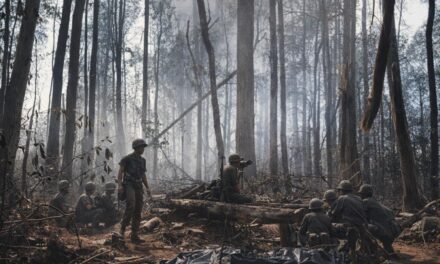
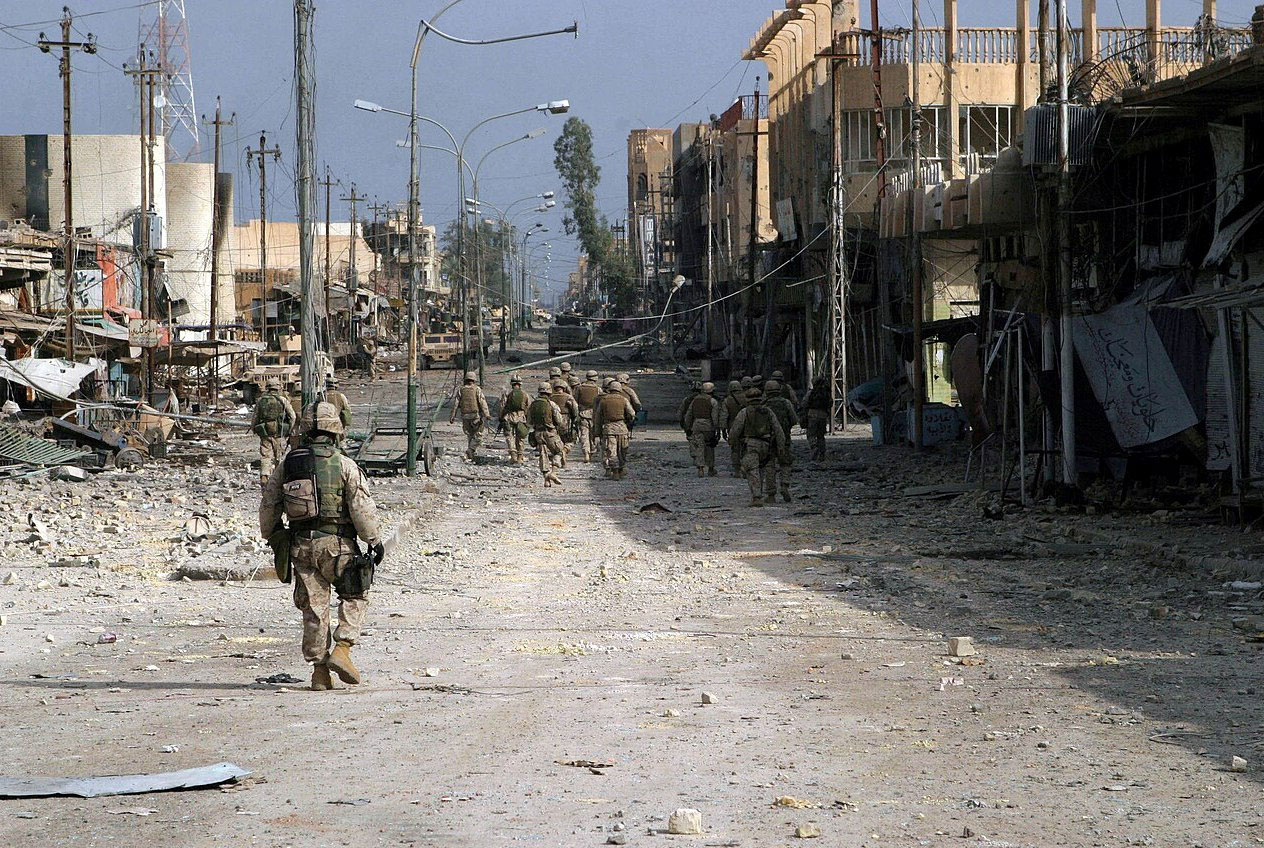
The assault began on November 7, 2004, and by most accounts quickly became the most sustained, block-by-block urban combat American troops had faced since the Vietnam War. New York Times correspondent Dexter Filkins, embedded with Bravo Company, 1st Battalion, 8th Marines for the length of the fight, described a company that suffered a roughly one-in-four casualty rate over just eight days of clearing houses one at a time, with insurgents repeatedly emerging from underground tunnels to strike Marines even during rest periods between assaults. Filkins’s dispatches, later expanded into his book The Forever War, also documented the disorienting brutality of the fighting at close range, including an incident in which his own unit came under fire from a misdirected American airstrike.
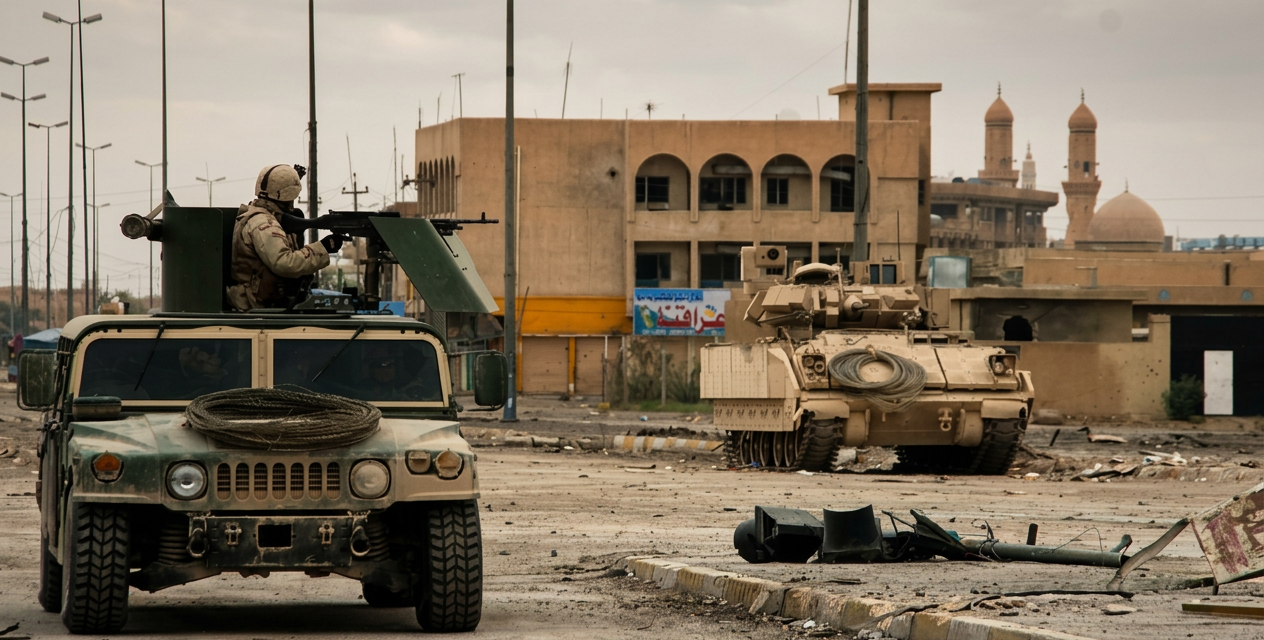
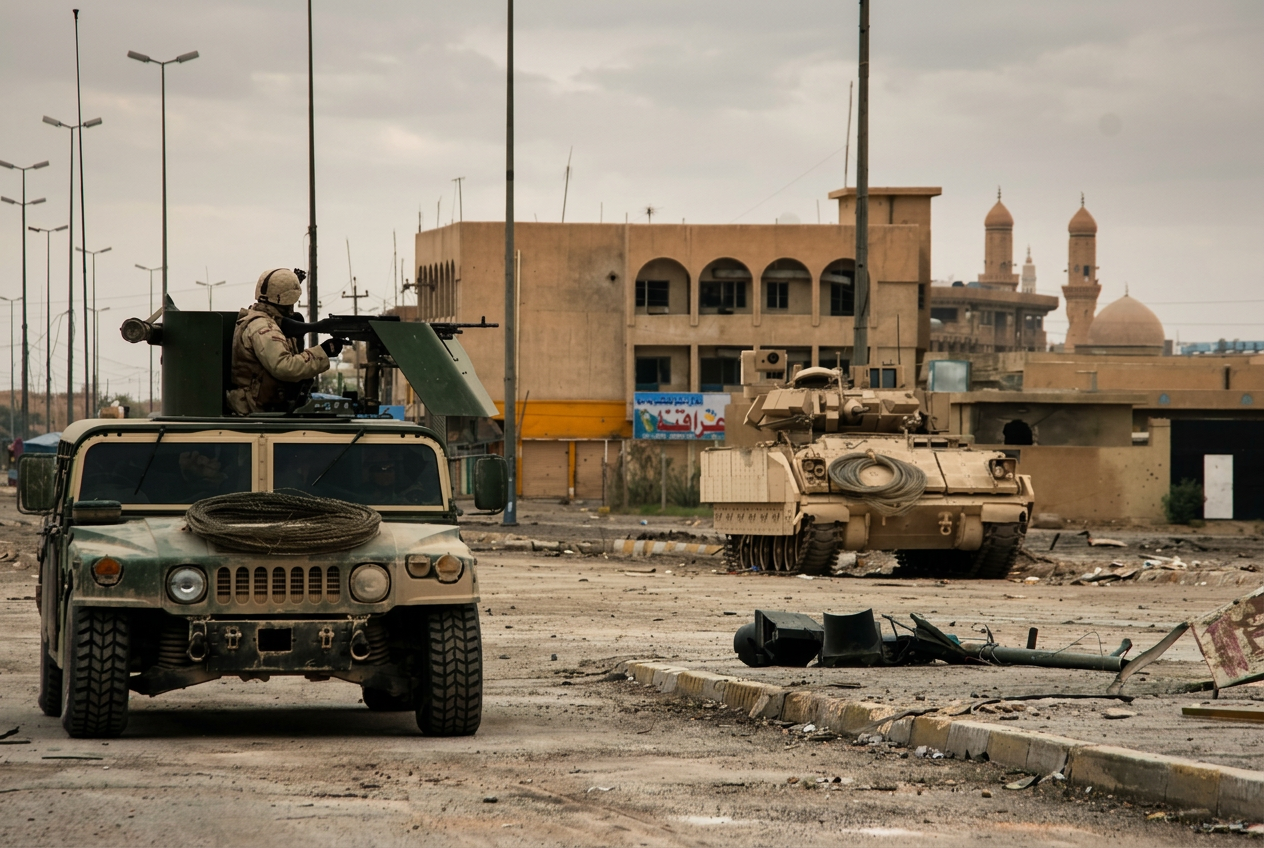
On November 10, Army Staff Sergeant David Bellavia’s squad was ambushed by machine-gun fire while clearing a house, and when the Bradley Fighting Vehicle supporting them broke down, Bellavia charged forward alone to draw fire and cover his trapped soldiers’ retreat. He then went back into the house a second time, accompanied only by a magazine journalist, and fought room to room in the dark, killing four insurgents and wounding a fifth in combat that included a grenade blast and hand-to-hand struggle, buying his squad the time it needed to regroup. He would receive the Medal of Honor for the action, awarded years after the fact once the full record of what happened inside that house had been reconstructed.
More than a month into the operation, on December 13, Marine First Sergeant Bradley Kasal was among a small team ambushed inside a house that Marines afterward called the Hell House. Shot repeatedly in the legs, Kasal crawled to a badly wounded, more junior Marine and covered him with his own body when a grenade went off nearby, holding a pistol on the doorway the entire time to keep it covered. A photograph of Marines carrying Kasal out afterward, still gripping his weapon, became one of the most widely reproduced images to come out of the Iraq War; Kasal earned the Navy Cross for the action, though he has said comparatively little about it himself, leaving the fullest account to journalist Nathaniel Helms’s biography My Men Are My Heroes and to Bing West’s history of the battle, No True Glory.
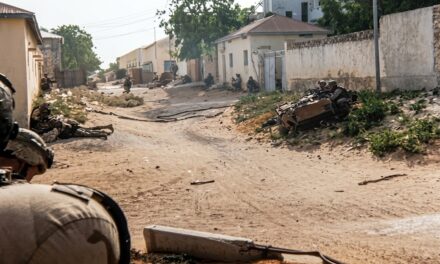
Fighting continued through the city street by street until late December, by which point the sustained house-to-house combat, and the civilian toll it inflicted on those residents who had stayed behind or been unable to leave, had made Fallujah the defining case study of what urban warfare against an entrenched insurgency actually cost, for the Americans who fought it and for the Iraqis who lived through it. Hospitals inside the city, working with dwindling supplies and staff, absorbed casualties from both sides of the fighting throughout the operation, a burden Dr. Ghanim and colleagues like him carried largely outside the view of the American units clearing the streets above them.
The Legacy of Fallujah
Fallujah became the defining example of what sustained, block-by-block urban combat against a dug-in insurgency actually demanded of the troops who fought it, a case studied closely enough afterward that Marine Corps University has published detailed historical accounts of the operation for those training to fight in cities. Militarily, the assault achieved what it set out to do, clearing the city of the insurgent stronghold that had defied the earlier spring offensive; politically and socially, it left behind a devastated urban landscape and a displaced population that would shape Fallujah’s relationship with the American presence in Iraq for years afterward.
The same battle that produced two of the war’s most decorated individual actions also produced a civilian population that bore a cost rarely weighed alongside the medals, a tension that has never fully resolved into a single, settled verdict on what the second battle for Fallujah actually won.
Fallujah: A Site Off-Limits
Fallujah today is a living Iraqi city, not a preserved battlefield, and there is no visitor center, memorial, or public monument marking where the fighting of November and December 2004 took place. The U.S. State Department maintains a standing advisory against travel to Iraq, and Fallujah itself has no tourism infrastructure built around the battle for outside visitors to use.
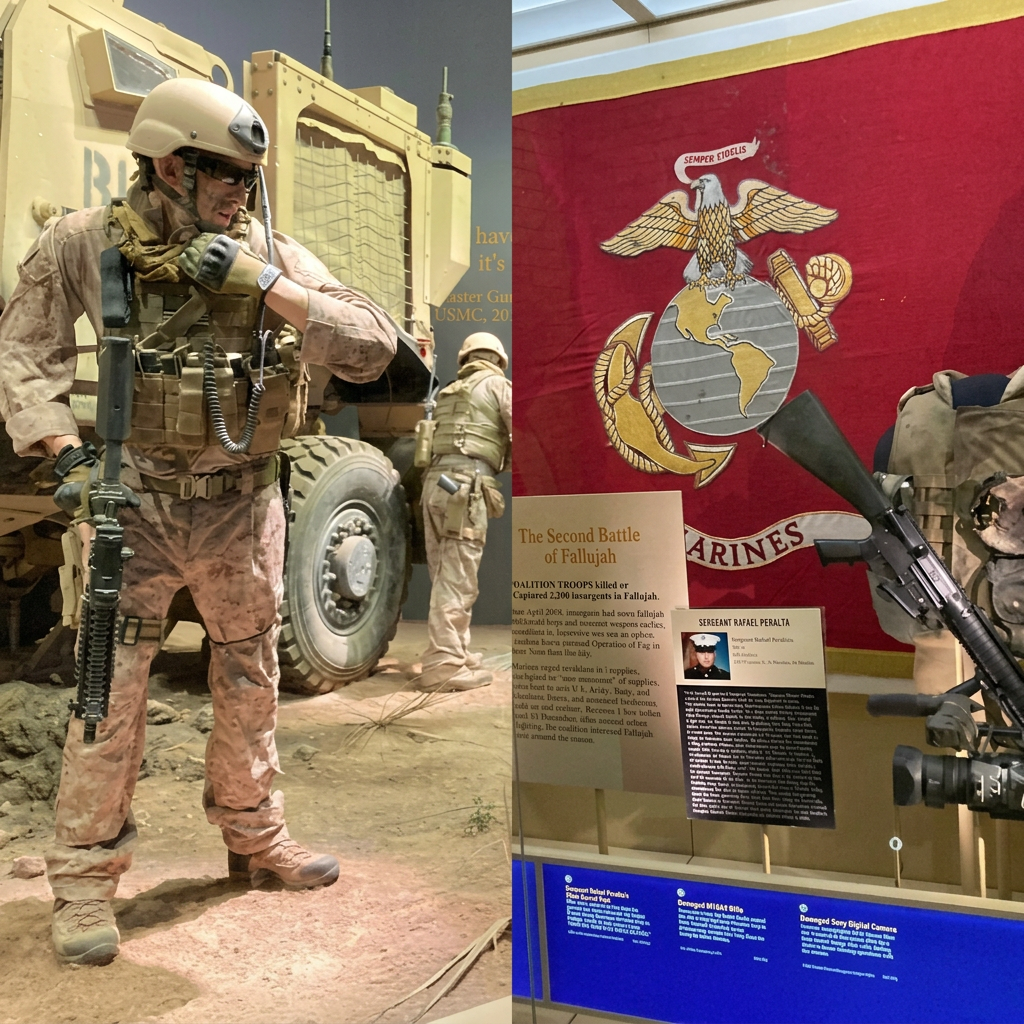
For Americans wanting to engage with this history in person, the most accessible option is the National Museum of the Marine Corps in Triangle, Virginia, which includes galleries covering the Iraq War era and is free to enter, offering a room-by-room look at the uniforms, equipment, and stories of the conflict Fallujah came to define. The accounts quoted below in “What Others Have Experienced” describe visits to that museum, not to Fallujah itself, since the battlefield remains closed off to the kind of visit this section would otherwise describe.
Remembrance at Fallujah
Individual acts of the battle have been formally recognized years after the fact, with Bellavia’s Medal of Honor and Kasal’s Navy Cross standing as the most visible markers the U.S. military has given this fight, alongside the exhibits at the National Museum of the Marine Corps that place Fallujah within the Corps’s own institutional memory of the Iraq War. What is far less visible in American remembrance is the toll on Iraqi civilians like Dr. Ghanim’s patients and neighbors, whose experience of the battle rarely appears alongside the medals and photographs that have come to define how Americans remember Fallujah.
Visitor Info: www.usmcu.edu
Location: Fallujah, Al-Anbar Province, Iraq
Site Status: Access Restricted or Unsafe
Visitation Notes: Fallujah is a living Iraqi city, not a preserved historic site, and the battlefield itself has no visitor center, memorial, or public monument. The U.S. State Department maintains a standing Level 4 “Do Not Travel” advisory for all of Iraq, and Fallujah has no tourism infrastructure for outside visitors. The most accessible way for Americans to engage with the battle’s history is the National Museum of the Marine Corps in Triangle, Virginia, which is free to enter and includes galleries covering the Iraq War era.
Google Map
Visitor Comments
Reviewing the National Museum of the Marine Corps, sawight, from Falls Church, Virginia remarks that the Iraq and Afghanistan galleries were particularly well done, down to the ambient scent of the region worked into the display to make it feel real.
— from TripAdvisor
Gundoctor 913A of Lexington, South Carolina says he spent over seven hours touring the National Museum of the Marine Corps and still didn’t see it all. The exhibits run chronologically from the Revolutionary War through the modern era, and the galleries covering 1980 to the present, including the Iraq War, were still being finished out during this visit.
— from TripAdvisor
According to Naila H, reviewing the National Museum of the Marine Corps, lots and lots of history is packed into this museum, and the best part is that is it’s free to visit. Just be prepared to have bags checked and go through a metal detector at the entrance.
— from Wanderlog