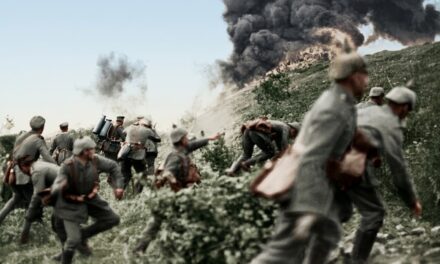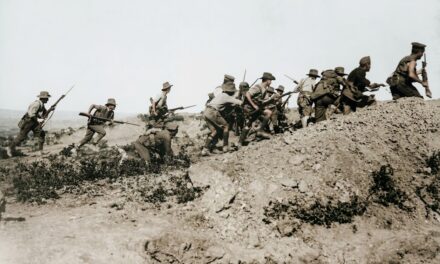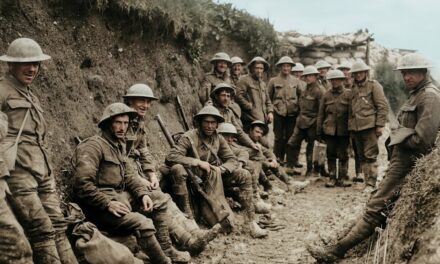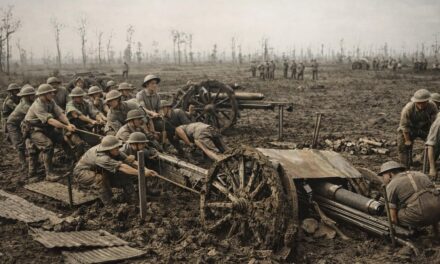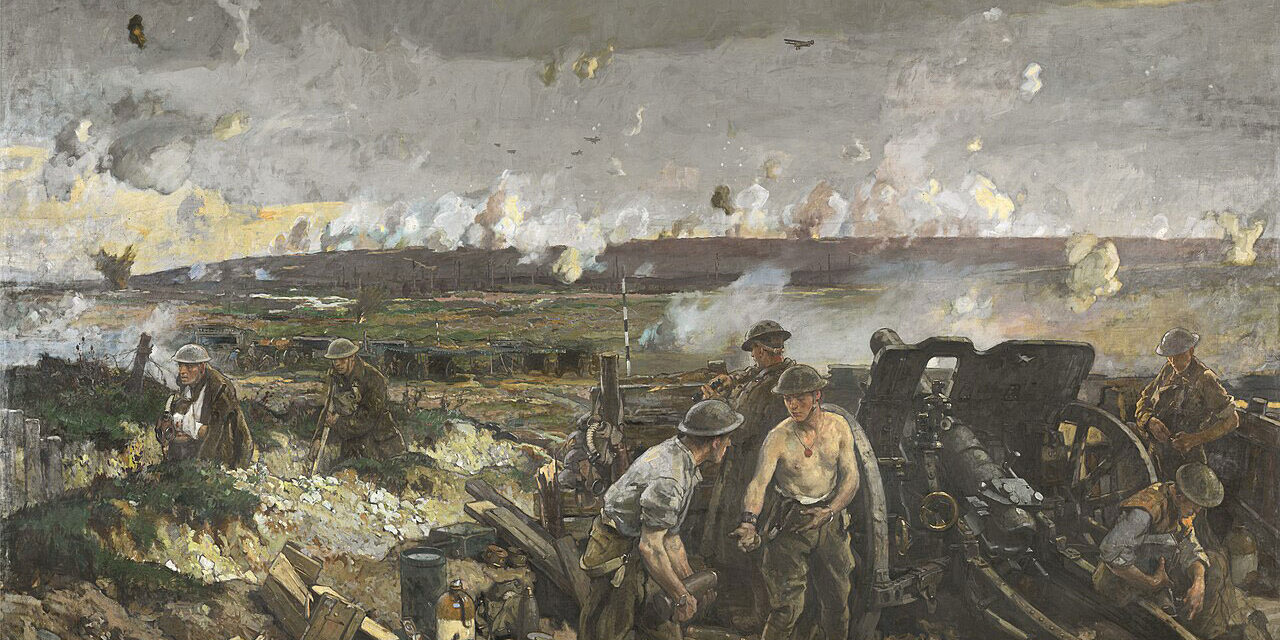
Before a single shot was fired in the real attack, Canadian soldiers had already fought the battle for Vimy Ridge dozens of times over. Behind the front lines, engineers laid out a full-scale replica of the German trench system using tape and flags, and for weeks every unit rehearsed its exact objectives across that mock battlefield until the plan was second nature. When the actual assault began at dawn on April 9, 1917, the result was one of the most meticulously prepared attacks of the entire First World War, and it worked: in a single morning, four Canadian divisions fighting together for the first time seized a heavily fortified ridge that had defeated previous French and British attempts at a staggering cost, a feat of rehearsal and coordination that would help cement the battle’s outsized place in Canadian national memory for generations to come.
Vimy Ridge: The Road to Battle
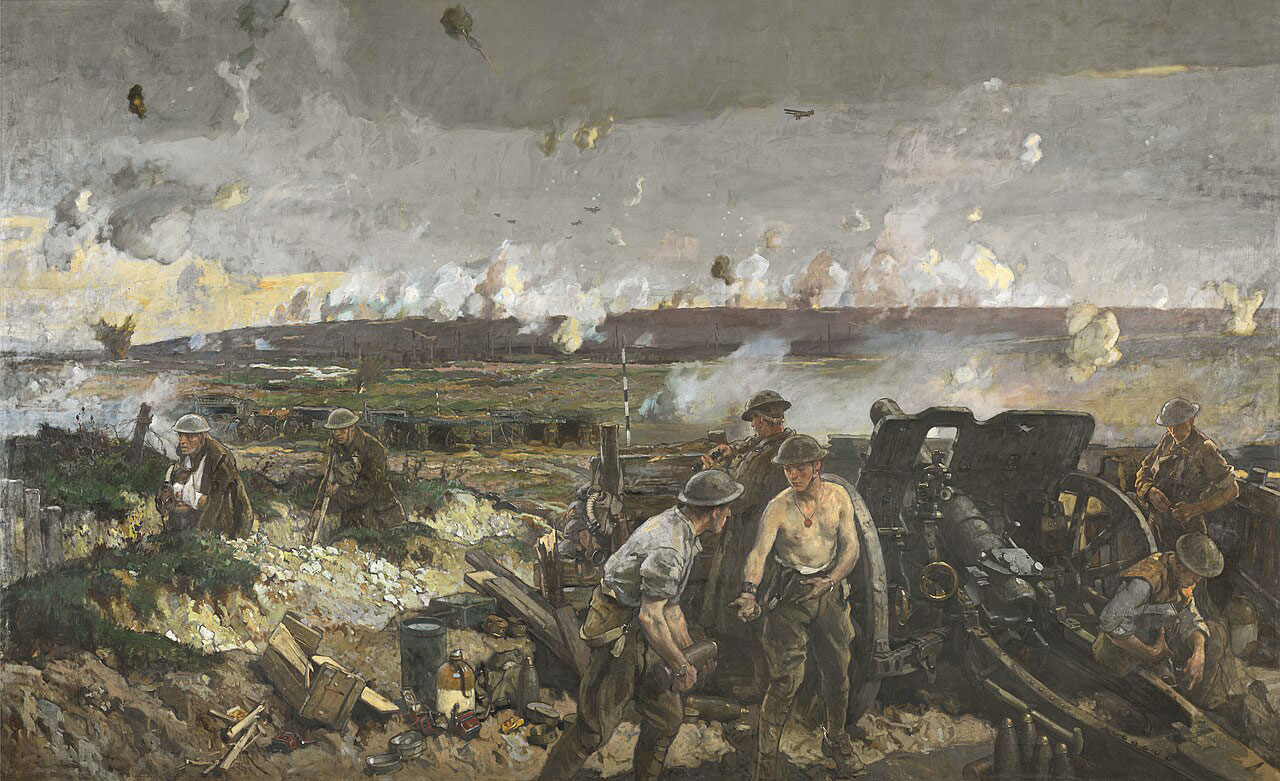
Vimy Ridge, a modest but commanding height overlooking the coal-mining plain around Douai in northern France, had been in German hands since the war’s opening year, its high ground offering an unobstructed view over Allied positions for miles in every direction and making it one of the most heavily fortified defensive positions on the entire Western Front. French forces had already attempted to retake the ridge in 1915, suffering enormous casualties for minimal gains against its layered trench systems, deep dugouts, and interlocking machine-gun positions, and by 1917 the ridge stood as a symbol of just how costly a direct assault on prepared German defenses could be. Responsibility for the next attempt fell to the Canadian Corps, serving within the British army under the command of Lieutenant-General Julian Byng, with Canadian officers, including Major-General Arthur Currie, playing an increasingly central role in planning an assault that would draw on hard lessons from earlier Western Front failures. Canadian planners developed an unusually detailed and coordinated approach, distributing maps and objectives down to the level of individual soldiers, tunneling the Grange Subway and other underground passages to move troops to the front line under cover and protected from German artillery, and building a creeping artillery barrage, timed to advance in careful stages just ahead of the infantry, coordinated with new counter-battery techniques designed to locate and silence German guns before the attack even began. Soldiers were briefed in unusual depth for the era, with maps, aerial photographs, and models of the German positions studied down to the level of individual platoons so that every man had a clear sense of the ground he would be crossing and the objective he was expected to reach, even if officers above him became casualties early in the fighting. By early April 1917, as part of the broader British-led Battle of Arras, the four divisions of the Canadian Corps stood ready to attack Vimy Ridge together for the first time in the Corps’ history, a coordinated national effort unlike anything Canadian forces had previously attempted in the war.
The Battle of Vimy Ridge
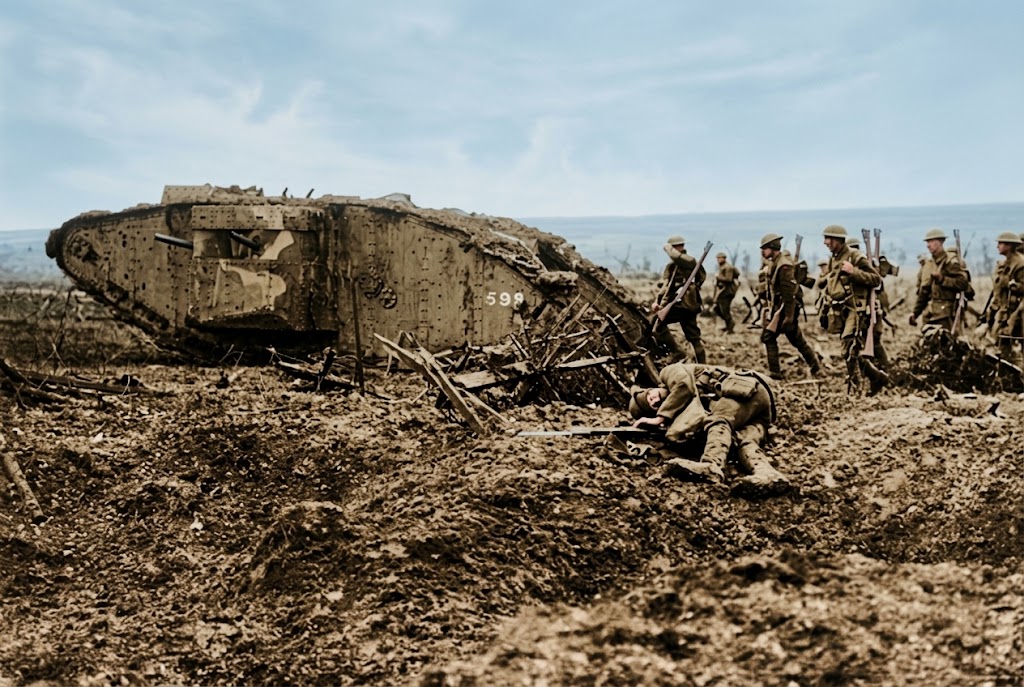
The assault began at 5:30 on the morning of Easter Monday, April 9, 1917, in cold, sleeting weather, as the creeping barrage opened overhead and all four Canadian divisions advanced together up the ridge’s slopes through mud, wire, and the remnants of a defense that had held against previous attackers for more than two years. Nearly a thousand artillery pieces supported the attack, a concentration of guns far denser than had typically been massed for previous Western Front offensives, and the preceding bombardment had spent weeks methodically cutting the German wire and targeting known strongpoints before the infantry ever left their own trenches. Three of the four divisions reached their initial objectives with relative speed on the first day, moving forward behind the rolling curtain of artillery fire in disciplined stages that kept German defenders, many of them experienced Bavarian troops holding some of the war’s most heavily engineered defenses, pinned down in their dugouts and unable to organize an effective counterattack before Canadian troops reached their trenches. The fourth division, tasked with the highest and most heavily defended point on the ridge, Hill 145, met far stiffer resistance and could not fully secure the position until the following day, April 10, after additional attacks pushed through the last determined German defenders holding the summit, from which the surrounding plain toward Douai could be seen for miles in clear weather, underscoring exactly why the position had been so fiercely held. A smaller but still fiercely contested feature known as “the Pimple,” at the ridge’s northern end, held out even longer and was not finally captured until April 12, bringing the battle to its close after four days of fighting across the length of the ridge. The victory came at a heavy cost, with Canadian casualties totaling roughly 10,600, including some 3,600 killed, figures that reflected the scale and difficulty of the fighting even amid a battle widely regarded as unusually well planned and executed by the standards of the Western Front. Four Canadian soldiers received the Victoria Cross for actions during the assault, and by the time the fighting ended, the Canadian Corps had accomplished what two years of previous French and British attempts had failed to do, driving German forces entirely off a position they had held and fortified since 1914, a success credited in large part to the meticulous planning and rehearsal that had preceded the attack by weeks.
The Legacy of Vimy Ridge
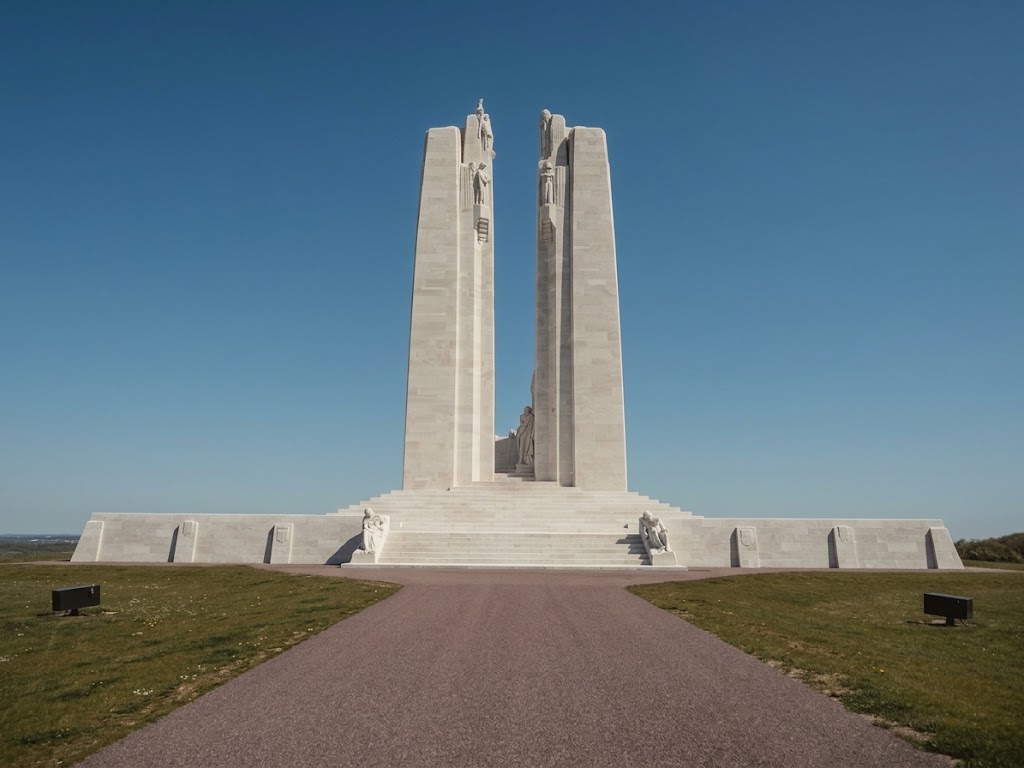
Vimy Ridge’s capture became one of the signature Canadian achievements of the First World War, and the battle has long occupied an outsized place in Canadian national memory, frequently described, with some historical debate over the extent to which the narrative developed after the fact, as a moment in which the country came into its own on the world stage. The battle contributed to growing recognition of Canada’s military contribution within the British Empire and to the country’s evolving path toward greater independence in international affairs over the following decades. In recognition of the sacrifice made there, France ceded the land encompassing the ridge to Canada in perpetuity, a rare grant of sovereign territory that remains Canadian soil to this day, and the site later became home to the Canadian National Vimy Memorial, designed by sculptor Walter Allward and dedicated in 1936 after more than a decade of construction, one of the most prominent Canadian war memorials anywhere in the world and a fixture of national commemoration ever since.
Visiting Vimy Ridge Today
The Canadian National Vimy Memorial, a short drive from Arras and easily reachable as a day trip from Lille, is free to visit year-round and preserves the monument itself alongside sections of original trenches and shell craters, giving visitors a rare chance to walk ground still visibly scarred by the fighting more than a century later. A modern Visitor Education Centre anchors the site, staffed by Canadian student guides who lead visitors through the battle’s history and answer questions throughout the day. Guided tours of the Grange Subway, the underground tunnel system used to move troops safely to the front line during the attack, are generally free but capacity-limited and occasionally suspended for maintenance, so visitors hoping to join one are advised to arrive early or book ahead rather than assume a spot will be available. Spring through autumn offers the most practical conditions for exploring the site’s outdoor areas, and large sections of the surrounding grounds remain fenced off because of unexploded ordnance still buried from the war, with sheep used to keep the grass down in these restricted zones without disturbing the ground, so visitors are asked to stay on marked paths throughout. The tunnel tours are not well suited to anyone with mobility limitations or claustrophobia, given the confined underground spaces involved, and visitors planning to combine the underground tour with the outdoor memorial and trench sections should budget a couple of hours to see the site properly rather than rushing through in a brief stop. An annual Vimy Ridge Day commemoration is held each April 9, marking the anniversary of the battle’s opening assault and drawing visitors and dignitaries to the memorial grounds each year.
Remembrance at Vimy Ridge
Private Elmer McKenzie of the 42nd Battalion, Royal Highlanders of Canada, kept a wartime diary through the war’s final years, and his terse entry for April 9, 1917, records the ridge’s capture in spare, immediate terms: old German dugouts encountered on the high ground, foul weather, deep mud underfoot, and his own brother Doug wounded fighting beside him. A markedly different vantage point survives in the dispatch of Sir Philip Gibbs, an official British war correspondent accredited to the front, who filed an on-the-spot account of the assault calling it the greatest victory yet achieved in the war, describing the bombardment and the infantry’s advance for readers following the battle from home, though his contemporary prisoner-count figures ran higher than later research has confirmed and are best read as characteristic of a correspondent working amid the fog of an unfolding battle. Between them, McKenzie’s clipped, mud-level diary entry and Gibbs’s sweeping journalistic dispatch preserve Vimy Ridge from opposite ends of how the battle was experienced and reported, one written by a soldier in the moment for no reader but himself, the other composed for a home-front public hungry for news of victory. Other soldiers’ letters from the battle survive as well, including one from Lieutenant Stuart Cameron Kirkland, wounded in the attack, whose account of the fighting and its aftermath was published in his hometown newspaper weeks later, and another from Private Earl Sorel, who described being wounded on the ridge and saved by a childhood friend who was himself killed not long after, a reminder that behind the battle’s larger strategic and symbolic significance lay thousands of individual, often costly, personal stories.
Visitor Info: Documentary titled “The Battle of Vimy Ridge” (Far from Home: Canada and the Great War series, 1999)
Location: Canadian National Vimy Memorial, Route de Vimy, Givenchy-en-Gohelle, Pas-de-Calais, France
Site Status: National Park / Managed Historic Site
Visitation Notes: The Canadian National Vimy Memorial, a short drive from Arras and reachable as a day trip from Lille, is free to visit year-round and includes the monument, preserved trenches and craters, and a modern Visitor Education Centre staffed by Canadian student guides. Guided tours of the Grange Subway tunnel system are generally free but capacity-limited and occasionally suspended for maintenance, so booking or arriving early is recommended. Spring through autumn is most practical for outdoor viewing. Large areas of the surrounding grounds remain fenced off due to unexploded WWI ordnance still in the ground, with sheep used to maintain these zones without disturbing the soil, so visitors should stay on marked paths; the tunnel tours are not well suited to those with mobility limitations or claustrophobia. An annual Vimy Ridge Day commemoration is held each 9 April.
Google Map
Visitor Comments
According to Sailorsgirl,, the new Visitor Center is beautiful, and young Canadian college students greet visitors and answer any questions — the displays are done incredibly well and are very informative. This is my favorite of all the war memorials in Europe.
— from TripAdvisor
summ3r recommends a visit to the Visitor Education Centre first to secure a free spot on the guided tunnel tour, since they fill up fast — the “We Will Remember” exhibit and the bilingual student guides are excellent, though there’s no on-site cafe. Words fail; go and see for yourself.
— from TripAdvisor
According to Peter Hohenhaus, the Grange Subway tour runs about 20-30 minutes with a roughly 25-person cap and isn’t recommended for anyone claustrophobic or with mobility limitations; the monument itself is almost over-the-top in its symbolism, and the preserved trenches feel a bit like not-fully-authentic replicas in places, but the site is well worth visiting all the same — and the sheep grazing the unexploded-ordnance zones are a memorable sight.
— from dark-tourism.com